Transient Vision Loss in One Eye: Possible Causes and Tests

Transient vision loss in one eye can last seconds to minutes and may clear completely, but it should not be ignored. Common causes include migraine, retinal problems, optic nerve disorders, and reduced blood flow such as amaurosis fugax.
Key Takeaways
- Transient vision loss in one eye can last seconds to minutes and may clear completely, but it should not be ignored.
- Common causes include migraine, retinal problems, optic nerve disorders, and reduced blood flow such as amaurosis fugax.
- Doctors often use an eye examination, blood pressure check, imaging, and vascular tests to find the cause.
- Urgent care is needed if vision loss is sudden, painful, recurrent, or occurs with weakness, speech trouble, or severe headache.
- Treatment depends on the cause and may involve managing vascular risk factors, treating eye disease, or preventing future attacks.
Transient vision loss in one eye means a short-lived episode of reduced or lost vision affecting only one eye. Although some causes are harmless, others can signal reduced blood flow to the eye or brain, so timely medical assessment is important.
Overview
Transient vision loss in one eye refers to a temporary episode of partial or complete loss of sight in a single eye. Some people describe it as a curtain coming down, dimming, blurring, graying out, or a dark patch blocking vision. The episode may last only a few seconds, several minutes, or occasionally longer, and vision often returns fully afterward.
This symptom is sometimes called amaurosis fugax when it is caused by a brief reduction in blood flow to the retina or optic nerve. However, not every episode has the same explanation. Problems affecting the eye itself, the optic nerve, circulation, or the brain’s visual pathways can all play a role, which is why a careful evaluation is needed.
Even if the vision comes back quickly, transient vision loss in one eye should be taken seriously. In some people it is an early warning sign of stroke or vascular disease. In others it may be related to migraine, inflammation, or a retinal condition that benefits from prompt treatment.
Symptoms and What an Episode May Feel Like
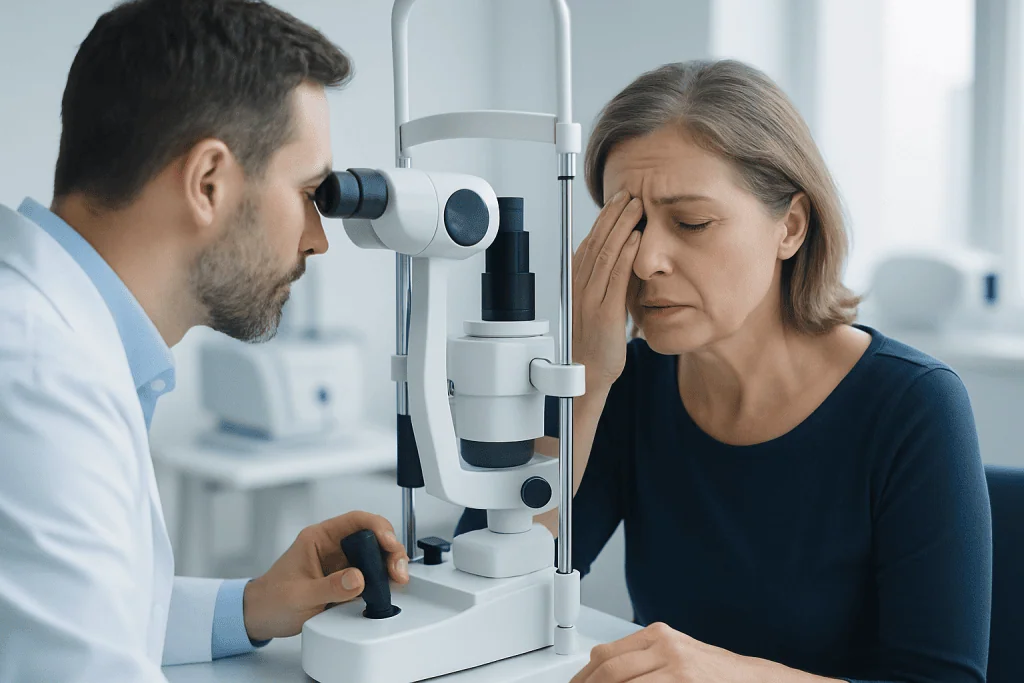
The exact symptoms vary from person to person. Vision may go completely black, become gray or foggy, or fade in one part of the visual field. Some people notice only a small blind spot, while others lose nearly all vision in the affected eye for a short time. The event is usually painless, but pain can occur in certain eye conditions.
Clues about the cause may come from the pattern of symptoms. A curtain-like shadow descending over the eye may suggest reduced retinal blood flow. Flashing lights, zigzags, or shimmering patterns can occur with migraine, although migraine visual symptoms often affect both eyes from the brain’s visual cortex rather than just one eye. Eye pain, redness, halos, or nausea raise concern for acute eye disease.
Associated symptoms are especially important. People should note whether they also had headache, jaw pain, scalp tenderness, weakness, numbness, trouble speaking, imbalance, or facial droop. These details help doctors decide whether the problem may involve the retina, optic nerve, blood vessels, or a broader neurologic condition.
- Sudden dimming or blackout in one eye
- Blurred, patchy, or tunnel-like vision
- A curtain or shade effect
- Flashes, sparkles, or shimmering lights
- Eye pain or headache in some cases
Possible Causes and Risk Factors

One important cause is reduced blood flow to the retina or optic nerve. This may happen when a tiny clot or cholesterol fragment travels from the carotid artery or the heart and briefly blocks circulation. Doctors often refer to this as amaurosis fugax. Because it can be related to the same vascular risk factors linked to stroke, it deserves prompt medical attention.
Eye-related causes are also possible. These include retinal migraine, retinal tear or detachment, vitreous problems, optic nerve swelling, glaucoma, and inflammation inside the eye. Conditions such as retinal detachment or a retinal artery problem may require urgent ophthalmic care. Temporary visual symptoms can also occur with migraine and may be confused with a true one-eye event unless each eye is tested separately during an episode.
In older adults, giant cell arteritis is an especially important cause to consider, particularly if there is scalp tenderness, jaw pain when chewing, fever, or unexplained fatigue. This inflammatory condition can reduce blood flow to the optic nerve and may threaten vision if not treated quickly. Other possible causes include low blood pressure, severe anemia, blood clotting disorders, autoimmune disease, and less commonly pressure-related changes around the optic nerve.
Risk tends to be higher in people with high blood pressure, diabetes, high cholesterol, smoking history, atrial fibrillation, known carotid artery disease, older age, or prior stroke or transient ischemic attack. Still, younger adults can also experience transient vision loss, especially when migraine, inflammation, or retinal disorders are involved.
How Doctors Diagnose the Cause
Diagnosis begins with a detailed history. The doctor will ask whether the vision loss truly affected one eye, how long it lasted, what the person saw, whether it came on suddenly or gradually, and whether there were accompanying neurologic or eye symptoms. This timeline often provides the first clue about whether the event was vascular, ocular, inflammatory, or migraine-related.
A complete eye examination is usually performed, including visual acuity, pupil reactions, eye pressure, slit-lamp examination, and a careful look at the retina and optic nerve after dilation. In some cases, photographs of the retina, optical coherence tomography, and visual field testing help detect subtle retinal or optic nerve abnormalities. These tests may reveal signs of emboli, bleeding, swelling, or damage that guide next steps.
Because temporary monocular vision loss can reflect a circulation problem, many patients also need blood pressure measurement, heart rhythm evaluation, and vascular imaging. Depending on the situation, doctors may request carotid Doppler ultrasound, CT angiography, MR angiography, or brain imaging to look for stroke risk. Blood tests may be used to check for inflammation, anemia, clotting concerns, diabetes, cholesterol levels, or suspected giant cell arteritis.
If the episode suggests a neuro-ophthalmic or cerebrovascular problem, care may involve both ophthalmology and neurology. Some patients may need hospital-based evaluation if symptoms are recent, recurrent, or associated with stroke warning signs. Advanced testing can sometimes be coordinated through brain MRI, carotid Doppler ultrasound, or a comprehensive eye examination when clinically appropriate.
Treatment Options
Treatment depends entirely on the underlying cause. If doctors suspect a temporary blockage in retinal blood flow, care focuses on reducing the risk of stroke or future vascular events. This may include treatment of blood pressure, cholesterol, diabetes, and heart rhythm problems, along with medication such as antiplatelet or anticoagulant therapy when a physician determines it is appropriate.
If a carotid artery narrowing or heart-related source of emboli is found, further treatment may be needed under the guidance of vascular, neurology, or cardiology specialists. When the cause is an eye condition such as glaucoma, retinal disease, or inflammation, ophthalmic treatment may include pressure-lowering medicines, anti-inflammatory treatment, laser procedures, or surgery depending on the diagnosis. Some retinal conditions are managed with retinal laser treatment if the treating specialist recommends it.
Migraine-related episodes are approached differently. Doctors may review headache patterns, triggers, and the need for preventive measures or prescription migraine treatment. When giant cell arteritis is suspected, urgent treatment is often started quickly to protect vision while further testing is underway.
The most important point is that treatment should follow an accurate diagnosis rather than self-treatment at home. Because the causes range from relatively benign to time-sensitive vascular disease, professional assessment helps ensure the right response.
Prevention and Self-care
Not every episode can be prevented, but lowering overall vascular risk is one of the most effective steps. This includes controlling blood pressure, blood sugar, and cholesterol, stopping smoking, maintaining a healthy weight, being physically active, and taking prescribed medicines regularly. People with atrial fibrillation or known carotid disease should keep follow-up appointments and discuss stroke prevention with their doctor.
For those with migraine, identifying triggers such as stress, sleep disruption, dehydration, or certain foods may reduce attacks. Regular sleep, good hydration, and consistent meals can help some people. If visual episodes are recurrent, keeping a symptom diary can make medical visits more productive by capturing duration, triggers, associated symptoms, and whether one or both eyes seemed affected.
Self-care should never replace urgent evaluation when symptoms are new or concerning. During an episode, it may help to cover one eye and then the other to confirm whether the problem is truly in a single eye. That simple observation can be useful information for the clinician, but it should not delay seeking prompt care if symptoms are severe or accompanied by neurologic changes.
When to See a Doctor
Any first episode of transient vision loss in one eye warrants prompt medical evaluation, even if vision returns completely. Same-day or emergency assessment is especially important if the episode lasted several minutes, happened more than once, or occurred in someone with vascular risk factors such as smoking, diabetes, high blood pressure, high cholesterol, or heart disease.
Emergency care is needed right away if transient vision loss occurs with weakness, numbness, facial droop, difficulty speaking, severe dizziness, chest pain, or sudden trouble walking. These may be signs of a transient ischemic attack or stroke. Sudden painful vision loss, red eye, severe headache, flashes with a new shower of floaters, or a curtain over part of the vision also need urgent medical review.
Older adults with jaw pain while chewing, scalp tenderness, fever, muscle aches, or unexplained fatigue should seek urgent care because giant cell arteritis must be ruled out quickly. In complex cases, a neuro-ophthalmologist may work together with retina, neurology, stroke, or vascular specialists to confirm the diagnosis and guide treatment. Acibadem International’s multidisciplinary specialists in JCI-accredited hospitals evaluate and treat neuro-ophthalmic and vascular causes of transient vision loss for international patients.
Frequently asked questions
Is transient vision loss in one eye an emergency?
It can be. Because a brief loss of vision in one eye may be caused by reduced blood flow to the retina or brain, it should be assessed promptly, especially if it is new, sudden, or recurrent. Emergency care is needed if it happens with stroke symptoms, severe headache, eye pain, or a red eye.
How long does temporary vision loss usually last?
Episodes may last from a few seconds to several minutes, and sometimes longer depending on the cause. The duration alone does not confirm whether the problem is harmless or serious. Even short episodes deserve medical attention when they affect only one eye.
Can migraine cause vision loss in only one eye?
Yes, retinal migraine can affect one eye, but it is less common than migraine visual aura that affects both eyes through the brain's visual pathways. Many people think one eye is involved when both eyes are actually affected, so careful history is important. A doctor may ask the person to test each eye separately during an episode if it happens again.
What tests are commonly done after an episode?
Doctors often begin with a full eye examination and blood pressure check. Depending on the suspected cause, they may also order retinal imaging, visual field testing, blood tests, carotid ultrasound, heart evaluation, or brain and blood vessel imaging. The goal is to identify whether the source is ocular, vascular, inflammatory, or neurologic.
Can stress or fatigue cause temporary vision loss?
Stress and fatigue may contribute to migraine episodes or make visual symptoms feel more noticeable, but they should not be assumed to be the only cause. Temporary vision loss in one eye can also reflect eye disease or a circulation problem. It is safest to have a clinician evaluate new symptoms rather than attributing them to stress alone.
Will vision always return completely?
Many people recover full vision after a transient episode, but not always. If the underlying cause involves ongoing reduced blood flow, retinal damage, inflammation, or another eye disorder, there can be lasting effects. Early evaluation improves the chance of identifying and treating a potentially reversible cause.
References
- American Academy of Ophthalmology
- National Eye Institute
- American Stroke Association
- National Institute of Neurological Disorders and Stroke
- Mayo Clinic
This article is for general information only and is not a substitute for professional medical advice. Please consult a qualified doctor about your individual situation.
Explore treatments in Turkey — costs, top hospitals & a free quote
JCI-accredited · board-certified surgeons · reply within 24h
Add us as a Preferred Source to see more of our trusted health content across Google Search, AI Overviews and Discover.
Check your numbers in seconds
BMI, calories, due date, blood pressure and 30+ more clinical calculators — free, instant, doctor-reviewed ranges.

More from the Health Library



Related Specialists

Dr. Hakki Süha Özçelik
Otorhinolaryngology
Dr. Babak Hekmatjou
Emergency Service
Dt. Oğuzhan Hakan Özdemir
Oral & Dental Health
Prof. Dr. Mehmet Serdar Binnet
Orthopedic Surgery & Traumatology