Treatment of Respiratory Distress in Newborns: How It Works, Results and What to Expect

Breathing difficulty in a newborn requires prompt assessment by trained neonatal clinicians. Respiratory distress syndrome is most common in premature babies because their lungs may not yet make enough surfactant.
Key Takeaways
- Breathing difficulty in a newborn requires prompt assessment by trained neonatal clinicians.
- Respiratory distress syndrome is most common in premature babies because their lungs may not yet make enough surfactant.
- Treatment is tailored to the cause and may include warmth, oxygen, CPAP, surfactant, IV fluids, medicines or ventilation.
- Recovery varies widely, but many babies improve as their lungs mature and the underlying problem resolves.
- NICU length of stay depends on breathing needs, feeding ability, temperature control and overall health.
Treatment of respiratory distress in newborns provides breathing support while the medical team identifies and manages the underlying cause. Care may range from close observation and supplemental oxygen to CPAP, surfactant replacement, mechanical ventilation and treatment for infection or other conditions.
Overview: treatment of respiratory distress in newborns
Treatment of respiratory distress in newborns focuses first on helping the baby breathe safely and maintaining normal oxygen and carbon dioxide levels. The neonatal team then looks for the cause of the distress, because treatment can differ for respiratory distress syndrome (RDS), infection, transient tachypnea, aspiration, congenital heart conditions and other problems.
Respiratory distress is a clinical term for signs that a baby is working harder than expected to breathe. It may occur shortly after birth or develop later in the first days of life. Newborn care teams assess babies quickly and provide support in a neonatal intensive care unit (NICU) when needed, with the goal of using the least invasive support that is safe and effective.
RDS is a common cause of breathing difficulty in premature infants. In this condition, the lungs have insufficient surfactant, a natural substance that helps keep the tiny air sacs open. More information about this condition is available in respiratory distress syndrome.
What are the symptoms of infant respiratory distress syndrome?
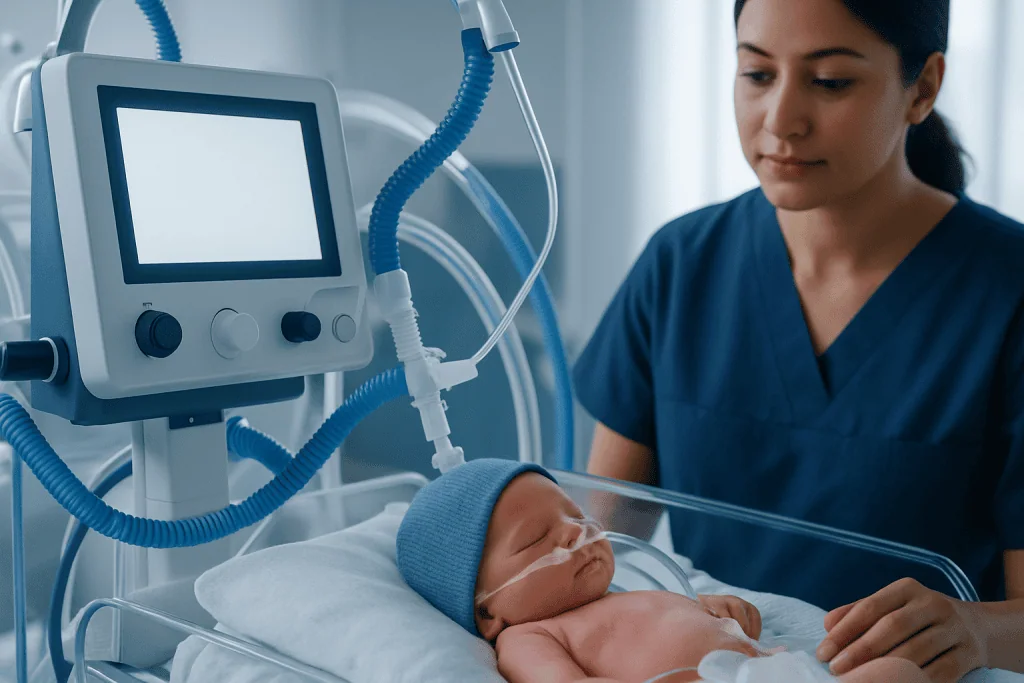
Symptoms of infant respiratory distress syndrome often begin soon after birth and can become more noticeable over the first several hours. A baby may breathe rapidly, appear to work hard with each breath, or need extra oxygen to maintain healthy oxygen levels.
Clinical signs may include:
- Rapid breathing, usually more than 60 breaths per minute
- Grunting sounds during exhalation
- Flaring of the nostrils
- Chest retractions, where the skin pulls inward between or below the ribs
- Blue or gray coloring of the lips, tongue or skin, depending on skin tone
- Pauses in breathing, poor feeding, reduced alertness or difficulty maintaining body temperature
These signs are not specific to RDS. For example, pneumonia, blood infection, a collapsed lung, heart disease and temporary delayed clearance of lung fluid can look similar. This is why newborn respiratory distress should be assessed urgently by a qualified healthcare team rather than managed at home.
How to treat RDS in newborns?

RDS in newborns is treated with supportive respiratory care and, when indicated, surfactant replacement therapy. The exact plan depends on gestational age, the baby’s breathing effort, oxygen requirement, blood gas results and chest X-ray findings. Treatment is delivered in hospital, usually within a newborn unit or NICU.
Many babies receive continuous positive airway pressure (CPAP). This gentle form of noninvasive support delivers air through small nasal prongs or a mask and helps keep the lungs open between breaths. Some babies need supplemental oxygen, while others require a breathing tube and mechanical ventilation if CPAP does not provide enough support or if they are very unwell.
Surfactant may be given through a thin tube placed into the windpipe. It spreads through the lungs and lowers surface tension inside the air sacs, helping them remain open. The procedure is commonly performed while the baby is closely monitored. For babies requiring advanced respiratory care, neonatal intensive care brings together neonatologists, respiratory therapists, neonatal nurses and other specialists.
Care also includes keeping the baby warm, monitoring blood glucose and fluid balance, providing nutrition safely and checking for other causes of distress. If infection is possible, clinicians may take blood cultures and begin antibiotics while results are reviewed. Antibiotics are stopped or adjusted according to the clinical assessment and test findings.
How treatment works: assessment and step-by-step care
At birth or on arrival at the NICU, the team evaluates airway, breathing, circulation, temperature and blood sugar. They observe the baby’s respiratory rate and effort, check oxygen saturation with a skin sensor and listen to the lungs and heart. Blood tests, a chest X-ray and blood gas measurements may be used to clarify the cause and severity of the problem.
Initial support commonly starts with warmth, positioning, gentle stimulation when appropriate and oxygen or CPAP. Clinicians continuously reassess whether the baby is improving, stable or needs more intensive support. Oxygen is adjusted carefully because both low and excessive oxygen exposure can be harmful in premature infants.
If surfactant is needed, the baby receives it through an endotracheal tube, sometimes using a minimally invasive technique while continuing CPAP. If invasive ventilation is necessary, a ventilator provides controlled breaths until the lungs can manage more of the work independently. The care team aims to reduce respiratory support as soon as it is safe.
Some babies need evaluation by additional specialists. For example, a suspected heart-related cause may require echocardiography and pediatric cardiology input, while suspected infection may involve neonatal infectious disease expertise. Treatment plans are reviewed regularly with parents and adapted as the baby’s condition changes.
Who may need NICU respiratory treatment?
Any newborn with significant breathing difficulty may need hospital-based respiratory support. Premature babies have a higher likelihood of RDS because surfactant production increases later in pregnancy. However, babies born at term can also develop respiratory distress for other reasons, including transient tachypnea of the newborn, meconium aspiration, infection, congenital lung differences or heart conditions.
Factors that can increase the chance of breathing problems include early delivery, multiple pregnancy, maternal diabetes, delivery by cesarean birth without labor in some circumstances, difficult delivery, and certain fetal or congenital conditions. These factors do not mean that a baby will definitely develop respiratory distress; they help the clinical team prepare appropriate monitoring and support.
Before a planned preterm birth, pregnant patients may be offered corticosteroid injections to help fetal lungs mature when clinically appropriate. This is a preventive strategy during pregnancy and is different from treatment given after birth. Obstetric and neonatal teams make these decisions individually, based on pregnancy timing and the health of the parent and baby.
Benefits, risks and recovery timeline
The main benefit of newborn respiratory treatment is that it supports gas exchange while the lungs mature or recover from the underlying illness. CPAP can reduce the need for invasive ventilation in many babies, and surfactant therapy can improve lung function in infants with surfactant deficiency. Monitoring in the NICU also allows the team to detect changes quickly.
All respiratory interventions have potential risks. CPAP may cause nasal irritation, abdominal fullness or, rarely, air leakage from the lungs. Mechanical ventilation can increase the risk of lung injury, infection and air leaks, particularly when prolonged. Surfactant administration may temporarily affect breathing, heart rate or oxygen levels, which is why it is given with close monitoring.
How long it takes to recover depends on the diagnosis, gestational age and any complications. Some babies with mild transient breathing difficulty improve within hours to a few days. Babies with RDS may need support for several days or longer, especially if they were born very prematurely. The team will explain the baby’s day-to-day progress and expected next steps.
Recovery is not judged by breathing alone. Babies generally need to breathe with little or no support, maintain their temperature in an open cot, feed and gain weight adequately, and have no unresolved medical concerns before discharge planning can proceed.
How long do babies stay in NICU for respiratory distress?
There is no single NICU stay length for respiratory distress. A full-term baby with a mild, short-lived condition may be monitored for a brief period and go home within several days. A premature baby with RDS may stay longer because lung development, feeding coordination and temperature regulation all take time.
Clinicians generally consider discharge when a baby is breathing safely without significant support, taking enough milk by breast, bottle or another safe feeding plan, gaining weight and maintaining body temperature. Some babies who are otherwise well may transfer from intensive care to a lower-acuity neonatal unit before going home.
Parents can remain involved throughout the NICU stay by asking the care team about their baby’s support level, feeding plan and discharge milestones. When medically appropriate, skin-to-skin contact and participation in routine care can support bonding. The team will provide individualized guidance on safe sleep, feeding, medicines and follow-up before discharge.
When to seek medical care
A newborn who is breathing fast, grunting, flaring the nostrils, pulling in at the ribs, turning blue or gray, having pauses in breathing, feeding poorly or appearing unusually sleepy needs urgent medical assessment. Parents and caregivers should call emergency services or seek immediate care rather than waiting to see whether symptoms settle.
After discharge, families should also contact their pediatrician promptly if the baby develops fever, worsening feeding, fewer wet diapers, repeated vomiting, increased sleepiness or any new breathing concern. A young infant can become unwell quickly, and early review is the safest approach.
Acibadem International’s multidisciplinary neonatal and pediatric specialists at JCI-accredited hospitals can assess and treat newborn respiratory conditions for international patients. Care plans should always be guided by the baby’s treating neonatal team and the family’s local emergency services when urgent symptoms occur.
Frequently asked questions
How to treat RDS in newborns?
RDS is treated in a hospital or NICU with breathing support tailored to the baby’s needs. This may include oxygen, CPAP, surfactant replacement therapy and, for some babies, mechanical ventilation. Clinicians also monitor temperature, glucose, fluids, feeding and possible infection.
What are the symptoms of infant respiratory distress syndrome?
Common signs include rapid breathing, grunting, nasal flaring and chest retractions. A baby may also need extra oxygen, feed poorly or have blue or gray discoloration around the lips or tongue. These signs require urgent professional assessment because several newborn conditions can cause similar symptoms.
How long does it take for a newborn baby to recover from respiratory distress syndrome?
Recovery can range from days to weeks and depends largely on how early the baby was born and how severe the lung condition is. Many babies improve as surfactant treatment takes effect and the lungs continue to mature. The neonatal team can provide the most reliable estimate based on the baby’s daily progress.
How long do babies stay in NICU for respiratory distress?
A NICU stay may be brief for mild, temporary respiratory distress, while premature babies with RDS often need longer care. Discharge depends on stable breathing, safe feeding, temperature control, weight gain and the absence of other medical concerns. The length of stay is therefore individualized.
Can respiratory distress syndrome be prevented?
Not every case can be prevented, particularly when early birth cannot be avoided. When preterm delivery is likely, clinicians may recommend antenatal corticosteroids to support fetal lung development. Good prenatal care and management of pregnancy complications may also reduce certain risks.
Is surfactant treatment safe for newborns?
Surfactant is an established treatment for newborns with RDS and can significantly improve lung function when used appropriately. Like all procedures, it has possible short-term effects, including temporary changes in oxygen levels or heart rate. It is administered by experienced neonatal professionals with continuous monitoring.
References
- American Academy of Pediatrics
- World Health Organization
- National Institute of Child Health and Human Development
- Merck Manual Professional Edition
- European Society for Paediatric Research
This article is for general information only and is not a substitute for professional medical advice. Please consult a qualified doctor about your individual situation.
Explore treatments in Turkey — costs, top hospitals & a free quote
JCI-accredited · board-certified surgeons · reply within 24h
Add us as a Preferred Source to see more of our trusted health content across Google Search, AI Overviews and Discover.