Treatment Options for Lung Cancer: How It Works, Results and What to Expect
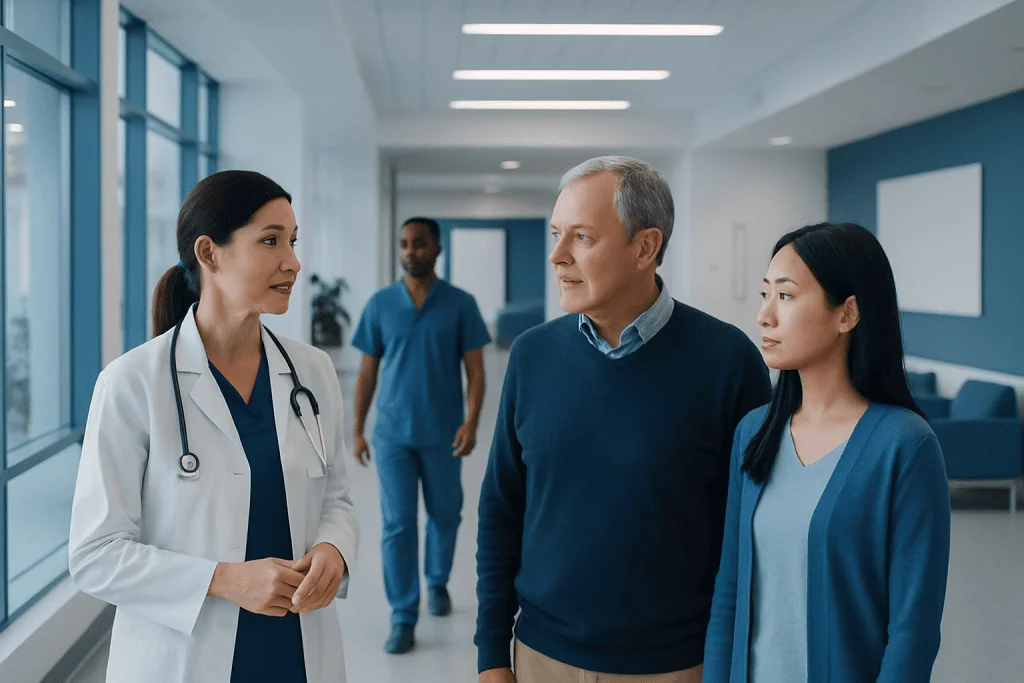
Lung cancer treatment is individualized through staging, pathology and biomarker testing. Early-stage lung cancer may be treated with surgery, radiation, or both with systemic therapy.
Key Takeaways
- Lung cancer treatment is individualized through staging, pathology and biomarker testing.
- Early-stage lung cancer may be treated with surgery, radiation, or both with systemic therapy.
- Advanced lung cancer is often managed with systemic treatments such as targeted therapy, immunotherapy, chemotherapy, or combinations.
- Treatment planning commonly involves specialists in medical oncology, thoracic surgery, radiation oncology, pulmonology and pathology.
- Supportive care can help manage symptoms and treatment side effects at every stage of care.
Treatment options for lung cancer may include surgery, radiation therapy, chemotherapy, targeted therapy, immunotherapy, or a carefully planned combination. The best approach depends on the cancer type, stage, molecular test results, overall health, lung function, and personal treatment goals.
Overview: How are treatment options for lung cancer chosen?
Treatment options for lung cancer include surgery, radiation therapy, chemotherapy, targeted therapy, immunotherapy, and supportive or palliative care. A single treatment may be enough for some early cancers, while many people benefit from a sequence or combination of treatments designed to control the cancer, reduce the risk of recurrence, relieve symptoms, and protect quality of life.
The plan begins with understanding whether the cancer is non-small cell lung cancer or small cell lung cancer, how far it has spread, and whether tumor testing identifies a targetable genetic change. Doctors also consider breathing capacity, heart health, other medical conditions, previous treatments, and the person’s wishes. A multidisciplinary team can review these details together before recommending a plan.
Although learning about treatment choices can feel overwhelming, patients do not have to make decisions alone. Asking what the goal of each treatment is, what alternatives exist, and how side effects will be monitored can help patients and families take an active role in care.
How treatment planning and candidacy work
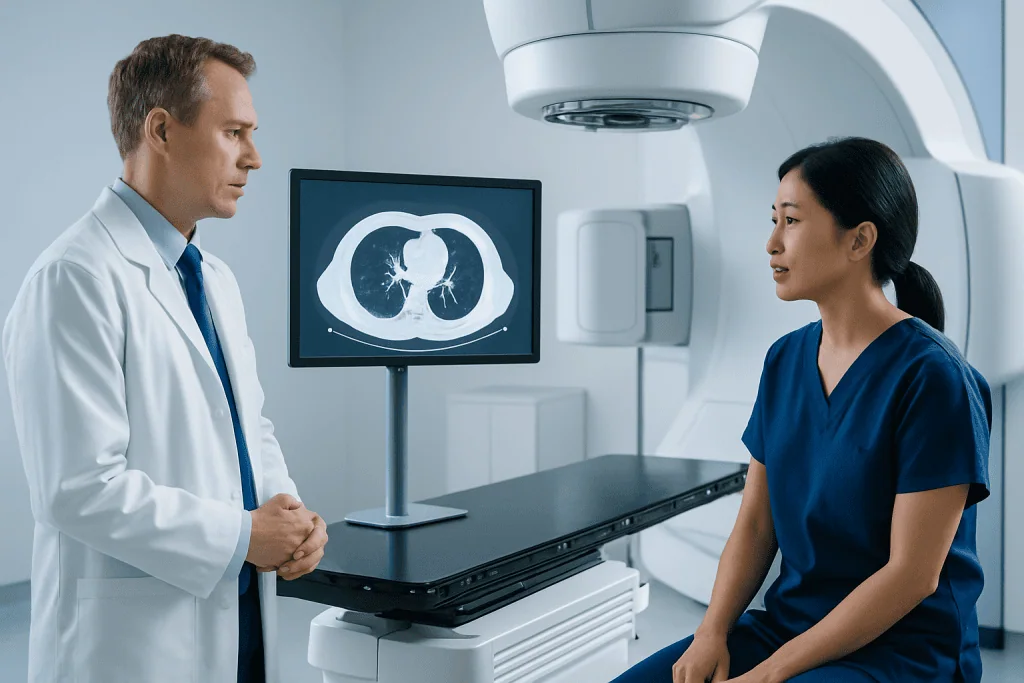
Before treatment starts, clinicians confirm the diagnosis with a tissue sample whenever possible. Pathologists examine the cells to identify the cancer type, while imaging tests such as CT, PET-CT, or brain imaging may be used to stage the disease. Lung function tests, blood tests, and an assessment of everyday functioning help determine which treatments can be given safely.
For non-small cell lung cancer, biomarker testing is especially important in advanced disease and is often useful in earlier stages as well. This testing may look for changes in genes such as EGFR, ALK, ROS1, BRAF, KRAS, MET, RET, NTRK, or HER2, as well as PD-L1 expression. Results can guide whether targeted therapy or immunotherapy may be appropriate.
Surgery is usually considered when the tumor is localized and enough healthy lung can remain afterward. Radiation may be used when surgery is not appropriate, after surgery in selected situations, or to treat disease in a specific area. Systemic treatments circulate through the body and are commonly used when there is a higher risk of microscopic spread or known spread beyond the lung.
Treatment options: how they work and what to expect
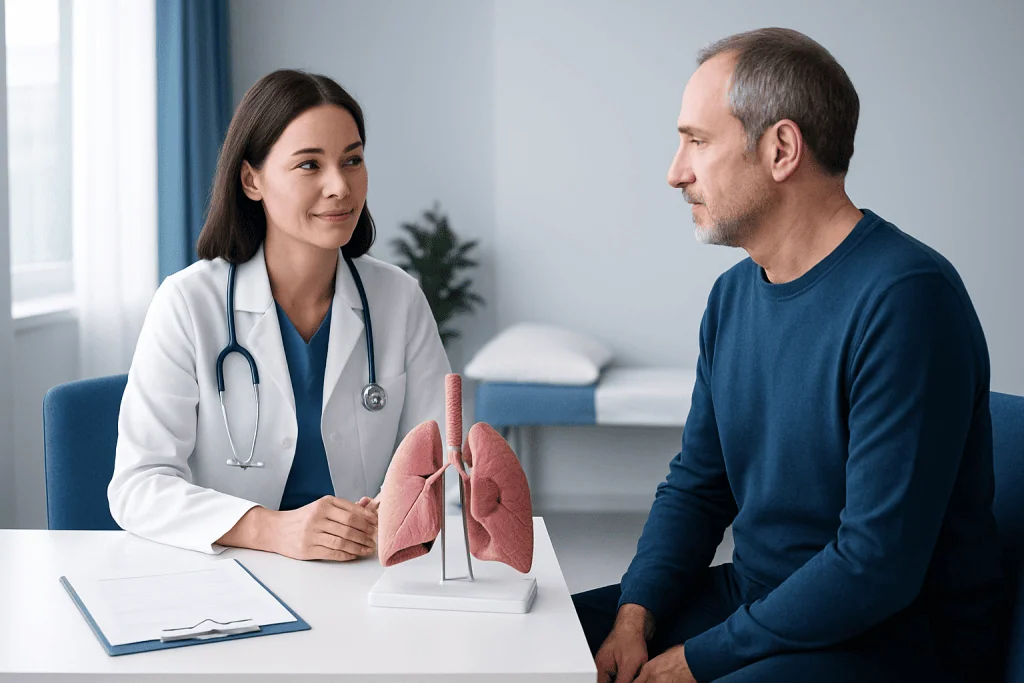
Surgery removes the tumor and, when appropriate, nearby lymph nodes. Depending on the location and size of the cancer, a surgeon may remove a small section of lung, a lobe, or less commonly an entire lung. Minimally invasive techniques may be possible for selected patients, but the safest operation depends on the tumor and anatomy. lung cancer treatment planning commonly includes an assessment by a thoracic surgeon and lung-function testing.
Radiation therapy uses precisely planned high-energy beams to damage cancer cells. Stereotactic body radiation therapy may deliver focused treatment over a small number of sessions for selected early-stage tumors when surgery is not suitable. Conventional external-beam radiation may be used over several weeks, often with chemotherapy for some locally advanced cancers. Fatigue, skin irritation, swallowing discomfort, cough, and inflammation of lung tissue can occur, but the care team monitors for these effects.
Chemotherapy uses medicines that interfere with cancer-cell growth. It may be given before surgery, after surgery, with radiation, or as treatment for advanced cancer. Targeted therapy blocks specific cancer-driving molecular changes and is used only when testing shows that a relevant target is present. Immunotherapy helps the immune system recognize and respond to cancer cells; it may be used alone or in combination with chemotherapy, depending on the cancer and test results.
Supportive care is part of active cancer care, not a last resort. It may include help with breathlessness, pain, nutrition, fatigue, emotional wellbeing, smoking cessation, rehabilitation, and management of side effects. Palliative care specialists can work alongside oncology teams at any stage to improve comfort and daily functioning.
What happens step by step, and what is recovery like?
After diagnosis, the first steps are usually staging, pathology review, biomarker testing, and discussion at a multidisciplinary meeting. The team then explains the proposed treatment sequence. Some patients start with surgery or focused radiation, while others first receive medicines to shrink or control the cancer before local treatment.
During surgery, patients receive anesthesia and remain in hospital for monitoring, pain control, breathing exercises, and early movement. The hospital stay and recovery time vary by procedure, surgical approach, lung function, and any complications. Many people need several weeks before energy and activity gradually improve, and pulmonary rehabilitation may be recommended.
Radiation visits are generally outpatient. The first appointment includes planning scans and positioning; treatment itself is painless and usually brief. Chemotherapy, targeted therapy, and immunotherapy are administered in cycles or ongoing schedules that differ by regimen. Regular visits and blood tests help the team assess response and identify side effects early.
Follow-up imaging is used to monitor treatment response and detect recurrence after curative-intent care. Patients should report new or worsening symptoms rather than waiting for the next scheduled appointment, as many treatment effects can be managed more effectively when addressed early.
Benefits, limitations and possible risks
The potential benefit of treatment depends strongly on cancer type and stage. For localized disease, treatment may aim to cure the cancer. For cancer that has spread, treatment may shrink or slow cancer growth, prolong life, reduce symptoms, and help maintain quality of life. Outcomes vary considerably between individuals, so a treating team is best placed to explain what a particular plan may mean.
Each approach has possible risks. Surgery can involve bleeding, infection, blood clots, air leaks, pneumonia, and reduced breathing reserve. Radiation can irritate nearby tissues and may cause fatigue, inflammation of the esophagus or lungs, and rarely longer-term scarring. Chemotherapy can cause fatigue, nausea, infection risk from low blood counts, nerve symptoms, or other effects depending on the medicines used.
Targeted therapies and immunotherapies have different side-effect patterns. Targeted medicines may cause skin, digestive, liver, lung, heart, or blood-pressure effects depending on the drug. Immunotherapy can sometimes cause inflammation in organs such as the lungs, bowel, liver, thyroid, skin, or kidneys. Prompt reporting of diarrhea, fever, severe rash, chest symptoms, or unusual shortness of breath is important.
Clinical trials may be an option for eligible patients at different stages of lung cancer. These studies evaluate new approaches or combinations under close supervision and may be discussed with the oncology team when appropriate.
What is the average time from lung cancer diagnosis to treatment?
There is no single average timeline that applies to everyone. Treatment should begin promptly after the diagnosis has been confirmed and the key information needed for safe treatment planning is available, including staging and, for many non-small cell lung cancers, biomarker test results.
For some patients, this process takes a few weeks because imaging, biopsy review, lung-function testing, and specialist consultations are needed. Starting treatment before staging or molecular testing is complete may mean missing the most suitable option. However, teams generally expedite assessment when symptoms are severe or the cancer appears likely to progress quickly.
Patients can ask which tests are still pending, when the multidisciplinary review will occur, and what the expected start date is. They should also tell the team about worsening breathlessness, pain, coughing blood, weight loss, or new neurological symptoms while waiting.
What is the most successful treatment for lung cancer?
There is no one treatment that is most successful for every person with lung cancer. For early-stage non-small cell lung cancer, complete surgical removal is often the preferred curative treatment when a person is medically fit for surgery. For people who cannot have surgery, precisely delivered radiation can offer a curative-intent alternative in selected cases.
For locally advanced disease, combined treatment with chemotherapy, radiation, immunotherapy, surgery, or selected combinations may provide the best chance of long-term control. In advanced non-small cell lung cancer with an actionable genetic alteration, targeted therapy can be highly effective. In other settings, immunotherapy with or without chemotherapy may be recommended.
Small cell lung cancer is usually treated differently because it tends to grow and spread more rapidly. Chemotherapy and immunotherapy are common treatments, while radiation may be added for limited-stage disease or to address specific sites. The most appropriate treatment is therefore the one matched to the cancer’s biology, extent, and the individual’s health.
What organ does lung cancer spread to first, and what is the average survival rate?
Lung cancer does not always spread to the same organ first. It may spread to nearby lymph nodes before reaching other parts of the body, but it can also spread through the bloodstream or lymphatic system. Common distant sites include the brain, bones, liver, adrenal glands, and the other lung.
The average survival rate for lung cancer is best understood through population statistics, which cannot predict an individual outcome. Survival differs substantially by cancer type, stage at diagnosis, age, overall health, tumor biology, access to treatment, and response to therapy. Early-stage cancers generally have a much better outlook than cancers diagnosed after distant spread.
Modern treatments have improved outcomes for many people, particularly when biomarker-guided therapies or immunotherapy are suitable. The oncology team can discuss prognosis using the most relevant staging information and explain the limits of survival statistics in an individual case.
Acibadem International’s multidisciplinary specialists and JCI-accredited hospitals diagnose and treat lung cancer for international patients, with care plans developed around pathology, staging, and individual health needs.
When to seek medical care
Anyone with a persistent or changing cough, coughing up blood, unexplained breathlessness, chest pain, repeated chest infections, unexplained weight loss, or ongoing fatigue should arrange a medical assessment. These symptoms can have many causes, including conditions other than cancer, but they deserve timely evaluation.
Urgent medical care is important for severe breathing difficulty, large amounts of blood when coughing, new confusion, seizures, sudden weakness or numbness, severe chest pain, or a rapidly worsening condition. People already receiving lung cancer treatment should contact their care team promptly for fever, new shortness of breath, severe diarrhea, uncontrolled vomiting, or troubling new symptoms.
Stopping smoking, avoiding secondhand smoke, staying physically active within personal limits, maintaining nutrition, and attending follow-up appointments can support overall health during and after treatment. These steps do not replace medical treatment, but they can help patients prepare for and recover from it.
Frequently asked questions
Can lung cancer be cured?
Some lung cancers can be cured, particularly when they are found at an early stage and can be completely treated with surgery, radiation, or a combination approach. The chance of cure depends on the cancer type, stage, tumor biology, and a person's overall health. Even when cure is not possible, treatment can often control disease and relieve symptoms.
Do all patients with lung cancer need chemotherapy?
No. Chemotherapy is not needed in every case. It may be recommended based on stage, cancer type, surgery results, and whether targeted therapy or immunotherapy is more appropriate. Some early cancers are treated with surgery or radiation alone.
How long does lung cancer treatment last?
Treatment length depends on the approach being used. Surgery is a one-time procedure followed by recovery and surveillance, while radiation may take a few sessions or several weeks. Drug treatments are given in planned cycles or continued while they are helping and side effects remain manageable.
Can targeted therapy be used without genetic testing?
Targeted therapy should generally be selected only after tumor testing shows a molecular change that the medicine is designed to treat. Without that result, the treatment may be unlikely to help and may expose the patient to unnecessary side effects. Testing can be performed on tumor tissue and, in some cases, blood.
What happens if lung cancer returns after treatment?
If lung cancer returns, the team reassesses its location, extent, cancer biology, and previous treatments. Options may include surgery, radiation, systemic therapy, clinical trials, and supportive care, depending on the situation. A new biopsy or molecular test may be useful in some cases.
Is immunotherapy suitable for everyone with lung cancer?
Immunotherapy is not suitable for every person or every type of lung cancer. Its use depends on cancer type, stage, PD-L1 testing, molecular findings, previous treatment, and medical conditions such as autoimmune disease. An oncology team can explain the potential benefits and risks for the individual.
References
- National Cancer Institute
- American Cancer Society
- National Comprehensive Cancer Network
- World Health Organization
- European Society for Medical Oncology
This article is for general information only and is not a substitute for professional medical advice. Please consult a qualified doctor about your individual situation.
Lung Cancer in Turkey — costs, top hospitals & a free quote
JCI-accredited · board-certified surgeons · reply within 24h
Add us as a Preferred Source to see more of our trusted health content across Google Search, AI Overviews and Discover.
Check your numbers in seconds
BMI, calories, due date, blood pressure and 30+ more clinical calculators — free, instant, doctor-reviewed ranges.

Medical Oncology Department
Medical treatment of cancer with chemotherapy, immunotherapy and targeted therapies under a multidisciplinary tumor board.
60 specialists in this unitMore from the Health Library


Related Specialists

Assoc. Prof. Dr. Çağrı Örs
Orthopedic Surgery & Traumatology
Dr. Sevim Kuyumcu
Ophthalmology
Dr. Zeki Yenidünya
Internal Medicine
Dr. Nargız Ibrahımlı
Aesthetic Plastic & Reconstructive Surgery