Triceps Muscle: A Complete Medical Overview
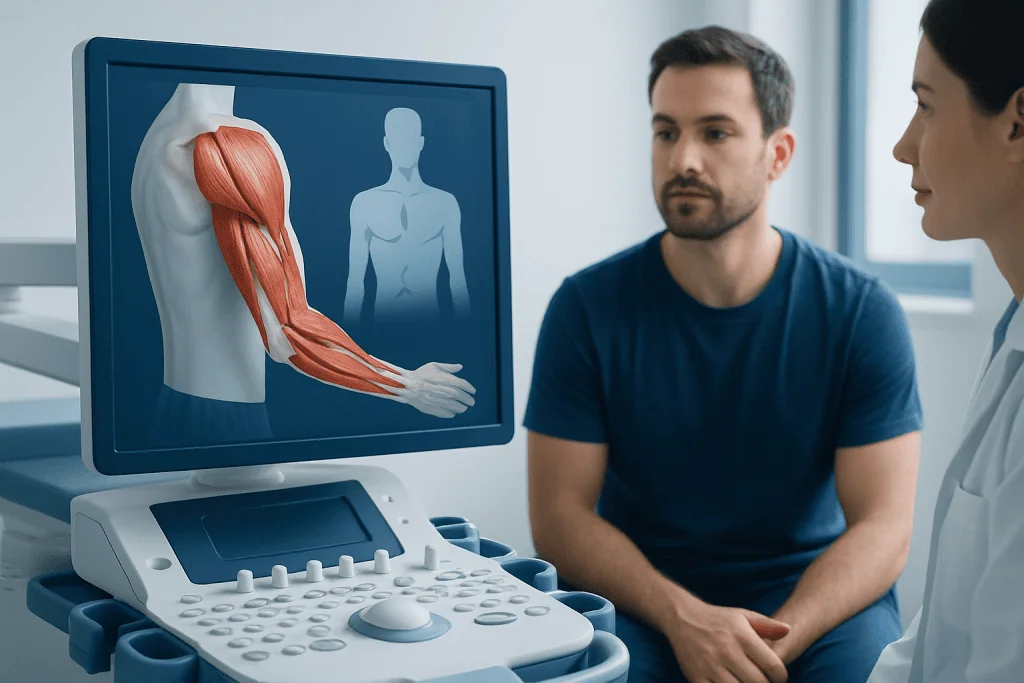
The triceps muscle has three parts and is mainly responsible for elbow extension. Pain in the back of the upper arm may come from muscle strain, tendon irritation, or less commonly a tear.
Key Takeaways
- The triceps muscle has three parts and is mainly responsible for elbow extension.
- Pain in the back of the upper arm may come from muscle strain, tendon irritation, or less commonly a tear.
- Diagnosis is often based on symptoms and physical examination, with imaging used when needed.
- Most mild triceps injuries improve with rest, activity adjustment, and guided rehabilitation.
- Sudden weakness, major swelling, bruising, or inability to straighten the arm needs prompt medical assessment.
The triceps muscle is the large muscle on the back of the upper arm. It helps straighten the elbow, supports some shoulder movements, and can become painful or injured through overuse, strain, or sudden force.
Overview of the triceps muscle
The triceps muscle is the broad muscle at the back of the upper arm. Its main job is to straighten the elbow, but it also helps stabilize the arm during pushing, lifting, and weight-bearing activities. In everyday life, this muscle works when a person pushes open a door, rises from a chair using the arms, or places an object on a shelf.
The name “triceps” means “three heads.” The muscle is made up of a long head, a lateral head, and a medial head. These three parts join into a common tendon that attaches near the elbow. Because of this design, the triceps muscle can generate force across the elbow joint and, through the long head, also contribute to some shoulder movement.
Although many people think of the triceps muscle mainly in terms of exercise or arm appearance, it is also medically important. Pain, weakness, or injury in this area can affect sports performance, work tasks, and simple daily activities. Understanding its structure and common problems can help people recognize symptoms early and seek appropriate care.
Anatomy and function
The long head of the triceps begins at the shoulder blade, while the lateral and medial heads begin on the upper arm bone, called the humerus. All three heads come together and insert through the triceps tendon onto the ulna, one of the forearm bones, at the tip of the elbow. This shared attachment allows the muscle to pull the forearm backward and straighten the arm.
The primary action of the triceps muscle is elbow extension. This means it helps move the elbow from a bent position to a straight position. The long head also assists with bringing the arm backward at the shoulder and helps keep the shoulder joint steady during movement.
The triceps muscle works together with nearby muscles and structures, including the biceps in the front of the arm, the shoulder muscles, and the forearm muscles. Balanced strength and flexibility across these areas support efficient arm movement. If one part becomes weak, tight, or injured, the body may compensate in ways that increase stress on the elbow or shoulder.
- Helps straighten the elbow
- Supports pushing and pressing movements
- Assists in shoulder stability through the long head
- Contributes to arm control during lifting and reaching
Common symptoms and triceps-related problems

Symptoms involving the triceps muscle can vary from mild soreness to significant weakness. A person may notice aching in the back of the upper arm, tenderness when pressing on the area, discomfort during pushing movements, or stiffness after exercise. In some cases, pain is felt closer to the elbow where the tendon attaches.
A triceps strain happens when muscle fibers are overstretched or torn. This may occur during sports, weight training, a fall, or an abrupt forceful movement. Mild strains usually cause localized pain and tightness, while more severe injuries may lead to swelling, bruising, and weakness when trying to straighten the elbow.
Tendon-related problems can also occur, especially with repetitive strain. Triceps tendinopathy may cause pain at the back of the elbow and discomfort that builds gradually rather than starting suddenly. Less commonly, the tendon can partially or completely tear. A tendon rupture may cause a popping sensation, rapid swelling, bruising, and marked loss of strength. Some arm pain can overlap with nearby conditions involving the shoulder or elbow, including tennis elbow or cervical nerve irritation.
Causes and risk factors
Overuse is one of the most common causes of triceps muscle pain. Repeated pushing, pressing, throwing, or weight-bearing through the arms can irritate the muscle or tendon over time. This is often seen in people who play racket sports, do gymnastics, swim, perform manual work, or increase strength training too quickly.
Sudden overload is another important cause. Lifting a heavier weight than usual, trying to stop a fall, or performing an explosive movement without proper preparation can strain the muscle or damage the tendon. Poor technique, inadequate warm-up, and muscle fatigue may increase this risk.
Several factors make triceps problems more likely. These include reduced flexibility, weak shoulder or upper back muscles, previous arm injuries, and imbalance between muscle groups. In some cases, pain around the arm may be influenced by broader joint problems, such as shoulder impingement syndrome, which can alter movement patterns and place extra stress on the triceps muscle.
- Repetitive exercise or work tasks
- Sudden forceful pushing or lifting
- Poor training technique or rapid load increase
- Insufficient rest and recovery
- Previous shoulder or elbow problems
How doctors diagnose triceps muscle injuries
Diagnosis usually starts with a medical history and physical examination. The doctor asks when the pain began, whether there was a sudden injury, what movements worsen symptoms, and whether weakness, swelling, or bruising is present. During the exam, the arm is checked for tenderness, range of motion, muscle strength, and any visible deformity.
In many mild cases, this evaluation is enough to suggest a strain or overuse problem. The doctor may also assess the shoulder, neck, and elbow to make sure the pain is not being referred from another area. This matters because pain in the back of the upper arm can sometimes be confused with tendon disorders, joint inflammation, or nerve-related symptoms.
If a more serious injury is suspected, imaging may be helpful. Ultrasound can assess soft tissues and tendon damage, while MRI provides a detailed view of the muscle and tendon when a partial or complete tear is possible. X-rays do not show muscle well, but they may be used to rule out bone injury or to look for associated elbow problems. In some cases, a person may also benefit from assessment in orthopedic rehabilitation to evaluate movement patterns and function.
Treatment options and recovery
Treatment depends on the cause and severity of the problem. Mild triceps muscle strain often improves with temporary rest from the triggering activity, ice in the early phase, and a gradual return to movement. Doctors may recommend simple pain-relief strategies and activity modification while the tissue recovers. Avoiding complete immobility is usually important, because gentle movement can help reduce stiffness.
Physical therapy is often a key part of recovery. A rehabilitation plan may include stretching, progressive strengthening, and exercises to improve shoulder, upper back, and elbow mechanics. Guided recovery is especially useful for athletes, people with recurring symptoms, or those whose work depends on arm strength. Depending on the findings, some patients may be referred for physical therapy and rehabilitation to rebuild function safely.
More significant injuries may need specialist care. Partial tendon tears may require a period of immobilization followed by structured rehabilitation, while complete tendon ruptures are more likely to need orthopedic evaluation and treatment, sometimes including surgical repair. The best approach depends on the patient’s age, health, activity level, and the extent of tissue damage. Near the end of the care pathway, some international patients choose centers such as Acibadem International, where multidisciplinary specialists in JCI-accredited hospitals diagnose and treat muscle and tendon injuries.
Prevention and self-care
Many triceps muscle problems can be reduced through training habits that protect the arm. Warming up before exercise, increasing resistance gradually, and using proper technique during pressing or throwing activities can lower stress on the muscle and tendon. Rest days are also important, because repetitive strain often develops when the body does not have enough time to recover.
Balanced conditioning matters as much as triceps strength itself. Shoulder stability, upper back control, and flexibility of the chest and arm muscles all influence how force is distributed through the upper limb. A program that focuses only on one muscle group may increase the risk of overload.
At home, self-care for mild symptoms usually includes short-term activity reduction, gentle range-of-motion work, and avoiding painful overloading. If symptoms persist, keep returning, or interfere with sleep, work, or sport, a professional assessment is sensible. Early evaluation may help prevent a small strain from turning into a more lasting tendon problem.
- Warm up before sports or strength training
- Progress exercise intensity gradually
- Use correct form for pressing and lifting
- Strengthen the shoulder and upper back
- Allow enough recovery between intense sessions
When to seek medical care
Most minor triceps muscle soreness settles with time and sensible self-care, but some symptoms deserve prompt attention. A person should seek medical evaluation if pain follows a sudden injury, if there is major bruising or swelling, or if the arm becomes clearly weak. Inability to straighten the elbow normally can suggest a more significant muscle or tendon injury.
Medical care is also important when pain does not improve after a reasonable period of rest, keeps returning with activity, or limits everyday tasks. Persistent pain near the back of the elbow may reflect tendon involvement rather than simple muscle soreness. Numbness, tingling, neck pain, fever, or redness may point to a different problem and should be assessed by a qualified doctor.
Early diagnosis can help guide the right treatment and reduce the chance of prolonged weakness or stiffness. People who rely on arm strength for work, sports, or caregiving may especially benefit from timely assessment and a structured recovery plan.
Frequently asked questions
What does the triceps muscle do?
The triceps muscle mainly straightens the elbow. It also helps with pushing movements and supports shoulder stability through its long head.
Where is triceps muscle pain usually felt?
Pain is usually felt at the back of the upper arm or near the back of the elbow. It may feel sore, tight, tender, or weak during pushing, lifting, or reaching.
How can someone tell if it is a triceps strain or normal post-exercise soreness?
Normal soreness often appears after unfamiliar exercise and improves over a few days. A triceps strain is more likely if there is sharp pain, a sudden pulling sensation, swelling, bruising, or weakness with elbow extension.
Can a triceps muscle injury heal without surgery?
Yes, many mild to moderate triceps muscle strains improve without surgery. Rest, gradual rehabilitation, and medical guidance are often enough, but complete tendon tears may require surgical repair.
How long does triceps muscle recovery take?
Recovery time depends on the severity of the problem. Mild strains may improve within days to a few weeks, while more significant muscle or tendon injuries can take longer and may need structured rehabilitation.
When should a person worry about triceps pain?
A person should seek medical care if pain is severe, follows a sudden injury, causes marked weakness, or comes with swelling and bruising. Ongoing pain that does not improve or keeps returning also deserves assessment.
References
- American Academy of Orthopaedic Surgeons
- National Institute of Arthritis and Musculoskeletal and Skin Diseases
- Mayo Clinic
- MedlinePlus
- Cleveland Clinic
This article is for general information only and is not a substitute for professional medical advice. Please consult a qualified doctor about your individual situation.
Joint and spine care in Turkey — expert assessment & treatment
JCI-accredited · board-certified surgeons · reply within 24h
Add us as a Preferred Source to see more of our trusted health content across Google Search, AI Overviews and Discover.