Turkey Dental Implant Cost: What Patients Really Pay

Dental implant costs vary because every patient’s tooth, gum and jawbone needs are different. A complete written treatment plan should clarify what is included, what may be needed later and who provides follow-up care.
Key Takeaways
- Dental implant costs vary because every patient’s tooth, gum and jawbone needs are different.
- A complete written treatment plan should clarify what is included, what may be needed later and who provides follow-up care.
- Implants replace tooth roots, but the visible crown, bridge or denture is a separate part of the restoration plan.
- Good oral hygiene, smoking cessation and regular reviews support long-term implant health.
- People considering care abroad should allow time for assessment, healing and safe travel planning.
Turkey dental implant cost cannot be assessed reliably from a single advertised figure. The overall amount depends on the clinical plan, including assessment, implant placement, bone preparation where needed, the final restoration, follow-up care and the materials selected.
Understanding Turkey Dental Implant Cost
Turkey dental implant cost is best understood as the cost of a personalised treatment pathway rather than a standard product. A safe estimate starts after a dental examination and imaging show whether the jawbone and gums can support an implant, how many teeth need replacement, and what type of final restoration is appropriate. A single missing tooth, several missing teeth and a full-arch restoration require very different planning.
Patients should ask for a written, itemised plan. It should explain the clinical assessment, imaging, implant surgery, abutment where used, temporary teeth if needed, final crown, bridge or denture, laboratory work, prescribed medicines, reviews and any anticipated additional procedures. It is also important to ask which elements are conditional, such as bone grafting, gum treatment or treatment of a tooth that cannot be retained.
Comparing plans is more useful than comparing headline prices. A lower initial quote may not include the final restoration, diagnostic scans, anaesthesia, temporary restoration, follow-up visits or management of complications. Patients should also account for non-clinical travel expenses, time away from home and the practical arrangements for continuing care after they return.
What a Dental Implant Is and How It Works
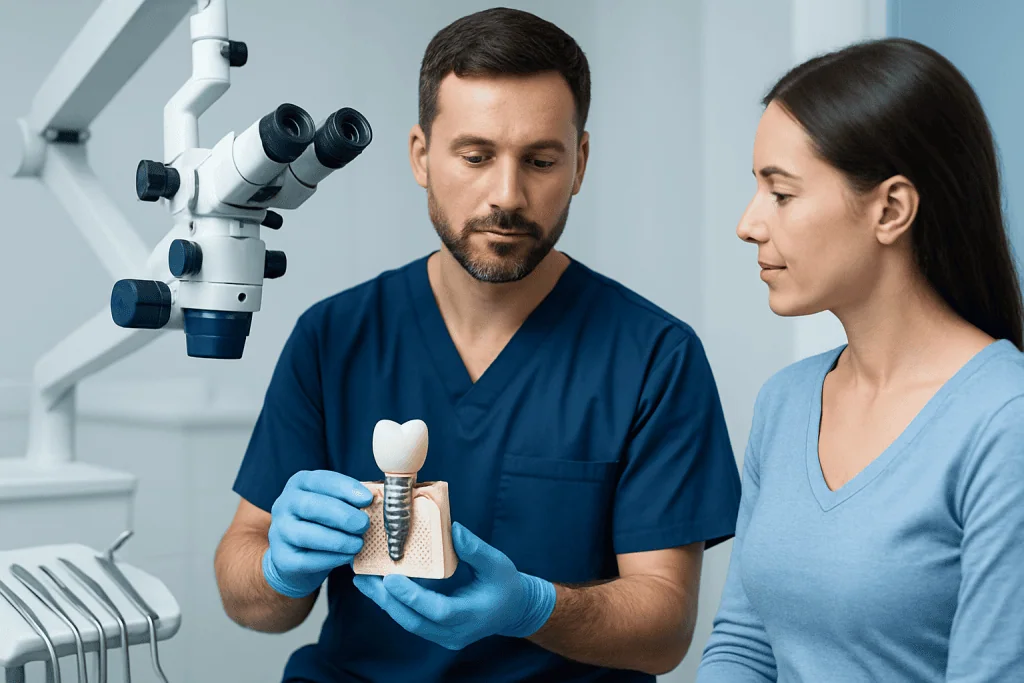
A dental implant is a small, biocompatible post placed into the jawbone to replace the root of a missing tooth. Over time, bone can grow closely around the implant through a process called osseointegration. Once healing is sufficient, the implant can support an abutment and a custom-made crown, bridge or removable denture.
Implants can help restore chewing function, speech and appearance. They may also help preserve the jawbone in the area of a missing tooth, although bone changes can still occur and results vary between individuals. Unlike a conventional bridge, an implant-supported single crown may avoid preparation of neighbouring healthy teeth.
The final restoration is as important as the implant itself. Its shape, bite relationship, cleanability and materials need careful planning. For an overview of clinical assessment and implant-based tooth replacement, patients can explore dental implant treatment.
Not every missing tooth needs an implant. Depending on oral health, bite, medical history and personal goals, alternatives may include a conventional bridge, a resin-bonded bridge, a removable partial denture or leaving the space untreated in selected circumstances. A dentist can explain the likely benefits and limitations of each option.
Who May Be a Candidate for Implants
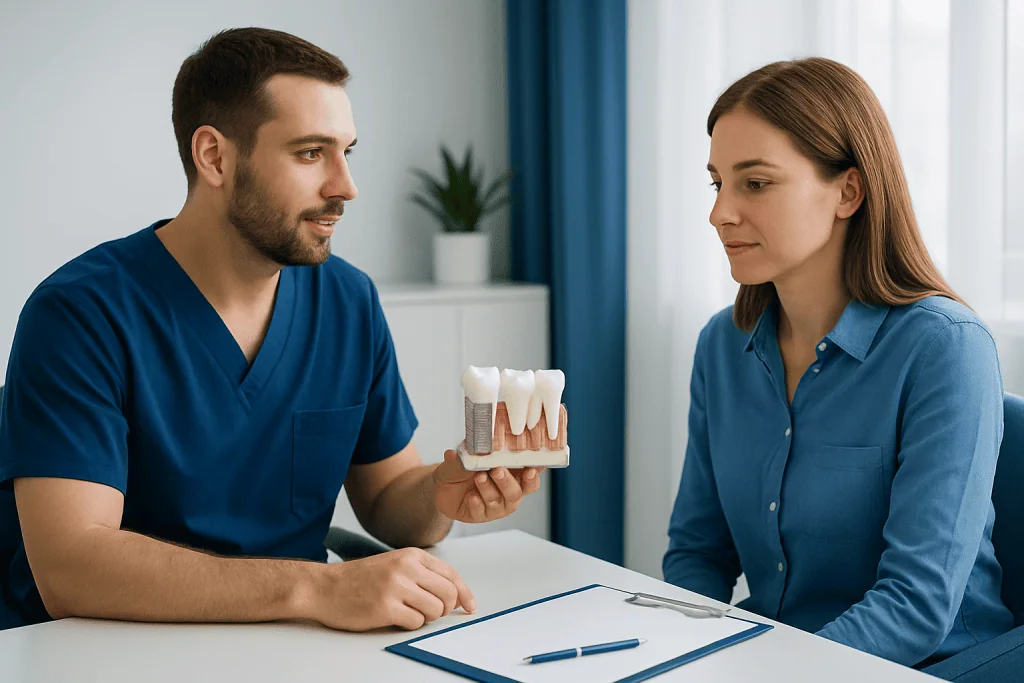
Many adults with one or more missing teeth may be candidates for dental implants, but suitability is determined individually. The dentist assesses gum health, the amount and quality of jawbone, the location of nearby nerves and sinuses, the bite, oral hygiene habits and the condition of remaining teeth. Three-dimensional imaging may be recommended to plan placement accurately.
Healthy gums and effective plaque control are especially important. Untreated gum disease can affect the tissues around implants, while active tooth decay or oral infection should generally be addressed before surgery. Some people need preliminary care, such as periodontal treatment, tooth removal, bone grafting or sinus augmentation, before an implant can be placed safely.
Medical factors also matter. Smoking, poorly controlled diabetes, medications that affect bone healing, previous radiation treatment to the jaws and immune-system conditions may alter treatment planning or healing. These factors do not always prevent treatment, but they should be discussed openly with the treating dentist and relevant medical specialists.
- Share a full medical history and all medicines or supplements.
- Discuss smoking or nicotine use and support for stopping.
- Ask whether existing gum disease or jawbone loss requires treatment first.
- Clarify whether the proposed restoration is fixed or removable and how it will be cleaned.
The Dental Implant Procedure Step by Step
The process begins with consultation, examination and diagnostic imaging. The dental team discusses the missing tooth or teeth, facial and bite considerations, oral health and expected treatment stages. A digital or physical treatment plan may be used to guide implant position, particularly where precision is needed close to nerves, sinuses or adjacent teeth.
During implant placement, the area is numbed with local anaesthetic; other sedation options may be considered for suitable patients. The dentist prepares a carefully planned site in the jawbone and places the implant. In some cases, a grafting procedure or extraction is performed at the same appointment. Whether an immediate temporary tooth is suitable depends on implant stability, bite forces and individual healing factors.
After surgery, healing may take several months while the implant integrates with the bone. The dentist then connects the implant to the final restoration directly or with an abutment. Impressions or digital scans are used to create a crown, bridge or denture designed to fit the gums and bite.
Some treatment plans use immediate loading, meaning a temporary restoration is attached soon after implant placement. This approach is not appropriate for everyone and does not mean that biological healing has been bypassed. The dental team should explain the reason for the chosen schedule and when a definitive restoration is expected.
Recovery Timeline, Benefits and Possible Risks
After implant surgery, mild discomfort, swelling, bruising or minor bleeding can occur for a few days. The dental team may advise a soft diet, careful oral hygiene and avoiding vigorous activity initially. Recovery experiences differ according to the number and location of implants, whether grafting was performed and a person’s overall health.
Early follow-up appointments allow the dentist to check wound healing and address concerns. The full treatment timeline can be longer when bone grafting, sinus procedures, complex gum treatment or staged placement is needed. Patients travelling for care should not assume that a brief visit is sufficient for every implant plan; healing and restoration stages may require separate appointments.
Potential benefits include improved chewing comfort, support for a fixed or removable restoration, and replacement of a missing tooth without relying on adjacent teeth in some cases. However, no treatment is free of risk. Possible complications include infection, delayed healing, implant mobility or failure to integrate, gum recession, inflammation around an implant, damage to nearby structures, bite problems or aesthetic dissatisfaction.
Long-term success depends on careful planning, skilled treatment, regular professional review and consistent home care. Implants cannot develop tooth decay, but the surrounding gum and bone can become inflamed. This is why cleaning around implants and attending maintenance visits remain essential.
Planning Treatment and Travel Responsibly
For people comparing treatment abroad, clear communication and continuity of care are central to safe planning. Before committing, patients should receive an explanation of the diagnosis, proposed treatment, alternatives, expected stages, healing intervals and foreseeable additional procedures. They should also understand who will provide urgent advice and routine follow-up after they return home.
A useful plan identifies the implant system and restoration type, whether temporary teeth are planned, the expected number of visits and what records will be provided. Patients may wish to ask for copies of imaging, treatment notes, implant details and laboratory information. These records can help a local dentist if future care is needed.
Travel should be scheduled around clinical recovery rather than convenience alone. Patients should avoid making tight travel arrangements immediately after surgery and should follow their clinician’s advice about flying, particularly if sinus-related procedures or extensive surgery have been performed. Insurance policies may have exclusions for planned dental treatment, so checking coverage in advance is sensible.
Acibadem International’s multidisciplinary specialists and JCI-accredited hospitals diagnose and treat dental conditions for international patients, with treatment planning tailored to individual oral-health needs.
When to Seek Medical Care
Patients should contact their dentist promptly if pain, swelling or bleeding becomes worse rather than gradually improving, or if they develop a fever, pus, a bad taste, persistent numbness or difficulty opening the mouth. An implant or temporary restoration that feels loose should also be assessed without delay. Early review can help identify whether normal healing, infection or a bite-related issue is involved.
Urgent medical care is needed for trouble breathing or swallowing, rapidly spreading facial or neck swelling, severe allergic symptoms, uncontrolled bleeding or signs of a serious systemic illness. These symptoms are uncommon, but they should not be managed by waiting for a routine dental appointment.
After the final restoration is fitted, bleeding gums, tenderness, bad breath, changes in bite, gum recession or mobility around an implant should be checked by a dentist. Regular examinations and professional cleaning allow problems affecting the tissues around implants to be detected early.
Protecting Implant Health Over Time
Implant care is similar to caring for natural teeth, but cleaning methods may need to be adapted to the restoration. Brushing twice daily with an appropriate toothbrush, cleaning between teeth or around implant-supported bridges as instructed, and attending regular dental reviews are important. A dental professional can demonstrate the safest tools for a particular crown, bridge or denture.
Stopping smoking and avoiding nicotine products can support gum health and healing. If teeth grinding or clenching is present, the dentist may recommend a protective night guard to reduce excessive forces on the restoration. A balanced diet and good management of chronic health conditions, including diabetes, also support overall oral health.
Maintenance visits are not simply cosmetic cleanings. They include assessment of the gums, bite, restoration surfaces and, when indicated, imaging of the surrounding bone. Prompt attention to changes helps preserve the long-term function of an implant-supported restoration.
Frequently asked questions
What determines Turkey dental implant cost?
The cost is shaped by the number of implants, the need for imaging, bone or gum preparation, the type of final restoration and the number of clinical stages required. It can also depend on whether temporary teeth, sedation, laboratory work and follow-up appointments are included. A written treatment plan is the safest basis for comparison.
Does an implant quote usually include the crown?
Not always. Implant placement, the connector component and the final crown or bridge may be listed separately, especially when healing occurs between surgical and restoration stages. Patients should ask specifically whether the final restoration and all planned reviews are included.
How long does dental implant treatment take?
Treatment can range from a shorter pathway in selected cases to several months or longer when healing or preparatory procedures are required. Bone grafting, gum treatment, extractions and the need to monitor integration may extend the timeline. The treating dentist can provide an individual schedule after assessment.
Can everyone have dental implants?
Many people can be considered for implants, but an examination is needed to assess gum health, jawbone, bite and medical factors. Smoking, uncontrolled health conditions and untreated gum disease may increase risks or mean treatment should be delayed. Alternative tooth-replacement options may be more suitable for some people.
Is dental implant surgery painful?
The procedure is normally performed with local anaesthetic, so the surgical area should be numb. Mild to moderate soreness and swelling can occur afterward and are usually managed with the aftercare advice provided by the dental team. Pain that worsens, or swelling accompanied by fever or discharge, should be reviewed promptly.
What happens if an implant needs follow-up care after travel?
Patients should know in advance who to contact for post-treatment questions and should take home their treatment records, imaging where available and implant details. A local dentist may be able to provide routine maintenance or urgent assessment, although the approach depends on the issue and the available records. Planning follow-up before travel is an important part of responsible implant care.
References
- World Health Organization
- American Dental Association
- European Federation of Periodontology
- National Institute of Dental and Craniofacial Research
- International Team for Implantology
This article is for general information only and is not a substitute for professional medical advice. Please consult a qualified doctor about your individual situation.
Explore treatments in Turkey — costs, top hospitals & a free quote
JCI-accredited · board-certified surgeons · reply within 24h
Add us as a Preferred Source to see more of our trusted health content across Google Search, AI Overviews and Discover.