Type 2 2Nd Degree Heart Block: An Evidence-Based Patient Guide

Type 2 2nd degree heart block causes intermittent missed heartbeats because electrical impulses fail below the AV node. It is considered more concerning than Mobitz type I block because it may progress suddenly to complete heart block.
Key Takeaways
- Type 2 2nd degree heart block causes intermittent missed heartbeats because electrical impulses fail below the AV node.
- It is considered more concerning than Mobitz type I block because it may progress suddenly to complete heart block.
- Symptoms can include dizziness, fainting, tiredness, shortness of breath, chest discomfort, or a slow pulse.
- A permanent pacemaker is commonly recommended unless a reversible cause is clearly identified and corrected.
- Medicines that slow conduction through the heart may need review by a clinician; patients should not stop prescribed medicines without advice.
- Fainting, chest pain, severe breathlessness, or a very slow pulse requires urgent medical care.
Type 2 2nd degree heart block, also called Mobitz type II second-degree atrioventricular block, is a condition in which some electrical signals from the heart’s upper chambers do not reach the lower chambers. Because it can progress to a more complete heart block, prompt medical assessment is important even when symptoms are mild or absent.
Overview: what is type 2 2nd degree heart block?
Type 2 2nd degree heart block is a disturbance in the heart’s electrical conduction system. It is also known as Mobitz type II second-degree atrioventricular (AV) block. In this condition, electrical impulses begin in the upper heart chambers, called the atria, but some do not travel successfully to the lower chambers, called the ventricles. The result is an occasional missed ventricular beat and a heartbeat that may become slow or irregular.
The heart normally relies on a coordinated electrical pathway to maintain a steady rhythm. With Mobitz type II block, the delay or interruption usually occurs in the His-Purkinje system, a conduction network below the AV node. This location matters because the problem may worsen unexpectedly and develop into complete heart block, where no atrial signals reach the ventricles.
It differs from Mobitz type I, or Wenckebach block, in which the electrical delay gradually lengthens before a beat is dropped. In type II block, the PR interval on an electrocardiogram is typically constant before a sudden non-conducted beat. Interpretation should always be made by a qualified clinician, as several rhythm patterns can look similar on a brief recording.
Is a second-degree type 2 heart block serious?
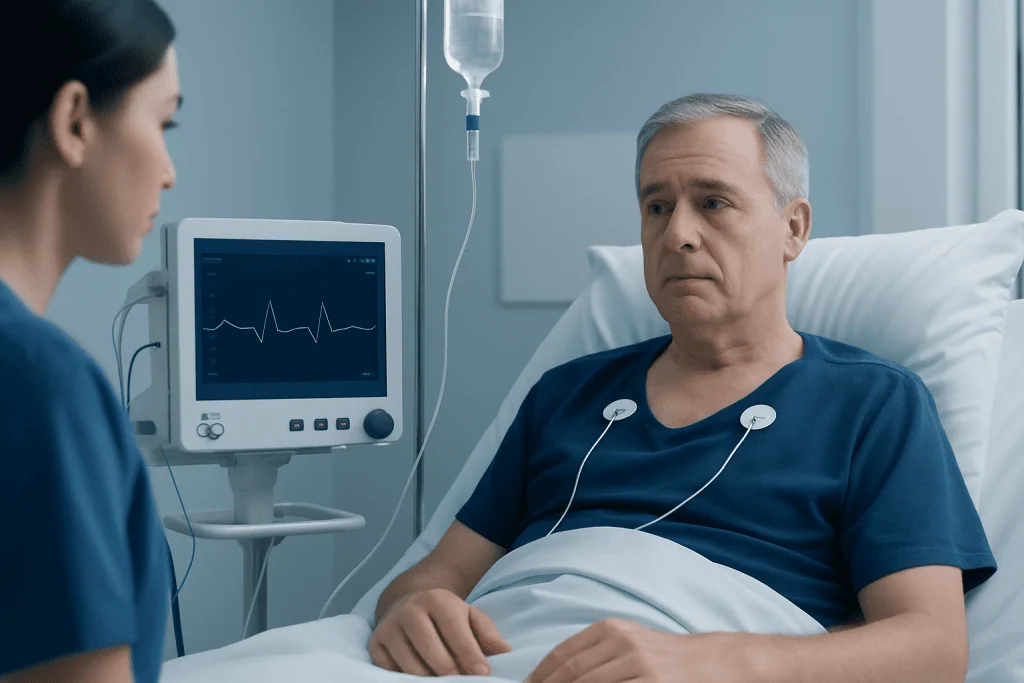
Yes. Second-degree type II heart block is generally considered a serious conduction abnormality because it can lead to a dangerously slow heart rate or progress to third-degree, or complete, heart block. The risk is not identical for every person, but the condition should not be managed by observation alone without specialist assessment.
Some people have no obvious symptoms and the block is found during a routine ECG, pre-operative assessment, or cardiac monitoring. Others notice light-headedness, reduced exercise tolerance, unusual tiredness, palpitations, breathlessness, near-fainting, or fainting. Symptoms can occur when the brain and other organs temporarily receive less blood because the heart rate is too slow.
Severity depends on the rhythm pattern, how often beats are dropped, the underlying heart condition, the person’s symptoms, and whether the block is persistent or intermittent. A cardiologist, often with input from a heart rhythm specialist called an electrophysiologist, can determine the urgency and appropriate treatment.
Causes and risk factors
Mobitz type II block commonly reflects disease or injury in the heart’s conduction tissue. It may occur with coronary artery disease, previous heart attack, cardiomyopathy, inflammation of the heart muscle, infiltrative conditions, or scarring related to aging or prior heart surgery. In some people, the cause is not immediately clear.
Less commonly, potentially reversible factors may contribute. These include certain medicines, electrolyte disturbances, reduced blood flow to the heart, infection or inflammation affecting the heart, and complications after cardiac procedures. A clinician will assess whether a reversible cause is present, but a temporary trigger does not always exclude underlying conduction-system disease.
Medicines that can slow AV conduction include beta blockers, verapamil, diltiazem, digoxin, and some antiarrhythmic medicines. These medicines can be important and appropriate for many cardiac conditions, so a person should never stop them independently. Instead, they should seek prompt advice from the clinician who prescribed them or from an urgent care service if concerning symptoms develop.
- Older age and known structural heart disease may increase risk.
- A history of heart attack, cardiac surgery, or cardiomyopathy can be relevant.
- New symptoms after starting or changing a heart medicine should be reported promptly.
Diagnosis and monitoring
An electrocardiogram, also called an ECG or EKG, is the main test used to identify type 2 2nd degree heart block. The ECG may show a regular PR interval followed by a P wave that is not followed by a QRS complex, meaning an atrial signal did not produce a ventricular heartbeat. Because the block may come and go, one ECG may not capture it.
Ambulatory monitoring, such as a Holter monitor or longer-term event monitor, can record the heart rhythm during normal daily activities. This can help connect symptoms such as dizziness or fainting with rhythm changes. In hospital, continuous cardiac monitoring may be used when the block is newly discovered, symptomatic, frequent, or associated with an unstable heart rate.
Clinicians may also order blood tests to check electrolytes, kidney function, thyroid status when relevant, and medication levels in selected cases. Echocardiography can assess heart structure and pumping function. Depending on the clinical context, further tests may evaluate coronary artery disease, inflammation, or other causes of conduction disease.
How is 2nd degree heart block type 2 treated?
Treatment focuses first on safety. A person with symptoms, a very slow heart rate, unstable blood pressure, chest pain, or signs of poor circulation may need urgent hospital monitoring and temporary measures to support the heart rhythm. Clinicians will also look for and correct reversible contributors, such as medication effects or significant electrolyte abnormalities.
For persistent Mobitz type II block that is not due to a clearly reversible cause, a permanent pacemaker is commonly recommended. A pacemaker is a small implanted device that monitors the rhythm and sends gentle electrical impulses when the heart beats too slowly or when signals fail to reach the ventricles. It does not cure the underlying conduction disease, but it can prevent slow-rate symptoms and reduce the risk associated with progression to more advanced block.
The decision is individualized and is based on ECG findings, symptoms, the likely site of block, associated heart disease, and the chance of progression. A cardiology team may also address related conditions, such as coronary artery disease or heart failure, when these are present. Acibadem International’s multidisciplinary cardiac specialists and JCI-accredited hospitals diagnose and treat heart rhythm conditions for international patients.
Pacemaker procedure: how it works, candidacy and recovery
A permanent pacemaker may be considered for people with confirmed Mobitz type II block, especially when the block is persistent, occurs with symptoms, is associated with a wide QRS complex, or is not explained by a reversible cause. The treating cardiologist will explain whether a single- or dual-chamber device is appropriate. Individual recommendations depend on the person’s rhythm pattern and overall heart health.
During implantation, the patient is usually awake with local anesthetic and sedation if needed. The clinician makes a small incision, commonly below the collarbone, and guides one or more leads through a vein into the heart using imaging. The leads are connected to a pulse generator placed under the skin, and the device is tested before the incision is closed. Some patients may receive a leadless pacemaker in selected circumstances.
Recovery often includes a short period of observation, wound-care instructions, and a device check before discharge or soon afterward. Mild soreness or bruising around the incision can occur initially. Patients are usually advised to avoid strenuous arm movements and heavy lifting on the implant side for a period specified by their care team, while continuing gentle activity as advised.
Benefits include protection against excessively slow rhythms and improvement in symptoms caused by bradycardia. Risks are uncommon but can include bleeding, infection, lead displacement, collapsed lung, blood vessel injury, or later device or lead problems. Regular pacemaker follow-up, often including remote monitoring, helps confirm that the device and leads are working as intended.
What to do for 2nd degree type 2 heart block?
A person who has been told they may have type 2 2nd degree heart block should arrange prompt assessment by a cardiologist, even if they feel well. They should bring a complete list of medicines, supplements, prior ECGs, and information about symptoms such as fainting, fatigue, chest discomfort, or shortness of breath. A clinician may recommend monitoring in hospital depending on the ECG findings and the person’s condition.
Until assessed, it is sensible to avoid driving, operating hazardous machinery, or undertaking activities where a sudden loss of consciousness could cause harm if dizziness or fainting has occurred. People should not try to manage the condition with home remedies, stimulants, or changes to prescribed heart medicines. They should also avoid taking another person’s medicine.
After treatment, self-care includes attending rhythm and pacemaker follow-up appointments, keeping the incision clean and dry as directed after implantation, and discussing return to work, exercise, and travel with the care team. A pacemaker identification card should be carried, and patients should tell healthcare professionals and security personnel that they have an implanted device.
Which drug should be avoided in patients with a second-degree heart block?
There is not one medication that should automatically be avoided by every person with second-degree heart block. However, medicines that slow electrical conduction through the AV node may worsen bradycardia or conduction block and require careful medical review. These can include beta blockers, non-dihydropyridine calcium channel blockers such as verapamil and diltiazem, digoxin, and certain antiarrhythmic medicines.
Whether a medicine is appropriate depends on the exact type of heart block, the person’s symptoms, the presence of a pacemaker, and the reason the medicine was prescribed. In Mobitz type II block without a pacemaker, clinicians are particularly cautious with AV-node-blocking medicines. Medication changes should be made only by a qualified prescriber.
People should seek advice promptly if they develop a slower pulse, new dizziness, fainting, unusual weakness, or worsening breathlessness after starting or changing a medicine. They should not abruptly stop beta blockers or other prescribed cardiac medicines unless a clinician tells them to do so, as sudden withdrawal may also be harmful.
When to seek medical care
Emergency medical care is needed for fainting, near-fainting with ongoing symptoms, chest pain, severe shortness of breath, confusion, a markedly slow heartbeat, or signs of poor circulation such as cold clammy skin. These symptoms may indicate that the heart is not pumping enough blood effectively and should be assessed without delay.
Prompt, non-emergency medical review is appropriate for recurrent dizziness, unexplained fatigue, palpitations, reduced exercise tolerance, or an irregular or slow pulse. Anyone whose ECG report suggests Mobitz type II or second-degree type II AV block should discuss it urgently with a cardiologist, even if symptoms are absent.
With timely evaluation and appropriate pacing when indicated, many people can return to daily activities with confidence. Ongoing follow-up is important because the treatment plan may need adjustment as heart health, medicines, and device needs change over time.
Frequently asked questions
Can type 2 2nd degree heart block go away on its own?
It may improve if it is caused by a reversible factor, such as a medicine effect, an electrolyte problem, or temporary heart inflammation. However, Mobitz type II block often reflects underlying disease in the conduction system and should be assessed promptly. A clinician should confirm whether the cause is reversible and whether pacing is needed.
Can a person have Mobitz type II heart block without symptoms?
Yes. Some people have no noticeable symptoms, particularly if dropped beats are infrequent. Even without symptoms, the rhythm pattern can be clinically important because it may progress to a more advanced heart block. Specialist assessment is recommended after the finding is identified.
Does Mobitz type II always require a pacemaker?
A permanent pacemaker is commonly recommended for acquired Mobitz type II block when there is no reversible cause. The decision depends on the ECG pattern, symptoms, associated heart disease, and clinical circumstances. A cardiologist or electrophysiologist can explain the expected benefits and alternatives for the individual.
What is the difference between Mobitz type I and Mobitz type II?
In Mobitz type I, the PR interval progressively lengthens before a beat is dropped. In Mobitz type II, the PR interval usually remains unchanged before an unexpected dropped beat. Mobitz type II is generally more concerning because it more often arises below the AV node and may progress to complete heart block.
Can exercise worsen second-degree type II heart block?
Exercise advice should be individualized until the rhythm has been evaluated. If a person has dizziness, fainting, chest discomfort, or marked breathlessness, they should stop activity and seek medical assessment. After treatment, a cardiology team can provide safe guidance on returning to physical activity.
Can a pacemaker cure type 2 2nd degree heart block?
A pacemaker does not reverse damaged conduction tissue, but it can reliably support the heart rate when signals are blocked or too slow. This can reduce symptoms caused by bradycardia and help protect against consequences of advanced heart block. Regular follow-up is needed to monitor the device and overall cardiac health.
References
- American Heart Association
- American College of Cardiology
- Heart Rhythm Society
- National Heart, Lung, and Blood Institute
- Mayo Clinic
This article is for general information only and is not a substitute for professional medical advice. Please consult a qualified doctor about your individual situation.
Explore treatments in Turkey — costs, top hospitals & a free quote
JCI-accredited · board-certified surgeons · reply within 24h
Add us as a Preferred Source to see more of our trusted health content across Google Search, AI Overviews and Discover.
Check your numbers in seconds
BMI, calories, due date, blood pressure and 30+ more clinical calculators — free, instant, doctor-reviewed ranges.