Ulcerative Colitis vs Crohn’s Disease: How the Two Conditions Differ
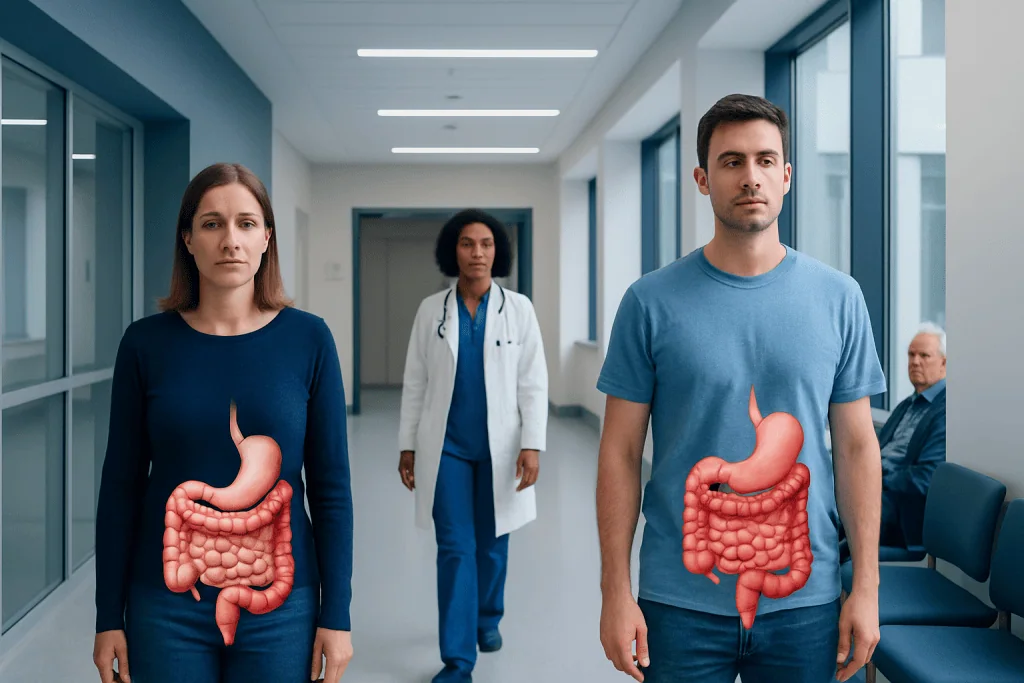
Ulcerative colitis affects the colon and rectum, while Crohn’s disease can affect any part of the digestive tract. Inflammation in ulcerative colitis is usually continuous and limited to the inner lining, while Crohn’s disease often causes patchy, deeper inflammation.
Key Takeaways
- Ulcerative colitis affects the colon and rectum, while Crohn’s disease can affect any part of the digestive tract.
- Inflammation in ulcerative colitis is usually continuous and limited to the inner lining, while Crohn’s disease often causes patchy, deeper inflammation.
- Both conditions may cause diarrhea, abdominal pain, fatigue, and weight loss, but bleeding is more common in ulcerative colitis.
- Diagnosis usually involves medical history, stool tests, blood tests, endoscopy, and imaging.
- Treatment may include diet support, anti-inflammatory medicines, immune-targeting therapies, and sometimes surgery.
- Long-term follow-up is important to control symptoms, prevent complications, and protect quality of life.
Ulcerative colitis and Crohn’s disease are the two main types of inflammatory bowel disease (IBD). They share some symptoms, but they affect different parts of the digestive tract and can behave differently over time.
Overview: what ulcerative colitis and Crohn’s disease are
Ulcerative colitis and Crohn’s disease are chronic inflammatory bowel diseases, often called IBD. In both conditions, the immune system becomes overactive in the digestive tract, leading to ongoing inflammation. Although they are related, they are not the same disease.
The main difference is where inflammation occurs. Ulcerative colitis affects the large intestine, including the rectum, and the inflammation usually spreads in a continuous pattern. Crohn’s disease can affect any part of the digestive tract, from the mouth to the anus, and often appears in separate inflamed areas with healthy tissue in between.
Another important difference is how deeply the bowel wall is affected. Ulcerative colitis usually involves the inner lining of the colon. Crohn’s disease often extends deeper through the bowel wall, which can lead to complications such as strictures, fistulas, and abscesses.
Both conditions often follow a pattern of flare-ups and remissions. Many people have periods when symptoms are active and other times when they improve. With proper diagnosis, treatment, and follow-up, many patients are able to manage IBD and maintain daily activities.
Symptoms: how they can look similar and different

Ulcerative colitis and Crohn’s disease can cause many of the same symptoms. Common symptoms include diarrhea, abdominal pain, urgency to use the toilet, fatigue, reduced appetite, and unintended weight loss. Because both conditions involve inflammation, people may also feel generally unwell during flare-ups.
Some symptoms are more typical of one condition than the other. Ulcerative colitis more often causes bloody diarrhea and a feeling of incomplete emptying after a bowel movement, especially when the rectum is inflamed. Crohn’s disease may be more likely to cause cramping abdominal pain, mouth sores, and symptoms related to narrowing or deeper inflammation in the bowel.
People with Crohn’s disease may also develop problems around the anus, such as pain, drainage, fissures, or fistulas. These are much less common in ulcerative colitis. In children and teenagers, either condition can affect growth and development if inflammation interferes with nutrition.
IBD can also affect parts of the body outside the digestive tract. Some people develop joint pain, eye inflammation, skin changes, or liver-related problems. These extraintestinal symptoms can occur in both ulcerative colitis and Crohn’s disease and are one reason why ongoing medical care is important.
Causes and risk factors
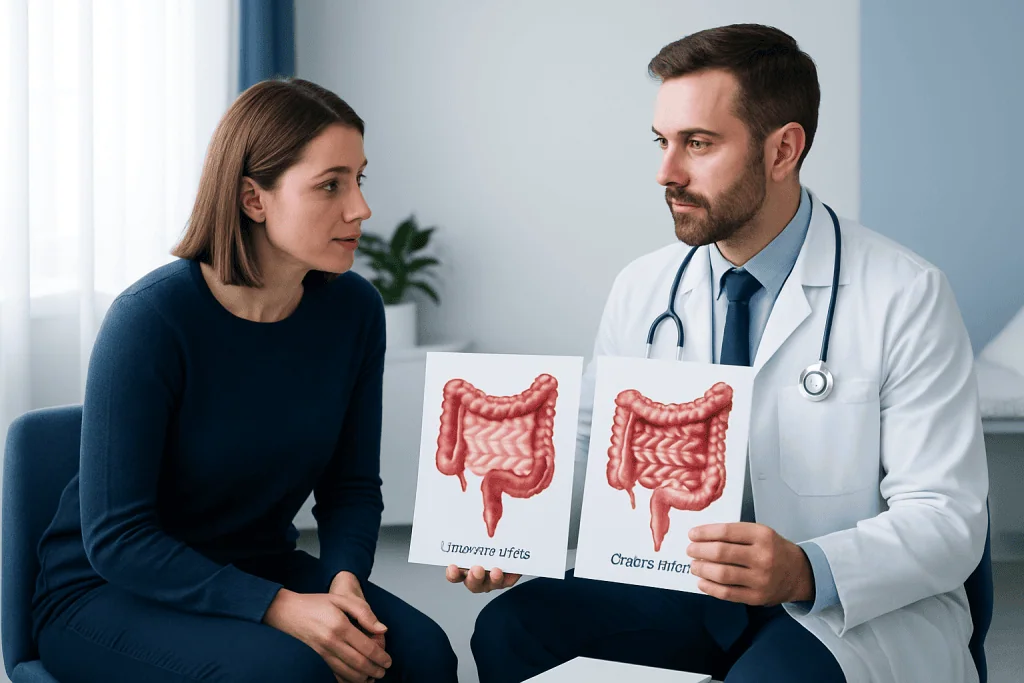
The exact cause of ulcerative colitis and Crohn’s disease is not fully understood. Experts believe they develop through a combination of immune system changes, genetic susceptibility, and environmental influences. The body appears to react abnormally to normal bacteria in the intestine, leading to ongoing inflammation.
Family history can increase risk. A person with a close relative who has IBD may be more likely to develop it, although many patients have no family history at all. Several genes are linked to IBD, but genes alone do not explain why the disease begins or why one person develops ulcerative colitis while another develops Crohn’s disease.
Environmental factors may also play a role. Smoking is strongly associated with Crohn’s disease and can make it harder to control. The relationship is more complex in ulcerative colitis, but smoking is not recommended because of its many overall health risks. Diet does not directly cause IBD, although certain foods may worsen symptoms during a flare.
Stress does not cause ulcerative colitis or Crohn’s disease, but it can make symptoms feel worse or make coping harder. Infections do not usually cause chronic IBD, though intestinal infections can sometimes trigger similar symptoms and need to be ruled out during diagnosis.
Diagnosis: tests used to tell them apart
Diagnosing inflammatory bowel disease begins with a careful medical history and physical examination. A doctor will ask about the pattern of symptoms, bowel habits, bleeding, weight changes, family history, and any symptoms outside the digestive system. This first step helps guide the choice of tests.
Blood tests can show signs of inflammation, anemia, or poor nutrition. Stool tests are often used to look for infection and to check markers of intestinal inflammation. These tests cannot confirm ulcerative colitis or Crohn’s disease by themselves, but they help identify whether more detailed evaluation is needed.
Endoscopy is one of the most important tools. Colonoscopy allows the doctor to examine the colon and terminal ileum, take tissue samples, and look for patterns that suggest one condition over the other. In ulcerative colitis, inflammation usually starts in the rectum and extends continuously. In Crohn’s disease, inflamed segments may be patchy, and deeper ulcers may be seen.
Imaging studies may be needed when Crohn’s disease is suspected in the small intestine or when complications are possible. CT enterography, MRI enterography, ultrasound, or other scans can help assess narrowing, abscesses, fistulas, and disease beyond the reach of a colonoscope. Sometimes the diagnosis is straightforward, but in some cases it may take time and repeat assessment to define the exact type of IBD.
Treatment options for both conditions
Treatment aims to reduce inflammation, relieve symptoms, promote healing of the bowel, and prevent complications. The best treatment plan depends on whether the patient has ulcerative colitis or Crohn’s disease, which part of the digestive tract is affected, how severe the inflammation is, and whether complications are present.
Medicines may include anti-inflammatory drugs, corticosteroids for short-term control of flares, immunomodulators, and biologic or targeted therapies that act on specific immune pathways. These treatments can be very effective, but they need monitoring and regular review with a specialist. Supportive care such as iron replacement, vitamin supplementation, and nutrition advice may also be important.
Surgery has different roles in the two conditions. In ulcerative colitis, removal of the colon can eliminate the disease from the large intestine, although it is usually considered when medicines are not enough or when complications develop. In Crohn’s disease, surgery may be needed to treat strictures, fistulas, abscesses, or damaged segments of bowel, but it does not cure the underlying tendency toward inflammation.
Depending on symptoms and findings, care may involve endoscopic evaluation such as colonoscopy, advanced imaging, and in selected cases procedures related to inflammatory bowel disease treatment or specialist gastroenterology care. Treatment works best when patients and clinicians make decisions together and adjust the plan over time.
Prevention, daily management, and self-care
There is no known way to fully prevent ulcerative colitis or Crohn’s disease, but daily habits can support better disease control and overall well-being. Taking medicines as prescribed, attending follow-up visits, and reporting changes early can help reduce the risk of severe flare-ups and complications.
Food choices do not cause IBD, yet nutrition still matters. During flares, some people find that smaller meals, softer foods, or avoiding individual trigger foods can reduce discomfort. Because nutritional needs vary widely, personalized advice from a doctor or dietitian is often more helpful than strict self-imposed diets.
Stress management, regular physical activity, adequate sleep, and avoiding smoking are also important. Smoking cessation is especially beneficial for Crohn’s disease. Vaccinations and preventive care should be reviewed with a healthcare team, particularly for people taking immune-suppressing medicines.
Some patients need long-term monitoring for complications such as anemia, bone thinning, and colon cancer risk, especially with longstanding ulcerative colitis or extensive colonic inflammation. Keeping a symptom diary and understanding early warning signs can help patients recognize when they may be entering a flare.
When to see a doctor
A doctor should evaluate persistent diarrhea, rectal bleeding, abdominal pain, unexplained weight loss, or ongoing fatigue. These symptoms do not always mean ulcerative colitis or Crohn’s disease, but they deserve medical attention, especially if they last more than a short time or keep returning.
Urgent care may be needed for severe abdominal pain, high fever, signs of dehydration, repeated vomiting, heavy bleeding, or a swollen abdomen. These symptoms can suggest a significant flare or a complication and should not be ignored.
People already diagnosed with IBD should contact their healthcare team if their usual symptoms suddenly worsen, if medicines stop working as expected, or if they develop new symptoms such as eye pain, joint swelling, or drainage around the anus. Early review can often prevent a small problem from becoming more serious.
For patients seeking coordinated care, Acibadem International’s multidisciplinary specialists in JCI-accredited hospitals diagnose and treat ulcerative colitis and Crohn’s disease for international patients. A specialist can help confirm the diagnosis, explain the differences clearly, and develop a treatment plan suited to the individual.
Frequently asked questions
Is ulcerative colitis worse than Crohn’s disease?
Neither condition is always worse than the other. Severity varies from person to person and depends on how much of the digestive tract is affected, how active the inflammation is, and whether complications develop. Some people have mild disease, while others need more intensive treatment.
Can ulcerative colitis turn into Crohn’s disease?
Ulcerative colitis does not usually change into Crohn’s disease. However, in some cases the diagnosis is unclear at first because the two conditions can overlap in symptoms and early test findings. Over time, further endoscopy, biopsies, and imaging may clarify which type of IBD is present.
Which condition is more likely to cause bleeding?
Bleeding in the stool is generally more common in ulcerative colitis because the disease affects the colon and rectum lining. Crohn’s disease can also cause bleeding, but it more often causes abdominal pain, patchy inflammation, and complications related to deeper bowel wall involvement.
Can both conditions affect areas outside the bowel?
Yes. Ulcerative colitis and Crohn’s disease can both be associated with joint pain, eye inflammation, skin problems, and certain liver or bile duct conditions. These symptoms should be discussed with a doctor because they may need treatment as part of overall IBD care.
Do all patients with ulcerative colitis or Crohn’s disease need surgery?
No. Many patients are managed successfully with medicines, monitoring, and lifestyle support. Surgery is usually considered when symptoms are difficult to control, complications develop, or a damaged section of bowel needs treatment.
Is there a special diet that cures IBD?
No diet has been proven to cure ulcerative colitis or Crohn’s disease. Still, tailored nutrition can help reduce discomfort, support healing, and prevent deficiencies. A doctor or dietitian can help identify foods that are easier to tolerate during a flare and build a sustainable eating plan.
This article is for general information only and is not a substitute for professional medical advice. Please consult a qualified doctor about your individual situation.
Ulcerative Colitis in Turkey — costs, top hospitals & a free quote
JCI-accredited · board-certified surgeons · reply within 24h
Add us as a Preferred Source to see more of our trusted health content across Google Search, AI Overviews and Discover.

More from the Health Library

Ulcerative Colitis: Bleeding, Urgency, and Treatment Options

Carcinoid Syndrome: Flushing, Diarrhea, and Neuroendocrine Tumor Testing

Aplastic Anemia: Low Blood Counts, Causes, and Treatment Options

Pulmonary Embolism: Warning Signs, Diagnosis, and Emergency Care

Gout: Sudden Joint Pain, Uric Acid, and Flare Prevention