Understanding Congenital Glaucoma: A Complete Patient Guide

Congenital glaucoma usually results from an underdeveloped eye drainage angle that raises pressure inside the eye. Common early signs include excessive tearing, sensitivity to light, eyelid squeezing, cloudy corneas, and unusually large-looking eyes.
Key Takeaways
- Congenital glaucoma usually results from an underdeveloped eye drainage angle that raises pressure inside the eye.
- Common early signs include excessive tearing, sensitivity to light, eyelid squeezing, cloudy corneas, and unusually large-looking eyes.
- Diagnosis requires a detailed pediatric eye examination, sometimes performed under anesthesia to obtain accurate measurements.
- Surgery is the main treatment, while eye drops may be used before surgery or as additional pressure control.
- Children need long-term follow-up because eye pressure, vision development, and treatment needs can change as they grow.
Congenital glaucoma is a rare form of glaucoma that develops at birth or during early childhood because the eye cannot drain fluid normally. It requires prompt assessment by a pediatric ophthalmologist, as early treatment can lower eye pressure and help preserve vision.
Overview: What Is Congenital Glaucoma?
Congenital glaucoma is a rare eye condition in which pressure inside the eye becomes too high during infancy or early childhood. The pressure rises because fluid made within the eye cannot drain away properly. Without treatment, high pressure can damage the optic nerve, the structure that carries visual information from the eye to the brain, and may affect a child’s developing vision.
The term primary congenital glaucoma is used when the main problem is an abnormal development of the eye’s drainage angle. This is the area where fluid normally leaves the eye. It may affect one or both eyes, although both eyes are involved in many children. The condition may be recognized at birth, but symptoms can also become noticeable over the first months or years of life.
Congenital glaucoma is different from the more common forms of glaucoma seen in adults. In babies and young children, the tissues of the eye are more flexible. As a result, raised pressure may enlarge the eye or stretch and cloud the clear front surface of the eye, called the cornea. Prompt specialist care is important, and many children can benefit from early pressure-lowering treatment and ongoing visual rehabilitation.
Signs and Symptoms Parents May Notice
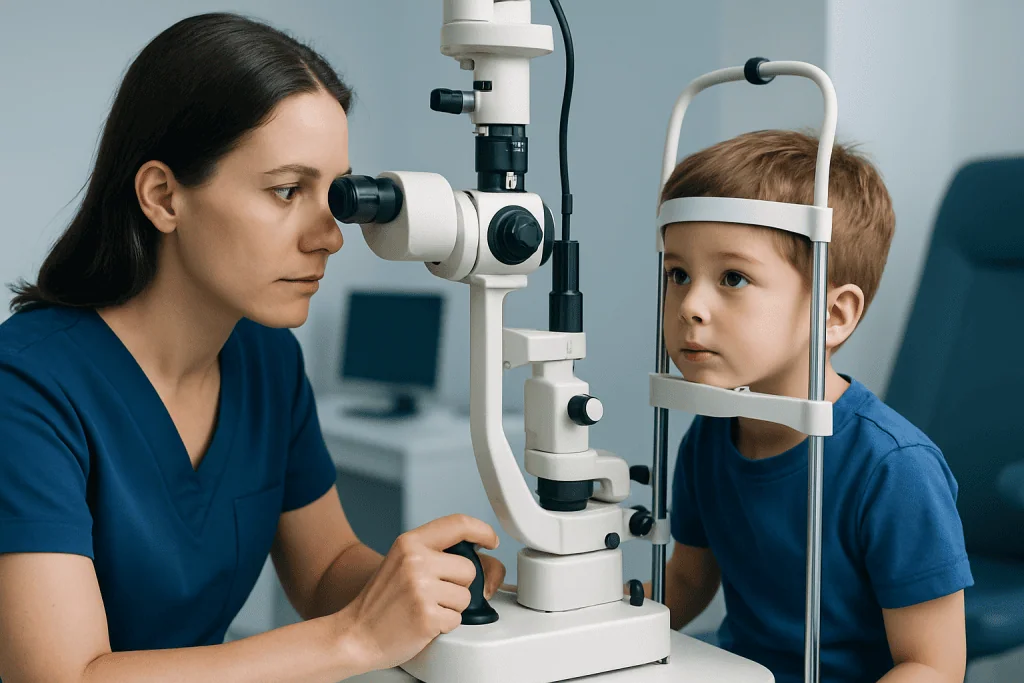
Symptoms can be subtle at first, and a baby or young child cannot describe changes in vision. A classic group of signs includes excessive tearing, discomfort in bright light, and frequent blinking or squeezing the eyelids shut. These symptoms may be mistaken for a blocked tear duct, eye irritation, or sensitivity to light, so persistent symptoms should be checked by an eye specialist.
Parents or caregivers may also notice that one or both eyes look larger than expected, especially if one eye appears bigger than the other. The cornea may look hazy, grayish, or blue-gray rather than clear. This cloudiness can occur when high pressure causes swelling in the cornea. Some children appear irritable, rub their eyes, or avoid light because the eye is uncomfortable.
Vision effects vary. In more advanced cases, a child may not fixate on faces or objects as expected, may have an eye that turns inward or outward, or may develop reduced vision in one eye. However, the absence of obvious symptoms does not fully rule out glaucoma. Children with a family history of childhood glaucoma or certain eye and genetic conditions may need eye assessments even when they appear comfortable.
- Persistent tearing without signs of infection
- Light sensitivity or frequent eyelid squeezing
- A cloudy or enlarged-looking eye
- Redness, rubbing, or unexplained irritability
- Concern about visual attention or eye alignment
Why Congenital Glaucoma Develops
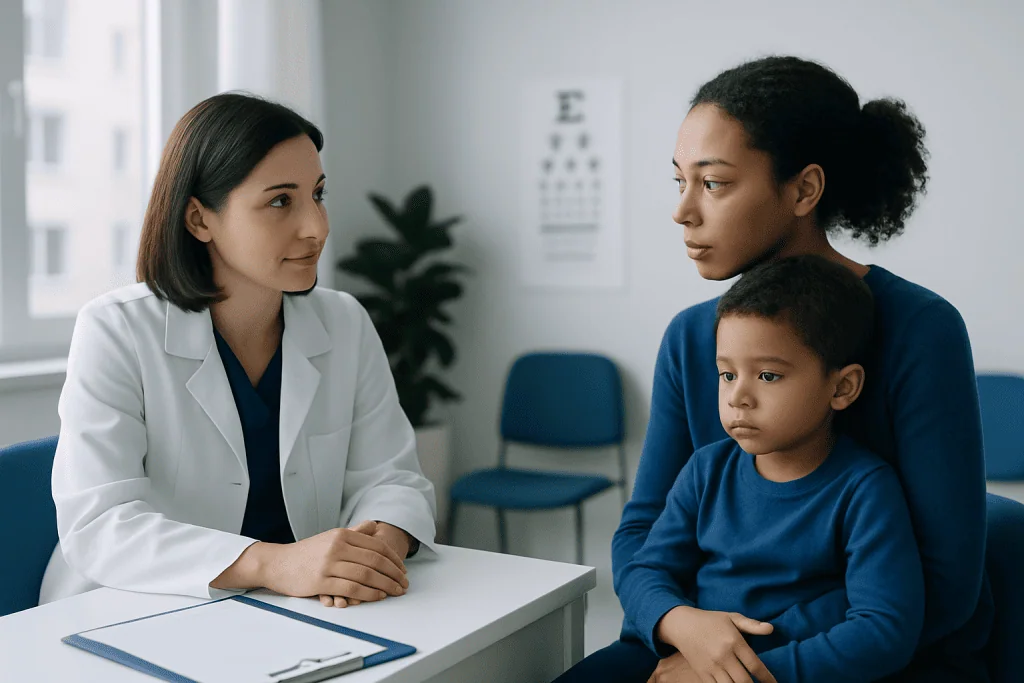
In primary congenital glaucoma, the drainage structures in the front of the eye do not develop normally before birth. The eye continues to produce fluid, known as aqueous humor, but the fluid does not leave the eye efficiently. Pressure can then build up. This is not caused by anything a parent did or did not do during pregnancy or early childcare.
Most cases occur without a known cause in the family. However, inherited genetic changes can play a role in some children, particularly when more than one family member has childhood glaucoma or when parents are related by blood. A pediatric ophthalmologist may suggest genetic counseling or testing in selected situations. This can help families understand recurrence risk, although a genetic cause is not identified in every case.
Glaucoma in a child may also occur as part of another eye condition or a broader medical syndrome. Examples include abnormalities of the front of the eye, certain skin or vascular birthmarks, previous eye surgery, eye injury, inflammation inside the eye, or lens-related conditions. This is often called secondary childhood glaucoma. Identifying the underlying cause helps guide treatment and follow-up.
How Doctors Diagnose It
Assessment should be carried out by an ophthalmologist experienced in treating children. The doctor will ask about symptoms, pregnancy and birth history, family eye conditions, and any medical diagnoses. They will examine the child’s eye appearance, corneal clarity, pupil responses, eye movements, and visual behavior in an age-appropriate way.
Important tests include measuring eye pressure, examining the cornea, measuring corneal diameter, and assessing the optic nerve at the back of the eye. The doctor may use specialized instruments to examine the drainage angle, a test known as gonioscopy. Imaging or photographs of the optic nerve may be used when practical, allowing changes to be compared over time.
Babies and very young children often cannot remain still long enough for a complete examination in clinic. For this reason, a comprehensive examination under anesthesia may be recommended. This is a routine approach in pediatric ophthalmology when detailed, reliable measurements are needed. It allows the team to confirm the diagnosis, assess severity, and plan treatment safely.
Doctors also consider other causes of tearing, light sensitivity, or a cloudy cornea. These may include infection, corneal disorders, injury, cataract, or a blocked tear duct. Accurate diagnosis matters because congenital glaucoma needs a different and often urgent treatment approach.
Treatment Options and Ongoing Eye Care
The main aim of congenital glaucoma treatment is to lower eye pressure and protect the optic nerve while supporting normal visual development. Surgery is usually the primary treatment because the underlying problem is impaired fluid drainage. The specific procedure depends on the child’s age, the anatomy of the drainage angle, corneal clarity, pressure level, and whether previous treatment has been performed.
Angle surgery may be used to improve fluid outflow. Procedures can include goniotomy, in which the surgeon opens part of the drainage angle from inside the eye, and trabeculotomy, in which drainage pathways are opened using a surgical approach from outside the eye. When angle procedures are not suitable or do not sufficiently lower pressure, other approaches may include trabeculectomy, glaucoma drainage devices, or carefully selected laser or cyclodestructive procedures.
Eye drops may be prescribed to lower eye pressure before surgery, while waiting for a procedure, or after surgery if additional pressure control is needed. In young children, drops are generally not considered a complete substitute for surgery in primary congenital glaucoma. Parents should use medication exactly as advised and inform the medical team about any concerns, including sleepiness, breathing changes, poor feeding, or skin irritation.
Treatment also includes protecting visual development. A child may need glasses for short-sightedness, astigmatism, or other focusing problems. If one eye sees less well than the other, patching therapy may be recommended to treat amblyopia, often called lazy eye. Regular care from a pediatric ophthalmologist is essential, even after successful surgery, because glaucoma can require further treatment over time.
Daily Care, Follow-Up, and Family Support
There is no home remedy that can safely lower eye pressure in congenital glaucoma. Parents can make an important difference by attending follow-up appointments, giving prescribed medicines consistently, and reporting changes in the child’s eyes or behavior. Keeping a simple record of medications, surgery dates, and questions for appointments can be useful, especially when more than one specialist is involved.
After eye surgery, the care team will provide individualized instructions about eye shields, bathing, activity, drops, and follow-up timing. It is important not to rub or press on the operated eye. Parents should avoid stopping drops or changing the schedule without speaking to the ophthalmology team, even if the eye appears clearer or the child seems more comfortable.
Children with congenital glaucoma may need support for vision, development, and learning. Early vision assessment and appropriate glasses can help a child make the best use of their sight. If vision is significantly reduced, early intervention services and school-based support may be helpful. Families may also find genetic counseling valuable when the condition is suspected to be inherited.
For international patients, Acibadem International’s multidisciplinary specialists and JCI-accredited hospitals can assess and treat childhood eye conditions, including congenital glaucoma, with coordinated pediatric ophthalmology follow-up.
When to Seek Medical Care
A baby or young child should be assessed promptly by an eye doctor if there is persistent tearing, strong sensitivity to light, repeated eyelid squeezing, a cloudy-looking cornea, or an eye that appears unusually large. These symptoms do not always mean congenital glaucoma, but they need timely evaluation because some causes can affect vision if left untreated.
Urgent medical assessment is appropriate if a child develops sudden eye redness with pain or severe distress, marked corneal clouding, swelling around the eye, an apparent injury, or a sudden change in visual behavior. Fever, discharge, or a red eye can have other causes, but parents should not assume that symptoms are due only to an infection or blocked tear duct when light sensitivity or corneal clouding is present.
Children already diagnosed with glaucoma should attend all planned pressure checks and eye examinations. Families should contact their treating team sooner if they notice renewed tearing, discomfort in light, increased eye size, medication side effects, or difficulty giving prescribed drops. Early review can help the team identify changes in pressure or treatment needs before they have a lasting effect on vision.
Frequently asked questions
Is congenital glaucoma curable?
Congenital glaucoma can often be controlled, but it usually requires long-term monitoring rather than a one-time cure. Surgery can improve fluid drainage and lower eye pressure, while medicines and additional procedures may sometimes be needed. The outlook is generally better when the condition is diagnosed and treated early.
Can congenital glaucoma cause blindness?
If high eye pressure is not treated, it can damage the optic nerve and lead to permanent vision loss. Early specialist treatment can greatly reduce this risk and support normal visual development. The degree of vision affected depends on how early the condition is detected, how severe it is, and how well pressure responds to treatment.
At what age is congenital glaucoma diagnosed?
It is often diagnosed during the first year of life, although it can be identified at birth or later in childhood. Some children have clear symptoms early, while others have less obvious signs. An ophthalmologist can evaluate a child of any age when glaucoma is suspected.
Is congenital glaucoma inherited?
Some cases are linked to inherited genetic changes, but many occur without a known family history. A family history of childhood glaucoma can increase the value of early eye examinations and genetic counseling. A specialist can advise whether genetic testing may be useful for the child and family.
Will my child need more than one glaucoma surgery?
Some children achieve good pressure control after one procedure, while others need further surgery or additional treatments as the eye grows. This does not necessarily mean the first treatment failed; childhood glaucoma can change over time. Regular examinations help the ophthalmologist decide whether further treatment is needed.
Can eye drops alone treat congenital glaucoma?
Eye drops can help reduce pressure temporarily or provide additional control, but surgery is usually the main treatment for primary congenital glaucoma. This is because the drainage angle itself is not formed normally. The child’s ophthalmologist will decide which drops, if any, are appropriate and how they should be used.
References
- American Academy of Ophthalmology
- American Association for Pediatric Ophthalmology and Strabismus
- National Eye Institute
- World Glaucoma Association
This article is for general information only and is not a substitute for professional medical advice. Please consult a qualified doctor about your individual situation.
Glaucoma in Turkey — costs, top hospitals & a free quote
JCI-accredited · board-certified surgeons · reply within 24h
Add us as a Preferred Source to see more of our trusted health content across Google Search, AI Overviews and Discover.

Ophthalmology
Comprehensive eye care from laser vision correction to retina, cornea and cataract surgery.
74 specialists in this unitMore from the Health Library



Related Specialists

Dr. Nargız Ibrahımlı
Aesthetic Plastic & Reconstructive Surgery
Prof. Dr. Turgay Çelikel
Internal Medicine
Dr. Metin Bozkuş
Emergency Service
Prof. Dr. Mehmet Serdar Binnet
Orthopedic Surgery & Traumatology