Understanding Lesion Skin Disease: A Complete Patient Guide

A skin lesion is any area of skin that looks or feels different from the surrounding skin. Lesions may be primary, meaning they appear first, or secondary, meaning they develop from irritation, injury, or healing.
Key Takeaways
- A skin lesion is any area of skin that looks or feels different from the surrounding skin.
- Lesions may be primary, meaning they appear first, or secondary, meaning they develop from irritation, injury, or healing.
- Common causes include eczema, acne, infections, allergic reactions, sun damage, and skin cancer.
- Warning signs include rapid change, bleeding, persistent crusting, pain, or a sore that does not heal.
- Diagnosis may involve a skin examination, dermoscopy, swab, scraping, or biopsy.
- Treatment depends on the cause and can range from skin care and medicines to minor procedures or surgery.
Lesion skin disease is a broad term for any abnormal area of skin, including bumps, patches, sores, or color changes. Some skin lesions are harmless and temporary, while others need medical evaluation to identify inflammation, infection, precancerous change, or skin cancer.
What lesion skin disease means
Lesion skin disease is not one single diagnosis. It is a general way of describing a visible or palpable skin change such as a spot, bump, patch, blister, ulcer, scale, or mole that differs from nearby skin. In practice, the term covers many conditions, from mild rashes and acne to infections, chronic inflammatory disorders, and cancerous or precancerous growths.
Doctors often classify lesions by how they look and how they develop. A lesion may be flat or raised, red or brown, dry or fluid-filled, itchy or painless. It may appear suddenly, evolve slowly over months, or come and go. These details help narrow down the cause.
A helpful distinction is between primary and secondary lesions. Primary lesions are the first visible change, such as a papule, plaque, vesicle, or nodule. Secondary lesions develop afterward because of scratching, rubbing, infection, breakdown, or healing, such as crusts, scales, ulcers, scars, or fissures.
Many skin lesions are benign. Even so, a new lesion or one that changes in size, color, shape, or sensation should be checked. This is especially important if it persists, bleeds, forms a scab repeatedly, or does not heal as expected.
How skin lesions can look and feel
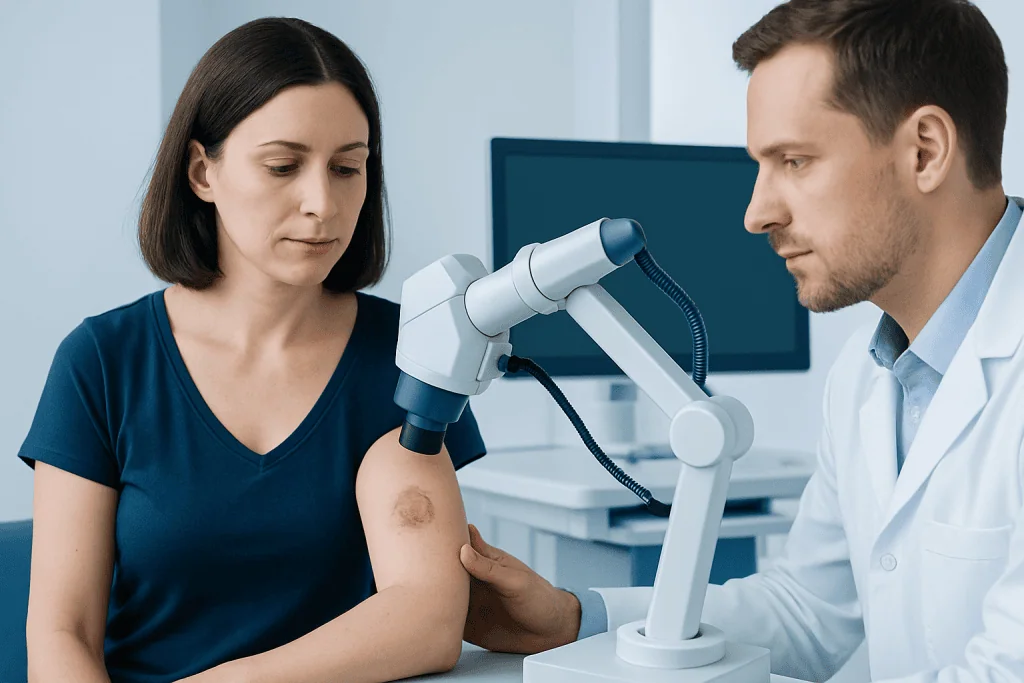
Skin lesions vary widely, which is why self-diagnosis can be difficult. Some are flat patches of altered color, while others are raised bumps, thickened plaques, pus-filled spots, or open sores. Certain lesions have smooth borders and even color, while others are irregular, mixed in color, or rough to the touch.
Associated symptoms may offer clues. Itching often points to eczema, allergic reactions, insect bites, or some infections. Pain or tenderness may occur with inflamed cysts, bacterial infections, shingles, or ulcers. Burning, numbness, crusting, scaling, or oozing can also be part of the picture.
Location matters too. Lesions on sun-exposed areas such as the face, scalp, ears, forearms, or backs of the hands raise concern for sun damage and skin cancer. Lesions in body folds may be linked to friction, moisture, yeast, or inflammatory conditions. Spots on the scalp, nails, palms, soles, or genital area often need a careful professional assessment because the causes can be different from lesions elsewhere.
- Flat spots or patches may reflect pigmentation changes, inflammation, or sun damage.
- Raised bumps can be acne, warts, cysts, moles, or tumors.
- Blisters may suggest irritation, eczema, viral infection, or autoimmune disease.
- Open sores can result from trauma, infection, poor circulation, or cancer.
Common causes and risk factors
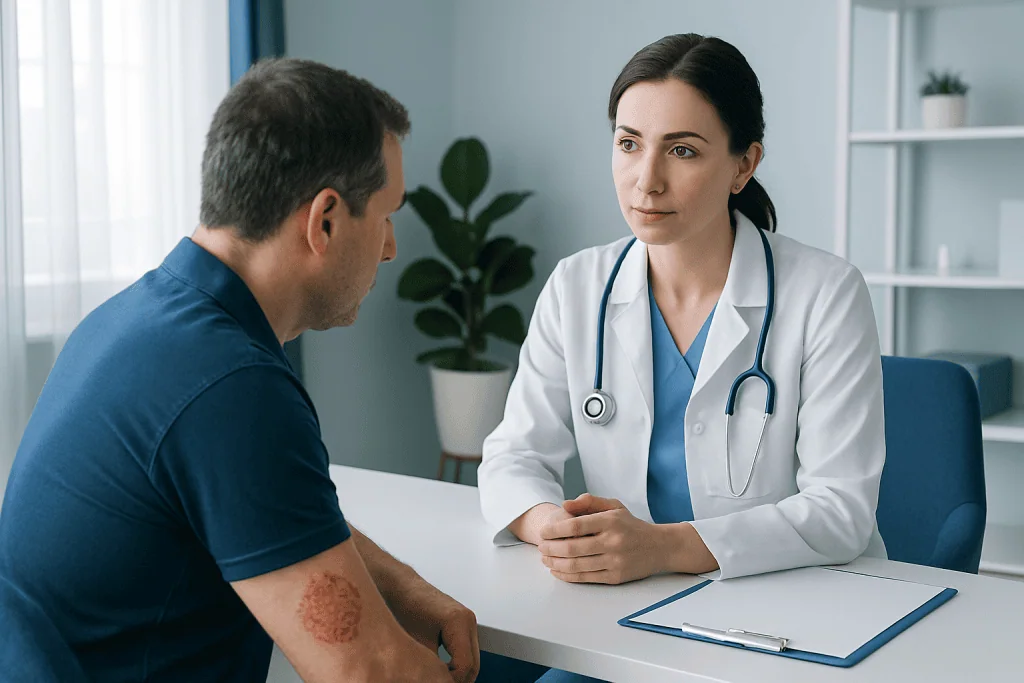
The causes of lesion skin disease are broad, but they often fall into a few main groups: inflammatory conditions, infections, benign growths, sun-related damage, trauma, autoimmune disease, and cancer. Inflammatory conditions include eczema, psoriasis, acne, rosacea, and contact dermatitis. Infections may be bacterial, viral, fungal, or parasitic.
Benign lesions are very common and include moles, skin tags, seborrheic keratoses, lipomas, and cysts. These are usually not dangerous, but some can become irritated or resemble more serious conditions. Sun exposure is another major factor, particularly for rough scaly spots called actinic keratoses and for certain skin cancers. A persistent nonhealing lesion may need evaluation for skin cancer.
Risk factors depend on the underlying cause. Sensitive skin, allergies, dry climate, cosmetics, and detergents can trigger inflammatory rashes. Sharing towels, close skin contact, sweating, or damp footwear may increase the chance of infection. Fair skin, a history of sunburns, tanning bed use, older age, and a family history of skin cancer raise the likelihood of sun-related lesions.
Some systemic illnesses and medicines also affect the skin. Diabetes, circulation problems, autoimmune disease, and immune suppression can make lesions more likely or harder to heal. Because skin findings sometimes reflect internal disease, persistent or unusual lesions should be reviewed in a medical setting rather than treated repeatedly without a diagnosis.
When a lesion may need medical attention
Many minor lesions improve with time or simple care, but certain features deserve prompt medical review. A lesion that grows quickly, bleeds easily, changes color, develops an irregular border, or repeatedly crusts over should not be ignored. A sore that does not heal within several weeks also needs assessment.
Medical care is also important if a lesion is very painful, signs of infection appear, or a rash spreads rapidly. Redness that expands, pus, warmth, fever, or swelling can point to bacterial infection that may need prescription treatment. In children, older adults, and people with weakened immune systems, earlier evaluation is especially sensible.
A doctor should also assess lesions that interfere with daily life, such as severe itching, sleep disturbance, visible facial lesions causing distress, or lesions near the eyes, mouth, nails, or genitals. Early evaluation can prevent complications and helps ensure the right treatment starts sooner.
This short rule is useful: seek care for lesions that are new and concerning, changing, persistent, infected, or unexplained. If there is any doubt about whether a lesion is harmless, a dermatologist or qualified physician can examine it safely and accurately.
How doctors diagnose lesion skin disease
Diagnosis begins with a careful history and skin examination. The doctor usually asks when the lesion started, whether it itches or hurts, what treatments have been tried, and whether there are triggers such as new cosmetics, medications, travel, sun exposure, or contact with someone who has a rash. Personal and family history of eczema, psoriasis, allergies, or skin cancer also matters.
The physical examination looks at the lesion’s size, shape, color, border, surface, and distribution on the body. A dermatoscope, a handheld magnifying tool, can help assess pigmented and nonpigmented lesions in more detail. Sometimes the appearance is enough to make a diagnosis, especially for common benign growths or well-recognized rashes.
When the cause is less clear, further tests may be needed. These can include a skin swab, fungal scraping, patch testing for allergy, blood tests in selected cases, or a skin biopsy. A biopsy involves taking a small sample for laboratory examination and is often the most reliable way to distinguish benign lesions from inflammatory disease or cancer.
Patients may hear terms such as dermatitis, nevus, keratosis, ulcer, or plaque during the evaluation. These describe the lesion’s type rather than automatically meaning something dangerous. Understanding the exact diagnosis is important because treatment for one lesion, such as eczema, may worsen another, such as a fungal infection.
Treatment options for different kinds of skin lesions
Treatment depends entirely on the cause. Inflammatory lesions may improve with moisturizers, trigger avoidance, medicated creams, or short-term anti-inflammatory treatments. Acne-related lesions can respond to topical therapies, while bacterial, viral, or fungal lesions may require specific medicines aimed at the organism causing the problem.
Benign lesions that are not causing symptoms may simply be monitored. If they become irritated, catch on clothing, become infected, or cause cosmetic concern, a doctor may recommend removal. Common office-based approaches include cryotherapy, curettage, drainage, laser therapy, or skin biopsy when a sample is needed before deciding on the best next step.
Suspicious, precancerous, or confirmed cancerous lesions usually need a more definitive procedure. Depending on the diagnosis, treatment may involve surgical removal, topical therapy, photodynamic therapy, or other specialist-led care. If cancer is diagnosed, the care plan may include skin cancer treatment tailored to the lesion type, depth, and location.
Some lesions are related to chronic skin disease and may come and go over time. In that situation, treatment focuses not only on clearing the current lesion but also on long-term skin care and flare prevention. If a lesion is part of an inflammatory condition such as psoriasis, follow-up can help adjust treatment as the skin changes.
Self-care, skin protection, and prevention
Good skin care lowers the chance of irritation and supports healing. Gentle cleansing, regular moisturizing, and avoiding harsh scrubs or fragranced products can help protect the skin barrier. Scratching should be minimized because it can turn a simple rash into a secondary lesion with bleeding, infection, or scarring.
Sun protection is one of the most important preventive steps. Broad-spectrum sunscreen, shade, protective clothing, and avoiding peak ultraviolet exposure can reduce the risk of actinic damage and skin cancer. People with many moles or a history of sunburn should be especially consistent with sun-safe habits.
Preventive care also includes practical steps based on the likely cause. Keeping skin folds dry, not sharing personal items, changing out of sweaty clothes, and wearing breathable footwear may help prevent infections. Patch testing or trigger avoidance can help those with recurrent allergic or irritant dermatitis. For suspicious or changing growths, early evaluation is safer than repeated home remedies.
Patients with recurring or complex lesions may benefit from specialist care. Acibadem International’s multidisciplinary specialists in JCI-accredited hospitals diagnose and treat skin conditions for international patients, including evaluation with dermatology consultation and procedures such as dermatology consultation when appropriate.
Frequently asked questions
Is lesion skin disease the same as skin cancer?
No. Lesion skin disease is a broad term for any abnormal skin area, and most lesions are not cancer. However, some lesions can be precancerous or cancerous, so a changing or nonhealing lesion should be examined by a doctor.
What is the difference between a rash and a skin lesion?
A rash usually describes a widespread skin eruption, often with redness or itching. A skin lesion can be a single spot or many spots and includes a broader range of changes such as moles, cysts, ulcers, blisters, and scaly patches.
Can a harmless-looking lesion still need evaluation?
Yes. Some lesions that appear minor can persist because of infection, allergy, autoimmune disease, or early skin cancer. Medical review is wise if the lesion is new, unexplained, recurrent, or not healing.
Will every skin lesion need a biopsy?
No. Many lesions can be diagnosed by history and examination alone. A biopsy is usually reserved for lesions that are suspicious, unclear in appearance, unusually persistent, or important to confirm before treatment.
Can I treat a skin lesion at home?
Simple measures such as gentle cleansing, moisturizing, and avoiding picking may help minor irritation. Home treatment is not appropriate for rapidly changing, bleeding, painful, infected, or persistent lesions, which should be assessed by a qualified clinician.
Are skin lesions contagious?
Some are, and some are not. Lesions caused by fungal infections, bacterial infections, viral infections, or parasites may spread through contact, while inflammatory conditions like eczema or psoriasis are not contagious.
References
- American Academy of Dermatology
- National Health Service
- MedlinePlus
- Mayo Clinic
- World Health Organization
This article is for general information only and is not a substitute for professional medical advice. Please consult a qualified doctor about your individual situation.
Persistent digestive symptoms? Get evaluated in Turkey
JCI-accredited · board-certified surgeons · reply within 24h
Add us as a Preferred Source to see more of our trusted health content across Google Search, AI Overviews and Discover.