Understanding Physical Therapy Acl Injury: A Complete Patient Guide
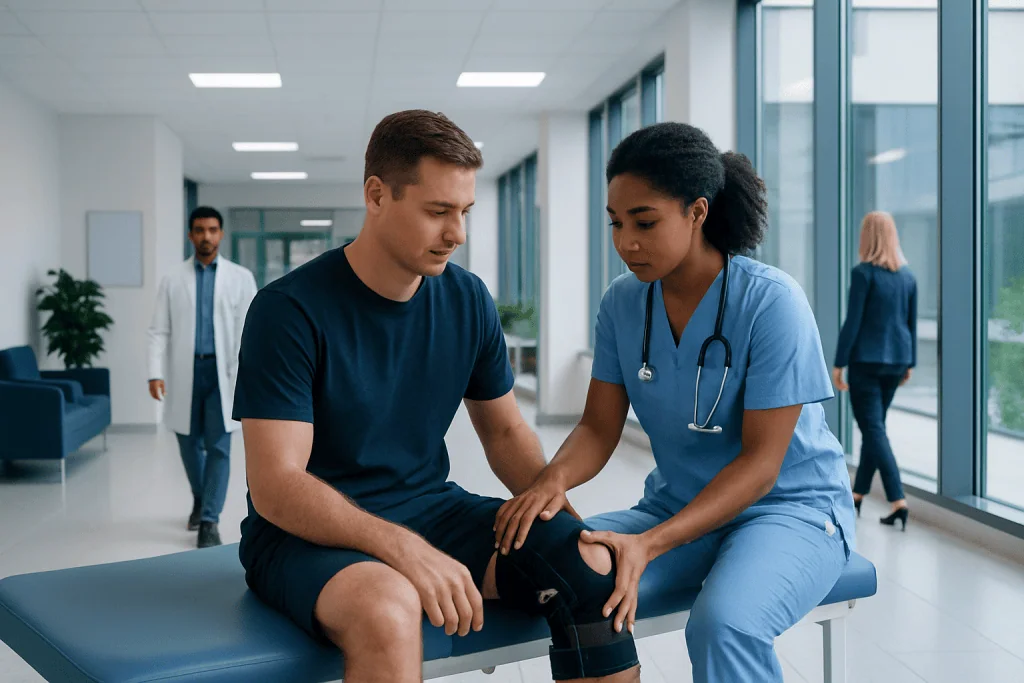
Physical therapy is a central part of recovery after an ACL injury, with or without surgery. Early goals focus on reducing swelling, restoring knee extension, and rebuilding safe movement patterns.
Key Takeaways
- Physical therapy is a central part of recovery after an ACL injury, with or without surgery.
- Early goals focus on reducing swelling, restoring knee extension, and rebuilding safe movement patterns.
- Rehabilitation progresses step by step from mobility to strength, balance, running, and sport-specific activity.
- Recovery timelines vary based on injury severity, associated damage, surgery, and individual goals.
- Returning to sports too early can increase the risk of re-injury, so testing and medical guidance are important.
Physical therapy for an ACL injury is a structured rehabilitation process that helps the knee regain motion, strength, balance, and confidence after a tear, whether treatment is surgical or nonsurgical. A well-planned program usually progresses in stages and is adjusted to pain, swelling, healing, and a person’s activity goals.
Overview: what physical therapy for an ACL injury involves
Physical therapy for an ACL injury is the main way clinicians help patients recover knee function after damage to the anterior cruciate ligament. The program is designed to reduce pain and swelling, restore range of motion, rebuild muscle strength, improve balance, and support a safe return to daily activities or sports. It may be used as the main treatment for some partial tears and lower-demand patients, or as an essential part of recovery before and after surgery.
The ACL helps control forward movement and rotation of the shin bone relative to the thigh bone. When it is torn, the knee can feel unstable, especially during pivoting, cutting, or sudden stopping. Physical therapy does not simply mean doing a few exercises. It is a progressive rehabilitation plan guided by examination findings, healing stage, and functional milestones.
Many patients are surprised to learn that rehabilitation often begins soon after injury, even before a final decision about surgery. This early phase can improve motion, calm inflammation, and prepare the knee for better outcomes later. For people who need an operation, therapy is also a major part of recovery after ACL surgery.
Symptoms and functional problems after an ACL injury
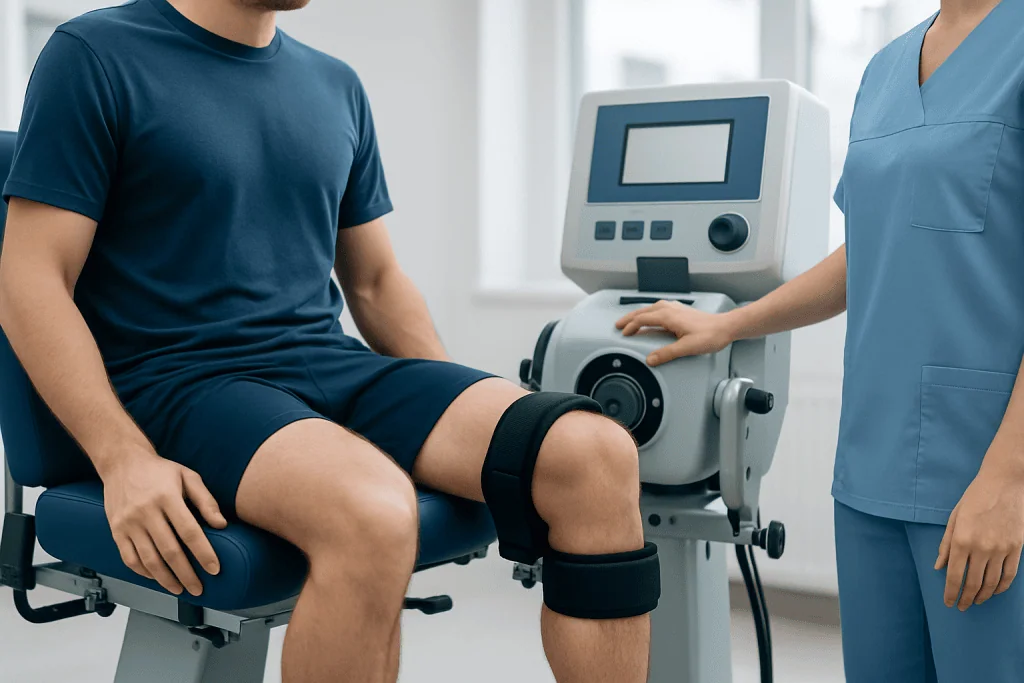
An ACL injury often happens during sports or exercise that involve sudden direction changes, awkward landings, or direct contact. Many people report a popping sensation, immediate swelling, and trouble continuing the activity. In the first days, the knee may feel painful, stiff, weak, or difficult to fully straighten.
Beyond pain, the main problem is often instability. Some patients describe the knee as giving way during turning, stepping off a curb, or walking on uneven ground. Others notice reduced confidence in the leg, difficulty going downstairs, or fatigue around the knee and thigh muscles.
Not every ACL injury feels the same. A partial tear may cause less instability than a complete tear, and symptoms can also depend on whether there is associated damage such as a meniscus injury, cartilage injury, or bone bruise. Because related injuries are common, an ACL tear is often assessed alongside conditions such as a meniscus tear.
- Swelling within hours of injury
- Pain with weight-bearing or movement
- Loss of full knee motion, especially extension
- Buckling or giving-way episodes
- Weakness in the quadriceps and hamstrings
- Difficulty returning to sports or active work
How rehabilitation plans are tailored
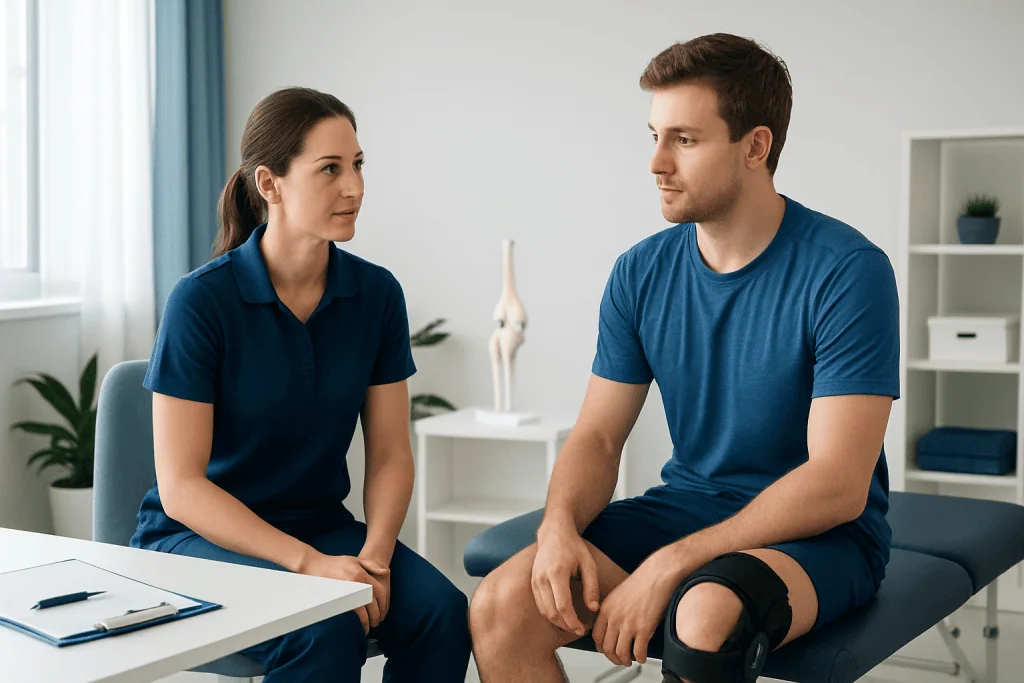
Physical therapy for an ACL injury is not one-size-fits-all. A therapist and orthopedic specialist usually consider the person’s age, activity level, work demands, sporting goals, degree of instability, associated injuries, and whether surgery is planned. A young athlete who wants to return to pivoting sports may follow a different path from an older adult whose main goal is comfortable walking and daily function.
One important distinction is whether treatment is nonsurgical or surgical. Some people can do very well with strengthening, neuromuscular training, and activity modification alone. Others have repeated instability or high-demand athletic goals and may be advised to consider knee ligament surgery. In both pathways, therapy remains central to restoring function.
Therapists also tailor the program to the stage of healing. In the early phase, aggressive activity can worsen swelling and delay progress. Later, moving too cautiously can lead to persistent stiffness, weakness, or altered movement patterns. The aim is steady progress that respects tissue healing while challenging the knee enough to regain normal performance.
Stages of physical therapy after an ACL injury
Rehabilitation usually moves through stages rather than fixed calendar dates. Early treatment focuses on controlling swelling, reducing pain, restoring full knee extension, improving flexion, and normalizing walking. Patients may use ice, compression, elevation, crutches when needed, and gentle exercises to activate the quadriceps and maintain hip and core strength.
As symptoms improve, therapy shifts toward progressive strengthening and neuromuscular training. This often includes closed-chain strengthening, hamstring and gluteal work, balance tasks, step control, and movement retraining. The goal is to restore stability and reduce compensation patterns that can place extra stress on the knee.
Later stages may introduce jogging, hopping, landing drills, agility work, and sport-specific activities when strength, control, and symptoms allow. Return-to-sport decisions are usually based on function and testing, not just time since injury or surgery. In some cases, clinicians may also assess for associated problems such as ACL injury severity or cartilage damage before progression.
- Phase 1: swelling control, motion, walking, muscle activation
- Phase 2: strength, endurance, single-leg control
- Phase 3: dynamic balance, impact preparation, movement quality
- Phase 4: running, cutting, jumping, sport-specific training
- Phase 5: return-to-sport or return-to-work testing and maintenance
Diagnosis, monitoring, and signs of progress
Diagnosis usually starts with a medical history and physical examination. A doctor may ask how the injury happened, whether swelling appeared quickly, and whether the knee has felt unstable since then. Specific clinical tests help evaluate ligament laxity, while imaging such as MRI may be used to confirm the tear and look for meniscus, cartilage, or other ligament injuries.
For rehabilitation, progress is monitored through more than symptom relief alone. Clinicians assess knee extension and flexion, swelling, walking pattern, single-leg control, muscle strength, and the ability to perform daily or sports-related tasks safely. This is important because a knee may feel better before it has fully recovered the strength and control needed for higher-level activity.
Patients often ask how long recovery takes. There is no single timeline. Mild injuries can improve sooner, while complete tears, combined injuries, or postoperative recovery typically require many months of structured rehabilitation. A therapist may adjust the program if swelling returns, motion stalls, or strength differences persist between the injured and uninjured sides.
Treatment options: rehabilitation with or without surgery
Not every ACL tear requires an operation. Some patients can manage well with a nonsurgical plan focused on strengthening, balance training, and modifying activities that trigger instability. This approach may be suitable for people with lower pivoting demands, partial tears, or those who can function well without giving-way episodes. Bracing may be considered in selected cases, but it does not replace rehabilitation.
For patients with repeated instability, associated injuries, or goals involving cutting and pivoting sports, surgery may be recommended. Even then, physical therapy remains a key part of the process. Prehabilitation before surgery can improve motion and muscle activation, while postoperative therapy helps protect the graft, restore strength, and guide the gradual return to activity. Some patients also need care for related problems such as meniscus surgery when injuries occur together.
Medication for pain or inflammation may be used short term under medical guidance, but medicines alone cannot restore stability or performance. The foundation of treatment is a structured plan that combines medical assessment, targeted exercise, gradual progression, and reassessment over time. At the appropriate stage, rehabilitation may also include supervised return-to-run and return-to-sport testing.
Prevention, self-care, and safe return to activity
Although not every ACL injury can be prevented, training can reduce risk. Programs that improve landing mechanics, hip and core strength, balance, and lower-limb control are especially useful for athletes in jumping and pivoting sports. Warm-up routines that include neuromuscular exercises may help the body respond better to quick changes in direction.
During recovery, self-care supports the work done in therapy. Patients are often advised to follow their home exercise plan, manage swelling after activity, avoid sudden progression, and wear appropriate footwear for training. Consistency matters more than intensity. Missing the basics of motion, strength, and control can slow recovery even if pain is improving.
Returning to activity should be based on readiness, not pressure from a calendar, team, or event. A safe return usually depends on adequate strength, good movement quality, stable single-leg control, and confidence in the knee. Near the end of care, patients who need specialist evaluation may be assessed by multidisciplinary teams; Acibadem International’s JCI-accredited hospitals provide diagnosis and treatment for international patients with complex knee injuries.
When to seek medical care
Medical assessment is important after a suspected ACL injury, especially if there is rapid swelling, difficulty bearing weight, a popping sensation at the time of injury, or repeated giving-way episodes. Early evaluation can help identify associated injuries and guide whether rehabilitation alone or surgical consultation is more appropriate.
Patients already in therapy should contact a clinician if pain or swelling suddenly worsens, the knee becomes locked, fever develops, the calf becomes painful or swollen, or progress stalls despite following the program. These symptoms do not always signal a serious problem, but they should be reviewed promptly.
It is also wise to seek follow-up care before returning to sport after a significant ACL injury. A knee that feels “almost normal” may still lack the strength, symmetry, or movement control needed for cutting and jumping. A doctor or therapist can help decide when progression is safe.
Frequently asked questions
Can an ACL injury heal with physical therapy alone?
Some ACL injuries can be managed successfully without surgery, especially in people with lower activity demands or partial tears. Physical therapy can improve strength, balance, and knee control, but it does not recreate the original ligament. The best approach depends on instability symptoms, lifestyle, and associated knee damage.
How soon should physical therapy start after an ACL injury?
Physical therapy often starts soon after the injury once a clinician has evaluated the knee. Early rehabilitation usually focuses on reducing swelling, restoring motion, and helping the patient walk more normally. Starting early may support better function and, if surgery is needed, better preparation for it.
How long does physical therapy for an ACL injury usually take?
Recovery time varies widely depending on whether the tear is partial or complete, whether surgery is performed, and whether other structures are injured. Many patients need several months of guided rehabilitation, and return to sport may take longer. Progress is usually based on functional milestones rather than a fixed number of weeks.
What exercises are usually included in ACL rehabilitation?
Programs commonly include range-of-motion work, quadriceps activation, hamstring and glute strengthening, balance training, and gradual functional drills. Later stages may add jogging, hopping, landing, and agility exercises. The exact plan should be personalized by a qualified professional.
Is walking good for an ACL injury?
Walking can be helpful when it is done safely and at the right stage of recovery. Early on, some patients need crutches or temporary activity limits until swelling and pain improve. A therapist can guide when to increase walking and how to avoid compensation that may irritate the knee.
Can someone return to sports after an ACL injury?
Many people do return to sports after an ACL injury, but timing depends on healing, strength, stability, and movement quality. Returning too early can increase the chance of re-injury. Functional testing and medical guidance are important before resuming pivoting or contact sports.
References
- American Academy of Orthopaedic Surgeons
- National Institute of Arthritis and Musculoskeletal and Skin Diseases
- American Physical Therapy Association
- American Orthopaedic Society for Sports Medicine
- Mayo Clinic
This article is for general information only and is not a substitute for professional medical advice. Please consult a qualified doctor about your individual situation.
Joint and spine care in Turkey — expert assessment & treatment
JCI-accredited · board-certified surgeons · reply within 24h
Add us as a Preferred Source to see more of our trusted health content across Google Search, AI Overviews and Discover.