Understanding Topical Treatments for Pimples: A Complete Patient Guide

Topical treatments for pimples work best when matched to the type and severity of acne. Common active ingredients include benzoyl peroxide, retinoids, salicylic acid, azelaic acid, and topical antibiotics.
Key Takeaways
- Topical treatments for pimples work best when matched to the type and severity of acne.
- Common active ingredients include benzoyl peroxide, retinoids, salicylic acid, azelaic acid, and topical antibiotics.
- Most topical treatments need several weeks of regular use before clear improvement is seen.
- Dryness, peeling, and irritation are common at first and can often be managed with gentle skincare.
- Moderate, severe, scarring, or persistent acne should be assessed by a dermatologist.
Topical treatments for pimples are medicines or skincare products applied directly to the skin to reduce clogged pores, bacteria, oil, and inflammation. The most effective option depends on the type of acne, the person’s skin sensitivity, and whether the treatment is used correctly and consistently.
Overview: what topical treatments for pimples do
Topical treatments for pimples are products applied to the skin to help control acne. They may be prescription medicines or over-the-counter options, and they work in different ways: by unclogging pores, reducing excess oil, lowering the number of acne-causing bacteria, and calming inflammation. Because acne develops through more than one process, treatment often works best when the active ingredients are chosen for the person’s specific pattern of breakouts.
Pimples can include whiteheads, blackheads, red bumps, pus-filled spots, and sometimes deeper tender lumps. A cream or gel that helps blackheads may not be enough for inflamed acne, and a product that is effective for one person may irritate another. This is why skin type, acne severity, and treatment goals matter when selecting topical care.
Many people expect overnight improvement, but topical acne treatment usually takes time. It is common to need 6 to 12 weeks of consistent use before the full benefit is clear. During the first few weeks, mild dryness or temporary irritation may happen, especially with stronger ingredients such as retinoids or benzoyl peroxide.
Topical treatment is often the first step for mild acne and may also be combined with oral medicines or office-based care for more stubborn cases. People with recurrent or widespread breakouts may benefit from an assessment for acne to confirm the type of condition and build a suitable treatment plan.
How pimples form and why the right ingredient matters
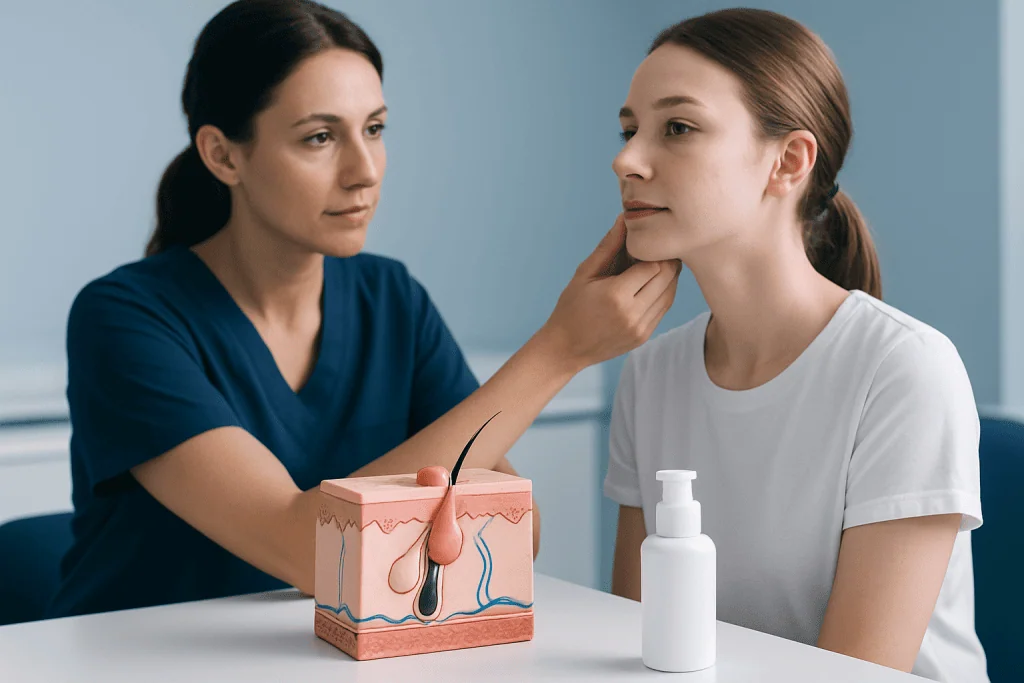
Pimples develop when hair follicles become blocked with oil and dead skin cells. This blockage can create comedones, such as blackheads and whiteheads. If inflammation develops, the area may become red, swollen, and painful. A skin bacterium called Cutibacterium acnes can also contribute to inflamed acne in some people.
Hormones often play an important role by increasing oil production, especially during adolescence, around menstrual cycles, or with certain endocrine conditions. Family history, friction from helmets or masks, some cosmetics, and stress-related flares may also contribute. Acne is not caused simply by poor hygiene, and over-washing can actually worsen irritation.
Because different factors drive acne, ingredients are chosen for different tasks. Salicylic acid helps loosen debris inside pores. Retinoids normalize skin cell turnover and help prevent new clogged pores. Benzoyl peroxide lowers bacterial load and helps inflamed lesions. Azelaic acid may reduce inflammation and post-inflammatory marks, and topical antibiotics can help selected patients when used carefully.
Understanding this “match the treatment to the lesion” approach helps explain why one product may be helpful for whiteheads but not deeper pimples. It also explains why combination therapy is common. For example, a clinician may recommend a retinoid for prevention and a benzoyl peroxide wash or gel to target inflamed spots at the same time.
Main types of topical treatments for pimples

Benzoyl peroxide is a widely used treatment for inflamed pimples. It helps reduce acne-causing bacteria and has mild pore-clearing effects. It is available in different strengths and forms, including gels, creams, and washes. Common side effects include dryness, redness, and bleaching of towels or clothing.
Topical retinoids, such as adapalene, tretinoin, and tazarotene, help prevent clogged pores and are especially useful for blackheads, whiteheads, and long-term acne control. They can also support fading of acne marks over time. Retinoids often cause peeling or irritation at first, so they are usually introduced gradually with a gentle moisturizer.
Salicylic acid is a beta-hydroxy acid that helps exfoliate inside pores. It may be useful for milder acne and oily skin, especially when comedones are the main concern. Azelaic acid is another option that can help with both acne and leftover discoloration after pimples heal. It is often considered when sensitive skin limits the use of harsher products.
Topical antibiotics, such as clindamycin or erythromycin, may be prescribed for inflamed acne, but they are generally not used alone because bacterial resistance can develop. They are often paired with benzoyl peroxide. In selected cases, a dermatologist may advise additional care through dermatology evaluation and treatment if the skin is sensitive, the acne is recurring, or standard products are not helping enough.
- Blackheads/whiteheads: retinoids, salicylic acid
- Red inflamed pimples: benzoyl peroxide, combination therapy
- Sensitive skin or acne marks: azelaic acid
- More persistent acne: prescription combinations under medical guidance
How to use topical acne products safely and effectively
Correct use is just as important as the ingredient itself. In general, a thin layer is applied to the acne-prone area rather than only dabbing visible spots, especially for treatments designed to prevent new pimples. Applying too much does not make the medicine work faster and often increases irritation.
Starting slowly can help the skin adjust. For example, a retinoid may be used every other night at first, while benzoyl peroxide may begin with a lower strength or short-contact use if the skin is easily irritated. A non-comedogenic moisturizer and sunscreen are often recommended alongside treatment because some active ingredients can dry the skin or increase sun sensitivity.
Gentle skincare supports better results. This usually means washing with a mild cleanser, avoiding harsh scrubs, and choosing oil-free or non-comedogenic cosmetics. Picking or squeezing pimples can increase inflammation and raise the risk of marks or scarring.
Pregnancy, very sensitive skin, eczema, or a history of allergic reactions may affect which topical products are appropriate. A doctor or pharmacist can help review ingredients before use. If irritation is severe, blistering develops, or the skin becomes markedly swollen, the product should be stopped and medical advice should be sought promptly.
When topical treatment may not be enough
Topical care can be very effective for mild acne, but it does not solve every situation. Deep painful nodules, widespread acne on the chest or back, acne causing dark marks or scars, and breakouts that continue despite regular use of treatment may need a broader approach. In these situations, a clinician may consider prescription combinations, hormonal treatment in selected patients, or oral medication.
Acne can also overlap with other skin problems. What looks like pimples may sometimes be rosacea, folliculitis, perioral dermatitis, or irritation from skincare products. If the diagnosis is uncertain, it is wise to have the skin examined rather than repeatedly switching products.
Scarring is another reason not to delay medical review. Early treatment of active inflammation may reduce the chance of long-term textural changes. If acne scars have already formed, a specialist may discuss options such as laser treatment or other procedural approaches once active breakouts are under better control.
In some cases, persistent pigmentation or textural change after acne may benefit from expert assessment in skin rejuvenation programs tailored to the person’s skin type and healing pattern. The best timing and technique depend on whether acne is still active and on the risk of irritation.
Prevention and self-care habits that support clearer skin
Acne cannot always be prevented completely, especially when hormones are a major factor, but daily habits can reduce flares and support treatment. Washing the face gently once or twice a day, removing makeup before sleep, and using non-comedogenic skincare and sunscreen are simple steps that can make a difference.
Hair products, heavy oils, and occlusive cosmetics may worsen breakouts in some people, especially along the forehead, hairline, or jaw. It may also help to shower after sweating and to reduce friction from tight hats, sports helmets, or mask edges when possible. Pillowcases, phones, and makeup brushes should be kept reasonably clean, although overly aggressive cleaning of the skin itself is not helpful.
Diet is not the sole cause of acne, but some people notice that specific patterns seem to trigger flares. Rather than making extreme restrictions, it is usually more practical to look for consistent personal triggers and discuss them with a clinician if needed. Stress management, regular sleep, and avoiding smoking also support overall skin health.
For people who experience repeated breakouts, self-care works best when it is steady and simple. Switching products too often can make it hard to tell what is helping and may increase irritation. A dermatologist can help create a routine that balances treatment with protection of the skin barrier.
When to seek medical care
Medical advice is important if pimples are painful, deep, leaving scars, or not improving after several weeks of regular topical treatment. A doctor should also assess acne that begins suddenly in adulthood, is linked with irregular periods or other hormonal symptoms, or causes significant distress or low confidence.
Urgent care is appropriate if there is severe swelling, crusting, blistering, trouble breathing after applying a product, or signs of a strong allergic reaction. These problems are not typical of routine acne treatment and should be evaluated promptly.
A dermatologist can confirm whether the skin problem is acne, recommend evidence-based topical or combination therapy, and monitor side effects. Near the end of the care journey, some people may also ask about managing marks or scars once inflammation has settled. Acibadem International’s multidisciplinary specialists in JCI-accredited hospitals diagnose and treat acne and related skin concerns for international patients.
If symptoms are ongoing, specialist review through acne care can help clarify whether topical treatments alone are enough or whether another diagnosis or added therapy should be considered.
Frequently asked questions
What is the best topical treatment for pimples?
There is no single best option for everyone. The right topical treatment depends on whether the acne is mostly blackheads and whiteheads, red inflamed pimples, or deeper lesions, as well as how sensitive the skin is. Many people do best with a combination chosen by a doctor or pharmacist.
How long do topical treatments for pimples take to work?
Most topical acne treatments need time and regular use. Noticeable improvement often begins after several weeks, and fuller results may take 6 to 12 weeks. Stopping too early is a common reason people think a product is not working.
Can topical treatments make acne worse at first?
Some products, especially retinoids, can cause early dryness, peeling, or mild irritation while the skin adjusts. This does not always mean the treatment is harmful, but severe burning, swelling, or blistering is not expected and should be checked by a clinician. Introducing treatment gradually often helps.
Is it safe to use more than one acne cream at the same time?
Sometimes yes, but combinations should be used thoughtfully. For example, a retinoid and benzoyl peroxide may both be helpful, but using several strong products together can irritate the skin. A clinician can help decide which combinations are effective and how to space them correctly.
Do I need a prescription for topical treatments for pimples?
Not always. Some ingredients, such as certain forms of benzoyl peroxide, salicylic acid, and adapalene, may be available without a prescription in some countries. Stronger retinoids, antibiotic combinations, and customized regimens usually require medical guidance.
Can topical treatments help acne scars?
Topical treatments mainly help active acne and may improve discoloration left behind after pimples heal. They do not usually remove established deep scars. If scarring is present, a dermatologist can discuss procedures that may be more suitable once acne is controlled.
References
- American Academy of Dermatology
- National Institute for Health and Care Excellence
- Mayo Clinic
- National Health Service
- American Academy of Family Physicians
This article is for general information only and is not a substitute for professional medical advice. Please consult a qualified doctor about your individual situation.
Explore treatments in Turkey — costs, top hospitals & a free quote
JCI-accredited · board-certified surgeons · reply within 24h
Add us as a Preferred Source to see more of our trusted health content across Google Search, AI Overviews and Discover.

More from the Health Library



Related Specialists
Dr. Mustafa Tolga Ünsür
Pediatrics
Dr. Cahide İnci Kurtul
General Surgery
Prof. Dr. Mehmet Ufuk Abacıoğlu
Radiation Oncology
Dr. Oya Yeşim Hacımustafaoğlu Utkan (m)
Dermatology