Unstable Angina — Explained by Medical Evidence, Not Myths

Unstable angina happens when the heart does not get enough blood and oxygen, usually because of a narrowed or suddenly blocked coronary artery. It often causes chest pressure, tightness, or pain that is new, worsening, occurs at rest, or lasts longer than usual.
Key Takeaways
- Unstable angina happens when the heart does not get enough blood and oxygen, usually because of a narrowed or suddenly blocked coronary artery.
- It often causes chest pressure, tightness, or pain that is new, worsening, occurs at rest, or lasts longer than usual.
- Unlike stable angina, unstable angina is a medical emergency because it may happen just before a heart attack.
- Diagnosis usually involves a physical exam, ECG, blood tests, and sometimes imaging or coronary angiography.
- Treatment focuses on restoring blood flow, reducing strain on the heart, and lowering the risk of heart attack.
- People with possible unstable angina should seek urgent medical care rather than trying to manage symptoms at home.
Unstable angina is a serious form of chest pain caused by reduced blood flow to the heart muscle. It can be a warning sign of a heart attack, so new, worsening, or unexpected chest discomfort should be assessed urgently.
Overview: what unstable angina means
Unstable angina is chest discomfort caused by a sudden drop in blood flow to the heart muscle. In simple terms, it means the heart is not getting enough oxygen-rich blood, often because a coronary artery has become severely narrowed or partly blocked. It is considered part of acute coronary syndrome, the same urgent group of conditions that includes heart attack.
What makes unstable angina different is the pattern. Symptoms may appear for the first time, become more frequent, feel stronger than before, happen at rest, or last longer than expected. Even if the discomfort goes away, the episode should not be ignored because it can signal that a heart attack may happen soon.
Many people are familiar with the term “angina” but may not realize there are different types. Stable angina usually follows a predictable pattern, such as chest pain with exercise that improves with rest. Unstable angina is less predictable and more concerning. It needs prompt medical evaluation to identify the cause and protect the heart.
How unstable angina feels and common symptoms
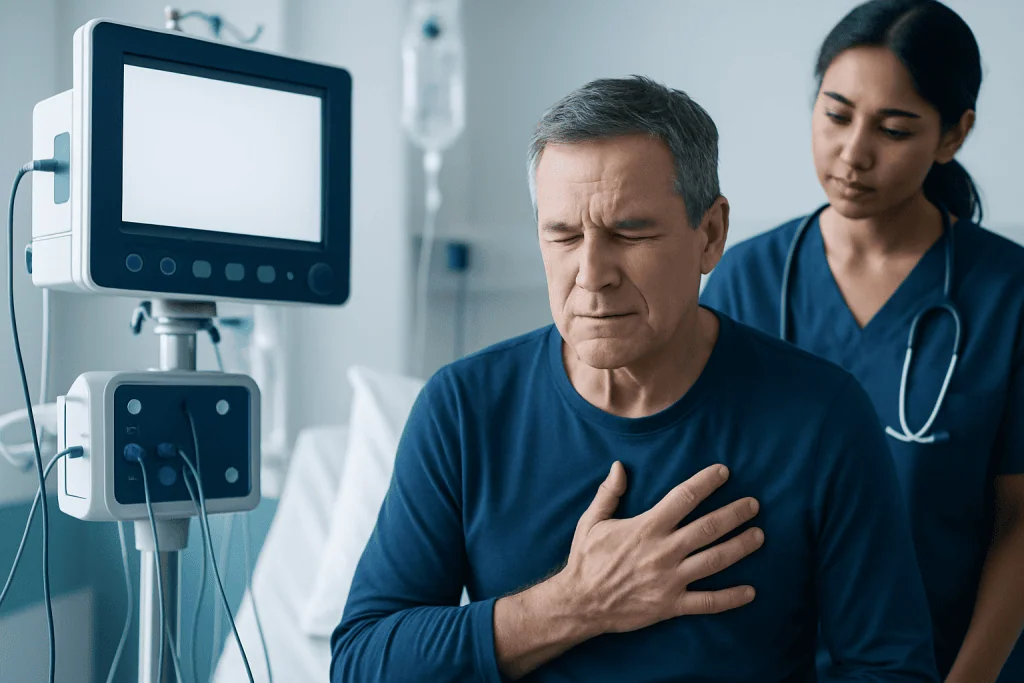
The most common symptom is chest discomfort. People often describe it as pressure, squeezing, heaviness, burning, or tightness rather than sharp pain. It may affect the center of the chest, but it can also spread to the shoulders, arms, neck, jaw, back, or upper stomach area.
Symptoms may begin during physical activity, emotional stress, or even while resting or sleeping. In unstable angina, the discomfort may be more intense than usual, may last longer, or may happen with less exertion than before. Some people notice that symptoms no longer improve as quickly with rest.
Other symptoms can occur at the same time, including shortness of breath, sweating, nausea, dizziness, unusual fatigue, or a sense of unease. Older adults, women, and people with diabetes may have less typical symptoms, such as breathlessness, indigestion-like discomfort, or fatigue without classic chest pain.
- New chest pressure or tightness
- Chest pain that occurs at rest
- Symptoms that are more frequent, longer-lasting, or more severe
- Pain spreading to the arm, jaw, neck, shoulder, or back
- Shortness of breath, nausea, sweating, or lightheadedness
Why it happens: causes and risk factors

The usual cause of unstable angina is coronary artery disease. Over time, fatty deposits called plaque can build up inside the coronary arteries. If a plaque becomes damaged or ruptures, a blood clot may form on its surface. This can suddenly reduce blood flow to the heart enough to cause symptoms, even if the artery is not fully blocked.
Less commonly, unstable angina can be triggered when the heart needs more oxygen than the blood supply can provide. This may happen during severe illness, uncontrolled high blood pressure, fast heart rhythms, anemia, or other conditions that increase the heart’s workload. In some people, a coronary artery spasm may also contribute.
Several factors raise the risk. These include smoking, high blood pressure, high cholesterol, diabetes, obesity, lack of exercise, older age, family history of early heart disease, chronic kidney disease, and stress. People who already have coronary artery disease or previous angina, heart attack, or stent placement may have a higher chance of developing unstable angina.
Risk factors often overlap, which is why prevention and long-term management matter. Addressing blood pressure, cholesterol, blood sugar, sleep, nutrition, and tobacco exposure can reduce strain on the heart and help lower the chance of future events.
How doctors diagnose unstable angina
Diagnosis begins with the story of the symptoms. A doctor will ask when the discomfort started, how it feels, how long it lasts, whether it occurs with activity or at rest, and whether there are associated symptoms such as breathlessness or sweating. This clinical history is very important because unstable angina may not always show clear changes on every test.
An electrocardiogram, or ECG, is usually done quickly to look for signs of reduced blood flow to the heart. Blood tests are also important, especially cardiac troponin, which helps doctors tell the difference between unstable angina and heart attack. In unstable angina, troponin may remain normal because there is not enough heart muscle damage to release high levels into the blood.
Other tests may be used depending on the situation. These can include echocardiography, stress testing after the person is stable, coronary CT angiography, or invasive coronary angiography to directly view the coronary arteries. In urgent or higher-risk cases, doctors may recommend coronary angiography to identify where blood flow is reduced and guide treatment.
Because other conditions can also cause chest symptoms, doctors may consider alternatives such as reflux, muscle strain, panic symptoms, lung problems, or aortic disease. Still, chest discomfort suggestive of unstable angina is approached carefully first, because ruling out a serious heart-related cause is the priority.
Treatment options and what care may involve
Treatment aims to improve blood flow to the heart, relieve symptoms, and reduce the risk of heart attack. In the emergency setting, doctors may use medicines that reduce clot formation, lower the heart’s workload, and ease chest discomfort. The exact combination depends on the person’s condition, ECG findings, blood tests, bleeding risk, and medical history.
Many patients are admitted to the hospital for monitoring because symptoms can change quickly. Ongoing assessment helps detect whether unstable angina is settling or whether it is progressing toward a heart attack. Doctors also address contributing problems such as uncontrolled blood pressure, irregular heart rhythm, low oxygen, or anemia if present.
If a significant narrowing or blockage is found, a procedure may be needed to restore blood flow. This may involve coronary angioplasty and stent placement or, in some cases, coronary bypass surgery. The choice depends on how many arteries are affected, where the narrowing is located, overall heart function, and other health conditions.
After the urgent phase, long-term treatment usually includes medicines and lifestyle measures to prevent future episodes. Follow-up care focuses on controlling risk factors, taking prescribed medication consistently, and learning how to respond if symptoms return. Since unstable angina belongs to the same emergency spectrum as heart attack, continued cardiac follow-up is important even after symptoms improve.
Prevention, recovery, and self-care after an episode
Recovery does not end when the chest pain stops. Preventing another episode usually means making several heart-protective changes at the same time. Stopping smoking, eating a balanced diet, keeping active within medical advice, reaching a healthy weight, improving sleep, and managing stress can all support heart health.
Medical prevention is equally important. People may need treatment for high blood pressure, diabetes, or high cholesterol, and they should take prescribed heart medicines exactly as directed. Follow-up appointments allow the care team to review symptoms, monitor risk factors, and adjust treatment if needed.
Cardiac rehabilitation may be recommended after hospitalization or a heart-related procedure. These structured programs combine supervised exercise, education, and risk-factor management. They can help people regain confidence, understand their condition, and return to daily activities more safely.
It can also help to know a personal action plan. A person should understand which symptoms need urgent attention, which medicines to keep available, and when to call emergency services. Family members may benefit from knowing these steps too, especially if symptoms have occurred before.
When to seek medical care
Any possible unstable angina should be treated as urgent. A person should seek emergency medical care right away if chest pressure, tightness, or pain is new, happens at rest, becomes more severe, lasts longer than a few minutes, or is accompanied by shortness of breath, sweating, faintness, nausea, or pain spreading to the arm, jaw, neck, or back.
It is safer not to drive oneself if symptoms are significant or ongoing. Emergency services can begin assessment on the way to the hospital and direct the person to appropriate care. Trying to “wait it out” at home may delay treatment if the condition is actually a heart attack or is about to become one.
Even if symptoms improve, prompt medical review is still important. Chest discomfort that comes and goes can still reflect reduced blood flow to the heart. Near the end of the care journey, some patients may choose centers experienced in international cardiac care; Acibadem International’s multidisciplinary specialists and JCI-accredited hospitals diagnose and treat heart conditions for international patients.
Frequently asked questions
Is unstable angina the same as a heart attack?
No. Both are part of acute coronary syndrome, but unstable angina usually does not cause the same degree of heart muscle damage seen in a heart attack. Even so, it can happen just before a heart attack and should be treated as an emergency.
How is unstable angina different from stable angina?
Stable angina tends to follow a predictable pattern, such as chest discomfort with exertion that improves with rest. Unstable angina is new, worsening, happens more easily, occurs at rest, or lasts longer than expected. That change in pattern is what makes it more concerning.
Can unstable angina happen without severe chest pain?
Yes. Some people have shortness of breath, fatigue, nausea, sweating, or discomfort in the jaw, back, or arm instead of classic chest pain. Atypical symptoms are more common in older adults, women, and people with diabetes.
Will tests always show unstable angina clearly?
Not always. An ECG can sometimes be normal or show only temporary changes, and blood tests may remain normal if there is no clear heart muscle injury. That is why the pattern of symptoms and a doctor’s assessment are so important.
Can unstable angina be treated with medicine alone?
Sometimes, depending on the cause, severity, and test results. Many people need medicines urgently to reduce clotting and ease strain on the heart, while some also need procedures such as angiography, stenting, or bypass surgery. The treatment plan is individualized.
What should a person do if symptoms return after treatment?
Recurring chest discomfort should be taken seriously, especially if it is new, stronger, happens at rest, or comes with breathlessness or sweating. The safest step is to seek urgent medical evaluation rather than trying to self-diagnose the cause.
This article is for general information only and is not a substitute for professional medical advice. Please consult a qualified doctor about your individual situation.
Angina in Turkey — costs, top hospitals & a free quote
JCI-accredited · board-certified surgeons · reply within 24h
Add us as a Preferred Source to see more of our trusted health content across Google Search, AI Overviews and Discover.
Check your numbers in seconds
BMI, calories, due date, blood pressure and 30+ more clinical calculators — free, instant, doctor-reviewed ranges.

More from the Health Library

Cryo Facial: A Complete Medical Overview

Ischial Ramus — Explained by Medical Evidence, Not Myths

Acne and Skin Care: An Evidence-Based Guide for Patients

Blood in Stool: A Complete Medical Overview

Penis Sleeve: A Complete Medical Overview