Urine Sample Test STD: What Patients Need to Know

A urine sample test STD screen is most often used to detect chlamydia and gonorrhea. Urine testing is simple and noninvasive, but it cannot diagnose every sexually transmitted infection.
Key Takeaways
- A urine sample test STD screen is most often used to detect chlamydia and gonorrhea.
- Urine testing is simple and noninvasive, but it cannot diagnose every sexually transmitted infection.
- Test accuracy depends on the type of infection, timing of exposure, symptoms, and how the sample is collected.
- People with symptoms, a new sexual partner, or known exposure may need urine tests plus swab or blood tests.
- Prompt diagnosis and treatment help prevent complications and reduce transmission to partners.
A urine sample test for STD screening can help detect certain sexually transmitted infections, most commonly chlamydia and gonorrhea. It is convenient and noninvasive, but it does not replace all other STI tests, because some infections are better diagnosed with swabs or blood tests.
Overview: what a urine sample test for STD can show
A urine sample test for STD screening is a laboratory test that looks for signs of certain sexually transmitted infections in urine. In everyday practice, it is most commonly used to detect bacterial infections such as chlamydia and gonorrhea. Many laboratories use a highly sensitive method called nucleic acid amplification testing, which looks for the genetic material of the infection.
This type of test is popular because it is easy to collect, does not require a pelvic exam or urethral swab in every case, and can be useful for people with or without symptoms. However, it is important to understand its limits. A urine test is not a universal STD test, and it does not reliably diagnose every infection that can be spread through sexual contact.
Some sexually transmitted infections are better detected with other methods. For example, HIV and syphilis are usually diagnosed with blood tests, while herpes is often assessed by examining and testing a sore. Infections in the throat or rectum also often require swab samples from those specific areas rather than urine alone.
Which STDs can and cannot be detected in urine
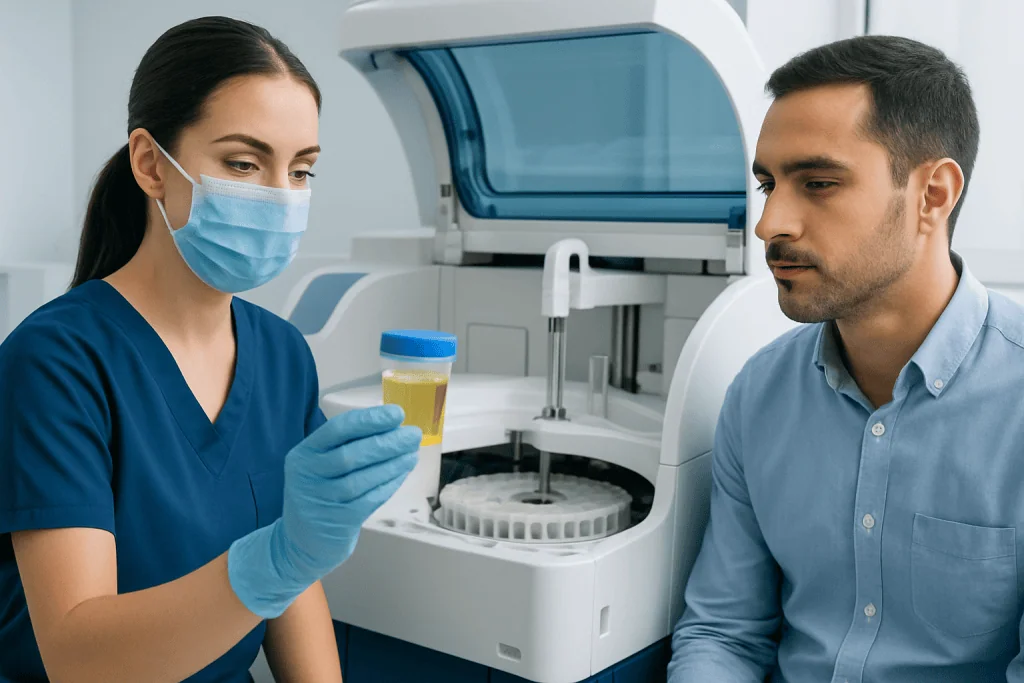
The main infections a urine sample test can detect are chlamydia and gonorrhea. These infections often affect the urethra and may not cause obvious symptoms, especially in women. Because of that, urine testing can be a practical way to identify infection early and start treatment.
In some settings, urine may also be used as part of testing for trichomoniasis, although this varies by laboratory and patient group. Still, a negative urine result does not always rule out infection in another body site. If someone has had oral or anal sexual contact, a doctor may recommend throat or rectal swabs as well.
A urine sample generally is not the standard test for HIV, syphilis, hepatitis B, or hepatitis C. These infections are more often checked with blood tests. Herpes is usually evaluated based on symptoms and by testing a lesion when one is present. Human papillomavirus is also not typically diagnosed through urine testing in routine STD screening.
- Usually detected by urine: chlamydia, gonorrhea
- Sometimes assessed with other sample types depending on symptoms: trichomoniasis
- Usually not diagnosed by urine alone: HIV, syphilis, herpes, hepatitis B, hepatitis C, HPV
Symptoms and situations that may lead to testing

A person may be advised to have a urine sample test even if there are no symptoms. Screening is often recommended after unprotected sex, a new sexual partner, multiple partners, or if a current or former partner has tested positive for an STI. Regular screening may also be advised during pregnancy or as part of routine sexual health care for people at higher risk.
When symptoms are present, they can include burning during urination, unusual discharge from the penis or vagina, pelvic pain, bleeding between periods, pain during sex, or discomfort in the lower abdomen. In men, testicular pain can sometimes occur. These symptoms do not confirm an STD on their own, but they are reasons to seek medical evaluation.
It is also possible to have an infection in the throat or rectum without symptoms. For that reason, doctors often ask about the type of sexual contact a person has had, not only whether symptoms are present. This helps determine whether urine testing alone is enough or whether additional swabs or blood tests are needed.
How the test is done and how to prepare
A urine sample test for STD screening is usually quick and straightforward. The patient is asked to provide a urine sample in a sterile container. For some tests, the first part of the urine stream, often called first-catch urine, is preferred because it may contain more material from the urethra and improve detection of infection.
Preparation instructions can vary slightly between laboratories, but patients are often advised not to urinate for a period before giving the sample. This can help improve the quality of the specimen. It is also important to follow the collection instructions carefully and avoid contaminating the sample.
In many cases, the urine sample is only one part of a broader sexual health evaluation. A doctor may ask about symptoms, recent exposures, contraceptive use, past infections, and any previous treatment. If needed, further evaluation may include blood tests, a physical examination, or targeted swabs from the cervix, urethra, throat, or rectum. In specialist settings, a broader workup may be arranged through services related to comprehensive check-up evaluation when sexual health concerns are part of the overall assessment.
Accuracy, timing, and reasons a urine test may not be enough
Urine testing for chlamydia and gonorrhea is generally accurate when the right sample is collected and the timing is appropriate. Even so, no test is perfect. Testing too soon after exposure may lead to a false-negative result if the infection has not reached detectable levels yet. This is one reason doctors may recommend repeat testing in some situations.
Another limitation is that urine mainly reflects infection in the urinary tract. If an infection is located in the throat or rectum, a urine sample may miss it. In addition, recent antibiotic use can sometimes affect results, and symptoms caused by other conditions may be mistaken for an STI.
Urinary symptoms can also come from other health problems, including urinary tract infection or irritation unrelated to infection. For persistent symptoms, doctors may also consider conditions involving the urinary system more broadly, including urologic disorders, depending on the patient’s age, symptoms, and medical history.
What happens if the result is positive
A positive urine sample test usually means the infection can be treated, and early treatment is important to prevent complications and reduce spread to sexual partners. The exact treatment depends on which infection is found. Bacterial STIs such as chlamydia and gonorrhea are usually treated with prescription antibiotics chosen according to current guidelines and local resistance patterns.
Patients are commonly advised to avoid sexual contact until treatment is completed and a clinician says it is safe to resume. Partner notification and partner testing are also important, because untreated partners can pass the infection back and forth. Depending on the infection, a follow-up test may be recommended to confirm clearance or to check for reinfection.
If symptoms are severe, recurrent, or linked to complications, further specialist care may be needed. Management may involve laboratory review, targeted imaging, or multidisciplinary follow-up. For patients who need evaluation or treatment planning in an international setting, Acibadem International’s multidisciplinary specialists and JCI-accredited hospitals provide care for sexual health and related urinary conditions, including services connected with urology care when appropriate.
Prevention, self-care, and when to seek medical care
Prevention starts with safer sex practices. Using condoms or other barrier methods consistently, limiting exposure through open communication with partners, and having regular sexual health screening can all lower the risk of infection. Vaccination also plays a role for some sexually transmitted infections, such as hepatitis B and HPV, though these are not diagnosed with a urine test alone.
Self-care after possible exposure should not rely on guessing or waiting for symptoms. Many STIs cause mild symptoms or none at all. It is safer to arrange testing based on the type of sexual contact and the time since exposure, and to avoid sexual contact if an infection is suspected until a clinician has advised on next steps.
Medical care should be sought promptly if there is burning with urination, genital discharge, pelvic or testicular pain, fever, sores, bleeding between periods, or if a sexual partner has been diagnosed with an STI. Urgent assessment is especially important in pregnancy, after sexual assault, or if symptoms are severe. A clinician can decide whether a urine sample is enough or whether blood tests, swabs, or further evaluation for infectious diseases care are needed.
Frequently asked questions
Can a urine sample test detect all STDs?
No. A urine sample test is mainly used to detect certain infections, especially chlamydia and gonorrhea. Other sexually transmitted infections, such as HIV and syphilis, usually require blood tests, while herpes may need a swab from a sore.
How accurate is a urine sample test for STD screening?
Urine testing can be very accurate for chlamydia and gonorrhea when the right test and collection method are used. Accuracy can be affected by testing too soon after exposure, recent antibiotic use, or infection in the throat or rectum rather than the urinary tract.
Do patients need symptoms to have a urine STD test?
No. Many people with chlamydia or gonorrhea have no symptoms, so testing may still be recommended after exposure or as routine screening. This is one reason regular sexual health checkups are important for some individuals.
How should a patient prepare for a urine sample test STD check?
The laboratory may ask the patient not to urinate for a period before giving the sample. It is also important to follow the collection instructions carefully, because the first part of the urine stream may be needed for accurate testing.
If the urine test is negative, does that mean there is no STI?
Not always. A negative urine result may not rule out infections in the throat, rectum, or bloodstream, and it may be too early after exposure for the infection to be detected. A doctor may recommend repeat testing or additional swabs or blood tests depending on the situation.
What happens if a urine sample test comes back positive?
A positive result usually means treatment is needed, often with antibiotics for bacterial infections such as chlamydia or gonorrhea. The patient should follow medical advice, inform recent sexual partners, and avoid sexual contact until treatment guidance is completed.
This article is for general information only and is not a substitute for professional medical advice. Please consult a qualified doctor about your individual situation.
Explore treatments in Turkey — costs, top hospitals & a free quote
JCI-accredited · board-certified surgeons · reply within 24h
Add us as a Preferred Source to see more of our trusted health content across Google Search, AI Overviews and Discover.

More from the Health Library

Arterioles: A Complete Medical Overview

Forehead Wrinkles: What Patients Need to Know

Trypophobia: A Complete Medical Overview

Peeled Finger: A Complete Medical Overview

Black Currant — Explained by Medical Evidence, Not Myths