Varicose Veins: Causes, Symptoms, and Modern Treatments
Varicose veins develop when vein valves weaken or leak, allowing blood to pool in the legs. Symptoms may include visible bulging veins, leg heaviness, aching, swelling, itching, or skin changes around the ankles.
Key Takeaways
- Varicose veins develop when vein valves weaken or leak, allowing blood to pool in the legs.
- Symptoms may include visible bulging veins, leg heaviness, aching, swelling, itching, or skin changes around the ankles.
- Risk factors include age, family history, pregnancy, excess weight, prolonged standing or sitting, and previous blood clots.
- Diagnosis is usually based on a physical examination and duplex ultrasound to check blood flow and valve function.
- Modern treatments are often minimally invasive and may include endovenous ablation, sclerotherapy, or vein removal techniques.
- Medical evaluation is important if symptoms worsen, skin changes develop, or there are signs of inflammation, bleeding, or a possible blood clot.
Varicose veins are enlarged, twisted veins that most often appear in the legs when blood does not flow efficiently back toward the heart. They are common and usually manageable, with modern treatments ranging from lifestyle measures and compression stockings to minimally invasive procedures.
Overview
Varicose veins are enlarged, swollen, and often twisted veins that can be seen just under the skin. They most commonly occur in the legs because leg veins work against gravity to return blood to the heart. When the small valves inside these veins do not close properly, blood can flow backward and collect, causing the vein to stretch and become visible.
For many people, varicose veins are mainly a cosmetic concern. For others, they may cause discomfort, heaviness, swelling, itching, or skin irritation. In some cases, varicose veins are part of chronic venous insufficiency, a longer-term problem in which the leg veins do not return blood efficiently.
Varicose veins are different from spider veins, although both can occur together. Spider veins are smaller, red, purple, or blue thread-like vessels close to the skin surface, while varicose veins are usually larger and may bulge. Both conditions can be assessed by a doctor, especially if there is pain, swelling, or skin change.
Symptoms
The most obvious sign of varicose veins is the appearance of enlarged veins, often blue or purple, that bulge or twist beneath the skin. They are usually seen on the calves, thighs, behind the knees, or around the ankles. Symptoms can vary from mild to more persistent and may become more noticeable after long periods of standing or sitting.
Common symptoms include aching, throbbing, burning, leg heaviness, tired legs, or a feeling of tightness. Some people notice swelling around the ankles, night cramps, restlessness in the legs, or itching over the affected veins. Symptoms often improve with walking, leg elevation, or wearing properly fitted compression stockings.
Skin changes can occur when venous pressure remains high over time. These may include dryness, eczema-like irritation, darkening of the skin near the ankles, or thickened skin. A non-healing sore, known as a venous ulcer, is less common but needs medical care. Sudden swelling, marked pain, redness, warmth, or tenderness along a vein should also be assessed promptly.
Causes and Risk Factors
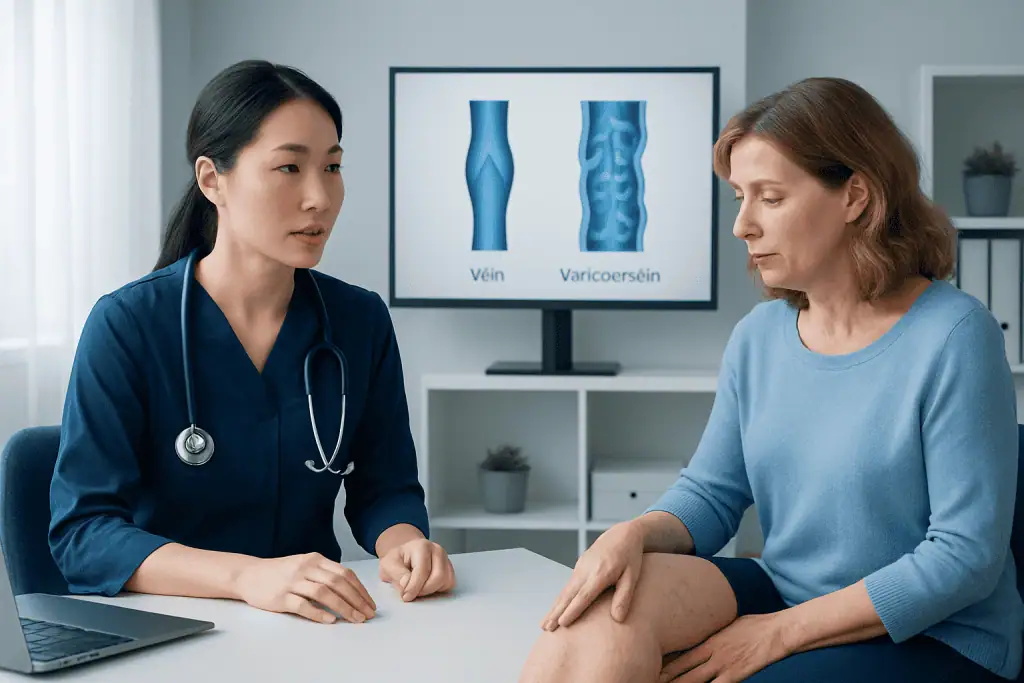
Varicose veins develop when vein walls and valves become weak or damaged. Healthy veins contain one-way valves that help blood move upward toward the heart. If these valves leak, blood can move backward and pool in the vein, increasing pressure and causing the vein to enlarge.
Several factors can increase the chance of developing varicose veins. These include inherited tendency, increasing age, pregnancy, hormonal changes, excess body weight, and jobs or routines that involve prolonged standing or sitting. Previous leg injury, previous deep vein thrombosis, and reduced mobility can also affect venous circulation.
Pregnancy-related varicose veins are common because blood volume increases and hormonal changes relax blood vessel walls. The growing uterus can also increase pressure on veins in the pelvis and legs. In many cases, pregnancy-related varicose veins improve after delivery, but some may persist and require evaluation.
- Family history of varicose veins
- Long hours standing or sitting without movement
- Multiple pregnancies
- Overweight or obesity
- Age-related weakening of vein valves
- History of blood clots or leg vein injury
Diagnosis
A doctor can often identify varicose veins through a physical examination. The assessment usually includes looking at the legs while the person is standing, asking about symptoms, checking for swelling or skin changes, and reviewing medical history. Important details include previous blood clots, pregnancies, surgeries, medications, and family history.
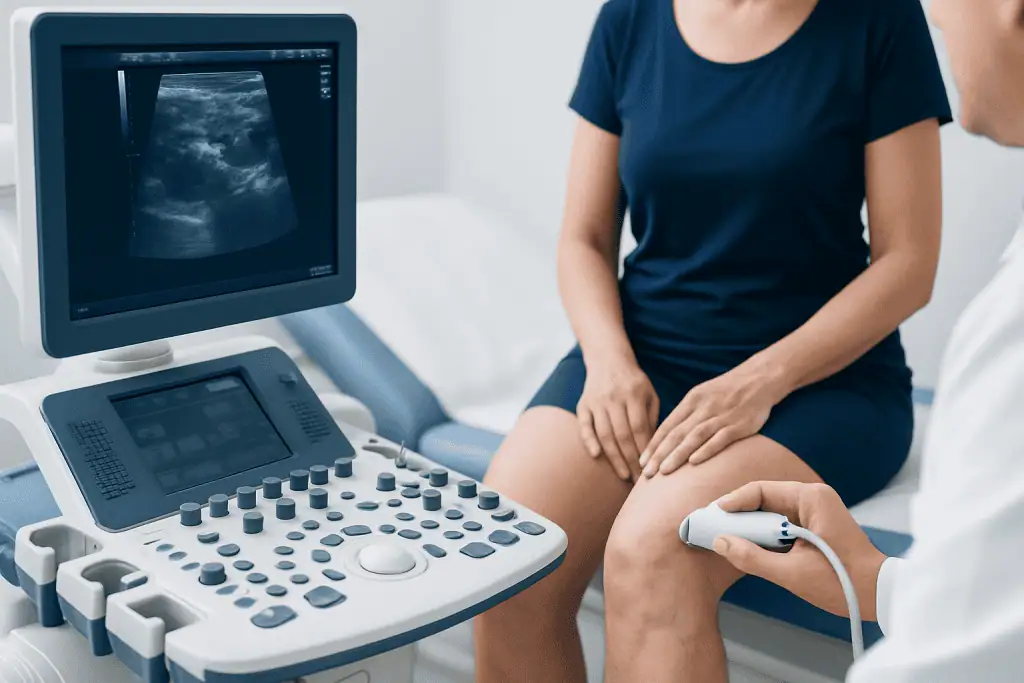
Duplex ultrasound is the main imaging test used to evaluate varicose veins. It combines traditional ultrasound images with Doppler technology to show blood flow direction and speed. This test helps identify which veins are affected, whether valves are leaking, and whether there is any evidence of a clot or obstruction.
Accurate diagnosis is important because the visible vein may not be the only problem. Varicose veins can arise from reflux in deeper or connecting veins, and treatment planning depends on understanding the pattern of venous insufficiency. A vascular surgeon, interventional radiologist, or other vein specialist may recommend a personalized plan based on ultrasound findings and symptoms.
Modern Treatment Options
Treatment depends on symptoms, ultrasound findings, overall health, and personal goals. Mild cases may be managed with lifestyle measures, compression stockings, and regular follow-up. When symptoms are persistent or there are complications such as skin changes, minimally invasive treatment may be recommended to close or remove the affected veins and redirect blood through healthier veins.
Endovenous thermal ablation is a commonly used modern approach. A thin catheter is placed into the affected vein under ultrasound guidance, and heat energy from laser or radiofrequency is used to close the vein. The body gradually absorbs the treated vein, while blood naturally reroutes through other veins. This is typically performed with local anesthesia and small punctures rather than large incisions.
Sclerotherapy involves injecting a medical solution or foam into a vein to irritate the inner lining and close it. It may be used for spider veins, smaller varicose veins, or selected larger veins depending on the case. Other options may include medical adhesive closure, ambulatory phlebectomy, or, less commonly today, surgical ligation and stripping. Each method has benefits and limitations, so the best option should be chosen after specialist assessment.
- Compression stockings for symptom relief and support
- Endovenous laser ablation or radiofrequency ablation
- Foam or liquid sclerotherapy
- Medical adhesive closure in selected cases
- Ambulatory phlebectomy for surface bulging veins
- Surgery when other approaches are not suitable
Recovery and Aftercare
Recovery after minimally invasive varicose vein treatment is usually straightforward, but instructions vary according to the procedure. Many patients are encouraged to walk soon after treatment because gentle movement supports circulation. Compression stockings may be recommended for a period of time, depending on the procedure and the doctor’s preference.
Temporary bruising, tightness, tenderness, or mild swelling can occur after treatment. These effects usually improve gradually. Patients should follow their clinician’s advice about activity, wound care, bathing, travel, and when to resume exercise. Long flights or prolonged immobility may require special guidance, particularly for people with a history of blood clots.
Follow-up ultrasound may be scheduled to confirm that the treated vein has closed and that blood flow is satisfactory. Varicose veins can recur or new veins can appear over time, especially when risk factors remain. Ongoing habits such as regular walking, weight management, and avoiding long periods of immobility can help support vein health.
Prevention and Self-Care
Not all varicose veins can be prevented, especially when family history, age, pregnancy, or previous vein problems are involved. However, healthy circulation habits can reduce pressure in the leg veins and may help slow progression. These measures can also ease symptoms such as heaviness and swelling.
Regular movement is one of the most helpful self-care strategies. Walking activates the calf muscles, which act as a natural pump to move blood upward. People who sit for long periods can benefit from short walking breaks, ankle circles, and calf raises. Those who stand for long hours may find relief by shifting weight, taking breaks, and elevating the legs when possible.
Compression stockings can help some patients by applying graduated pressure to support blood flow from the ankles upward. They should fit correctly and be chosen with professional guidance, especially for people with diabetes, peripheral artery disease, or skin problems. Maintaining a healthy weight, staying physically active, and avoiding tight clothing around the waist or legs may also reduce venous pressure.
- Walk regularly and avoid long periods of stillness
- Elevate the legs when resting
- Use compression stockings if recommended
- Maintain a healthy body weight
- Exercise the calf muscles during travel or desk work
- Seek care early for skin changes or worsening swelling
When to See a Doctor
A medical consultation is recommended when varicose veins cause pain, heaviness, swelling, skin irritation, or interfere with daily activities. Evaluation is also important if the skin around the ankle becomes darker, dry, thickened, or develops a sore that does not heal. Early assessment can help prevent progression and guide appropriate treatment.
Prompt medical attention is needed if there is sudden leg swelling, severe pain, redness, warmth, or tenderness, especially if symptoms affect one leg. These signs can be caused by several conditions, including inflammation of a surface vein or, less commonly, a deep vein clot. Bleeding from a varicose vein should be managed by applying firm pressure and elevating the leg, followed by medical assessment.
Patients with recurrent varicose veins, previous blood clots, pregnancy-related concerns, or complex medical conditions may benefit from specialist care. Acibadem International’s multidisciplinary specialists and JCI-accredited hospitals diagnose and treat venous conditions for international patients, including access to imaging and modern minimally invasive treatment options when appropriate.
Frequently asked questions
Are varicose veins dangerous?
Varicose veins are often not dangerous and may mainly cause cosmetic concern or mild discomfort. However, they can sometimes be linked with chronic venous insufficiency, skin changes, inflammation, bleeding, or ulcers. A doctor should assess varicose veins that are painful, worsening, or associated with swelling or skin problems.
Can varicose veins go away on their own?
Varicose veins usually do not disappear completely without treatment because the affected valves and vein walls have changed. Symptoms may improve with leg elevation, exercise, compression stockings, and weight management. Pregnancy-related varicose veins may improve after delivery, but persistent veins should be evaluated if they cause symptoms.
What is the difference between spider veins and varicose veins?
Spider veins are small, thin red, blue, or purple lines near the skin surface. Varicose veins are larger, may bulge, and can cause aching, heaviness, swelling, or skin irritation. Both can be assessed by a clinician, but varicose veins are more likely to require ultrasound evaluation.
Do compression stockings treat varicose veins?
Compression stockings can reduce symptoms such as swelling, aching, and heaviness by supporting blood flow in the legs. They do not remove existing varicose veins, but they may help control symptoms and slow progression. Proper fit is important, and people with circulation problems or certain medical conditions should ask a doctor before using them.
Is varicose vein treatment painful?
Modern minimally invasive treatments are usually performed with local anesthesia and are generally well tolerated. Patients may feel pressure, mild discomfort, or temporary tightness and bruising afterward. The experience varies by procedure and individual sensitivity, so the treating doctor can explain what to expect.
Can varicose veins come back after treatment?
Yes, new varicose veins can develop over time, even after successful treatment of the original veins. This may happen because of inherited tendency, ongoing venous valve weakness, pregnancy, weight changes, or prolonged standing or sitting. Follow-up care and healthy circulation habits can help reduce the risk of recurrence.
When should varicose veins be treated?
Treatment may be considered when varicose veins cause pain, swelling, heaviness, itching, skin changes, or reduced quality of life. It may also be recommended when there are complications such as bleeding, inflammation, or venous ulcers. The decision should be based on symptoms, ultrasound findings, and a discussion with a qualified vein specialist.
This article is for general information only and is not a substitute for professional medical advice. Please consult a qualified doctor about your individual situation.
Explore treatments in Turkey — costs, top hospitals & a free quote
JCI-accredited · board-certified surgeons · reply within 24h
Add us as a Preferred Source to see more of our trusted health content across Google Search, AI Overviews and Discover.

More from the Health Library
Lymphedema: Swelling Causes, Stages, and Long-Term Management
What Is Takayasu Arteritis? Vessel Inflammation, Arm Symptoms, and Imaging
Primary Hyperparathyroidism: High Calcium Symptoms and When Surgery Is Considered
What Is a Condition? Definition, Causes, and When It Matters
Common Synonyms for Condition: What the Term Can Mean in Medicine