Varicose Veins: Symptoms, Duplex Ultrasound, and Treatment Choices

Varicose veins develop when vein valves do not work properly, allowing blood to pool and veins to enlarge. Symptoms can range from cosmetic concerns to aching, swelling, itching, cramps, and skin changes around the ankles.
Key Takeaways
- Varicose veins develop when vein valves do not work properly, allowing blood to pool and veins to enlarge.
- Symptoms can range from cosmetic concerns to aching, swelling, itching, cramps, and skin changes around the ankles.
- Duplex ultrasound is the main test used to map leg veins, detect reflux, and guide treatment planning.
- Treatment options include lifestyle measures, compression stockings, minimally invasive endovenous procedures, sclerotherapy, and surgery in selected cases.
- Urgent medical advice is needed for sudden leg swelling, severe pain, bleeding from a vein, or symptoms suggesting a blood clot.
Varicose veins are common enlarged, twisted veins that most often appear in the legs and may cause heaviness, aching, swelling, or skin changes. Diagnosis usually includes a clinical examination and duplex ultrasound, which helps doctors choose the safest and most suitable treatment.
Overview
Varicose veins are enlarged, bulging, or twisted veins that are visible under the skin. They most often occur in the legs because leg veins work against gravity to move blood back toward the heart. When tiny one-way valves inside the veins become weak or damaged, blood can flow backward and collect in the vein. This is called venous reflux, and over time it can stretch the vein wall.
For many people, varicose veins are mainly a cosmetic concern. For others, they can cause daily discomfort such as heaviness, aching, swelling, itching, night cramps, or tired legs. Symptoms often worsen after long periods of standing or sitting and may improve with walking, leg elevation, or compression stockings.
Varicose veins are part of a broader condition called chronic venous disease. The condition is usually manageable, and modern evaluation allows treatment to be tailored to the person’s symptoms, vein anatomy, general health, and preferences. A vascular specialist can explain whether observation, conservative care, or a procedure is most appropriate.
Symptoms and Possible Complications
The most recognizable sign is a rope-like blue or purple vein on the calf, thigh, or behind the knee. Smaller red or blue surface veins, often called spider veins, may occur alone or together with varicose veins. Some people notice symptoms even when the visible veins are not very large, while others have prominent veins with little discomfort.
Common symptoms include leg heaviness, aching, burning, throbbing, itching, ankle swelling, restless legs, and cramps, especially at night. Symptoms may increase in warm weather, during hormonal changes, or after prolonged standing. Women may notice worsening around menstruation or during pregnancy, when pressure and hormonal effects can affect the veins.
If venous reflux continues for years, skin changes can develop around the lower leg and ankle. These may include brownish discoloration, eczema-like irritation, hardening of the skin, or slow-healing sores called venous leg ulcers. Superficial veins can also become inflamed and tender, a condition known as superficial thrombophlebitis. Although most varicose veins are not dangerous, new or severe symptoms should be assessed to rule out deeper vein problems.
Causes and Risk Factors
Varicose veins usually develop because of increased pressure inside superficial leg veins and valve weakness. Healthy valves open to allow blood to move upward and close to prevent backward flow. When valves leak, blood pools, pressure rises, and the vein becomes enlarged and tortuous.
Several factors can increase the likelihood of developing varicose veins. These include age, family history, previous pregnancy, female sex, obesity, prolonged standing or sitting, previous leg injury, and a history of blood clots. Jobs that require long hours on the feet, such as healthcare, hospitality, teaching, or retail work, can contribute to symptoms in people who are susceptible.
Pregnancy-related varicose veins may improve after delivery, although they can persist or return in later pregnancies. Hormonal changes can relax vein walls, and the growing uterus can increase pressure in the pelvic and leg veins. People with a history of deep vein thrombosis or pelvic vein problems may need a more detailed assessment because the underlying cause and treatment approach can differ.
- Family history is one of the strongest risk factors.
- Maintaining a healthy weight can reduce pressure on leg veins.
- Regular calf muscle movement supports blood return to the heart.
- Not all visible veins require a procedure, but symptoms should be discussed with a clinician.
Diagnosis and Duplex Ultrasound
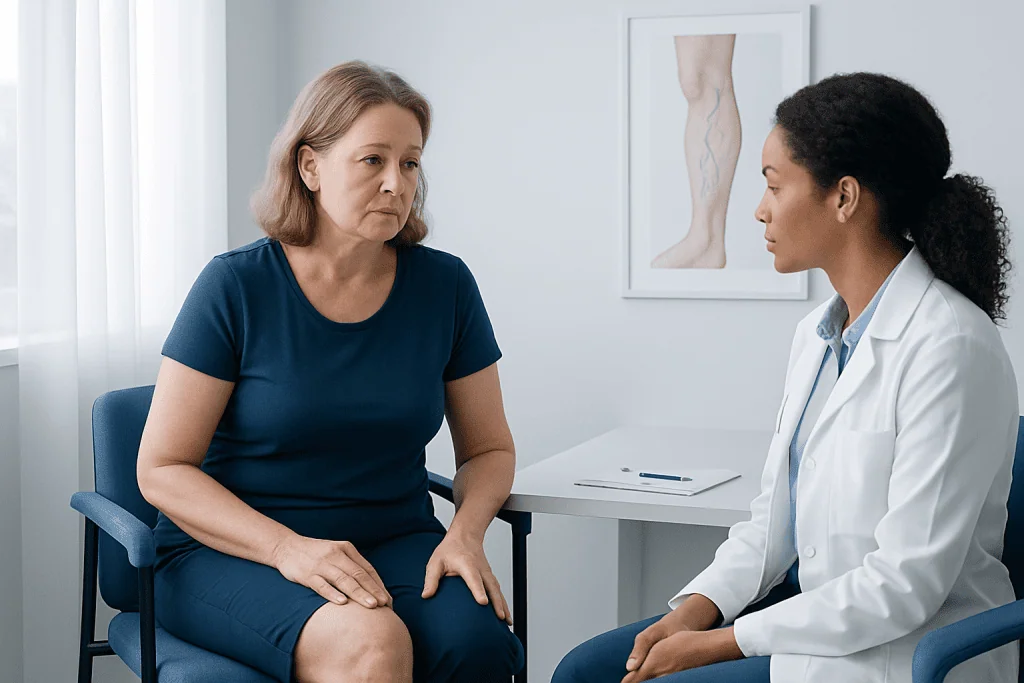
Diagnosis begins with a medical history and physical examination. The clinician may ask about symptoms, pregnancies, previous clots, leg injuries, medications, bleeding episodes, skin changes, and the effect of standing or elevation. The legs are usually examined while standing because varicose veins are often more visible when the veins are full.
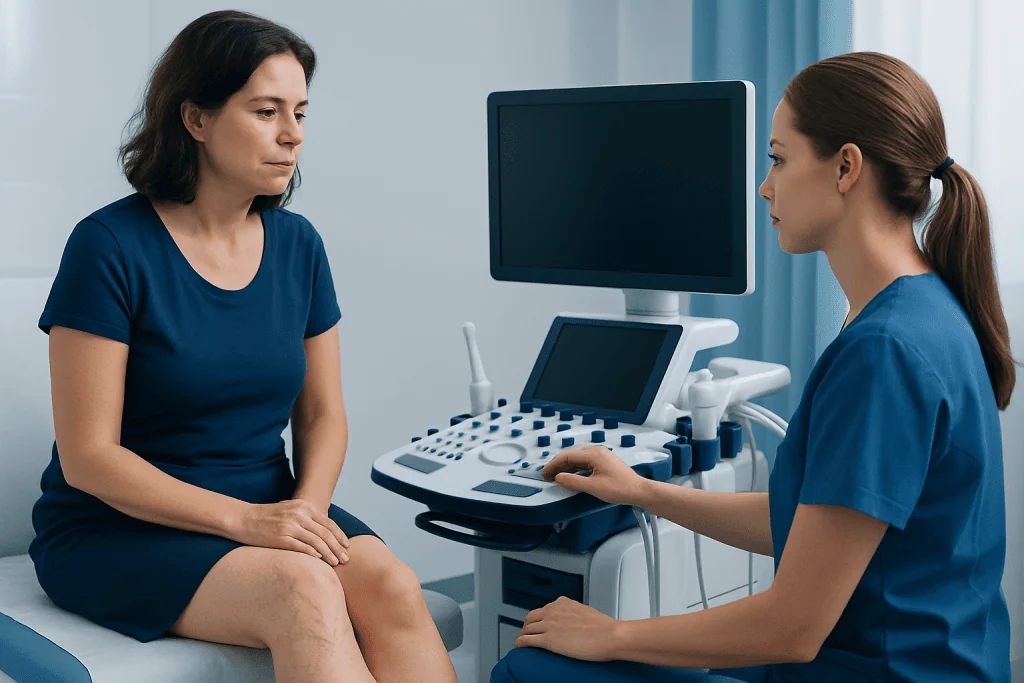
Duplex ultrasound is the key imaging test for varicose veins. It combines standard ultrasound images with Doppler flow assessment to show the structure of the veins and the direction of blood flow. The test can identify venous reflux, blocked veins, abnormal connections, and which vein segments are involved, such as the great saphenous vein, small saphenous vein, or perforator veins.
During the test, gel is placed on the skin and a handheld probe is moved along the leg. The examiner may gently squeeze the calf or ask the patient to change position to see how blood moves through the veins. Duplex ultrasound is noninvasive, does not use radiation, and is usually performed while the patient is standing or tilted upright for accurate reflux assessment.
The results guide treatment planning. Treating only the visible bulging vein without understanding the source of reflux may lead to recurrence. A vein map helps the specialist decide whether compression, sclerotherapy, endovenous ablation, phlebectomy, or surgery is most suitable and whether any deep vein issue needs attention first.
Treatment Choices
Treatment depends on symptoms, ultrasound findings, general health, skin condition, and personal goals. Some people need only education, monitoring, and self-care. Others benefit from procedures that close or remove the refluxing vein. The aim is to reduce symptoms, improve vein function, treat complications, and lower the chance of progression when clinically appropriate.
Conservative management may include graduated compression stockings, leg elevation, walking, calf exercises, weight management, and avoiding long periods of immobility. Compression stockings apply controlled pressure, usually strongest at the ankle, to support blood return. They can reduce swelling and discomfort, but the correct size and pressure level should be selected with professional guidance, especially for people with diabetes, peripheral artery disease, or skin problems.
Minimally invasive endovenous treatments are widely used when a main superficial vein has significant reflux. Endovenous thermal ablation uses laser or radiofrequency energy to close the vein from inside. Non-thermal methods, such as medical adhesive closure or mechanochemical techniques, may be considered in selected cases. These treatments are typically performed through a small puncture under ultrasound guidance, often with local anesthesia.
Sclerotherapy involves injecting a solution or foam into a vein to make it close. It is often used for spider veins, smaller varicose veins, or certain branches after the main reflux source has been treated. Ambulatory phlebectomy removes bulging surface veins through tiny skin openings. Traditional surgical ligation and stripping is less common today but may still be appropriate for some patients depending on anatomy, availability, and clinical judgment.
Recovery and Follow-Up
Recovery varies by treatment type, but many people return to light daily activities soon after minimally invasive vein procedures. Walking is commonly encouraged because calf muscle movement supports circulation. The treating doctor may recommend compression stockings for a period after treatment, depending on the procedure and the patient’s symptoms.
Mild bruising, tightness, tenderness, or a pulling sensation along the treated vein can occur and usually improves with time. Follow-up ultrasound may be arranged to confirm that the treated vein has closed and to check for rare complications such as extension of clot into deeper veins. Patients should follow their clinician’s instructions about activity, wound care, compression, and any medications.
Varicose veins can recur, especially in people with strong inherited tendency, multiple pregnancies, obesity, or long-standing venous disease. Recurrence does not necessarily mean the first treatment failed; new veins can become refluxing over time. Periodic reassessment is helpful if symptoms return, new bulging veins appear, or skin changes develop.
Prevention and Self-Care
Not all varicose veins can be prevented, especially when family history or pregnancy plays a major role. However, self-care can reduce symptoms and may slow progression. The most useful habit is regular movement, particularly walking, because the calf muscles act as a pump that helps push blood toward the heart.
People who stand or sit for long periods can benefit from changing position frequently, flexing the ankles, taking short walking breaks, and elevating the legs when resting. Maintaining a healthy weight reduces pressure on leg veins. Comfortable footwear and avoiding prolonged high-heel use may improve calf muscle function, although shoe choice alone will not prevent varicose veins.
Skin care is important when swelling, itching, or discoloration is present. Gentle moisturizing can help protect the skin barrier, and scratching irritated skin should be avoided. Anyone with persistent ankle swelling, eczema-like changes, or a wound near the ankle should seek medical evaluation because early treatment can help prevent complications.
- Walk regularly and avoid long periods of immobility.
- Elevate the legs when resting, especially after standing for hours.
- Use compression stockings only as advised and properly fitted.
- Protect dry or itchy lower-leg skin with gentle skin care.
When to See a Doctor
A medical assessment is recommended when varicose veins cause pain, swelling, heaviness, itching, cramps, skin discoloration, bleeding, or a non-healing sore. It is also helpful to see a doctor if the veins are rapidly worsening or if symptoms interfere with work, sleep, exercise, or daily activities. Early evaluation can clarify whether symptoms are due to superficial venous reflux or another condition.
Urgent medical advice is needed for sudden one-sided leg swelling, significant calf pain, redness and warmth, shortness of breath, chest pain, or coughing blood, as these may suggest a blood clot or another serious condition. Bleeding from a varicose vein should be controlled with firm pressure and leg elevation, followed by prompt medical care.
People considering treatment should ask about the ultrasound findings, the source of reflux, expected benefits, possible risks, recovery, and alternatives. At Acibadem International, multidisciplinary specialists in JCI-accredited hospitals diagnose and treat venous disease for international patients, including assessment with duplex ultrasound and individualized treatment planning. Patients should always consult a qualified doctor to decide what is appropriate for their situation.
Frequently asked questions
Are varicose veins dangerous?
Most varicose veins are not dangerous, but they can cause discomfort and sometimes lead to skin changes, inflammation, bleeding, or ulcers. A medical evaluation is recommended if symptoms are persistent, worsening, or associated with swelling or skin changes. Sudden severe symptoms should be assessed urgently.
What does duplex ultrasound show in varicose veins?
Duplex ultrasound shows both the anatomy of the veins and the direction of blood flow. It can detect venous reflux, vein blockage, and the exact vein segments that are not working properly. This information helps the specialist choose the most suitable treatment.
Do compression stockings cure varicose veins?
Compression stockings can reduce symptoms such as swelling, heaviness, and aching, but they do not usually remove existing varicose veins. They are often useful for symptom control, during pregnancy, while waiting for treatment, or after certain procedures. A clinician can advise on the correct strength and fit.
Which treatment is best for varicose veins?
There is no single best treatment for everyone. The best choice depends on symptoms, duplex ultrasound findings, vein size and location, skin health, medical history, and patient preference. Options may include conservative care, endovenous ablation, sclerotherapy, phlebectomy, or surgery.
Can varicose veins come back after treatment?
Yes, varicose veins can recur because chronic venous disease is influenced by genetics, age, pregnancy, weight, and lifestyle factors. New veins may become refluxing even after successful treatment of the original vein. Follow-up is helpful if symptoms or visible veins return.
Is walking good for varicose veins?
Walking is generally beneficial because calf muscle contractions help move blood from the legs back toward the heart. Regular movement can reduce heaviness and swelling, especially for people who sit or stand for long periods. People with severe pain, ulcers, or suspected clots should seek medical advice before changing activity levels.
References
- Society for Vascular Surgery
- American Venous Forum
- National Institute for Health and Care Excellence
- European Society for Vascular Surgery
- Mayo Clinic
This article is for general information only and is not a substitute for professional medical advice. Please consult a qualified doctor about your individual situation.
Ultrasound in Turkey — costs, top hospitals & a free quote
JCI-accredited · board-certified surgeons · reply within 24h
Add us as a Preferred Source to see more of our trusted health content across Google Search, AI Overviews and Discover.

Check-up & Preventive Medicine
Comprehensive health screenings designed for early detection and prevention.
3 specialists in this unit