Vibration Therapy: Diagnosis, Outlook, and Modern Treatment Approaches
Vibration therapy may be used as an adjunct to exercise and rehabilitation, rather than a stand-alone cure for a medical condition. Whole-body vibration and localized vibration are different approaches with different clinical uses and precautions.
Key Takeaways
- Vibration therapy may be used as an adjunct to exercise and rehabilitation, rather than a stand-alone cure for a medical condition.
- Whole-body vibration and localized vibration are different approaches with different clinical uses and precautions.
- Evidence is strongest for selected rehabilitation goals, such as improving muscle activation, balance, and physical function in some people.
- A clinician should assess persistent pain, weakness, numbness, falls, or reduced mobility before vibration therapy is started.
- People with certain medical conditions, recent injuries, implanted devices, or pregnancy may need to avoid vibration therapy or seek individualized advice.
Vibration therapy uses controlled mechanical vibrations, delivered locally or through a vibrating platform, as a possible addition to rehabilitation and exercise programs. Its benefits and safety depend on the person’s health, treatment goal, vibration type, and professional guidance; it is not a replacement for diagnosis or standard medical care.
Overview: What Is Vibration Therapy?
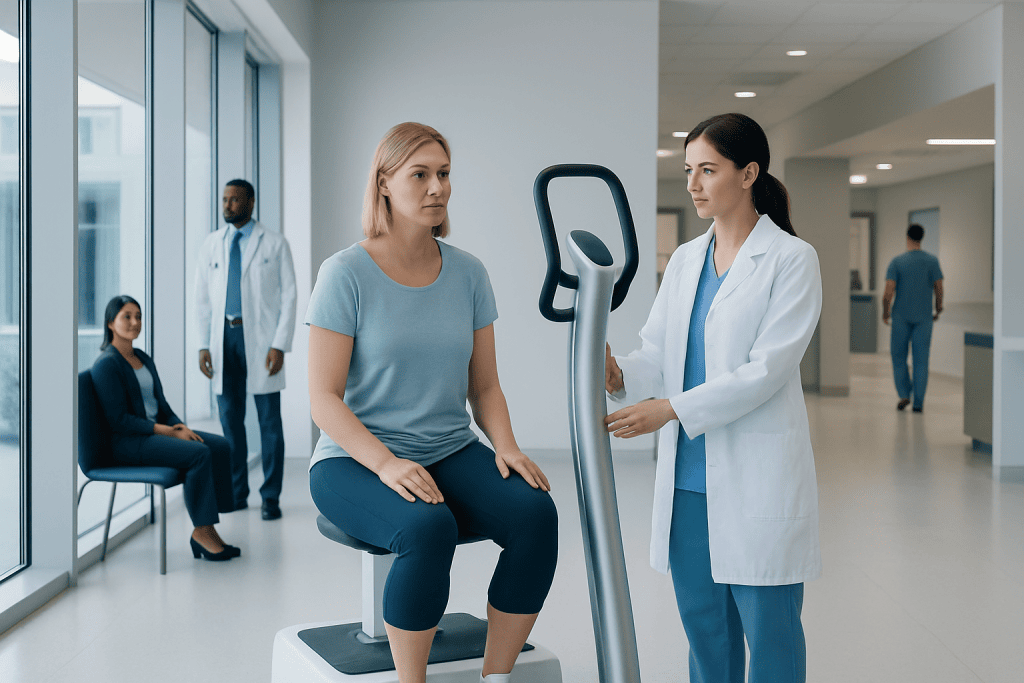
Vibration therapy is a broad term for treatments that use mechanical vibrations to stimulate muscles, tendons, bones, and sensory receptors. It is commonly discussed in rehabilitation, exercise medicine, and physical therapy. Depending on the device and goal, vibrations may be applied to one body area or transmitted through the feet while a person stands, sits, or performs gentle exercises on a vibrating platform.
Whole-body vibration therapy typically involves a platform that moves rapidly with a small range of motion. Localized vibration therapy uses a handheld device or specialized equipment on a targeted muscle or area. The sensation is usually similar to a controlled, repetitive shaking or buzzing. Treatment settings, body position, frequency, and session duration all influence how the body responds.
Vibration therapy is not a diagnostic test and does not identify the cause of pain, weakness, dizziness, or reduced mobility. Instead, it may be considered after a clinical assessment as one component of a wider plan that can include therapeutic exercise, education, medication when appropriate, nutrition, and treatment of an underlying condition.
Potential Benefits and What the Evidence Shows
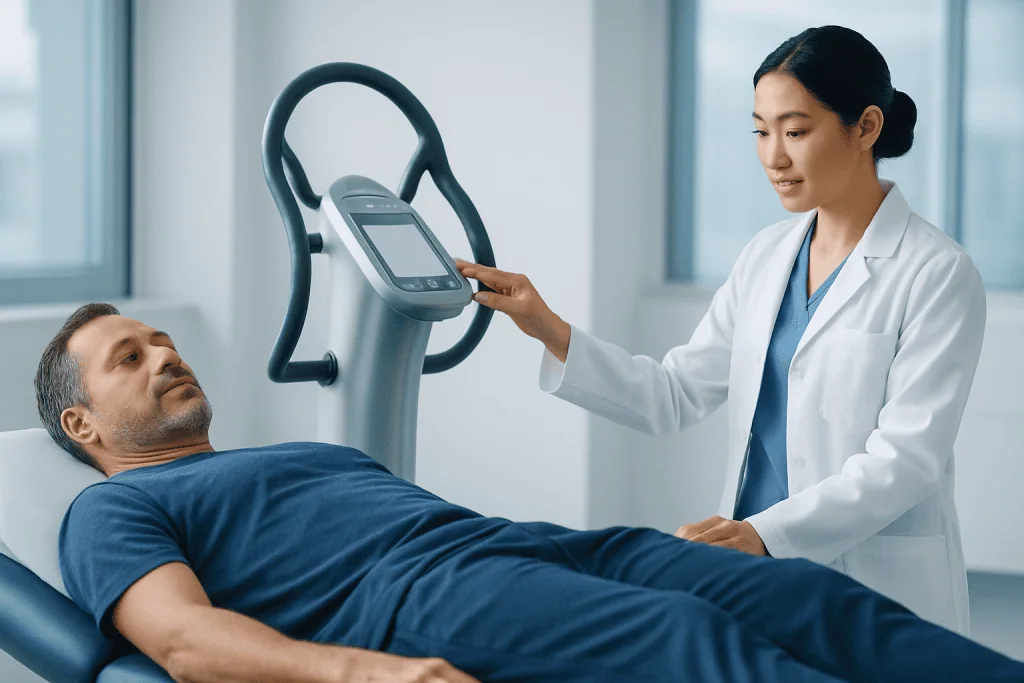
During vibration exposure, muscles make small reflex contractions to help stabilize the body. This response may support muscle activation and coordination, particularly when vibration is combined with supervised exercises such as squats, calf raises, or balance work. For people who find conventional exercise difficult, carefully selected vibration-based activity may offer a lower-load way to begin moving.
Research suggests that whole-body vibration may modestly improve aspects of lower-limb strength, balance, walking ability, and physical function in certain groups, including some older adults and people participating in rehabilitation. It has also been studied for bone health, neurological rehabilitation, sports recovery, and chronic musculoskeletal symptoms. However, findings are mixed, study methods vary, and results cannot be assumed to apply to every individual.
It is important to distinguish possible functional benefits from claims that are not well established. Vibration therapy has not been proven to detoxify the body, cure neurological disease, replace weight-management treatment, or reliably prevent fractures. It should not delay assessment for symptoms that may need medical attention, such as severe back pain, sudden weakness, or unexplained loss of balance.
For many people, the most meaningful benefit comes from using vibration as a structured addition to an active rehabilitation program, not from standing passively on a platform. A physiotherapist or rehabilitation clinician can help determine whether it has a useful role and set realistic, measurable goals.
Who May Be Considered for Treatment?

Vibration therapy may be considered in rehabilitation when a clinician is seeking to improve confidence with movement, lower-limb muscle recruitment, balance, or functional exercise tolerance. It may be used for an older person with reduced physical function, a person recovering from a period of inactivity, or someone with selected musculoskeletal limitations. The decision should be individualized rather than based on a device advertisement or a general fitness trend.
For people with osteoarthritis, persistent back discomfort, reduced mobility, or age-related loss of strength, the starting point is a proper assessment of symptoms, daily activities, medical history, and fall risk. Vibration may be one option among several, but exercise therapy, weight management where relevant, pain management, sleep, and activity modification can be equally or more important.
In neurological rehabilitation, vibration has been explored for movement and balance difficulties. Its role varies greatly according to the diagnosis, severity, spasticity, sensation, and ability to stand safely. A person with tremor, gait changes, muscle stiffness, or progressive weakness should receive a medical evaluation before trying vibration devices independently.
People often ask whether vibration therapy can help bone density. Weight-bearing and resistance exercise remain central approaches for supporting bone health, alongside adequate nutrition and medical treatment when indicated. Vibration may be discussed in selected cases, but it should not replace evaluation and evidence-based care for osteoporosis or fracture risk.
Assessment, Diagnosis, and Treatment Planning
There is no single “vibration therapy diagnosis.” Before recommending it, a clinician first identifies the health problem being addressed. This may involve a medical history, physical examination, review of medications, assessment of walking and balance, muscle strength testing, and discussion of previous injuries, surgeries, falls, and exercise habits.
Further tests depend on the symptoms. For example, persistent joint pain may require examination and imaging when clinically appropriate; suspected nerve problems may need neurological testing; and concerns about bone fragility may lead to bone-density assessment. The purpose is to avoid treating a symptom with a device when an underlying condition needs specific care.
A treatment plan should define a practical goal, such as standing more steadily, improving leg strength for stairs, returning to an activity after rehabilitation, or increasing tolerance for a prescribed exercise program. Progress can be monitored using functional measures, including walking distance, chair-rise ability, balance tests, pain impact, and confidence in everyday movement.
When vibration therapy is used, clinicians generally begin conservatively. They consider the type of platform or local device, posture, support needs, intensity, exposure time, and how the person feels during and after treatment. The plan should be adjusted or stopped if it triggers concerning symptoms or does not contribute to the agreed rehabilitation goal.
Modern Treatment Approaches and Practical Use
Modern vibration therapy is usually delivered through whole-body platforms or localized devices. Whole-body platforms may move vertically or in an alternating pattern that shifts one side and then the other. Local vibration may be applied to a muscle or tendon during a targeted rehabilitation activity. These approaches are not interchangeable, and the best choice depends on the treatment aim and the person’s ability to use the equipment safely.
In a supervised setting, vibration may be paired with established rehabilitation techniques. Examples include supported standing, gentle knee bends, step practice, balance exercises, or progressive strengthening. Combining it with active movement may help ensure that therapy remains focused on real-world function rather than passive device use.
Home devices are widely available, but product availability does not mean that a device is appropriate for every health concern. People should avoid relying on manufacturer claims to diagnose a problem or select treatment. A physiotherapist, rehabilitation specialist, or doctor can advise whether a home program is reasonable and whether a person needs supervision, hand support, or a different form of exercise.
Outlook is generally best when vibration therapy is approached as a time-limited, goal-based trial within a broader plan. If mobility, balance, pain impact, or exercise confidence improves, the program may be continued or progressed. If there is no meaningful benefit, the care team can reassess the diagnosis, barriers to activity, and other rehabilitation options.
Safety, Side Effects, and Situations Requiring Caution
Many people tolerate appropriately prescribed vibration therapy well. Temporary effects can include a tingling sensation, mild muscle fatigue, warmth in the legs, or short-lived discomfort after unfamiliar activity. These effects should be mild and settle with rest. Intensity should be reduced or treatment paused if symptoms become unpleasant.
Vibration therapy is not suitable for everyone without medical advice. Caution may be needed for people who are pregnant; have had recent surgery, a recent fracture, or a joint replacement that is still healing; have an active blood clot or clotting disorder; have severe cardiovascular disease; have significant peripheral neuropathy; or have an implanted medical device. The precise precautions depend on the device, health condition, and stage of recovery.
People with acute inflammation, unexplained swelling, open wounds in the treatment area, severe osteoporosis with high fracture risk, unstable joint problems, or severe vertigo should seek professional advice before using vibration equipment. A person who has difficulty standing safely should not use a whole-body platform alone because of fall risk.
Vibration therapy should be stopped and medical advice sought if it causes chest pain, marked breathlessness, fainting, new numbness, severe headache, rapidly increasing pain, or worsening weakness. These symptoms are not expected effects of routine rehabilitation and need appropriate assessment.
Self-Care and Supporting Long-Term Function
For most people, the foundation of better movement and physical resilience is regular activity that is appropriate for their health and ability. Strength training, balance practice, walking or other aerobic activity, flexibility work, and gradual increases in daily movement can all be valuable. Vibration therapy, if used, works best as a supplement to these habits rather than a shortcut around them.
Good recovery also includes adequate sleep, sufficient protein and overall nutrition, hydration, and management of chronic conditions such as diabetes, arthritis, heart disease, or neurological disorders. Footwear, home safety, vision correction, and review of medications can be particularly important for people at risk of falls.
People with pain should aim for paced activity rather than complete avoidance of movement, unless a clinician advises otherwise. Keeping a simple record of symptoms, activity, and functional changes can help a care team judge whether an intervention is beneficial. New symptoms or a steady decline in function should prompt reassessment rather than simply increasing vibration intensity.
Acibadem International’s multidisciplinary specialists and JCI-accredited hospitals can assess mobility concerns and develop individualized rehabilitation plans for international patients when clinically appropriate.
When to Seek Medical Care
Medical care should be sought promptly for sudden weakness, new facial drooping, difficulty speaking, loss of coordination, severe dizziness, fainting, chest pain, or sudden shortness of breath. These symptoms may indicate conditions that need urgent assessment and should not be managed with vibration therapy or home exercise equipment.
A routine medical appointment is appropriate for ongoing joint or back pain, repeated falls, progressive numbness, persistent tingling, muscle weakness, unexplained fatigue, or a noticeable decline in walking ability. A clinician can determine whether rehabilitation, medication review, imaging, neurological assessment, or another treatment is needed.
People considering vibration therapy after surgery, injury, fracture, or a new diagnosis should ask their treating clinician when and how activity can be restarted safely. This is especially important when weight bearing, balance, sensation, circulation, or bone strength may be affected.
Frequently asked questions
What is vibration therapy used for?
Vibration therapy may be used as an adjunct to rehabilitation, exercise, balance training, and muscle activation. Its purpose depends on the person’s needs, and it is usually most helpful when combined with an active program designed by a qualified clinician. It is not a cure for an underlying disease.
Does vibration therapy build bone density?
Vibration therapy has been studied for bone health, but evidence is not consistent enough to consider it a replacement for standard osteoporosis prevention or treatment. Weight-bearing exercise, resistance training, nutrition, fall prevention, and prescribed medication when needed remain important. A doctor can assess individual fracture risk and bone-health needs.
Is whole-body vibration therapy safe for older adults?
It can be safe for some older adults when it is adapted to their mobility, balance, bone health, and medical conditions. However, falls, dizziness, recent fractures, severe osteoporosis, and certain heart or neurological conditions may require special precautions. Professional assessment is advisable before beginning, especially for a person with reduced stability.
Can vibration therapy help with pain?
Some people experience temporary symptom relief or improved movement when vibration is used within a broader rehabilitation program. Results differ depending on the cause of pain, and vibration can aggravate symptoms in some situations. Persistent, severe, or worsening pain should be medically evaluated rather than self-treated.
Who should avoid vibration therapy?
People who are pregnant, have a recent fracture or surgery, active blood clot, unstable medical condition, severe balance difficulty, or certain implanted devices should seek clinician guidance before use. The same applies to people with unexplained pain, numbness, weakness, or swelling. Safety depends on the person and the specific device being considered.
How quickly does vibration therapy work?
There is no guaranteed timeline, and some people may not notice a meaningful change. When it is useful, improvement is usually assessed over several supervised sessions alongside exercise and functional rehabilitation. Progress should be measured by practical goals, such as safer walking, improved strength, or greater ease with daily tasks.
References
- World Health Organization
- National Institute on Aging
- National Institute of Arthritis and Musculoskeletal and Skin Diseases
- American College of Sports Medicine
- International Osteoporosis Foundation
This article is for general information only and is not a substitute for professional medical advice. Please consult a qualified doctor about your individual situation.
Joint and spine care in Turkey — expert assessment & treatment
JCI-accredited · board-certified surgeons · reply within 24h
Add us as a Preferred Source to see more of our trusted health content across Google Search, AI Overviews and Discover.