Vision Strain — Explained by Medical Evidence, Not Myths

Vision strain describes discomfort caused by sustained visual effort; it is also called asthenopia or digital eye strain when screens are involved. Common symptoms include tired or burning eyes, headaches, blurred vision, difficulty focusing, and neck or shoulder discomfort.
Key Takeaways
- Vision strain describes discomfort caused by sustained visual effort; it is also called asthenopia or digital eye strain when screens are involved.
- Common symptoms include tired or burning eyes, headaches, blurred vision, difficulty focusing, and neck or shoulder discomfort.
- Screens are not the only cause: uncorrected refractive errors, dry eyes, poor lighting, glare, and prolonged close work can all contribute.
- Regular visual breaks, comfortable screen positioning, blinking, and updated prescription glasses can reduce symptoms for many people.
- Sudden vision loss, severe eye pain, new double vision, or flashes and floaters require prompt medical assessment.
Vision strain is a common, usually temporary group of symptoms that can develop when the eyes work hard for extended periods, such as during screen use, reading, driving, or detailed close work. It does not usually damage the eyes, but persistent or recurrent symptoms may signal an uncorrected vision problem, dry eye, or another condition that deserves assessment.
What vision strain means—and what it does not
Vision strain is temporary discomfort that occurs when the eyes and visual system must maintain focus for a long time. It may happen after computer work, phone use, reading, sewing, driving, studying, or any activity requiring close attention. Clinicians may use the term asthenopia to describe this symptom pattern.
Despite a common concern, ordinary screen use is not known to permanently harm healthy eyes or “wear them out.” However, screens can make symptoms more noticeable because people tend to blink less, focus at a close distance, and work for long periods without changing posture or gaze. Small text, glare, low contrast, and poor viewing distance can add to the effort required.
Vision strain is a symptom rather than a single disease. For many people, practical changes and adequate rest improve it. When symptoms are frequent, worsening, or not clearly linked to visual tasks, an eye examination can help identify contributing issues such as dry eye disease, a need for glasses, or difficulties with eye alignment.
Common symptoms of vision strain
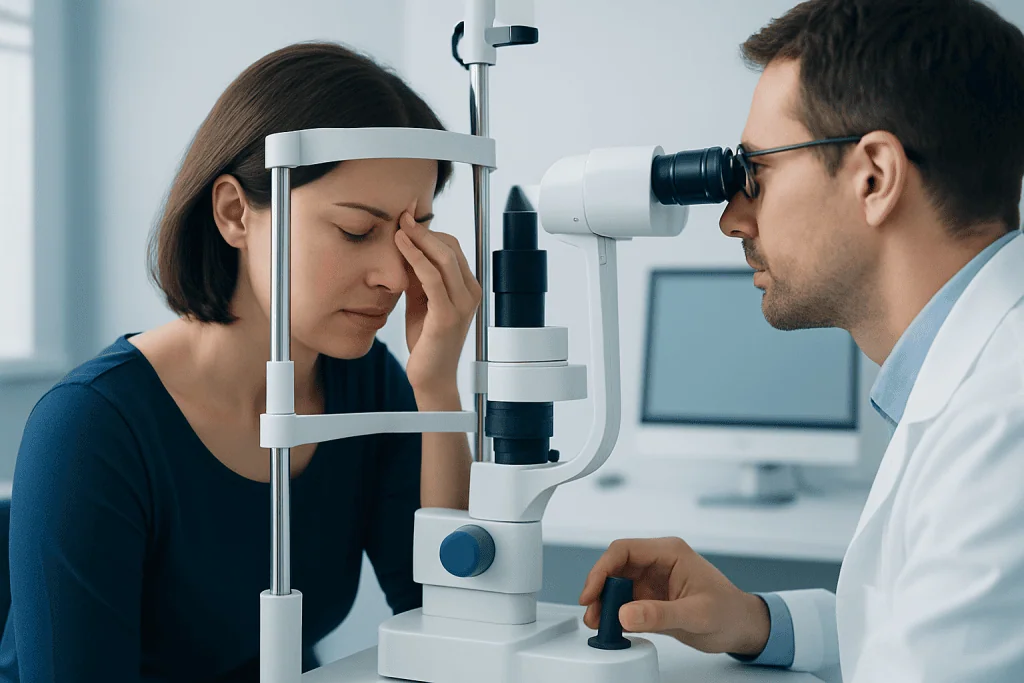
The symptoms of vision strain vary from person to person. They often begin during or after a visually demanding task and improve after a break, sleep, or time away from the activity. Symptoms may affect the eyes themselves, vision, or surrounding muscles.
- Tired, sore, heavy, burning, itchy, or watery eyes
- Dryness, grittiness, redness, or a feeling that something is in the eye
- Intermittent blurred vision or trouble shifting focus from near to far
- Headache, especially around the forehead, temples, or behind the eyes
- Light sensitivity or difficulty tolerating glare
- Neck, shoulder, or upper-back discomfort related to posture
- Difficulty concentrating or a sense that words move or overlap while reading
Symptoms are real even when an eye examination is otherwise normal. They may reflect a combination of focusing effort, reduced blinking, surface dryness, and body posture. However, persistent blur in one eye, double vision, eye pain, or symptoms unrelated to visual activity should not be assumed to be ordinary strain.
Why vision strain happens: evidence, not myths

Vision requires coordinated work by focusing muscles, eye movements, tear production, and the brain’s visual processing system. During close work, the eyes must sustain accommodation, the process of adjusting focus, and convergence, the inward turning of the eyes needed to view nearby objects. Long periods without rest can make this work feel uncomfortable, particularly when a person already has an uncorrected refractive error such as farsightedness, nearsightedness, or astigmatism.
Digital devices can contribute because users commonly hold them close, read small text, and blink less often. Reduced blinking can destabilize the tear film and lead to dryness or irritation. Blue light from typical consumer screens has received considerable attention, but current evidence does not show that it causes digital eye strain or eye damage at normal viewing levels. Blue-light filtering glasses may feel more comfortable for some people, but they are not a proven essential treatment for vision strain.
Environmental and physical factors matter as well. Reflections on a screen, direct overhead lighting, poor contrast, air conditioning, smoke, and low humidity may worsen eye-surface symptoms. Leaning forward, holding a device too low, or working with a poorly adjusted chair can increase neck and shoulder tension, which may be perceived as headache or eye discomfort.
Some people are more susceptible, including those who have dry eye symptoms, migraine, diabetes, thyroid eye disease, certain neurologic conditions, or medications that reduce tear production. Children and adults may also develop symptoms if their prescription has changed or if the eyes do not coordinate comfortably during close tasks.
How vision strain is assessed
A clinician will usually begin by asking when symptoms occur, which tasks trigger them, how long they last, and whether there are associated headaches, dryness, double vision, or changes in vision. Information about work habits, screen time, lighting, glasses or contact lens use, health conditions, and medications can provide useful clues.
An eye assessment may include visual acuity testing, measurement of refractive error, and examination of the front and back of the eye. Depending on the symptoms, the clinician may assess eye movements, how the eyes work together at near distance, focusing ability, pupil responses, and signs of dry eye. This evaluation helps distinguish ordinary strain from conditions that need more targeted treatment.
There is no single test that confirms vision strain. Instead, the diagnosis is based on the symptom pattern and on excluding or managing contributing eye problems. Keeping a brief symptom diary for one or two weeks—recording activities, duration, lighting, breaks, and symptoms—can help identify patterns before an appointment.
Practical ways to reduce vision strain
The most helpful approach is usually to reduce sustained visual demand and improve the visual environment. For screen work, placing the display about an arm’s length away is often comfortable, although the ideal distance depends on screen size, prescription, and individual needs. The top of the screen is generally best positioned at or slightly below eye level, which can support a natural posture and may reduce eye exposure and dryness.
Regular breaks allow the eyes to change focus and the body to move. A commonly used strategy is the 20-20-20 approach: about every 20 minutes, look at something roughly 20 feet away for 20 seconds. This is a practical reminder rather than a strict medical rule. Longer breaks, standing, stretching, and alternating between near and distance tasks may be especially useful during extended work sessions.
Text should be comfortably large and easy to read without leaning forward or squinting. Adjust screen brightness to a level that is broadly similar to the surrounding room, reduce reflections where possible, and avoid working in an extremely dark room with a very bright screen. Good room lighting is preferable to direct glare on the screen or workstation.
Conscious, complete blinking can help during visually intensive tasks. People with dryness may benefit from discussing preservative-free lubricating eye drops with an eye-care professional or pharmacist, particularly if symptoms recur. Contact lens wearers should follow their prescribed wearing schedule and seek advice if lenses become uncomfortable, vision becomes blurry, or redness develops.
Treatment depends on the underlying contributor
When lifestyle adjustments are not enough, treatment focuses on the factor causing or worsening symptoms. An updated prescription for glasses or contact lenses may reduce the effort needed to see clearly. Some people need specific lenses for computer distance or close tasks, especially if they are over age 40 and developing presbyopia, the normal age-related reduction in near focusing ability.
Dry eye disease may require a tailored plan that can include environmental adjustments, lubricating drops, eyelid hygiene, management of contributing conditions, or prescription treatment when appropriate. If a person has a problem with binocular vision, focusing, or eye alignment, an eye specialist may recommend lenses, prisms, targeted exercises, or other treatment based on the diagnosis.
Headaches should be assessed in their full context. Vision strain can contribute to headache, but not every headache during screen use is caused by the eyes. Migraine, stress, sleep disruption, dehydration, posture, and other medical factors may also play a role. A clinician can advise on the appropriate evaluation when headaches are new, frequent, severe, or changing.
Acibadem International’s multidisciplinary specialists and JCI-accredited hospitals can assess visual symptoms and associated health concerns for international patients when a more detailed evaluation is needed.
When to seek medical care
Arrange a routine eye examination if vision strain keeps returning despite sensible changes, interferes with work or reading, or is accompanied by ongoing dryness, frequent headaches, trouble focusing, or a need to hold reading material unusually close or far away. Children who avoid reading, lose their place easily, rub their eyes often, or have difficulty at school may also benefit from an eye assessment.
Seek urgent medical care for sudden loss or marked reduction of vision, severe eye pain, a painful red eye, new double vision, injury or chemical exposure to the eye, or a severe headache with neurologic symptoms such as weakness, confusion, or trouble speaking. New flashes of light, a sudden shower of floaters, or a curtain-like shadow in the visual field also need prompt evaluation.
These warning signs are not typical features of simple vision strain. Prompt assessment can identify time-sensitive eye or neurologic conditions and provide appropriate treatment. When in doubt, it is safer to contact an eye-care professional or urgent medical service for advice.
Frequently asked questions
Is vision strain the same as digital eye strain?
Digital eye strain is a form of vision strain associated with computer, tablet, and phone use. Vision strain can also occur with reading, driving, detailed manual work, or any prolonged task requiring close focus. Screens often add dryness, glare, and reduced blinking to the visual demand.
Can vision strain permanently damage the eyes?
Ordinary vision strain is generally temporary and is not known to cause permanent eye damage. It can still be uncomfortable and may affect concentration, work, and quality of life. Persistent symptoms should be checked because they may reflect an untreated eye problem rather than strain alone.
Do blue-light glasses prevent vision strain?
Current evidence does not show that blue-light filtering glasses reliably prevent digital eye strain. Some people may prefer them for comfort, but more established measures include regular breaks, reducing glare, using readable text, blinking, and correcting vision problems. Blue light in the evening may affect sleep for some people, which is a separate issue from eye strain.
How long does vision strain last?
Mild symptoms often improve after resting the eyes, changing focus, blinking, and stepping away from the triggering task. Recovery may take longer if dry eye, poor ergonomics, an outdated prescription, or very prolonged work sessions are involved. Symptoms that continue beyond the activity or recur often warrant an eye examination.
Can needing glasses cause vision strain?
Yes. Uncorrected or changed nearsightedness, farsightedness, astigmatism, or age-related near-vision changes can make focusing more effortful. An eye examination can determine whether glasses, contact lens changes, or task-specific lenses may help.
What is the best break routine for screen work?
A practical option is to pause approximately every 20 minutes and look into the distance for about 20 seconds. It is also helpful to blink fully, relax the shoulders, and change position regularly. The best routine is one that can be used consistently and that reduces symptoms during the working day.
References
- American Academy of Ophthalmology
- American Optometric Association
- National Eye Institute
- Mayo Clinic
- International Council of Ophthalmology
This article is for general information only and is not a substitute for professional medical advice. Please consult a qualified doctor about your individual situation.
Explore treatments in Turkey — costs, top hospitals & a free quote
JCI-accredited · board-certified surgeons · reply within 24h
Add us as a Preferred Source to see more of our trusted health content across Google Search, AI Overviews and Discover.

More from the Health Library

Laser Liposuction Cost: What Patients Need to Know

Upper Gi Series: A Complete Medical Overview

Lipoprotein — Explained by Medical Evidence, Not Myths

Tinnitus — Explained by Medical Evidence, Not Myths

Ovo Lacto Vegetarianism Vegetarian — Explained by Medical Evidence, Not Myths