Visual Snow Syndrome: Symptoms, Diagnosis, and Daily Management

Visual snow syndrome causes ongoing static-like dots in the vision that last longer than a typical migraine aura. Many people also notice light sensitivity, afterimages, night vision difficulty, floaters, or ringing in the ears.
Key Takeaways
- Visual snow syndrome causes ongoing static-like dots in the vision that last longer than a typical migraine aura.
- Many people also notice light sensitivity, afterimages, night vision difficulty, floaters, or ringing in the ears.
- Diagnosis is clinical and focuses on symptoms while ruling out eye disease, migraine aura, medication effects, and other neurological conditions.
- There is no single cure, but symptom management may include trigger control, migraine care, tinted lenses, and specialist follow-up.
- A neuro-ophthalmologist or neurologist can help confirm the diagnosis and create an individualized care plan.
Visual snow syndrome is a neurological visual condition that causes persistent flickering dots across the visual field, often along with other visual and sensory symptoms. Although it can be distressing, a careful evaluation can help rule out other causes and guide symptom management.
Overview of visual snow syndrome
Visual snow syndrome is a condition in which a person continuously sees tiny flickering dots, often described as television static, across all or most of the visual field. These dots are usually present all the time rather than appearing in brief episodes. Many people notice them more clearly against plain backgrounds, in dim light, or when looking at the sky or a white wall.
This condition is considered a neurological visual processing disorder rather than a structural problem of the eyes themselves. In other words, the eyes may look normal on examination, but the brain’s handling of visual information may be altered. For this reason, visual snow syndrome often sits at the intersection of neurology, migraine medicine, and neuro-ophthalmology.
Visual snow syndrome is different from common eye floaters, occasional flashes, or the short-lived shimmering visual changes of a migraine aura. Symptoms are typically persistent for months or years, and they may occur with additional features such as afterimages, sensitivity to light, poor night vision, or difficulty ignoring visual “noise.” A proper medical assessment is important to confirm the pattern and to exclude other conditions that can affect vision.
Symptoms and how visual snow may feel day to day
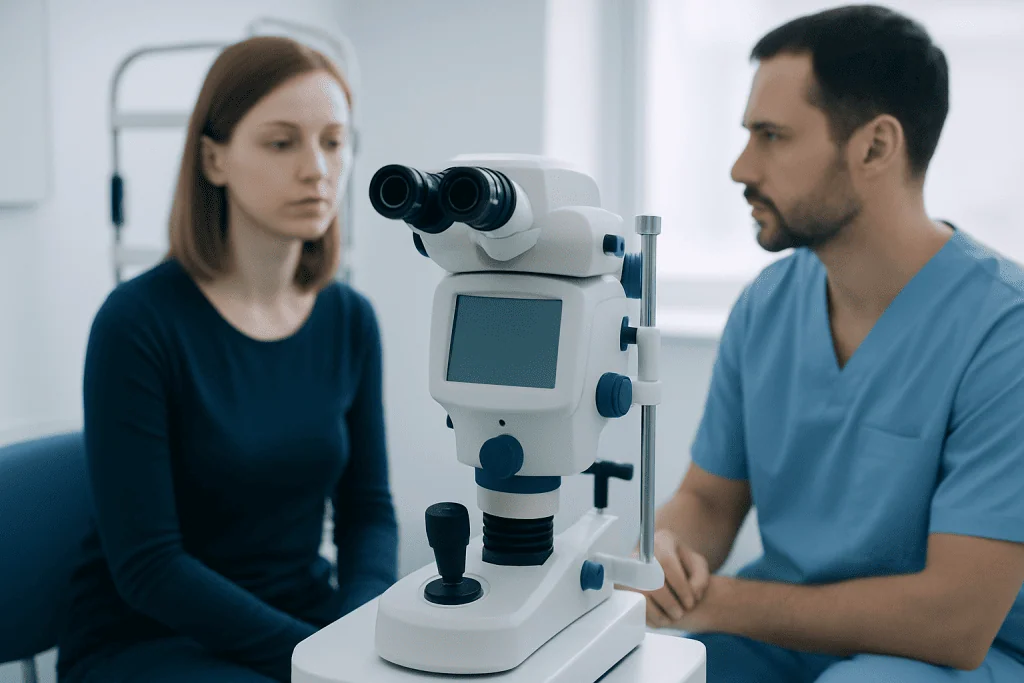
The main symptom of visual snow syndrome is the constant presence of countless small, moving dots across the visual field. People may describe them as black and white, transparent, flashing, or colored. The intensity can vary from mild background noise to a more distracting visual layer that interferes with reading, screen use, driving at night, or focusing in bright environments.
Many patients also have other visual symptoms. These can include palinopsia, which means persistent afterimages or trailing images after an object moves; photophobia, or sensitivity to light; entoptic phenomena, such as noticing floaters, blue field dots, or self-light of the eye more than usual; and nyctalopia, meaning difficulty seeing in low light or at night. Some people additionally experience non-visual symptoms, especially tinnitus.
Symptoms often exist alongside migraine, with or without aura, but visual snow syndrome is not simply the same thing as migraine aura. A migraine aura usually lasts minutes to an hour and then resolves, while visual snow remains present continuously. Some people also report anxiety, fatigue, trouble concentrating, or sensory overstimulation, especially when symptoms have been present for a long time.
- Continuous static-like dots in vision
- Light sensitivity
- Afterimages or visual trailing
- Difficulty seeing in dim light
- More awareness of floaters or other visual effects
- Tinnitus or ringing in the ears
Causes, associated conditions, and risk factors

The exact cause of visual snow syndrome is not fully understood. Current research suggests that it may involve differences in how the brain filters and processes visual information. Some experts believe there is increased excitability or altered activity in visual pathways, but this is still being studied. Importantly, this does not mean that a dangerous brain disease is present in every case.
Visual snow syndrome is commonly associated with migraine, especially migraine with aura. It may also overlap with conditions that involve sensory hypersensitivity, such as tinnitus. These associations do not prove that one condition causes the other, but they are common enough that doctors often ask about headaches, sound sensitivity, sleep problems, and anxiety symptoms during the evaluation.
Symptoms can sometimes become more noticeable during stress, poor sleep, illness, or periods of heavy screen exposure. Certain substances or medications may also trigger or worsen visual symptoms in some people, so a careful medication and substance history is useful. Because similar complaints can happen with other neurological or eye conditions, doctors may also consider differential diagnoses such as migraine, retinal disorders, or persistent aura before confirming visual snow syndrome.
How visual snow syndrome is diagnosed
Diagnosis is based mainly on the person’s symptom history and a clinical examination. A doctor will ask whether the static is present continuously, how long symptoms have lasted, whether both eyes are affected, and what other visual or neurological symptoms are present. The pattern matters: persistent visual static together with typical associated features helps distinguish visual snow syndrome from other causes of visual disturbance.
An eye examination is usually performed to rule out retinal, optic nerve, or other eye disease. Depending on the history, additional tests may include visual field testing, retinal imaging, or brain imaging. These tests are often normal in visual snow syndrome, but they are helpful when symptoms are new, atypical, one-sided, or accompanied by other concerning findings.
Doctors may also review migraine history, medication use, sleep quality, mental health symptoms, and exposure to recreational drugs or hallucinogens, since these factors can affect visual perception. In some cases, assessment by both neurology and ophthalmology is useful. When the diagnosis is uncertain, evaluation through neurology assessment and comprehensive eye examination may help clarify whether symptoms fit visual snow syndrome or another condition.
Treatment options and symptom management
There is currently no single universally effective cure for visual snow syndrome, so treatment focuses on reducing symptom burden and improving daily function. The best approach is individualized. Some people benefit most from reassurance and practical coping strategies once serious eye or brain disease has been excluded, while others need treatment for related conditions such as migraine, insomnia, or anxiety.
When migraine is present, managing migraine triggers and discussing preventive or symptom-directed migraine care with a doctor may help some patients. Tinted lenses or precision filters can be useful in selected cases, especially for photophobia or screen sensitivity. Because responses vary widely, treatments are usually introduced carefully and reviewed over time rather than expecting immediate results.
Supportive care may include sleep optimization, stress reduction, limiting triggers, and structured follow-up with a specialist. Some patients may be referred for migraine treatment if headaches are frequent or disabling, or for neuro-ophthalmology evaluation when symptoms are complex. Near the end of the care pathway, patients who need coordinated assessment may also seek help from centers such as Acibadem International, where multidisciplinary specialists in JCI-accredited hospitals evaluate and treat international patients with neurological and visual conditions.
Daily management, self-care, and practical coping strategies
Daily management begins with understanding personal triggers. Many people find that symptoms feel worse when they are tired, stressed, dehydrated, or exposed to glare. Keeping a symptom diary can help identify patterns related to sleep, caffeine, screen time, bright light, headaches, or certain environments. This information can be useful during medical visits.
Environmental adjustments can make day-to-day life easier. Screen filters, lower brightness settings, frequent screen breaks, and good room lighting may reduce visual discomfort. Sunglasses outdoors and carefully selected tinted lenses indoors may help with photophobia, although very dark lenses should be used thoughtfully to avoid increasing light sensitivity over time. Maintaining regular sleep, meals, hydration, and exercise may also support symptom control.
Emotional well-being matters too. Persistent visual symptoms can be distracting and frustrating, and some people begin to focus on them more when anxious. Relaxation techniques, mindfulness, counseling, or treatment for coexisting anxiety can be valuable parts of care. Self-care does not replace medical evaluation, but it can improve quality of life while a long-term management plan is being developed.
When to see a doctor
Anyone with persistent new visual symptoms should arrange a medical assessment, especially if the symptoms are affecting daily life. Visual snow syndrome itself is often not dangerous, but it should not be assumed without excluding other causes. An evaluation is particularly important when the visual disturbance starts suddenly, changes rapidly, or appears in only one eye.
Urgent medical care is needed if visual symptoms occur with significant eye pain, sudden vision loss, weakness, numbness, confusion, trouble speaking, severe new headache, or other neurological warning signs. These features can point to conditions that need prompt treatment. Even when the cause is ultimately benign, early assessment can provide reassurance and a safer path to diagnosis.
If symptoms persist despite a normal basic eye check, further review by a neuro-ophthalmologist or neurologist may be appropriate. Ongoing follow-up is helpful when symptoms evolve or when related problems such as migraine, tinnitus, sleep disturbance, or anxiety are also present. A qualified doctor can explain which findings fit visual snow syndrome and which would suggest another condition.
Frequently asked questions
Is visual snow syndrome a problem with the eyes or the brain?
Visual snow syndrome is generally considered a neurological visual processing disorder. Many people have a normal eye examination, but the brain may be handling visual signals differently. Even so, an eye exam is still important to rule out eye disease.
Is visual snow syndrome the same as migraine aura?
No. Migraine aura usually comes in episodes that last a limited time and then resolve, while visual snow syndrome tends to be continuous. However, the two conditions can occur together, and many people with visual snow also have migraine.
Can visual snow syndrome go away on its own?
Symptoms may remain stable, fluctuate, or become less bothersome over time, but there is no predictable pattern for everyone. Some people adapt well once they understand the condition and identify triggers. Ongoing medical follow-up can help if symptoms change or become more disruptive.
What tests are used to diagnose visual snow syndrome?
Doctors usually start with a detailed history and a full eye examination. Depending on the situation, they may also recommend visual field testing, retinal imaging, or brain imaging to rule out other causes. The diagnosis is made by the overall symptom pattern rather than one single test.
Are there treatments that help visual snow syndrome?
There is no single treatment that works for every patient. Management often focuses on related problems such as migraine, light sensitivity, poor sleep, or anxiety, along with practical changes like screen adjustments and tinted lenses. A specialist can help decide which options are most appropriate.
When should someone seek urgent help for visual symptoms?
Urgent care is important if visual changes come with sudden vision loss, severe eye pain, weakness, numbness, confusion, trouble speaking, or a severe new headache. These features are not typical of uncomplicated visual snow syndrome and may signal another condition. New one-sided symptoms should also be assessed promptly.
References
- American Academy of Ophthalmology
- American Academy of Neurology
- National Eye Institute
- National Institute of Neurological Disorders and Stroke
- European Headache Federation
This article is for general information only and is not a substitute for professional medical advice. Please consult a qualified doctor about your individual situation.
Explore treatments in Turkey — costs, top hospitals & a free quote
JCI-accredited · board-certified surgeons · reply within 24h
Add us as a Preferred Source to see more of our trusted health content across Google Search, AI Overviews and Discover.