Vitreous Humor — Explained by Medical Evidence, Not Myths

Vitreous humor is a clear gel that fills the space between the lens and the retina. With age, the vitreous humor naturally becomes more liquid and may pull away from the retina.
Key Takeaways
- Vitreous humor is a clear gel that fills the space between the lens and the retina.
- With age, the vitreous humor naturally becomes more liquid and may pull away from the retina.
- Common symptoms of vitreous changes include floaters and flashes of light.
- Most vitreous changes are not dangerous, but a retinal tear or detachment is an emergency.
- An eye examination with pupil dilation helps doctors assess the vitreous and retina.
- Prompt care is important if symptoms start suddenly or vision becomes shadowed, blurred, or reduced.
Vitreous humor is the clear, gel-like substance that fills the back of the eye, helping it keep its round shape and allowing light to pass to the retina. Most changes in the vitreous humor are age-related and harmless, but sudden new floaters, flashes, or vision loss can signal a problem that needs prompt medical assessment.
What the vitreous humor is and why it matters
The vitreous humor is the transparent, gel-like material that fills the large space in the back of the eye, between the lens and the retina. It is mostly water, with a delicate framework of collagen fibers and substances such as hyaluronic acid that help it keep a soft, gel consistency. In a healthy eye, this clear gel allows light to pass through to the retina, where visual signals begin.
The vitreous humor also helps the eye maintain its shape. It gently supports the retina from the inside and acts as a cushion against minor movements and impacts. Although it does not focus light like the cornea or lens, it plays an important supporting role in stable, comfortable vision.
Many people first hear about the vitreous humor when they notice floaters or are told they have a posterior vitreous detachment. These changes are common, especially with aging. Medical evidence shows that most vitreous changes are part of the natural aging process, but some symptoms overlap with retinal problems, which is why proper eye evaluation matters.
How the vitreous humor changes over time
The vitreous humor is not exactly the same throughout life. In childhood and early adulthood, it is usually firmer and more uniform. Over time, however, the gel slowly becomes more liquid. This process is often called vitreous syneresis and is a normal age-related change rather than a disease on its own.
As the vitreous becomes less uniform, tiny clumps or strands can form within it. These cast small shadows on the retina and may be seen as floaters. In many people, the vitreous also gradually separates from the retina. This is called posterior vitreous detachment, or PVD. PVD is common with aging and may happen earlier in people who are nearsighted, have had eye surgery, or have experienced eye trauma.
Most age-related vitreous changes do not threaten vision. Still, during the process of separation, the vitreous can tug on the retina. In some cases, this traction can create a retinal tear, which may lead to retinal detachment if not treated. This is the main reason sudden new symptoms should not be ignored.
Symptoms linked to vitreous humor problems

The most familiar symptom related to the vitreous humor is floaters. People often describe them as spots, threads, cobwebs, rings, or drifting shadows that move when the eye moves. Floaters are especially noticeable against a bright plain background such as a blue sky, a white wall, or a computer screen.
Another common symptom is flashes of light. These may look like brief streaks or flickers in the side vision and can happen when the vitreous tugs on the retina. A sudden increase in floaters together with flashes deserves prompt medical attention, even if there is no pain.
Other symptoms can suggest a more serious complication rather than a simple vitreous change. These include blurred vision that does not clear, a curtain or shadow over part of the visual field, reduced side vision, or a sudden drop in vision. While many eye conditions can cause these symptoms, they may indicate bleeding into the vitreous, a retinal tear, or retinal detachment.
- Common: occasional floaters, mild awareness of moving specks
- Needs prompt assessment: sudden burst of floaters, flashes, blurred vision
- Urgent warning signs: curtain-like shadow, missing vision, sudden marked vision loss
Causes and risk factors
The most common cause of symptoms involving the vitreous humor is normal aging. As the gel structure changes and partially liquefies, floaters become more likely and the vitreous may detach from the retina. This process can happen without any underlying disease and is often simply part of getting older.
Some people are more likely to develop vitreous changes earlier or to have related complications. Nearsightedness, previous eye surgery such as cataract surgery, eye injury, and a past history of retinal tears or detachments can all increase risk. Inflammation inside the eye may also affect the vitreous. In some cases, bleeding from the retina or abnormal blood vessels can enter the vitreous and cloud vision.
Doctors also consider other eye conditions that may affect the vitreous or retina together. For example, complications of diabetes can lead to bleeding into the vitreous, and inflammatory or retinal disorders may change vision in ways that resemble a simple floater problem. Because symptoms can overlap, a person should avoid self-diagnosing based on internet descriptions alone.
How doctors diagnose vitreous humor conditions
Diagnosis begins with a careful history. The doctor will usually ask when symptoms started, whether they came on suddenly, whether there are flashes, whether vision is blurred, and whether there has been trauma, surgery, or severe nearsightedness. This information helps determine whether a routine age-related vitreous change is likely or whether urgent retinal assessment is needed.
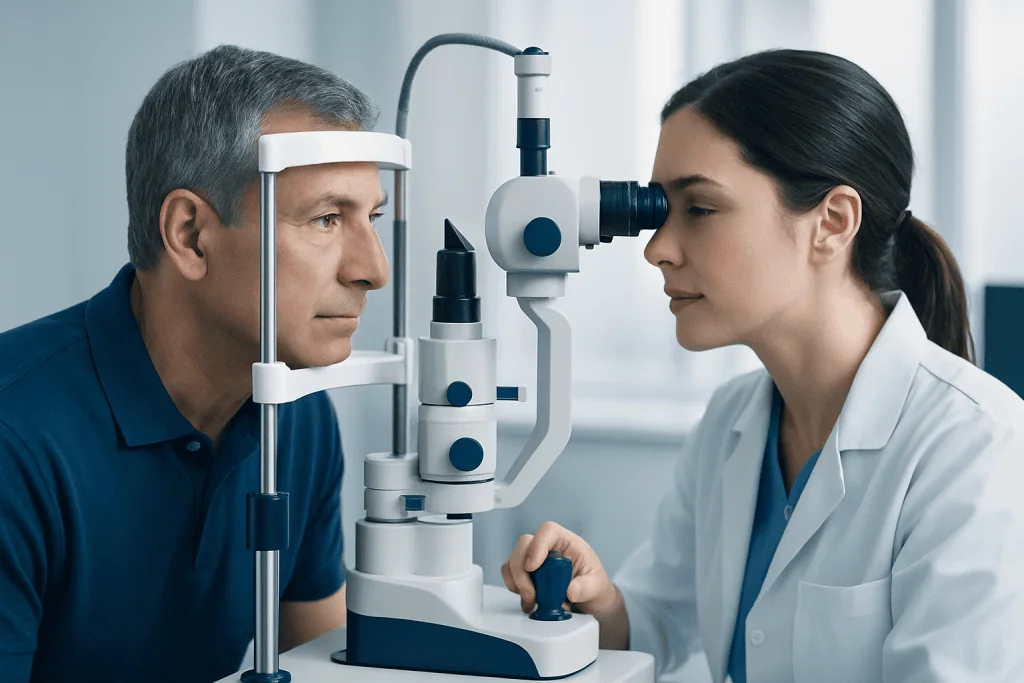
A full eye examination is the key test. It often includes checking visual acuity, examining the front of the eye, and measuring eye pressure when appropriate. Most importantly, the pupils are usually dilated so the vitreous and retina can be seen more clearly. This allows the ophthalmologist to look for vitreous separation, bleeding, retinal tears, or detachment.
If the view into the eye is blocked, imaging may help. Ocular ultrasound can be useful when blood or other clouding makes the retina hard to see directly. In some situations, retinal imaging or specialist assessment is arranged. Patients with symptoms suggesting a retinal problem may be referred urgently for retina treatment or further procedures depending on the findings.
Treatment options and what to expect
Treatment depends on the cause. Many people with age-related floaters or uncomplicated posterior vitreous detachment do not need active treatment. Doctors often recommend observation, because the brain commonly becomes less aware of floaters over time, and some floaters settle out of the line of sight. Follow-up may be advised to make sure no delayed retinal tear develops.
If a retinal tear is found, treatment is usually recommended to reduce the chance of retinal detachment. This may involve procedures such as laser sealing or cryotherapy performed by an eye specialist. If the retina has already detached, more advanced care may be needed, which can include vitrectomy or other retinal procedures depending on the case.
When vision is affected by blood, dense debris, infection, or severe traction inside the eye, treatment focuses on the underlying problem. In selected cases, a vitrectomy removes the altered vitreous and replaces it with another fluid or gas as appropriate. This is a specialist decision based on symptoms, retinal findings, and the balance of benefits and risks.
Some eye conditions affecting the retina and the vitreous are related. For example, diabetic eye disease can lead to bleeding or traction that involves the vitreous cavity and may require diabetic retinopathy treatment. Treatment plans are individualized, and patients should discuss expected recovery, activity restrictions, and follow-up with their ophthalmologist.
Self-care, prevention, and everyday eye awareness
There is no proven way to prevent all age-related changes in the vitreous humor, because they are a natural part of aging. However, overall eye health can be supported by regular eye examinations, especially for people with diabetes, high myopia, prior eye surgery, or a family or personal history of retinal disease. Managing long-term health conditions also matters because retinal disease can affect the vitreous secondarily.
It is helpful for patients to notice patterns in their vision without becoming alarmed by every floater. Long-standing, stable floaters are common. What matters most is change: a sudden shower of new floaters, new flashes, or a curtain-like shadow should prompt a same-day or urgent eye assessment. Eye protection during sports or hazardous work can also reduce the risk of trauma-related vitreous and retinal injury.
People who have already had a posterior vitreous detachment or retinal issue in one eye should follow their specialist’s advice for monitoring the other eye. Some patients benefit from care coordinated across retinal and general ophthalmology services. At Acibadem International, multidisciplinary eye specialists in JCI-accredited hospitals diagnose and treat vitreous and retinal conditions for international patients when specialized evaluation is needed.
When to seek medical care
Medical care is recommended promptly if symptoms involving the vitreous humor start suddenly. This includes a sudden increase in floaters, repeated flashes of light, blurred vision that is new, or a dark shadow in part of the visual field. These symptoms do not always mean a retinal emergency, but they should be checked without delay because timing can matter.
Urgent same-day evaluation is especially important if there is a curtain-like loss of vision, side vision loss, marked sudden decrease in sight, eye injury, or symptoms in a person with a history of retinal tears or detachment. Patients with diabetes who notice new floaters or haze should also seek assessment, as bleeding inside the eye can occur.
Routine care is appropriate for long-standing, unchanged floaters without flashes or vision loss, but even then, regular eye exams remain useful. If there is uncertainty, it is safer to ask an eye doctor than to assume symptoms are harmless. Early examination can reassure when findings are benign and helps protect vision when treatment is needed.
Frequently asked questions
Is the vitreous humor the same as tears or eye fluid on the surface?
No. The vitreous humor is the clear gel inside the eye, behind the lens and in front of the retina. Tears and the eye's surface moisture are completely different and do not come from the vitreous.
Are floaters always caused by a serious eye problem?
No. Many floaters are caused by normal age-related changes in the vitreous humor and are not dangerous. The concern is when floaters appear suddenly, increase quickly, or happen together with flashes or vision loss.
Can vitreous humor regenerate after it changes?
The vitreous does not return to its original youthful gel state once age-related changes occur. However, many people adapt well, and symptoms such as floaters may become less noticeable over time. Treatment is only needed in selected situations.
What is posterior vitreous detachment?
Posterior vitreous detachment, or PVD, happens when the vitreous separates from the retina as part of aging. It is common and often not harmful by itself, but it can sometimes pull hard enough to create a retinal tear.
Does a vitreous problem cause eye pain?
Most common vitreous changes, including floaters and PVD, do not cause pain. Pain may suggest a different issue, such as inflammation, injury, or another eye condition, so it should be discussed with a doctor.
How is a vitreous hemorrhage different from ordinary floaters?
A vitreous hemorrhage means blood has entered the vitreous cavity, often causing many dark floaters, haze, or blurred vision. Unlike simple age-related floaters, it may be linked to retinal disease, diabetes, trauma, or a retinal tear and needs medical evaluation.
This article is for general information only and is not a substitute for professional medical advice. Please consult a qualified doctor about your individual situation.
Explore treatments in Turkey — costs, top hospitals & a free quote
JCI-accredited · board-certified surgeons · reply within 24h
Add us as a Preferred Source to see more of our trusted health content across Google Search, AI Overviews and Discover.

More from the Health Library
Sleep Deprivation — Explained by Medical Evidence, Not Myths

Integumentary System Organs: A Complete Medical Overview

Campylobacter — Explained by Medical Evidence, Not Myths

Ice for Sore Neck: A Complete Medical Overview

Types of Dwarfism: What Patients Need to Know