Vocal Cord Nodules and Polyps: Symptoms and Voice Treatment

Vocal cord nodules and polyps are non-cancerous lesions that usually develop after repeated vocal strain, irritation or inflammation. Persistent hoarseness, vocal fatigue, breathiness, reduced pitch range and throat discomfort are common symptoms.
Key Takeaways
- Vocal cord nodules and polyps are non-cancerous lesions that usually develop after repeated vocal strain, irritation or inflammation.
- Persistent hoarseness, vocal fatigue, breathiness, reduced pitch range and throat discomfort are common symptoms.
- Diagnosis is made by an ENT specialist using laryngoscopy, often with stroboscopy to assess vocal fold vibration.
- Voice therapy is a key treatment, especially for nodules, and helps people use the voice more efficiently and safely.
- Some polyps, large lesions or non-resolving cases may need microsurgical removal followed by voice rehabilitation.
- Hoarseness lasting more than two to three weeks should be assessed by a qualified doctor, particularly in smokers or people with swallowing or breathing symptoms.
Vocal cord nodules and polyps are common benign growths on the vocal folds that can make the voice sound hoarse, weak, breathy or strained. With accurate diagnosis and a tailored plan that may include voice therapy, medical care and sometimes surgery, most people can improve voice quality and protect their vocal health.
Overview
Vocal cord nodules and polyps are benign, meaning non-cancerous, changes that form on the vocal folds inside the voice box, or larynx. The vocal folds are two delicate bands of tissue that open for breathing and come together to vibrate when a person speaks or sings. When a nodule or polyp interrupts this smooth vibration, the voice may become hoarse, rough, weak, breathy or unpredictable.
Although the terms are sometimes used together, nodules and polyps are not exactly the same. Vocal cord nodules are usually small, firm, callus-like swellings that tend to appear on both vocal folds in matching locations. They often develop gradually from repeated voice overuse or misuse. Vocal cord polyps are often softer, larger or more blister-like, and they commonly occur on one vocal fold, although they can affect both.
These conditions are especially common in people who use their voice heavily, such as teachers, singers, coaches, call center workers, presenters, actors and parents of young children. However, anyone can develop them. The good news is that many people improve with the right diagnosis, voice education and treatment plan. Early care helps reduce strain, restore healthier vocal habits and prevent ongoing irritation.
Symptoms of Vocal Cord Nodules and Polyps
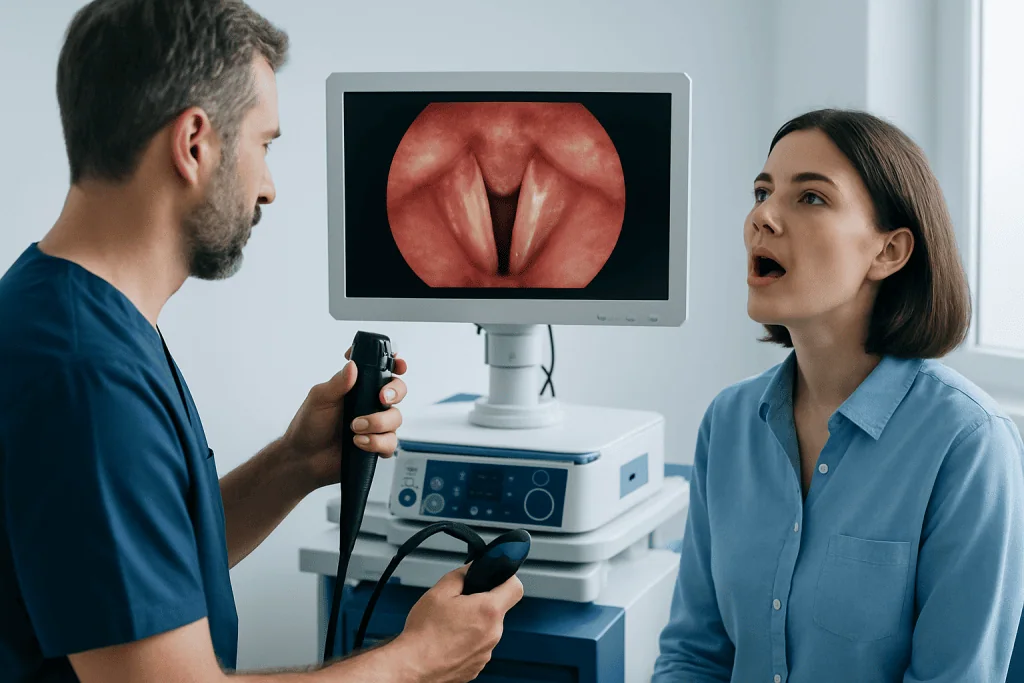
The main symptom of vocal cord nodules and polyps is a change in voice quality that does not settle as expected. Hoarseness may be present all day or may become worse after talking, singing or speaking in noisy environments. Some people notice that their voice sounds rough, raspy, breathy or lower than usual. Others feel they must push harder to be heard.
Symptoms can vary depending on the size, location and type of lesion, as well as how a person uses the voice. Professional voice users may notice subtle changes earlier, such as loss of vocal control, reduced range, difficulty with high notes, breaks in the voice or reduced endurance. For others, the first sign may be frequent throat clearing or a sensation that something is stuck in the throat.
- Hoarseness lasting more than two to three weeks
- Vocal fatigue or a tired voice after short periods of speaking
- Breathy, rough, strained or weak voice quality
- Voice breaks, pitch changes or reduced singing range
- Throat discomfort, tightness or a lump-like sensation
- Frequent throat clearing or cough related to irritation
Vocal cord nodules and polyps usually do not cause severe pain, and many people can breathe and swallow normally. However, persistent voice changes should not be ignored. A proper examination helps confirm the cause and rules out other conditions such as vocal fold inflammation, cysts, paralysis, reflux-related irritation or, less commonly, suspicious lesions.
Causes and Risk Factors

Vocal cord nodules and polyps often develop when the vocal folds are exposed to repeated mechanical stress. Loud talking, shouting, speaking for long periods without rest, singing with poor technique, speaking over background noise and using a voice that is too high or too low for comfort can all increase strain. Over time, the delicate vocal fold lining may swell and thicken, leading to nodules or polyps.
A single intense vocal event can also contribute, particularly to a polyp. For example, shouting at a concert, cheering at a sports event or forceful singing when the voice is already tired may cause a small blood vessel in the vocal fold to break. This can create a blood-filled or fluid-filled swelling. Repeated irritation then prevents the tissue from healing smoothly.
Several health and lifestyle factors may increase the risk or slow recovery. These include smoking or exposure to secondhand smoke, dehydration, poorly controlled acid reflux or laryngopharyngeal reflux, allergies, chronic sinus drainage, frequent coughing, and working in dusty or dry environments. Some people develop compensatory voice habits after a cold or throat infection, continuing to strain the voice even after the infection has improved.
Risk is not only about how much a person talks, but also how the voice is produced. Efficient voice use involves breath support, relaxed throat muscles and balanced vocal fold closure. A speech and language therapist or voice therapist can identify patterns such as excessive throat tension, hard glottal attacks, poor breath coordination or habitual loudness that may contribute to symptoms.
How Diagnosis Is Made
Diagnosis begins with a detailed medical and voice history. An ENT specialist may ask when the hoarseness started, whether it followed a cold or vocal strain, what makes it better or worse, and how the person uses the voice at work and socially. Information about reflux symptoms, allergies, medications, smoking, previous surgery and professional voice demands is also helpful.
The key examination is visualization of the larynx. This is commonly done with flexible laryngoscopy, where a thin camera is passed gently through the nose, or with a rigid scope placed through the mouth. The procedure is usually quick and performed in an outpatient setting. It allows the doctor to inspect the vocal folds, look for nodules, polyps or other lesions, and assess movement.
Many voice clinics also use videostroboscopy. This technique uses a special light to create a slow-motion view of vocal fold vibration. Stroboscopy is particularly useful because small lesions may affect the wave-like motion of the vocal fold lining even when they appear modest in size. It helps distinguish nodules and polyps from cysts, scars, hemorrhage, inflammation or nerve-related problems.
In some cases, additional assessment may be recommended. A speech and language therapist may analyze voice quality, pitch, loudness, breath support and speaking patterns. If reflux, allergy or sinus disease is suspected, treatment may be started or further evaluation arranged. Imaging is not usually needed for typical nodules or polyps, but the doctor may request tests if another condition is suspected.
Treatment Options
Treatment depends on the type of lesion, symptom severity, voice needs and contributing factors. For vocal cord nodules, conservative treatment is usually the first approach. This often includes voice therapy, vocal hygiene education and management of irritants such as reflux, allergies or chronic cough. Nodules frequently improve when the voice is used more efficiently and the vocal folds are given the conditions they need to heal.
Voice therapy is guided by a trained speech and language therapist or voice specialist. It may include exercises to reduce throat tension, improve breath coordination, balance resonance and reduce vocal effort. Therapy also helps patients recognize harmful habits such as speaking too loudly, talking through fatigue, repeated throat clearing or using a strained pitch. For singers and professional voice users, therapy may be coordinated with singing teachers or vocal coaches when appropriate.
Polyps may also improve with conservative care, especially if they are small and recent. However, larger polyps, long-standing polyps or lesions that significantly interfere with vocal fold vibration may require surgery. The usual procedure is phonomicrosurgery, performed with specialized instruments under magnification to remove the lesion while preserving as much normal vocal fold tissue as possible. Surgery is typically followed by a carefully planned period of voice rest and voice rehabilitation.
Medical treatment is aimed at contributing conditions rather than the nodule or polyp itself. For example, a doctor may treat reflux, allergy, postnasal drip or inflammation when these are present. Antibiotics are not used unless there is clear evidence of bacterial infection. Steroids may occasionally be considered in specific circumstances, but they are not a substitute for correcting voice strain. The safest plan is individualized after examination by an ENT specialist.
Recovery, Voice Therapy and Self-Care
Recovery is a gradual process, especially when voice habits have developed over many years. A person may begin to notice less effort, improved stamina and clearer voice quality as swelling decreases and technique improves. Progress is often best when the patient follows a consistent plan rather than relying only on short periods of voice rest. Rest can help during acute irritation, but long-term improvement usually requires healthier voice use.
Good vocal hygiene supports healing. Drinking enough water, avoiding smoking, limiting exposure to dry air or irritants, and using the voice thoughtfully can reduce stress on the vocal folds. It is also helpful to avoid whispering for long periods because whispering can sometimes increase throat tension. Instead, a soft, easy voice is usually safer when the voice is tired.
- Take brief voice breaks during long speaking days.
- Use a microphone when speaking to groups or in noisy rooms.
- Avoid shouting, cheering or talking over loud background noise.
- Warm up the voice gently before heavy voice use, especially for singing.
- Manage reflux, allergies and chronic cough with medical guidance.
- Replace repeated throat clearing with sips of water or gentle swallowing when advised.
After vocal fold surgery, recovery instructions should be followed closely. Patients may be advised to rest the voice for a limited period, then gradually return to speaking with guidance. Returning to heavy voice use too quickly can irritate the healing tissue. Voice therapy after surgery helps protect the result by addressing the underlying patterns that contributed to the lesion.
Prevention and Long-Term Voice Health
Preventing vocal cord nodules and polyps is largely about reducing repeated vocal trauma and controlling irritation. People who depend on their voice professionally benefit from learning efficient voice techniques before problems occur. Teachers, singers, trainers and public speakers may need amplification, scheduled voice breaks and strategies for speaking without strain in challenging environments.
Everyday habits matter as well. Hydration helps keep the vocal fold lining flexible. Avoiding tobacco smoke protects the larynx from chronic inflammation. Treating nasal allergies, sinus drainage and reflux can reduce coughing and throat clearing. When a person develops a cold or laryngitis, reducing voice load and avoiding forceful speaking can lower the risk of prolonged irritation.
It is also important to listen to early warning signs. A voice that becomes tired quickly, loses range, breaks unpredictably or feels uncomfortable after use is signaling that something needs adjustment. Seeking guidance early can prevent a temporary problem from becoming a persistent lesion. For people with high voice demands, periodic assessment by a voice-focused ENT team may be useful.
When to See a Doctor
A medical evaluation is recommended when hoarseness lasts longer than two to three weeks, keeps returning, or interferes with work, singing or daily communication. Assessment is especially important for people who smoke, have a history of head and neck cancer, cough up blood, have unexplained weight loss, or experience difficulty swallowing, breathing or persistent ear pain. These symptoms do not always mean something serious, but they should be checked promptly.
People who rely on their voice professionally should consider earlier evaluation because small changes can have a major impact on performance and livelihood. Early diagnosis can also shorten the time spent using compensatory, strained voice patterns. An ENT specialist can identify whether the problem is a nodule, polyp, cyst, inflammation, nerve problem or another voice disorder.
International patients seeking evaluation may benefit from coordinated care that includes ENT specialists, speech and language therapists and, when needed, surgical voice expertise. Acibadem International provides diagnosis and treatment for voice disorders, including vocal cord nodules and polyps, through multidisciplinary specialists in JCI-accredited hospitals. As with any medical decision, patients should discuss the most appropriate options with a qualified doctor who has examined them.
Frequently asked questions
Are vocal cord nodules and polyps cancer?
Vocal cord nodules and polyps are usually benign, non-cancerous lesions. However, persistent hoarseness should still be examined because several different conditions can affect the vocal folds. An ENT specialist can look directly at the larynx and confirm the cause.
Can vocal cord nodules go away without surgery?
Many vocal cord nodules improve with voice therapy, vocal hygiene and treatment of contributing problems such as reflux or allergies. The goal is to reduce repeated strain so the swollen tissue can settle. Surgery is not usually the first treatment for typical nodules.
Do vocal cord polyps always need surgery?
Not always. Small or recent polyps may improve with voice rest, voice therapy and management of irritation. Larger, long-standing or highly disruptive polyps may need microsurgical removal, especially if they prevent normal vocal fold vibration.
How long does voice therapy take?
The length of voice therapy varies depending on the lesion, the person’s voice demands and how long the problem has been present. Some people improve within a few sessions, while others need a longer program to change established habits. Consistent practice between sessions is important.
Is whispering helpful when the voice is hoarse?
Whispering is not always helpful and can sometimes increase tension in the throat. Many patients are advised to use a quiet, easy voice instead of whispering, but recommendations may vary. A voice therapist can teach the safest way to communicate during recovery.
When can a singer return to performing after treatment?
Return to singing depends on the diagnosis, treatment type and healing progress. After conservative care, singing may be gradually reintroduced as technique improves and symptoms settle. After surgery, the return is usually staged under medical and voice therapy guidance to protect the healing vocal fold.
References
- American Academy of Otolaryngology-Head and Neck Surgery
- National Institute on Deafness and Other Communication Disorders
- Cleveland Clinic
- Merck Manual Professional Edition
- British Voice Association
This article is for general information only and is not a substitute for professional medical advice. Please consult a qualified doctor about your individual situation.
Explore treatments in Turkey — costs, top hospitals & a free quote
JCI-accredited · board-certified surgeons · reply within 24h
Add us as a Preferred Source to see more of our trusted health content across Google Search, AI Overviews and Discover.

Related Treatments
Related Conditions
More from the Health Library



Related Specialists

Prof. Dr. Nazim Korkut
Otorhinolaryngology
Prof. Dr. Hasan M. Tanyeri
Ear Nose & Throat
Prof. Dr. Güler Berkiten
Otorhinolaryngology
Assoc. Prof. Dr. A. Erdem Kilavuz
Ear Nose & Throat