

Vulvar Cancer: Itching, Skin Changes, and When to Seek Evaluation

Persistent vulvar itching, pain, thickened skin, color changes, a lump, bleeding, or a non-healing sore should be medically evaluated. Most vulvar symptoms are not cancer, but a biopsy is the only reliable way to confirm or rule out vulvar cancer when an abnormal area is present.
Key Takeaways
- Persistent vulvar itching, pain, thickened skin, color changes, a lump, bleeding, or a non-healing sore should be medically evaluated.
- Most vulvar symptoms are not cancer, but a biopsy is the only reliable way to confirm or rule out vulvar cancer when an abnormal area is present.
- Human papillomavirus infection, lichen sclerosus, smoking, immune suppression, and vulvar precancer can increase risk.
- Treatment depends on the cancer type, size, location, stage, lymph node involvement, and the person’s overall health and preferences.
- HPV vaccination, not smoking, regular gynecologic care, and prompt treatment of chronic vulvar skin disease can help reduce risk or support earlier diagnosis.
Vulvar cancer is an uncommon cancer that develops on the outer female genital area and may first appear as persistent itching, a lump, a sore, or a change in skin color or texture. Many vulvar symptoms are caused by non-cancerous conditions, but symptoms that do not improve should be checked by a qualified doctor.
Overview
Vulvar cancer is a cancer that starts in the vulva, the external part of the female genital area. The vulva includes the inner and outer labia, clitoris, vaginal opening, urethral opening, and the skin between the vagina and anus. The most common type is squamous cell carcinoma, which begins in the thin, flat cells on the surface of the skin. Less common types include melanoma, basal cell carcinoma, adenocarcinoma, and other rare tumors.
This condition is uncommon compared with many other gynecologic cancers, and it often grows slowly. In some people, it develops from precancerous changes known as vulvar intraepithelial neoplasia, or VIN. In others, it is linked to long-term inflammatory skin conditions, such as lichen sclerosus. Because the early symptoms can resemble infections, irritation, eczema, or menopause-related dryness, evaluation is important when symptoms persist or recur.
Vulvar cancer is most treatable when found early. A person should not feel embarrassed about discussing vulvar symptoms with a clinician. Gynecologists and dermatologists are trained to evaluate intimate skin concerns respectfully, and a careful examination can often identify whether the cause is benign, precancerous, or cancerous.
Symptoms and Skin Changes to Notice
The most common early symptom is persistent itching in one area of the vulva. Itching may be mild at first and may come and go, which can make it easy to attribute to soaps, sweating, yeast infection, or tight clothing. However, itching that lasts more than a few weeks, keeps returning, or affects a specific patch of skin deserves medical attention.
Vulvar cancer may also cause visible or touchable skin changes. These can include a lump, wart-like growth, thickened patch, rough or scaly area, open sore, ulcer, or skin that looks white, red, pink, brown, or darker than the surrounding tissue. Some people notice bleeding not related to a period, discharge, crusting, tenderness, burning, pain with sex, or pain with urination if urine touches an irritated area.
These symptoms do not automatically mean cancer. Common non-cancerous causes include yeast infection, bacterial infection, contact dermatitis, allergic reactions, herpes, psoriasis, eczema, lichen sclerosus, vulvodynia, and hormonal dryness after menopause. Still, because symptoms can overlap, persistent or unusual changes should be examined rather than repeatedly treated without a clear diagnosis.
It can be helpful for a person to note when symptoms began, what makes them better or worse, whether there is bleeding or a sore, and whether over-the-counter treatments have helped. This information can guide the clinician and may reduce delays in diagnosis.
Causes and Risk Factors
Vulvar cancer develops when cells in the vulvar tissue acquire changes that allow them to grow abnormally. There is not always one clear cause. In many cases, vulvar cancer is associated with either human papillomavirus, known as HPV, or chronic inflammation and scarring of the vulvar skin. These pathways can affect different age groups and may look different under the microscope.
HPV is a common virus spread through intimate skin-to-skin contact. Certain high-risk HPV types can contribute to precancerous changes and cancers of the cervix, vagina, anus, throat, and vulva. HPV-related vulvar cancer may be preceded by VIN. It is important to understand that HPV infection is common, often clears naturally, and does not mean a person will develop cancer.
Another risk pathway involves long-standing skin conditions, especially lichen sclerosus, which can cause itching, white patches, fragile skin, tearing, and scarring. Good medical control of lichen sclerosus and follow-up of changing areas can help reduce complications. Other risk factors can include smoking, a weakened immune system, increasing age, a history of cervical or vaginal precancer, and previous vulvar precancer.
Having one or more risk factors does not mean vulvar cancer will occur, and some people diagnosed with vulvar cancer have no obvious risk factors. Risk information is most useful for encouraging prevention, awareness, and timely evaluation of symptoms.
Diagnosis
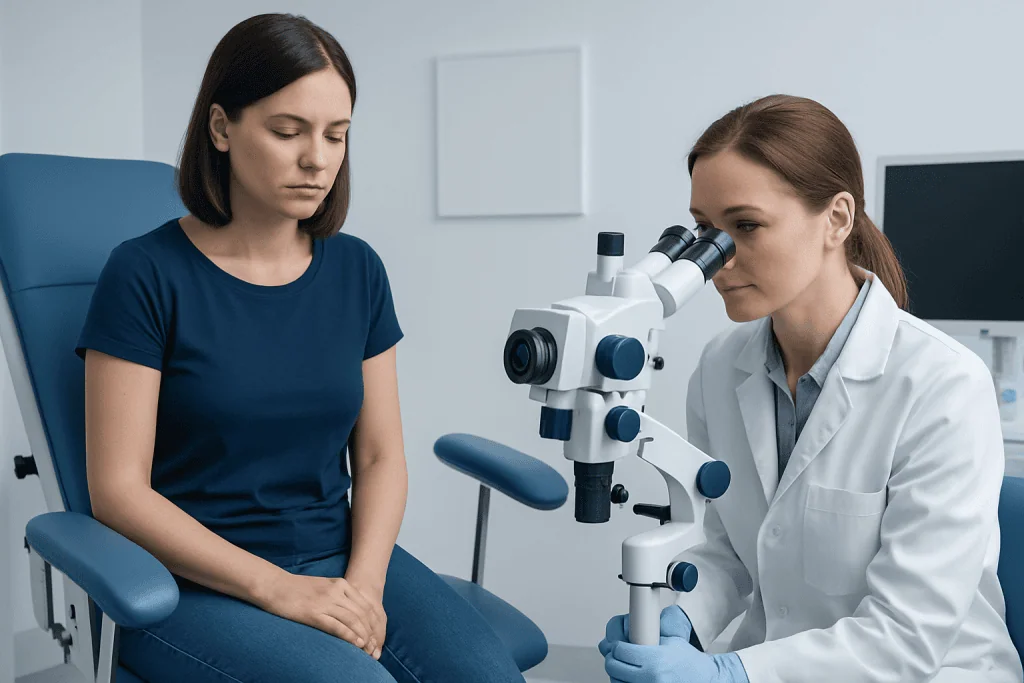
Diagnosis begins with a conversation about symptoms, medical history, sexual health history when relevant, previous abnormal Pap or HPV results, skin conditions, medications, and smoking. The clinician then examines the vulva using good lighting and may also perform a pelvic examination. Sometimes a magnifying instrument, called a colposcope, is used to inspect the skin more closely; when used for the vulva, this may be called vulvoscopy.
If an area looks abnormal, the key diagnostic test is a biopsy. During a vulvar biopsy, a small sample of tissue is removed after numbing the area with local anesthetic. The sample is examined by a pathologist to determine whether the change is inflammatory, precancerous, cancerous, or another condition. Although the idea of a biopsy can feel stressful, it is usually a brief procedure and provides the information needed to avoid guesswork.
If vulvar cancer is confirmed, additional tests may be recommended to determine the stage and guide treatment. These may include examination of the groin lymph nodes, imaging such as ultrasound, CT, MRI, or PET-CT in selected cases, and assessment by a gynecologic oncologist. Staging considers the size and depth of the tumor, whether it has spread to nearby structures, and whether lymph nodes are involved.
Accurate diagnosis is essential because treatment can vary widely. A small, early tumor may be managed very differently from a larger tumor or one close to the clitoris, urethra, or anus. The care team aims to treat the cancer effectively while preserving function, comfort, and quality of life whenever possible.
Treatment Options
Treatment depends on the type of vulvar cancer, its stage, location, size, lymph node status, and the person’s overall health. Surgery is commonly the main treatment for early vulvar cancer. The surgeon removes the cancer with a margin of healthy tissue, and the approach may range from local excision to more extensive surgery when necessary. Modern treatment planning tries to remove the cancer while preserving as much normal anatomy and function as safely possible.
Because vulvar cancer can spread to lymph nodes in the groin, lymph node assessment may be part of treatment. Some patients are candidates for sentinel lymph node biopsy, a technique that identifies the first lymph node or nodes most likely to receive drainage from the tumor. If appropriate, this can reduce the need for more extensive lymph node surgery. In other situations, removal of additional lymph nodes may be recommended.
Radiation therapy may be used after surgery if there is a higher risk of recurrence, such as positive margins or lymph node involvement. It may also be used before surgery to shrink a tumor or as the main treatment when surgery would be too extensive or is not medically suitable. Chemotherapy is sometimes given with radiation to improve its effect, particularly for more advanced disease. For certain advanced or recurrent cancers, systemic treatments such as chemotherapy, targeted therapy, or immunotherapy may be considered depending on tumor features and availability.
Care often involves a multidisciplinary team, including gynecologic oncology, radiation oncology, medical oncology, pathology, radiology, nursing, pain management, sexual health support, and rehabilitation when needed. Patients should feel encouraged to ask about expected benefits, possible side effects, wound care, sexual function, urinary or bowel effects, fertility if relevant, and recovery time before choosing a treatment plan.
Prevention and Self-care
Not all cases of vulvar cancer can be prevented, but several steps may help reduce risk or support earlier detection. HPV vaccination is an important prevention tool because it protects against the high-risk HPV types that cause many HPV-related cancers. Vaccination is most effective before exposure to HPV, but some adults may still benefit; eligibility should be discussed with a healthcare professional.
Smoking cessation is another meaningful step, especially for people with HPV-related vulvar or cervical precancer. Smoking can affect immune response and tissue healing. People with lichen sclerosus or other chronic vulvar skin conditions should follow the treatment plan recommended by their clinician and attend follow-up visits, because well-controlled inflammation and monitoring of suspicious changes are important.
Gentle vulvar care can reduce irritation and make it easier to notice persistent changes. Helpful measures may include using mild, fragrance-free cleansers only as needed, avoiding scented pads or intimate sprays, wearing breathable cotton underwear, changing out of damp clothing promptly, and not scratching or using repeated over-the-counter treatments without a diagnosis. Lubricants or moisturizers may help dryness, but persistent pain, tearing, or sores should be evaluated.
Self-awareness is not the same as self-diagnosis. A person may occasionally look at the vulvar skin with a mirror to become familiar with what is normal for them. New lumps, ulcers, color changes, thickened patches, or symptoms that do not improve should be checked by a clinician.
When to See a Doctor
A medical appointment is recommended for vulvar itching, burning, pain, swelling, skin thickening, a lump, a wart-like growth, a sore, bleeding, or color change that lasts more than a few weeks, keeps recurring, or does not respond to appropriate treatment. A person should also seek care sooner if there is a growing mass, an ulcer that does not heal, unexplained bleeding, or pain that interferes with daily life, urination, or sexual activity.
Evaluation is especially important for people with lichen sclerosus, a history of vulvar intraepithelial neoplasia, prior cervical or vaginal precancer, immune suppression, or past HPV-related disease. Follow-up should not be delayed because of embarrassment, age, or the assumption that symptoms are due to menopause or infection. Many vulvar conditions are treatable, and identifying the correct cause is the first step toward relief.
During the visit, patients can ask whether a biopsy is needed, what conditions are being considered, how to care for the skin while awaiting results, and when follow-up should occur. If a symptom persists despite treatment, a second evaluation or specialist referral may be appropriate.
Acibadem International’s multidisciplinary specialists and JCI-accredited hospitals diagnose and treat vulvar cancer and other gynecologic cancers for international patients. As with any medical concern, decisions should be made with a qualified doctor who can review the individual situation and explain suitable options.
Frequently asked questions
Is vulvar itching usually a sign of vulvar cancer?
No. Vulvar itching is more often caused by non-cancerous conditions such as yeast infection, dermatitis, eczema, lichen sclerosus, or hormonal dryness. However, itching that persists, recurs, affects one specific area, or is accompanied by a lump, sore, bleeding, or skin change should be evaluated by a clinician.
What does vulvar cancer look like?
Vulvar cancer can look different from person to person. It may appear as a lump, thickened patch, wart-like growth, open sore, ulcer, scaly area, or a patch of skin that is white, red, pink, brown, or darker than nearby skin. Because appearance alone is not reliable, a biopsy may be needed to confirm the diagnosis.
Can a Pap smear detect vulvar cancer?
A Pap smear is designed to screen for cervical cell changes, not vulvar cancer. It may identify HPV-related cervical abnormalities, but it does not replace examination of the vulva. Persistent vulvar symptoms need a direct visual examination and, when indicated, a biopsy.
Is vulvar cancer related to HPV?
Some vulvar cancers are related to high-risk HPV infection, especially those that develop from vulvar precancer. Other vulvar cancers are more strongly linked to chronic inflammatory skin conditions such as lichen sclerosus. HPV vaccination and regular gynecologic care can help reduce risk of HPV-related disease.
Is a vulvar biopsy painful?
A vulvar biopsy is usually done with local anesthetic to numb the area. Patients may feel a brief sting from the anesthetic and some pressure during the procedure, followed by mild soreness as the skin heals. The clinician will explain wound care and what symptoms should prompt follow-up.
Can vulvar cancer be cured?
Many vulvar cancers, especially when diagnosed early, can be treated successfully. The outlook depends on the cancer type, stage, lymph node involvement, overall health, and response to treatment. A gynecologic oncologist can explain the most appropriate treatment plan and expected follow-up for the individual case.
How can someone reduce the risk of vulvar cancer?
Risk can be reduced by receiving HPV vaccination when appropriate, avoiding smoking, managing chronic vulvar skin conditions, and attending follow-up for any history of vulvar or cervical precancer. It is also important to seek evaluation for persistent vulvar itching, sores, lumps, or skin changes rather than repeatedly self-treating without a diagnosis.
References
- American Cancer Society
- National Cancer Institute
- American College of Obstetricians and Gynecologists
- European Society of Gynaecological Oncology
- National Comprehensive Cancer Network
This article is for general information only and is not a substitute for professional medical advice. Please consult a qualified doctor about your individual situation.
Vulvar Cancer in Turkey — costs, top hospitals & a free quote
JCI-accredited · board-certified surgeons · reply within 24h
Add us as a Preferred Source to see more of our trusted health content across Google Search, AI Overviews and Discover.

More from the Health Library



Related Specialists

Assoc. Prof. Dr. Fatih Büyükcam
Emergency Service
Assoc. Prof. Dr. Elif Meşeci
Gynecology & Obstetrics
Prof. Dr. Erdoğan Ertüngealp
Gynecology & Obstetrics
Prof. Dr. Fatih Oğuz Önder
Gastroenterology