Warts on Face: What Patients Need to Know

Facial warts are caused by HPV entering the skin through tiny cuts, irritation, or other breaks in the skin barrier. They may be rough and raised or smooth and flat, particularly on the forehead, cheeks, chin, and around areas that are shaved.
Key Takeaways
- Facial warts are caused by HPV entering the skin through tiny cuts, irritation, or other breaks in the skin barrier.
- They may be rough and raised or smooth and flat, particularly on the forehead, cheeks, chin, and around areas that are shaved.
- Many warts resolve without treatment, but facial lesions should not be picked, cut, or treated with strong over-the-counter products without medical advice.
- A clinician can distinguish warts from moles, skin tags, acne-related bumps, and other skin conditions that may need different care.
- Medical review is important for a rapidly changing, bleeding, painful, or uncertain facial growth.
Warts on face are common, usually harmless skin growths caused by certain types of human papillomavirus (HPV). Because facial skin is sensitive and other conditions can resemble warts, professional assessment is often the safest way to confirm the diagnosis and discuss treatment.
Overview: What Are Warts on Face?
Warts on face are small skin growths caused by infection with certain strains of human papillomavirus, commonly called HPV. The virus affects the outer layer of skin and can cause cells to grow more quickly than usual. Facial warts are generally benign, meaning they are not cancerous, and they are often manageable with time, observation, or appropriate treatment.
Facial warts can look different from the familiar rough wart seen on hands or feet. They are often small, skin-colored, tan, pink, or slightly darker than surrounding skin. Some are raised with a rough surface, while others are smooth and flat. A growth that looks like a wart is not always a wart, however, so a clinician may need to examine it before recommending removal.
Although HPV types that cause ordinary skin warts can spread through direct skin contact or shared items, they are different from many HPV types associated with genital infection. Having a wart on the face does not mean that a person has a sexually transmitted infection. The virus is common, and some people are more prone to developing warts than others.
How Facial Warts May Look and Feel
Common warts on the face may appear as firm, raised bumps with a rough, uneven surface. Tiny dark dots can sometimes be visible within a wart; these are small clotted blood vessels rather than “seeds.” Common warts may occur around the hairline, chin, jawline, or areas irritated by shaving.
Flat warts are especially common on the face. They are usually smoother, flatter, and smaller than common warts, and may occur in groups. They can be skin-colored, yellow-brown, or pinkish. On the face, they often develop on the forehead, cheeks, or beard area. Shaving, waxing, rubbing, or scratching can spread the virus across nearby skin, creating a line or cluster of new lesions.
Most warts do not hurt. They may itch, feel mildly irritated, or become noticeable because of their appearance. A wart should not be assumed when a lesion is painful, repeatedly bleeds, forms a persistent crust, changes rapidly, or has irregular pigment. These features do not necessarily indicate a serious problem, but they should be assessed by a qualified healthcare professional.
Why Warts Develop and Who May Be More Prone

Warts develop when HPV enters through a small break in the skin. Everyday activities can create these openings, including shaving, scratching, dry or irritated skin, acne picking, and minor cuts. The virus can then remain in the skin for a period before a visible wart develops, so it is often difficult to know exactly when or where it was acquired.
Direct contact with a wart can spread the virus from one area of the body to another or from one person to another. Sharing razors, towels, makeup applicators, or other personal grooming items may also contribute to spread, although infection does not occur after every contact. Touching a wart and then touching another area of the face can lead to self-spread, particularly when the skin is irritated.
Children and teenagers commonly develop warts, but people of any age can be affected. Individuals with eczema or other conditions that weaken the skin barrier may be more susceptible. People whose immune systems are suppressed by a medical condition or treatment may develop more numerous, persistent, or difficult-to-treat warts and should seek individualized advice from their healthcare team.
How a Doctor Diagnoses a Facial Wart
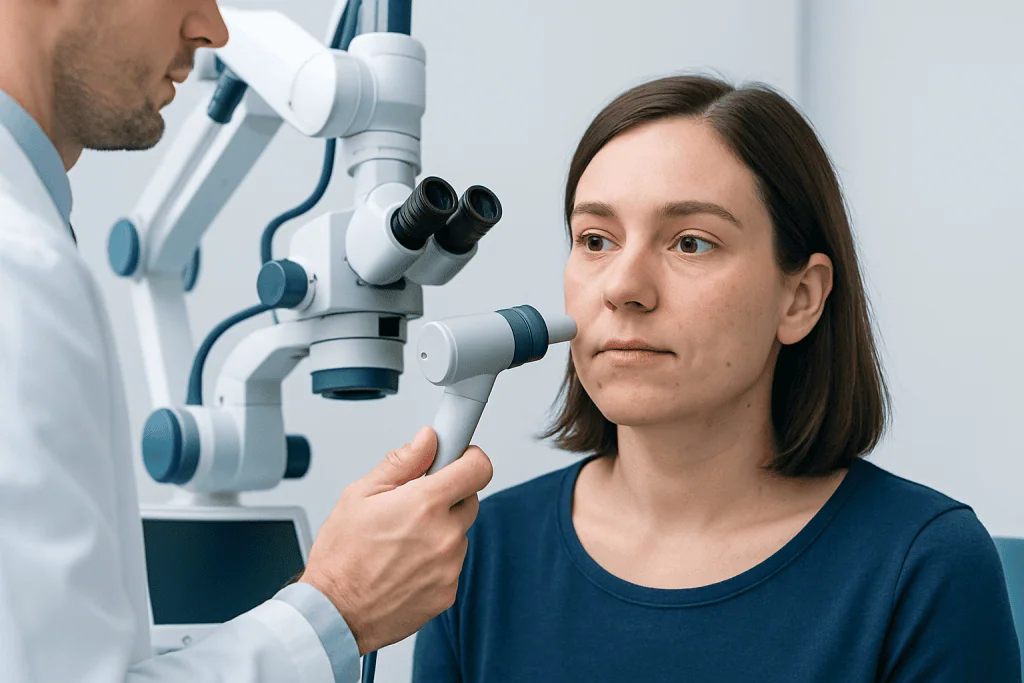
In many cases, a dermatologist or primary care clinician can diagnose a facial wart by looking closely at the skin. They may ask how long the lesion has been present, whether it has changed, whether similar bumps have appeared elsewhere, and whether shaving or another activity seems to have spread it. A dermatoscope, a handheld device that magnifies and illuminates the skin, may help clarify the diagnosis.
Several harmless and more significant skin conditions can resemble a wart. These include skin tags, seborrheic keratoses, molluscum contagiosum, acne-related bumps, benign moles, and certain types of skin cancer. For this reason, it is sensible not to self-diagnose a new or unusual facial growth, particularly if it is pigmented, asymmetric, ulcerated, or changing.
If the appearance is uncertain, the clinician may recommend a small skin biopsy. This involves removing or sampling a tiny piece of tissue for examination in a laboratory. A biopsy is not needed for every suspected wart, but it can provide a clear diagnosis when a lesion does not have typical features or has not responded as expected to treatment.
Treatment Options for Warts on Face
Many facial warts disappear on their own as the immune system recognizes the virus. This may take months or, in some cases, longer. Watchful waiting can be reasonable when a lesion has a typical appearance, is not bothersome, and has been assessed by a clinician. Treatment may be considered when warts spread, persist, catch during shaving, cause distress, or create diagnostic uncertainty.
Because facial skin is delicate, treatment should be selected carefully. A dermatologist may use cryotherapy, which freezes the wart with liquid nitrogen, but this needs particular caution on the face because it can cause blistering, pigment changes, or scarring. Other options may include carefully applied prescription topical medicines, procedures that remove or destroy wart tissue, or treatments designed to stimulate a local immune response. The best choice depends on the wart type, location, skin tone, number of lesions, and a person’s medical history.
Over-the-counter wart removers often contain salicylic acid or other strong ingredients. These products are commonly intended for thicker skin on the hands or feet and may irritate or damage facial skin. They should not be used close to the eyes, lips, nostrils, or other sensitive areas unless a clinician specifically recommends a suitable product and explains how to use it. Home freezing kits and attempts to cut, burn, or scrape off a facial wart can also lead to infection, scarring, or an incorrect treatment of a non-wart lesion.
Even after successful treatment, warts can recur because HPV may persist in nearby skin. Follow-up may be helpful if lesions return, spread, or do not improve. A dermatologist can adjust the plan while balancing effectiveness with the goal of preserving the skin’s appearance and comfort.
Everyday Care and Reducing Spread
A person with facial warts can reduce the chance of spreading them by avoiding picking, squeezing, scratching, or shaving directly over the lesion. If shaving is necessary, using a clean razor and taking care not to nick the wart may help limit irritation and self-spread. Disposable razors should not be shared, and reusable razors should be cleaned according to the manufacturer’s instructions.
It is helpful to wash hands after touching the face or applying skincare products. Towels, washcloths, makeup sponges, cosmetic brushes, and facial tools should not be shared. Keeping the skin moisturized may reduce cracking and irritation, especially for people with dry or eczema-prone skin. Makeup can be used if it does not irritate the area, but applicators should be kept clean and not used by others.
There is no guaranteed way to prevent all ordinary skin warts. A healthy skin barrier, avoiding trauma to the skin, and not sharing personal grooming items are practical measures. People should be cautious with online “natural” remedies, including acids, essential oils, or adhesive products, because these can cause burns or allergic reactions and have limited evidence for safe use on facial skin.
When to Seek Medical Care
Medical advice is recommended for any new facial growth that is difficult to identify, particularly before attempting treatment at home. A doctor or dermatologist should assess a lesion that grows quickly, changes in color or shape, bleeds without clear injury, becomes painful, develops an open sore, or does not heal. It is also sensible to arrange an appointment when a suspected wart is close to the eye, on the eyelid, lip, nostril, or another sensitive facial area.
People should seek care if facial warts are numerous, spreading, recurring, or causing significant emotional discomfort. Those with a weakened immune system, a history of skin cancer, or a condition that affects skin healing should discuss any new growth with their clinician promptly. Professional evaluation can prevent unnecessary irritation and ensure that the treatment plan fits the individual’s skin and health needs.
Acibadem International’s multidisciplinary specialists and JCI-accredited hospitals can assess facial skin lesions and discuss appropriate treatment options for international patients. A consultation with a qualified dermatologist remains the most reliable way to confirm whether a facial bump is a wart and to choose care that minimizes avoidable skin damage.
Frequently asked questions
Are warts on face contagious?
Facial warts can spread through direct contact with a wart or through contact with contaminated personal items, such as razors or towels. The virus may also spread from one part of the same person’s skin to another, especially after scratching or shaving. Good hand hygiene and not sharing personal grooming items can reduce this risk.
Can facial warts go away without treatment?
Yes. Many warts eventually clear when the immune system responds to the virus, although the timing is unpredictable and may take months or longer. Treatment may be considered when they spread, persist, interfere with shaving, or are cosmetically troubling.
Is it safe to use salicylic acid on warts on face?
Salicylic acid wart treatments are generally designed for thicker skin on areas such as the hands and feet. Facial skin is more sensitive, and these products may cause burns, irritation, pigment changes, or scarring. A person should ask a dermatologist before using any wart-removal product on the face.
Can shaving spread facial warts?
Shaving can spread the virus if the razor cuts or irritates a wart and then passes over nearby skin. It may also cause the wart to bleed or become inflamed. Avoid shaving directly over the lesion when possible, and use clean personal grooming tools.
How can a person tell whether a facial bump is a wart?
Warts may be rough and raised or smooth and flat, but many other skin conditions can have a similar appearance. A clinician can often identify a wart through examination and may use magnification or, rarely, a biopsy when the diagnosis is unclear. New, changing, bleeding, or irregular growths should be professionally assessed.
Do facial warts mean someone has a sexually transmitted HPV infection?
No. Common facial warts are usually caused by HPV types that affect ordinary skin and are different from the HPV types most often linked with genital infections. A facial wart alone does not indicate a sexually transmitted infection.
References
- American Academy of Dermatology Association
- Centers for Disease Control and Prevention
- National Health Service
- Merck Manual Consumer Version
- Mayo Clinic
This article is for general information only and is not a substitute for professional medical advice. Please consult a qualified doctor about your individual situation.
Explore treatments in Turkey — costs, top hospitals & a free quote
JCI-accredited · board-certified surgeons · reply within 24h
Add us as a Preferred Source to see more of our trusted health content across Google Search, AI Overviews and Discover.

More from the Health Library

Head of Lettuce: An Evidence-Based Guide for Patients

Chicory Coffee — Explained by Medical Evidence, Not Myths

Smooth Move Tea: An Evidence-Based Guide for Patients

Angiogram: What Patients Need to Know

Blood Clot Feces: An Evidence-Based Guide for Patients