What Does HPV Look Like? A Doctor-Reviewed Answer

HPV often causes no visible signs, so a person can have it without knowing. When visible, HPV may look like small flesh-colored, pink, white, or slightly darker bumps in the genital or anal area.
Key Takeaways
- HPV often causes no visible signs, so a person can have it without knowing.
- When visible, HPV may look like small flesh-colored, pink, white, or slightly darker bumps in the genital or anal area.
- Not every bump, rash, or skin change in this area is HPV; other skin conditions and infections can look similar.
- A doctor may diagnose HPV through examination, cervical screening, HPV testing, or biopsy when needed.
- Medical review is important for persistent growths, bleeding, pain, rapid changes, or any concern about cervical or anal symptoms.
In many people, HPV does not have a visible appearance at all. When HPV can be seen, it most often appears as small genital warts, while other HPV-related changes are only found during a medical exam or screening test.
Overview: what HPV may look like
For many people, the answer to “what does HPV look like” is simple: often, it does not look like anything. Human papillomavirus, or HPV, is very common, and many infections cause no visible symptoms. In these cases, a person may feel completely well and only learn about HPV through routine screening or a doctor’s evaluation.
When HPV does create visible changes, the most familiar appearance is genital warts. These may look like tiny raised bumps, flat spots, or soft clusters with a cauliflower-like surface. They can be flesh-colored, pink, white, gray, or somewhat darker than the surrounding skin, depending on skin tone.
It is also important to know that some HPV types do not cause warts at all. Instead, they can lead to changes in cells of the cervix, vulva, vagina, penis, anus, or throat. These changes usually cannot be seen by the person and often do not cause early symptoms, which is why regular screening matters.
Most HPV infections clear on their own over time. Even so, any new growth, persistent irritation, bleeding, or uncertainty about a genital or anal skin change is a good reason to seek medical advice rather than trying to identify it by appearance alone.
How visible HPV can appear on the skin
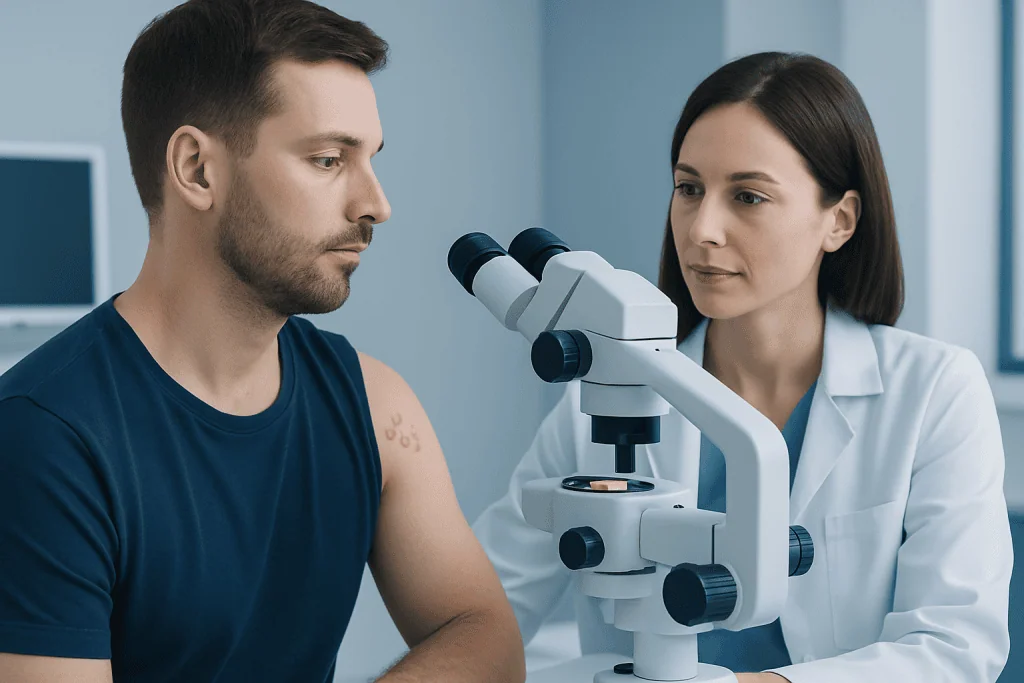
Visible HPV most commonly appears as genital warts. These are usually small, soft growths on or around the vulva, vagina, cervix, penis, scrotum, groin, or anus. Some are so tiny that they are easy to miss, while others form a cluster that is easier to notice.
The surface can be smooth or uneven. A wart may be flat, slightly raised, or attached by a narrow base. Some people notice one isolated bump, while others develop several close together. The area may feel rough to the touch, though many warts are painless.
HPV-related warts can vary in color. On lighter skin they may look pink, white, or flesh-colored. On darker skin they may appear brown, gray, violet-toned, or just slightly different from the surrounding skin. Because of this variation, there is no single “classic” look that fits every person.
Not everyone with visible HPV has discomfort, but some people notice itching, irritation, tenderness, or minor bleeding, especially if the warts are rubbed by clothing or during sex. If the appearance is unclear, a clinician can help distinguish HPV from genital warts caused by low-risk HPV types and from other skin conditions that may look similar.
What HPV usually does not look like

Many common genital and anal skin changes are not caused by HPV. Skin tags, ingrown hairs, shaving irritation, blocked glands, pimples, hemorrhoids, molluscum contagiosum, and some sexually transmitted infections can all create bumps or sores that may be confused with HPV. This is one reason self-diagnosis is often unreliable.
HPV usually does not cause large painful ulcers, open sores, or blisters. Those features may suggest another condition and should be assessed promptly. Likewise, a rash that spreads quickly, becomes very red, or is associated with fever deserves medical review.
High-risk HPV types generally do not produce a visible wart-like lesion that a person can identify at home. Instead, they may cause microscopic cell changes. For example, cervical HPV infection cannot be diagnosed by looking in a mirror, and early precancerous changes usually cannot be felt.
Because appearance alone has limits, a doctor may need to examine the area under proper lighting and magnification. If the concern involves internal areas such as the cervix, vagina, or anal canal, additional tests may be needed to understand whether HPV is present and whether any cell changes require follow-up.
Symptoms that can happen with HPV
HPV often causes no symptoms at all. When symptoms are present, they usually depend on where the virus is affecting the body and whether visible warts have formed. People may notice a new bump, a rough patch of skin, or a cluster of small growths in the genital or anal area.
Associated symptoms can include itching, mild burning, tenderness, or occasional spotting from friction. In some cases, warts are found only during a pelvic exam, a checkup for another concern, or evaluation of a partner’s diagnosis.
HPV in the cervix usually does not cause early symptoms, which is why cervical screening is so important. If cell changes become more advanced, symptoms such as abnormal vaginal bleeding, bleeding after sex, or unusual discharge may occur, but these signs have many possible causes and should be assessed without delay.
HPV can also affect other sites, including the throat or anus, though visible changes there are not always obvious. Persistent hoarseness, difficulty swallowing, anal bleeding, or ongoing discomfort should not be assumed to be HPV, but they do merit medical attention so the cause can be identified accurately.
How doctors diagnose HPV and similar-looking conditions
A doctor usually starts with a medical history and visual examination. They may ask when the skin change first appeared, whether it has grown or spread, and whether there is itching, pain, bleeding, or discharge. This first step often helps narrow down whether the lesion is likely to be HPV or another condition.
If visible warts are present, a clinician can often recognize them by appearance and location. However, when a lesion is unusual, changing, pigmented, ulcerated, or uncertain, a biopsy may be recommended. A biopsy allows the tissue to be examined more closely and can rule out other skin problems or more serious changes.
For cervical HPV, diagnosis is usually not based on visible signs. Screening may involve a Pap test to look for abnormal cells and an HPV test to identify high-risk viral types. If results are abnormal, the next step may be a closer examination of the cervix, such as colposcopy, to identify areas that need monitoring or sampling.
Depending on symptoms and location, doctors may also consider other evaluations. These can include a pelvic exam, anal examination, or referral to specialists if there is concern about lesions in hard-to-see areas. When questions remain, broader assessment may help distinguish HPV from cervical cancer or other conditions with overlapping signs.
Treatment options and what changes after treatment
Treatment depends on what HPV is doing in the body. If there are visible genital warts, treatment may focus on removing or reducing the growths. If screening shows abnormal cervical cells, treatment is aimed at monitoring or removing the affected tissue to prevent progression.
Genital warts can be managed in several ways. A doctor may recommend prescription topical therapies, freezing, cautery, or minor procedures to remove the lesions. In some cases, especially if the warts are small and not bothersome, careful observation may also be an option because some lesions can improve over time.
If HPV has caused cervical cell changes, management may range from repeat testing to procedures such as LEEP when clinically appropriate. The exact approach depends on the test results, the severity of cell changes, age, pregnancy status, and the person’s overall health history.
It is helpful to know that treating visible warts does not always eliminate the virus immediately, and warts can return. Follow-up matters because HPV-related changes can evolve over time. People with persistent or recurrent lesions may benefit from care plans that include gynecology, dermatology, or other specialists as needed.
Prevention, self-care, and reducing future risk
The most effective way to lower the risk of many HPV-related problems is vaccination. HPV vaccination helps protect against types linked to genital warts and several cancers. A doctor can advise whether vaccination is appropriate based on age, prior vaccination status, and overall health.
Routine screening is another important part of prevention. Cervical screening can detect abnormal cells before they cause symptoms. Safer sex practices, including condom use, can reduce HPV transmission, though they do not fully prevent it because HPV can affect skin not covered by a condom.
Self-care begins with avoiding irritation and avoiding attempts to cut, squeeze, burn, or treat an uncertain bump at home. Over-the-counter wart products made for hands or feet should not be used on genital skin unless a doctor specifically advises it. Gentle skin care and prompt assessment of persistent changes are safer choices.
General immune health also matters. Not smoking, managing chronic conditions, and attending recommended follow-up appointments may help the body clear HPV more effectively and support early detection of any changes that need treatment.
When to seek medical care
Medical review is sensible whenever a person notices a new genital, anal, or oral growth and is not sure what it is. While many causes are harmless or manageable, a professional exam is the safest way to identify HPV, rule out other conditions, and decide whether treatment or monitoring is needed.
It is especially important to seek care if a lesion is growing quickly, bleeding, painful, ulcerated, darkly pigmented, or associated with discharge, abnormal vaginal bleeding, pain during sex, or persistent anal symptoms. These findings do not automatically mean something serious, but they should not be ignored.
People should also contact a doctor if they have an abnormal Pap or HPV test result, recurrent genital warts, or symptoms that persist despite previous treatment. In some situations, further testing or procedures are needed to clarify the cause and guide next steps.
For international patients who need assessment or follow-up, Acibadem International’s multidisciplinary specialists in JCI-accredited hospitals diagnose and treat HPV-related conditions, including evaluation with Pap smear and specialist care when cervical or genital changes need closer review.
Frequently asked questions
Can HPV be present if there are no visible warts?
Yes. HPV very often causes no visible signs at all. A person can have HPV without bumps, pain, or any other symptoms, which is why screening and medical evaluation are important.
Are all genital bumps caused by HPV?
No. Genital bumps can also be caused by skin tags, ingrown hairs, irritation, cysts, molluscum contagiosum, hemorrhoids, and other infections. Because many conditions look similar, a doctor may need to examine the area to make the correct diagnosis.
What color are HPV warts?
HPV warts are often flesh-colored, pink, white, gray, or slightly darker than the surrounding skin. Their exact color can vary with skin tone and location, so color alone is not enough to confirm that a bump is HPV.
Can high-risk HPV be seen by looking at the skin?
Usually not. High-risk HPV often causes microscopic cell changes rather than visible warts. These changes are commonly found through cervical screening, HPV testing, or examinations performed by a clinician.
Do HPV warts hurt or itch?
They often do not cause pain, but some people notice itching, mild irritation, tenderness, or minor bleeding from friction. Symptoms vary by location and size, and some warts are found only during a medical exam.
When should someone see a doctor about a possible HPV lesion?
A doctor should assess any new or persistent genital, anal, or oral growth that is unexplained. Prompt review is especially important if there is pain, bleeding, rapid growth, unusual color, discharge, or an abnormal screening test result.
References
- World Health Organization
- Centers for Disease Control and Prevention
- American College of Obstetricians and Gynecologists
- National Cancer Institute
- American Cancer Society
This article is for general information only and is not a substitute for professional medical advice. Please consult a qualified doctor about your individual situation.
Explore treatments in Turkey — costs, top hospitals & a free quote
JCI-accredited · board-certified surgeons · reply within 24h
Add us as a Preferred Source to see more of our trusted health content across Google Search, AI Overviews and Discover.