

What Happens During Orthopedic Surgery? Step-by-Step for Patients

Orthopedic surgery usually follows a clear pathway: evaluation, preparation, anesthesia, surgery, recovery, and rehabilitation. The exact steps depend on the body part involved, the reason for surgery, and the patient’s overall health.
Key Takeaways
- Orthopedic surgery usually follows a clear pathway: evaluation, preparation, anesthesia, surgery, recovery, and rehabilitation.
- The exact steps depend on the body part involved, the reason for surgery, and the patient’s overall health.
- Good preparation before surgery and careful rehabilitation afterward can support a smoother recovery.
- Patients should discuss medications, allergies, medical conditions, and recovery goals with their surgical team.
- Warning signs after surgery, such as fever, increasing pain, or wound problems, should be reported promptly.
Orthopedic surgery is performed to treat problems affecting bones, joints, muscles, ligaments, and tendons. Understanding each step can help patients feel more prepared, ask informed questions, and take an active role in recovery.
Overview: What orthopedic surgery involves
Orthopedic surgery is a branch of medicine focused on treating conditions of the musculoskeletal system. This includes bones, joints, cartilage, ligaments, tendons, and muscles. Surgery may be recommended when symptoms such as pain, stiffness, instability, or loss of function do not improve enough with non-surgical care.
Not every orthopedic problem requires an operation. Doctors often begin with approaches such as medication, physical therapy, activity modification, injections, bracing, or guided rehabilitation. Surgery is usually considered when these treatments no longer provide adequate relief or when a structural problem needs repair, realignment, or replacement.
The exact procedure depends on the condition. Orthopedic operations may include fracture repair, ligament reconstruction, tendon repair, joint preservation procedures, arthroscopy, spine procedures, or joint replacement. Some people have surgery after an injury, while others need it for long-term wear-and-tear conditions such as knee osteoarthritis or damage in a meniscus tear.
Before surgery: evaluation, planning, and preparation

Before orthopedic surgery, the patient usually attends one or more preoperative visits. During these appointments, the surgeon reviews symptoms, medical history, previous treatments, imaging tests, and physical examination findings. This is the time to confirm the diagnosis, discuss the goal of surgery, and understand the expected benefits and possible risks.
Additional testing may be needed depending on the patient’s age, health, and the type of operation planned. Common preoperative checks include blood tests, heart evaluation, imaging, and anesthesia assessment. The healthcare team may also review medicines, supplements, and allergies, especially blood thinners or drugs that can affect bleeding or healing.
Patients are often given instructions about fasting, bathing, smoking cessation, alcohol use, and when to stop or continue certain medications. It is also helpful to prepare the home in advance, arrange transportation, and organize support for the first days after surgery. For some procedures, a course of prehabilitation or guided exercise before surgery can improve strength and confidence.
Many people feel anxious before an operation, which is understandable. Asking practical questions can be reassuring. Patients may wish to ask how long the procedure takes, what type of anesthesia will be used, how pain will be managed, when walking or movement can begin, and what kind of rehabilitation is expected afterward.
On the day of surgery: admission and anesthesia
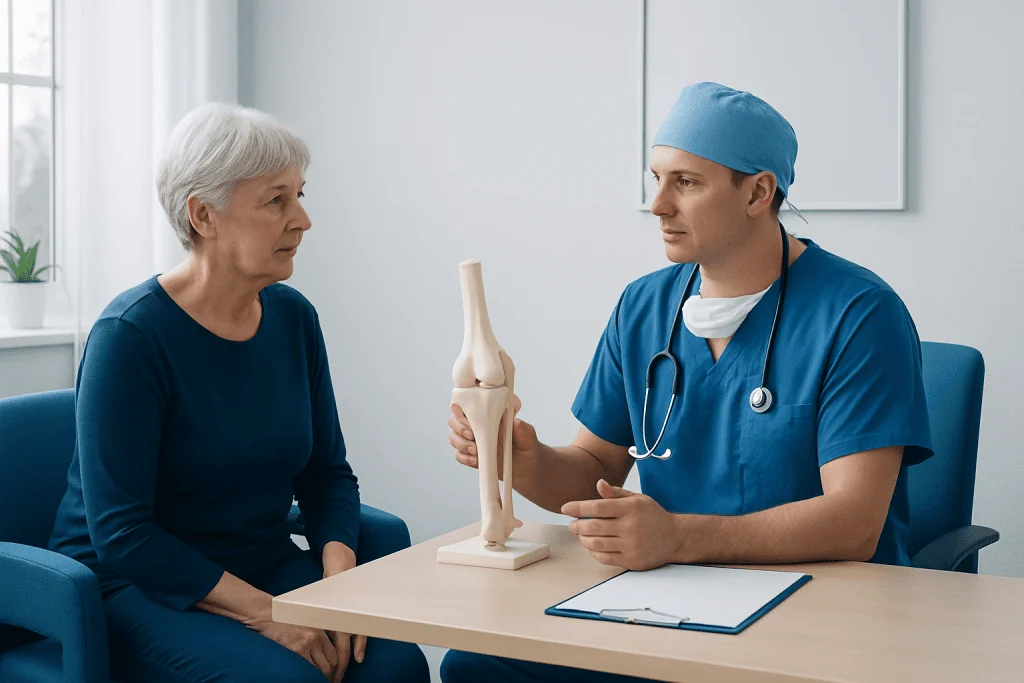
On the day of surgery, the patient arrives at the hospital or surgical center and checks in. Nurses confirm identity, review the planned procedure, and check important details such as allergies, medications, and fasting status. Vital signs are taken, and the surgical site may be marked by the surgeon to ensure accuracy and safety.
An intravenous line is usually placed for fluids and medications. The anesthesia team meets the patient and explains the most appropriate type of anesthesia. Depending on the operation, this may be general anesthesia, regional anesthesia such as a spinal block, or a nerve block to numb a specific area. Sedation may also be used in some cases.
Modern anesthesia aims to keep the patient safe and comfortable throughout the procedure. The choice depends on the body area being treated, the length of surgery, and the patient’s medical history. In many orthopedic operations, regional techniques can also help reduce pain after surgery by numbing the area for several hours.
Before entering the operating room, the team performs safety checks. These checks confirm the patient’s identity, the planned procedure, and the correct side or site. This structured process is an important part of surgical safety and helps reduce preventable errors.
During orthopedic surgery: step by step
Once in the operating room, the patient is positioned carefully to give the surgeon safe access to the affected area while protecting nerves, skin, and pressure points. Monitoring equipment tracks heart rate, blood pressure, oxygen level, and breathing throughout the operation. The skin is cleaned with antiseptic solution, and sterile drapes are placed to reduce the risk of infection.
The surgeon then performs the procedure using the planned technique. Some operations are done through small incisions with a camera and slim instruments, a method called arthroscopy. Others require a larger open incision for direct access. Examples include arthroscopic surgery for certain joint problems, repair of broken bones with plates or screws, or knee replacement when a damaged joint surface must be replaced.
Depending on the condition, the surgeon may remove damaged tissue, repair a tendon or ligament, realign bone, stabilize a fracture, or replace part or all of a joint. In selected cases, hip replacement or robotic knee replacement surgery may be part of the treatment plan if joint damage is advanced and symptoms limit daily life. The surgeon works with the operating room team to control bleeding, maintain sterile technique, and confirm that the repair or implant position is satisfactory.
At the end of the operation, the incision is closed with sutures, staples, adhesive strips, or surgical glue. A dressing is applied, and sometimes a brace, splint, or compression bandage is used to support the area. The patient is then moved to the recovery area for monitoring as the anesthesia wears off.
After surgery: recovery room, pain control, and early movement
Immediately after surgery, the patient is monitored in a recovery area. Nurses watch breathing, circulation, pain level, and alertness. It is normal to feel sleepy, groggy, cold, thirsty, or mildly nauseated at first, especially after general anesthesia. These symptoms are usually temporary and are managed by the care team.
Pain control begins early and may include a combination of methods rather than one medicine alone. Depending on the procedure, patients may receive oral medications, intravenous pain relief, ice therapy, elevation, or the lasting effect of a nerve block. The goal is not always to remove every sensation, but to keep pain manageable enough for rest, breathing, and movement.
Early movement is often encouraged as soon as it is medically safe. This can help support circulation, reduce stiffness, and lower the risk of some complications. For certain surgeries, patients may stand or walk on the same day with assistance. Others may need crutches, a walker, or a brace, and some may need to avoid putting weight on the operated limb for a period of time.
Before discharge, the team explains wound care, activity limits, warning signs, medications, and follow-up appointments. Some patients go home the same day, while others stay in hospital longer depending on the complexity of the surgery, pain control, mobility, and underlying medical conditions.
Rehabilitation and recovery at home
Recovery from orthopedic surgery continues well after leaving the hospital. The timeline varies widely based on the type of procedure, the body part involved, the patient’s age, and overall health. A minor arthroscopic procedure may allow a relatively quick return to daily tasks, while fracture repair, ligament reconstruction, or joint replacement may require a longer rehabilitation period.
Physical therapy is often a central part of recovery. Exercises may focus on reducing stiffness, restoring range of motion, rebuilding strength, improving balance, and retraining safe movement patterns. Following the rehabilitation plan closely can be just as important as the operation itself, because surgery and therapy work together to improve function.
At home, patients are usually advised to protect the wound, keep dressings clean and dry as instructed, take medications safely, and follow guidance about walking, stairs, sleeping positions, and return to driving or work. Good nutrition, hydration, and avoiding smoking can also support healing. Progress may come gradually, so patience is important.
Some discomfort, swelling, bruising, and fatigue are common in the early phase of recovery. However, many people notice steady improvement over time when they follow their surgeon’s and therapist’s advice. If additional support is needed, multidisciplinary care can help coordinate pain management, rehabilitation, and follow-up imaging or assessment.
Possible risks and how complications are reduced
Like any operation, orthopedic surgery carries some risks, but careful planning and modern safety protocols are designed to reduce them. General risks can include bleeding, infection, blood clots, reactions to anesthesia, and delayed wound healing. There may also be procedure-specific concerns such as stiffness, implant problems, nerve irritation, or incomplete symptom relief.
Risk is not the same for every patient. It may be influenced by age, smoking, obesity, diabetes, heart or lung disease, poor bone quality, and the complexity of the operation. This is why the preoperative assessment is so important. It helps the team identify modifiable risks and optimize the patient before surgery when possible.
Hospitals reduce complications through sterile technique, medication review, careful anesthesia monitoring, blood clot prevention measures, early mobilization, and structured discharge instructions. Patients also play a role by following fasting rules, stopping smoking if advised, taking medications exactly as directed, and attending follow-up visits.
For international patients seeking evaluation and treatment, Acibadem International’s multidisciplinary specialists and JCI-accredited hospitals diagnose and treat orthopedic conditions with coordinated surgical and rehabilitation care.
When to contact a doctor after orthopedic surgery
Patients should contact their doctor if recovery does not seem to be following the expected pattern. Warning signs can include fever, increasing redness or drainage from the wound, worsening swelling, severe or increasing pain that is not relieved by prescribed measures, or trouble moving the operated area as instructed.
Urgent medical attention may be needed for shortness of breath, chest pain, sudden calf pain or swelling, heavy bleeding, confusion, or signs of an allergic reaction. These symptoms can have several causes, but they should not be ignored.
Even when symptoms are less urgent, it is reasonable to call the surgical team with practical concerns. Questions about dressing changes, medications, showering, travel, work, exercise, or physical therapy are common after orthopedic surgery. Clear communication helps recovery feel safer and more manageable.
Regular follow-up appointments allow the team to check healing, review imaging if needed, monitor implants or repairs, and adjust rehabilitation goals. When patients understand what to expect and know when to seek help, they are better prepared for a confident recovery.
Frequently asked questions
How long does orthopedic surgery usually take?
The length of orthopedic surgery depends on the type of procedure, the body area involved, and whether the operation is simple or complex. Some procedures take less than an hour, while others may take several hours. The surgical team can give a more personalized estimate before the operation.
Will the patient be asleep during orthopedic surgery?
Not always. Some orthopedic procedures are done under general anesthesia, while others use regional anesthesia such as a spinal block or nerve block. The anesthesia team chooses the safest and most suitable option based on the procedure and the patient’s health.
Is orthopedic surgery always followed by physical therapy?
Physical therapy is very common after orthopedic surgery, but the exact plan varies. Some patients need formal rehabilitation for weeks or months, while others mainly follow a home exercise program. The goal is to restore movement, strength, and safe function.
How painful is recovery after orthopedic surgery?
Some pain and soreness are expected, especially in the first days after surgery. However, pain is usually managed with a combination of medications, ice, elevation, and guided movement. Patients should tell their care team if pain is not controlled well enough for rest or basic activity.
When can normal activities be resumed?
Return to daily activities depends on the procedure and how healing progresses. Light tasks may be possible within days for some operations, while sports, driving, or physically demanding work may take much longer. The safest timeline should come from the surgeon and rehabilitation team.
What can patients do to prepare for orthopedic surgery?
Patients can prepare by reviewing medications with their doctor, following fasting instructions, stopping smoking if advised, and arranging help at home. It is also useful to prepare recovery supplies, clear walking paths, and understand the rehabilitation plan in advance.
References
- American Academy of Orthopaedic Surgeons
- National Institute of Arthritis and Musculoskeletal and Skin Diseases
- MedlinePlus
- National Health Service
- World Health Organization
This article is for general information only and is not a substitute for professional medical advice. Please consult a qualified doctor about your individual situation.
Joint and spine care in Turkey — expert assessment & treatment
JCI-accredited · board-certified surgeons · reply within 24h
Add us as a Preferred Source to see more of our trusted health content across Google Search, AI Overviews and Discover.
Check your numbers in seconds
BMI, calories, due date, blood pressure and 30+ more clinical calculators — free, instant, doctor-reviewed ranges.

Orthopedics & Spine
Care for bones, joints and the musculoskeletal system, including joint replacement, sports injuries and trauma.
125 specialists in this unitMore from the Health Library



Related Specialists

Prof. Dr. Dilek Güven
Ophthalmology
Assoc. Prof. Dr. Ahmet Arnaz
Cardiovascular Surgery
Prof. Dr. Belgin Selam
Gynecology & Obstetrics
Assoc. Prof. Dr. Çetin Kılıççı
Gynecology & Obstetrics