What Is a Pacemaker: An Evidence-Based Patient Guide

Pacemakers are most often used to treat slow heart rhythms, pauses in the heartbeat, or problems with the heart’s electrical conduction system. The device continuously senses the heart rhythm and delivers an impulse only when it is needed.
Key Takeaways
- Pacemakers are most often used to treat slow heart rhythms, pauses in the heartbeat, or problems with the heart’s electrical conduction system.
- The device continuously senses the heart rhythm and delivers an impulse only when it is needed.
- Implantation is usually performed with local anesthetic and sedation, followed by a short recovery period and regular device checks.
- Most people can live active lives with a pacemaker, but should protect the implantation site early after surgery and understand common device-safety precautions.
- A pacemaker does not cure every heart condition; ongoing cardiology care remains important.
A pacemaker is a small electronic device placed under the skin to monitor the heart’s rhythm and provide gentle electrical impulses when the heartbeat is too slow or unreliable. It can reduce symptoms caused by certain rhythm disorders and help people return to daily activities with appropriate follow-up care.
Overview: What Is a Pacemaker?
What is a pacemaker? A pacemaker is a small implanted medical device that monitors the heart’s electrical activity and helps keep the heartbeat from becoming too slow or irregular. When it detects that the heart has missed a beat or is beating below a programmed rate, it can send a small electrical impulse to prompt a heartbeat.
Most permanent pacemakers have a pulse generator, which contains a battery and computer, and one or more thin insulated wires called leads. The generator is usually placed just beneath the skin below the collarbone, while the leads travel through a vein into the heart. Some people may be suitable for a leadless pacemaker, a compact device placed directly inside the heart through a catheter.
Pacemakers are used for selected electrical rhythm problems and are different from implantable cardioverter-defibrillators (ICDs). An ICD can deliver stronger therapy for certain dangerous fast rhythms, whereas a pacemaker primarily supports a heartbeat that is too slow. Evidence-based pacemaker care includes confirming the rhythm diagnosis, selecting the most suitable device, and providing long-term monitoring.
A Simple Definition of a Pacemaker
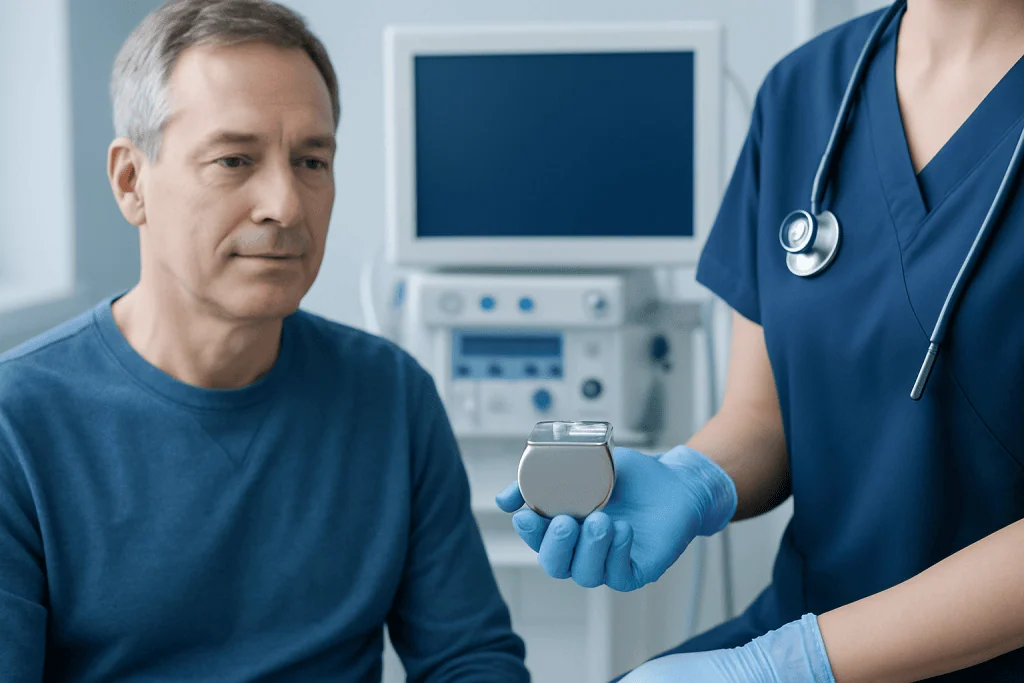
A simple definition of a pacemaker is: a battery-powered device that helps the heart beat at an appropriate rate when its natural electrical system is not doing so reliably. It does not replace the heart or make the heart work continuously on its own; it supports the heart’s rhythm when needed.
The heart normally beats because electrical signals begin in a natural pacemaker area called the sinus node and travel through organized pathways. Age-related changes, heart disease, some medicines, or injury to these pathways can interrupt this system. A pacemaker can sense these changes and provide timed support.
Modern devices are programmed individually. Some work only occasionally, while others provide more frequent pacing. They can also store rhythm information that helps the cardiology team assess symptoms and adjust care over time.
How a Pacemaker Works and Who May Need One

A pacemaker uses sensing and pacing functions. It senses the heart’s own electrical signals and waits when the rhythm is appropriate. If a beat is late or absent, it sends a very small impulse through a lead, or directly from a leadless device, to stimulate the heart muscle. Most people do not feel these impulses.
A cardiologist may consider a pacemaker for symptomatic bradycardia, meaning a slow heart rate that causes problems such as fainting, near-fainting, dizziness, fatigue, shortness of breath, or reduced exercise tolerance. It may also be recommended for sinus node dysfunction, certain types of atrioventricular block, or recurring long pauses in the heartbeat.
Not every slow pulse needs a pacemaker. For example, a low resting heart rate can be normal in some well-trained athletes, and reversible factors such as medication effects, thyroid disease, sleep apnea, or electrolyte disturbances may need attention first. The decision is based on symptoms, electrocardiogram findings, monitoring results, medical history, and the expected benefits of pacing.
Evaluation may include an ECG, ambulatory rhythm monitoring such as a Holter monitor, blood tests, echocardiography, and review of current medicines. These steps help establish whether symptoms occur at the same time as an abnormal rhythm.
Pacemaker Implantation: What Happens During the Procedure
Pacemaker implantation is commonly performed in a cardiac catheterization laboratory or operating room by a cardiology team with expertise in heart rhythm care. Before the procedure, the team reviews medicines, allergies, bleeding risk, and whether temporary changes to blood thinners or diabetes medicines are needed. Instructions should always come from the treating clinician.
For a traditional pacemaker, the skin below the collarbone is cleaned and numbed with local anesthetic. Sedation may be offered so the person is relaxed but able to breathe independently. The clinician makes a small incision, guides one or more leads through a vein into the heart using X-ray imaging, and tests their position and function.
The generator is connected to the leads and placed in a small pocket under the skin. The incision is then closed, and the device is programmed for the individual’s needs. A leadless pacemaker is inserted through a vein in the groin using a catheter and does not require a chest incision or leads.
After implantation, the heart rhythm and wound are checked. Many people go home the same day or after an overnight stay, depending on the procedure, health conditions, and local clinical practice. Pacemaker implantation should be planned with a qualified electrophysiology or cardiology team.
Benefits, Risks, and Recovery Timeline
For appropriately selected patients, a pacemaker can prevent excessively slow heart rates and reduce related symptoms such as dizziness, fainting, weakness, and exercise intolerance. It may improve day-to-day function and provide important protection from long pauses in the heart rhythm. Benefits vary according to the underlying condition and other aspects of heart health.
Like any invasive procedure, implantation has risks. These include bruising or bleeding at the implant site, infection, a collapsed lung, damage to a blood vessel or heart tissue, lead movement, and a need for later device or lead revision. Serious complications are uncommon but should be discussed in the context of the individual’s health, medications, and device type.
Recovery is usually gradual. Mild soreness, bruising, or tightness around the incision is common during the first days. The care team may advise limiting heavy lifting, forceful pulling, or raising the arm on the implant side above shoulder height for a period while the area heals. The exact restrictions and timing differ by device and clinician instructions.
A wound review and device check are usually arranged within the early recovery period, followed by ongoing checks in clinic or through remote monitoring. Pacemaker batteries often last for years, but replacement timing depends on pacing needs and device settings. Replacing a generator is typically simpler than the original implantation because the existing leads may remain in place.
What Is the Downside of Getting a Pacemaker?
The main downside of getting a pacemaker is that it involves a procedure, a healing period, and lifelong device follow-up. Although many people adapt well, there can be discomfort around the implant site at first, practical activity restrictions during recovery, and a small risk of procedure-related complications.
A pacemaker also does not treat every cause of tiredness, breathlessness, chest discomfort, or palpitations. Someone may still need treatment for coronary artery disease, heart failure, atrial fibrillation, valve disease, or other medical conditions. The device’s settings may occasionally need adjustment to best match symptoms and activity level.
Over the longer term, the battery will eventually need replacement, and leads can sometimes develop problems or require further procedures. People may also find it emotionally challenging to adjust to having an implanted device. Discussing concerns with the heart rhythm team can help, particularly when symptoms, anxiety, or uncertainty about activities persist.
What Can’t You Do Once You Have a Pacemaker?
Most people can resume walking, working, travel, exercise, and many hobbies after recovery and medical clearance. However, what should a patient with a pacemaker avoid depends on the type of device, the healing stage, work environment, and other health conditions. In the first weeks, protecting the incision and avoiding movements or lifting that could disturb a new lead is especially important.
Long term, people should keep strong magnets and powerful electromagnetic equipment away from the device unless a clinician has confirmed it is safe. This can include industrial welding equipment, some high-powered motors, and certain security or medical devices. Everyday appliances, mobile phones, Wi-Fi, and microwave ovens are generally safe when used normally; it is sensible to keep a phone away from the device pocket and not carry it in a shirt pocket over the pacemaker.
MRI scans may be possible for many people with MRI-conditional pacemakers, but the radiology and cardiology teams must verify the specific device and follow a dedicated safety process. Always tell healthcare professionals, dentists, airport staff, and other clinicians about the pacemaker before tests or procedures. Carrying the device identification card is useful.
Patients should learn what their own device is designed to do, attend scheduled checks, and know how to contact the device clinic. This is an important part of what should a patient with a pacemaker know how to do. New symptoms should not be assumed to be a device issue without medical assessment.
What Is the Life Expectancy After Having a Pacemaker Put In?
A pacemaker itself is designed to support heart rhythm and generally does not shorten life expectancy. For people whose symptoms or risk come from significant slow heart rhythms, successful pacing can be an important part of improving safety and quality of life.
Life expectancy after implantation depends mainly on the reason the pacemaker was needed and the person’s overall health. Factors such as age, heart muscle function, coronary artery disease, heart failure, kidney disease, lung disease, stroke risk, and other medical conditions have a greater influence than the presence of the pacemaker alone.
Regular follow-up helps the team monitor battery status, lead performance, rhythm information, and changes in health. It is helpful to ask the cardiologist how the underlying rhythm disorder and any other heart conditions affect individual outlook, rather than relying on a general estimate.
When to Seek Medical Care
People should seek urgent medical care for chest pain, severe shortness of breath, fainting, sudden weakness, or symptoms that could indicate a heart attack or stroke. Emergency assessment is also appropriate for severe or persistent palpitations, especially when accompanied by dizziness, collapse, or breathlessness.
Contact the pacemaker clinic or a clinician promptly if the wound becomes increasingly red, swollen, warm, painful, or draining fluid; if fever develops; or if the device appears to shift beneath the skin. Persistent hiccups, twitching near the chest or abdomen, new swelling of the arm on the implant side, or a return of pre-implant symptoms should also be assessed.
Acibadem International’s multidisciplinary cardiology specialists and JCI-accredited hospitals diagnose and treat heart rhythm conditions for international patients. Ongoing follow-up with a qualified cardiology team remains essential for safe, individualized pacemaker care.
Frequently asked questions
Is a pacemaker the same as a defibrillator?
No. A pacemaker mainly treats slow or interrupted heart rhythms by providing small electrical impulses when needed. An implantable cardioverter-defibrillator, or ICD, is designed to detect and treat certain potentially life-threatening fast rhythms and may also include pacing functions.
Can a person feel a pacemaker working?
Most people do not feel the regular electrical impulses from a pacemaker. Some may notice changes in heart rate during activity or occasionally feel sensations that should be discussed with the device clinic. New palpitations, dizziness, or persistent twitching should be reported.
How long does a pacemaker procedure take?
The procedure length varies with the device type, number of leads, anatomy, and whether other cardiac procedures are needed. A straightforward implantation often takes a few hours or less, but preparation and post-procedure observation add time. The care team can explain the expected schedule for the individual situation.
Can people exercise with a pacemaker?
Yes, many people return to regular exercise after healing and clearance from their cardiology team. The type and intensity of activity should reflect the underlying heart condition, fitness level, and any device-related recommendations. Contact sports or activities that could cause a direct blow to the device area may require specific advice.
Will a pacemaker set off airport security alarms?
A pacemaker may be detected by some security systems, although this is not always the case. Carrying a device identification card and telling security personnel is sensible. Hand-held security wands should not be held directly over the device longer than necessary.
Can a pacemaker be checked remotely?
Many modern devices can send information to the clinical team through a home monitor or secure remote system. Remote monitoring can complement scheduled in-person checks, but it does not replace emergency care for urgent symptoms. The available features depend on the device and local care plan.
References
- American Heart Association
- Heart Rhythm Society
- National Heart, Lung, and Blood Institute
- Mayo Clinic
- European Society of Cardiology
This article is for general information only and is not a substitute for professional medical advice. Please consult a qualified doctor about your individual situation.
Explore treatments in Turkey — costs, top hospitals & a free quote
JCI-accredited · board-certified surgeons · reply within 24h
Add us as a Preferred Source to see more of our trusted health content across Google Search, AI Overviews and Discover.
Check your numbers in seconds
BMI, calories, due date, blood pressure and 30+ more clinical calculators — free, instant, doctor-reviewed ranges.