What Is Dry Needling Treatment? Benefits, Risks, and Recovery

Dry needling treatment uses very thin needles to target tight or painful muscle trigger points. It is different from acupuncture, although both use similar needles.
Key Takeaways
- Dry needling treatment uses very thin needles to target tight or painful muscle trigger points.
- It is different from acupuncture, although both use similar needles.
- Common side effects are usually mild, such as temporary soreness, bruising, or fatigue.
- Dry needling often works best when combined with exercise, stretching, and physical therapy.
- A qualified clinician should assess whether the treatment is appropriate for each person.
Dry needling treatment is a technique used by trained healthcare professionals to help reduce muscle pain, tightness, and movement problems. It is commonly used as part of a broader rehabilitation plan, especially for trigger points and musculoskeletal conditions.
Overview of Dry Needling Treatment
Dry needling treatment is a technique used to address painful or tight areas in muscles, often called trigger points. During the procedure, a trained clinician inserts very thin, solid needles through the skin and into specific muscle tissue. The goal is to reduce pain, ease muscle tension, and improve movement.
The term “dry” means that no medication or fluid is injected through the needle. This makes dry needling different from injections such as corticosteroid or anesthetic treatments. It is most often used in rehabilitation, sports medicine, and physical therapy settings for musculoskeletal pain and movement problems.
Many people receive dry needling as part of a larger care plan rather than as a stand-alone treatment. A clinician may combine it with stretching, strengthening, posture correction, manual therapy, or activity changes. This combined approach can help address both symptoms and the underlying causes of muscle strain or overuse.
How Dry Needling Works
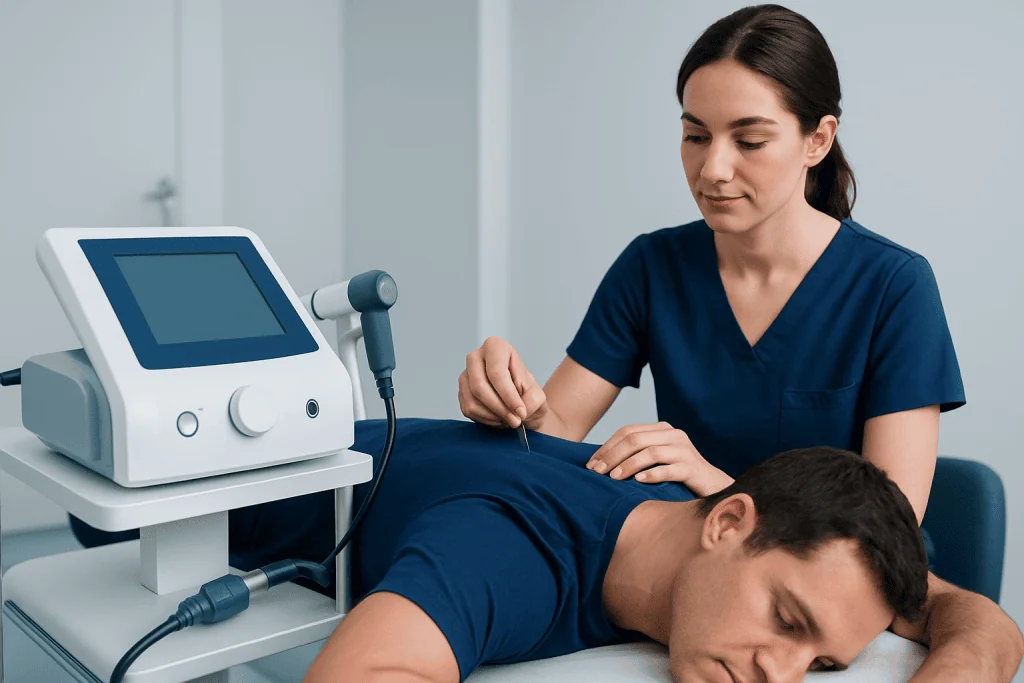
Dry needling is based on the idea that painful muscles can develop sensitive, tight bands known as trigger points. These spots may cause local pain, tenderness, stiffness, or pain that spreads to other areas. By inserting a needle into the trigger point, the clinician aims to help the muscle relax and restore more normal function.
Some people feel a brief twitch response when the needle reaches the tight muscle band. This involuntary contraction may be followed by a sense of release or reduced tension. Although the exact mechanisms are still being studied, dry needling may help by changing local muscle activity, improving blood flow, and affecting pain-signaling pathways in the nervous system.
Dry needling is not the same as acupuncture. Acupuncture is rooted in traditional Chinese medicine and focuses on balancing energy pathways. Dry needling is based on modern anatomy and pain science, and it targets muscles, connective tissue, and trigger points related to specific movement or pain complaints.
Who May Benefit From Dry Needling

Dry needling treatment may be recommended for people with muscle pain, sports injuries, or movement limitations related to tight or overactive muscles. It is often used for neck pain, shoulder pain, back pain, hip pain, leg pain, and certain overuse injuries. Clinicians may also consider it for tension-related headaches or muscle discomfort after repetitive activity.
It can be helpful for conditions involving myofascial pain, where muscle and connective tissue become tender and restricted. For example, a person with persistent neck tightness or shoulder blade pain may benefit if trigger points are contributing to symptoms. In some rehabilitation programs, dry needling is used alongside care for herniated disc-related muscle guarding or scoliosis-related muscular imbalance when a doctor considers it appropriate.
Dry needling is not suitable for everyone. People who are pregnant, have certain bleeding disorders, use blood thinners, have needle phobia, or have active skin infection near the treatment area may need a different approach. A careful medical history helps the clinician decide whether the treatment is safe and likely to help.
What Happens During the Procedure
Before starting, the clinician asks about symptoms, medical history, medications, and goals for treatment. They then examine movement, posture, muscle tenderness, and painful trigger points. This assessment helps identify the best areas to treat and whether dry needling should be part of the care plan.
During the procedure, the skin is cleaned and a thin sterile needle is inserted into the target muscle. Depending on the area and the treatment plan, the needle may be removed quickly or left in place briefly. Some people feel almost nothing, while others notice a quick ache, cramp, or twitch in the muscle.
The session itself is usually relatively short, but it is often combined with other rehabilitation strategies. A clinician may recommend gentle stretching afterward or may follow dry needling with physical therapy and rehabilitation exercises to improve mobility and support longer-term recovery. The number of sessions needed varies depending on the cause, severity, and duration of symptoms.
Benefits, Risks, and Side Effects
The main potential benefits of dry needling treatment are reduced muscle pain, less tightness, and improved range of motion. Some people notice relief soon after treatment, while others improve gradually over several sessions. When used appropriately, it may help a person move more comfortably and participate more fully in rehabilitation exercises.
Common side effects are usually mild and short-lived. These can include temporary soreness, bruising, slight bleeding at the needle site, tiredness, or a brief increase in symptoms before improvement occurs. Drinking water, using gentle movement, and following aftercare advice may help ease minor discomfort.
Although serious complications are uncommon when performed by trained professionals, they are still possible. Risks depend partly on the area being treated and may include infection, significant bleeding, fainting, or accidental injury to nearby structures. Needling near the chest region requires particular expertise because of the rare but important risk of a collapsed lung. For this reason, dry needling should only be performed by properly trained clinicians using appropriate hygiene and safety techniques.
It is also important to have realistic expectations. Dry needling may reduce symptoms, but it does not cure every cause of pain on its own. If a person has an underlying orthopedic problem, the clinician may combine treatment with approaches such as orthopedic evaluation or other rehabilitation methods to guide a safer and more complete recovery.
Recovery, Self-Care, and Aftercare
Recovery after dry needling is usually straightforward. Many people return to normal daily activities the same day, though the treated muscle may feel sore for 24 to 48 hours. This soreness is often described as similar to what is felt after an intense workout.
Simple aftercare can support a smoother recovery. Gentle walking, light stretching, staying hydrated, and using warmth on the area may help ease discomfort. Some clinicians advise avoiding very intense exercise for the rest of the day, especially if the muscle feels fatigued or tender.
Longer-term improvement often depends on addressing the reasons the muscle became irritated in the first place. A rehabilitation plan may include posture training, workstation adjustments, strengthening, flexibility work, and activity modification. In some cases, dry needling is part of a broader pain-management or recovery pathway that may also involve pain management support.
When to See a Doctor and Choosing Qualified Care
A doctor or rehabilitation specialist should evaluate pain that is severe, persistent, worsening, or associated with numbness, weakness, fever, swelling, unexplained weight loss, or loss of bladder or bowel control. These symptoms may suggest that a different diagnosis or more urgent treatment is needed. Dry needling is only one possible tool and is not appropriate for every type of pain.
It is important to seek treatment from a properly trained and licensed healthcare professional who uses sterile technique and understands anatomy well. Patients can ask about the clinician’s qualifications, experience, expected benefits, possible risks, and what other therapies may be combined with treatment. Clear communication helps create a safer and more effective care plan.
For people seeking coordinated care, Acibadem International’s multidisciplinary specialists in JCI-accredited hospitals evaluate musculoskeletal pain and offer individualized treatment plans for international patients. A complete assessment helps determine whether dry needling, exercise-based rehabilitation, imaging, or another approach is the most suitable next step.
Frequently asked questions
Is dry needling the same as acupuncture?
No. Both use thin needles, but they are based on different principles and are used in different ways. Dry needling focuses on trigger points, muscles, and movement-related pain, while acupuncture comes from traditional Chinese medicine.
Does dry needling hurt?
Many people feel only mild discomfort, but sensations vary depending on the muscle and the person’s sensitivity. A brief twitch, ache, or cramping feeling can happen during treatment, and some soreness afterward is common.
How long does it take to recover after dry needling treatment?
Most people recover quickly and can continue normal daily activities the same day. Mild soreness may last one or two days, and gentle movement, hydration, and rest can help.
How many sessions of dry needling are usually needed?
There is no single number that works for everyone. The treatment plan depends on the cause of symptoms, how long the problem has been present, and how the body responds after each session.
Who should avoid dry needling?
People with certain bleeding problems, active skin infections, severe needle anxiety, or specific medical concerns may not be good candidates. Pregnant individuals and people taking blood thinners should discuss risks carefully with a qualified clinician.
What are the side effects of dry needling treatment?
The most common side effects are mild soreness, bruising, slight bleeding, or temporary fatigue. Serious complications are uncommon but can occur, so treatment should be performed by a trained professional.
Can dry needling cure chronic pain?
Dry needling may help reduce pain and improve movement, but it is not a cure for every cause of chronic pain. It often works best as part of a broader rehabilitation plan that addresses strength, posture, daily habits, and any underlying condition.
References
- World Health Organization
- National Institute for Health and Care Excellence
- American Physical Therapy Association
- Cleveland Clinic
- Mayo Clinic
This article is for general information only and is not a substitute for professional medical advice. Please consult a qualified doctor about your individual situation.
Explore treatments in Turkey — costs, top hospitals & a free quote
JCI-accredited · board-certified surgeons · reply within 24h
Add us as a Preferred Source to see more of our trusted health content across Google Search, AI Overviews and Discover.

More from the Health Library



Related Specialists

Dr. Tülay Aslan Yayla
Neurosurgery
Dr. Uygar Cenik
Pulmonology
Dr. Aliye Sevil Sarıkaya
Pediatric Endocrinology
Prof. Dr. Ali Kurtsoy
Neurosurgery