What Kind of Cancer Did Brandon Blackstock Have?

Reports suggest Brandon Blackstock had melanoma, though full medical details have not been publicly confirmed. Melanoma is a serious form of skin cancer that begins in pigment-producing cells called melanocytes.
Key Takeaways
- Reports suggest Brandon Blackstock had melanoma, though full medical details have not been publicly confirmed.
- Melanoma is a serious form of skin cancer that begins in pigment-producing cells called melanocytes.
- Early detection greatly improves the chance of successful treatment.
- Warning signs often include a changing mole, a new dark spot, or a sore that does not heal.
- Diagnosis usually involves a skin exam and biopsy, with treatment based on the stage of disease.
Publicly available reports have not fully confirmed Brandon Blackstock’s diagnosis, but widely cited coverage suggests he had melanoma, a type of skin cancer. This article explains what melanoma is, possible symptoms, diagnosis, treatment, and when to seek medical care.
Overview
When people ask, “What kind of cancer did Brandon Blackstock have?” the most accurate patient-friendly answer is that public reporting has suggested melanoma, but complete medical details have not been officially shared in depth. Because of that, it is helpful to focus on the condition most often mentioned and explain what it means in general medical terms.
Melanoma is a type of skin cancer that develops in melanocytes, the cells that give skin its color. Although it is less common than some other skin cancers, it is considered more serious because it can grow deeper into the skin and spread to other parts of the body if not found early.
Many melanomas begin as a new spot on the skin or as a change in an existing mole. They may appear on sun-exposed areas, but they can also develop in places that receive little sunlight. Early recognition, prompt assessment, and timely treatment can make a major difference in outcomes.
What Is Melanoma?
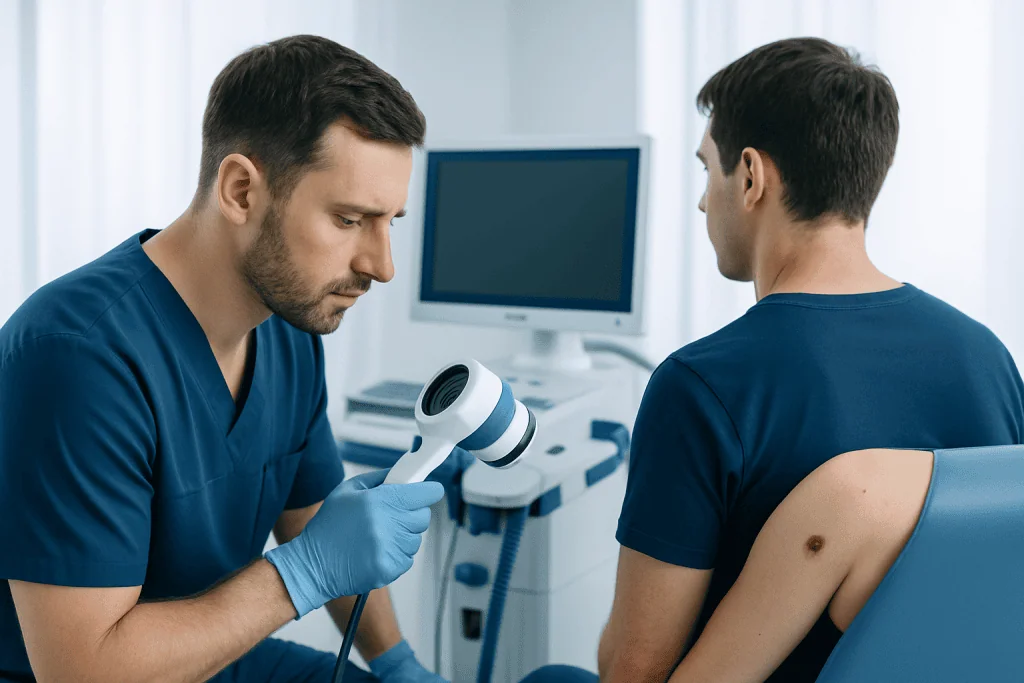
Melanoma starts when melanocytes grow in an abnormal and uncontrolled way. These cells are normally found in the skin, but melanoma can also rarely develop in the eye, under the nails, or on mucous membranes such as inside the mouth or nose. In everyday practice, however, the term most often refers to skin melanoma.
Unlike many harmless moles, melanoma can invade nearby tissue and may spread through the lymphatic system or bloodstream. That is why doctors take suspicious skin changes seriously. Not every unusual mole is cancer, but any changing lesion deserves careful evaluation.
Melanoma is often discussed alongside other forms of skin cancer, but it behaves differently from basal cell carcinoma and squamous cell carcinoma. Its treatment depends on how deep it has grown, whether lymph nodes are involved, and whether it has spread beyond the skin.
Symptoms and Warning Signs

The best-known warning signs of melanoma are described by the ABCDE rule. A stands for asymmetry, meaning one half of a mole does not match the other. B stands for border irregularity. C refers to color variation, such as shades of brown, black, red, white, or blue. D stands for diameter, especially a spot larger than about 6 mm, though melanomas can be smaller. E means evolving, or any change over time.
Other concerning signs include a new dark spot, a mole that itches or bleeds, a sore that does not heal, or a lesion that looks different from a person’s other moles. Some melanomas do not fit the classic mole pattern and may appear pink, skin-colored, or nail-related.
A useful practical idea is the “ugly duckling” sign. This means a spot that looks noticeably different from the person’s other moles. Because people know their own skin best, noticing a new or changing mark and bringing it to a doctor’s attention is often an important first step.
- New mole or pigmented spot
- Change in size, shape, or color of an existing mole
- Bleeding, crusting, or itching lesion
- Non-healing sore
- Dark streak under a nail or pigment spreading around the nail
Causes and Risk Factors
Melanoma develops because of DNA changes in melanocytes. Ultraviolet, or UV, radiation from sunlight and tanning beds is a major risk factor. Repeated sun exposure, especially a history of severe sunburns, can increase risk over time. However, melanoma can also occur in people without heavy sun exposure and in areas usually covered by clothing.
Several personal factors affect risk. These include fair skin, light eyes, blond or red hair, a large number of moles, atypical moles, a family history of melanoma, or a personal history of melanoma or other skin cancers. People with weakened immune systems may also be at greater risk.
Age can influence risk, but melanoma can occur in younger adults as well. A history of indoor tanning is another important and preventable risk factor. Having risk factors does not mean someone will definitely develop melanoma, but it does mean skin checks and sun protection become especially important.
How Melanoma Is Diagnosed
Diagnosis starts with a clinical skin examination. A doctor, often a dermatologist, reviews the skin carefully and asks about changes over time, family history, sun exposure, and previous skin lesions. Dermoscopy, a tool that allows closer inspection of pigmented lesions, can help doctors identify suspicious patterns.
If a lesion appears concerning, the next step is usually a biopsy. During a biopsy, part or all of the spot is removed and examined under a microscope. This is the only way to confirm whether melanoma is present. The pathology report often includes important details such as tumor thickness, ulceration, and margin status.
If melanoma is confirmed, further testing may be needed depending on the stage. Some patients need imaging studies or a sentinel lymph node biopsy to check whether the cancer has spread. These details help guide treatment planning and determine whether care may involve medical oncology or surgical oncology specialists in addition to dermatology.
Treatment Options
Treatment for melanoma depends on the stage, size, depth, and location of the tumor, as well as the patient’s overall health. In many early cases, surgery is the main treatment. The goal is to remove the melanoma completely along with a margin of normal-looking skin around it.
If there is concern that melanoma may have reached nearby lymph nodes, a sentinel lymph node biopsy may be recommended. Some patients may need additional surgery if lymph nodes are involved. For more advanced melanoma, treatment may include immunotherapy, targeted therapy, radiation therapy, or, less commonly than in the past, chemotherapy.
Modern melanoma care often uses a multidisciplinary approach. Depending on the features of the cancer, patients may be evaluated for immunotherapy or radiation therapy as part of a personalized plan. Follow-up after treatment is also essential, because people who have had melanoma remain at risk for recurrence or for developing a new melanoma later.
At centers such as Acibadem International, multidisciplinary specialists in JCI-accredited hospitals evaluate and treat melanoma for international patients, with diagnosis and care tailored to the individual case.
Prevention and Self-Care
Not all melanoma can be prevented, but reducing UV exposure can lower risk. Practical steps include using broad-spectrum sunscreen, wearing protective clothing, seeking shade during strong midday sun, and avoiding tanning beds. Sunscreen is important, but it works best when combined with other forms of sun protection.
Regular self-exams can help people notice skin changes early. It is useful to check the entire body, including the scalp, soles of the feet, back, and nails. A mirror or help from a partner can make these areas easier to inspect. People at higher risk may also benefit from routine professional skin examinations.
Self-care after a melanoma diagnosis includes keeping follow-up appointments, protecting the skin from further UV damage, and discussing any new or changing lesions promptly. Emotional support can also be important, since uncertainty around cancer can be stressful even when treatment is successful.
When to See a Doctor
A person should see a doctor if they notice a new mole, a changing pigmented spot, a lesion that bleeds or itches, or a sore that does not heal. Any lesion that looks different from other moles or changes over weeks to months deserves medical attention. It is better to have a suspicious spot checked early than to wait.
People with a strong family history of melanoma, many atypical moles, or a personal history of skin cancer should ask about regular skin surveillance. These checkups may help identify concerning lesions sooner. Prompt evaluation is especially important because early-stage melanoma is often highly treatable.
Anyone with diagnosed melanoma should seek follow-up exactly as advised by their care team. New symptoms such as unexplained swollen lymph nodes, persistent pain, unexplained weight loss, or new skin lesions should also be discussed with a qualified doctor.
Frequently asked questions
What kind of cancer did Brandon Blackstock reportedly have?
Public reports have suggested that Brandon Blackstock had melanoma. However, detailed medical information has not been fully confirmed in the public domain, so it is best to describe this as reported rather than officially detailed.
Is melanoma a serious cancer?
Yes, melanoma is considered a serious form of skin cancer because it can spread to other parts of the body if it is not found early. The good news is that early detection and treatment can greatly improve outcomes.
What are the first signs of melanoma?
Common early signs include a new dark spot, a mole that changes in shape or color, irregular borders, or a lesion that itches or bleeds. A spot that looks different from a person’s other moles should also be checked.
Can melanoma be cured?
Many early melanomas can be treated very successfully, often with surgery alone. The outlook depends on how early the melanoma is found and whether it has spread.
Who is most at risk for melanoma?
Risk is higher in people with fair skin, a history of severe sunburns, many or unusual moles, indoor tanning exposure, or a family history of melanoma. Still, melanoma can affect people of all skin tones.
How is melanoma confirmed?
Melanoma is confirmed with a biopsy, which means removing part or all of a suspicious lesion for laboratory examination. A skin exam alone can raise concern, but a biopsy is needed for diagnosis.
References
- World Health Organization
- American Cancer Society
- National Cancer Institute
- American Academy of Dermatology
- National Comprehensive Cancer Network
This article is for general information only and is not a substitute for professional medical advice. Please consult a qualified doctor about your individual situation.
Oncology care in Turkey — second opinion and treatment plan
JCI-accredited · board-certified surgeons · reply within 24h
Add us as a Preferred Source to see more of our trusted health content across Google Search, AI Overviews and Discover.