What Makes Hair Grow Faster? Here Is What the Evidence Says

Scalp hair commonly grows about 1 centimeter per month, although rates vary between people and over time. No shampoo, oil, supplement, or home remedy has been proven to make healthy hair grow much faster than its biologic rate.
Key Takeaways
- Scalp hair commonly grows about 1 centimeter per month, although rates vary between people and over time.
- No shampoo, oil, supplement, or home remedy has been proven to make healthy hair grow much faster than its biologic rate.
- Adequate protein, iron and other nutrients support normal hair production when a deficiency is present.
- Gentle styling and scalp care can reduce breakage, helping hair retain length even when growth rate does not change.
- Sudden shedding, patchy hair loss, scalp inflammation, or changes in general health should be assessed by a qualified clinician.
Most people cannot make hair grow dramatically faster than its natural rate, but good nutrition, gentle hair care, and treatment of medical causes of shedding can support healthy growth. New or significant hair loss deserves medical review, especially when it is patchy, sudden, or accompanied by scalp symptoms or other changes in health.
What makes hair grow faster?
For most people, there is no safe product or technique that makes hair grow dramatically faster than its natural rate. Hair growth is largely determined by genetics, age, hormones, overall health, and the normal cycle of the hair follicle. However, eating enough essential nutrients, avoiding hair breakage, caring for the scalp, and addressing an underlying medical cause of hair loss can help hair grow as well as it can.
Scalp hair usually grows gradually, often around 1 centimeter each month. This can seem slower when hair is breaking at the ends, shedding more than usual, or transitioning through a naturally slower phase. Temporary shedding after stress, illness, childbirth, weight loss, or a change in routine is common and often improves over time.
The most helpful approach is to distinguish between slower growth, hair breakage, and true hair loss. These concerns can look similar in the mirror, but they have different causes and solutions. A clinician can help identify whether the hair follicles are healthy and active and whether a treatable health issue may be contributing.
How hair growth works
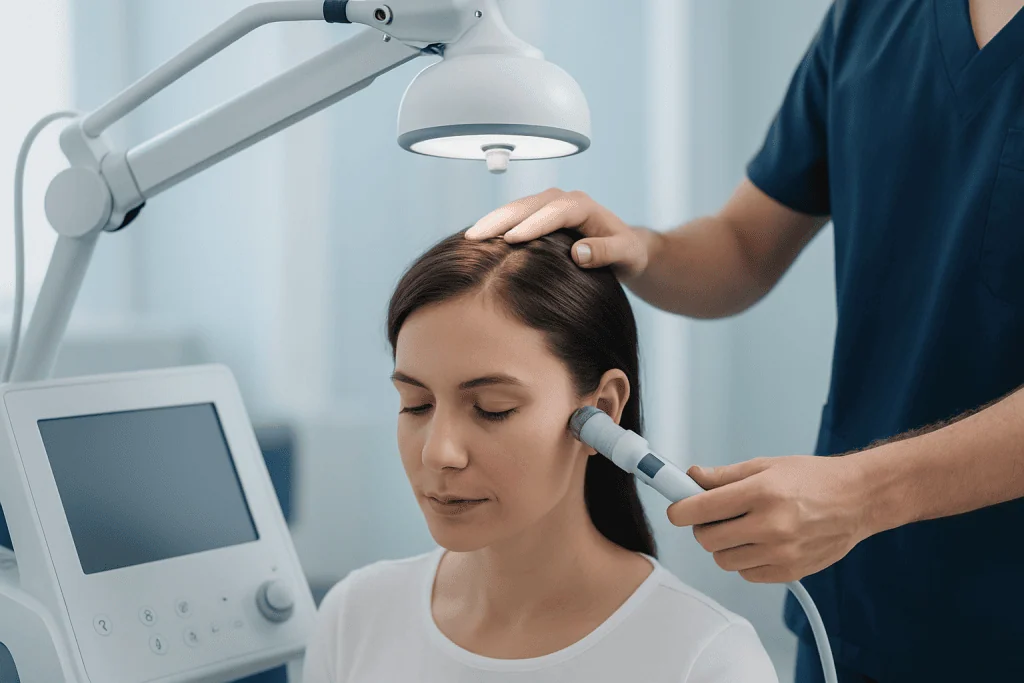
Each hair grows from a follicle in the skin. Follicles move through a repeating cycle: an active growth phase called anagen, a transition phase called catagen, and a resting phase called telogen. At the end of the resting phase, the old hair sheds and a new hair may begin growing from the same follicle.
The length of the active growth phase strongly affects how long hair can become. This phase is mostly influenced by inherited traits, but hormones, health conditions, medications, and nutritional status can also affect the cycle. Hair growth may naturally slow with age, and the diameter of individual hairs may become finer over time.
It is also important to recognize that hair length depends on retention as well as growth. Heat styling, bleaching, tight hairstyles, frequent chemical treatments, and rough detangling can damage the hair shaft. The follicle may be producing new hair normally, but repeated breakage can prevent a person from seeing length gains.
Normal daily shedding is part of the growth cycle. Seeing some hairs in a brush or shower drain is not automatically a sign of disease. A noticeable increase in shedding or visible thinning, especially if it lasts for several months, is a reason to consider medical advice.
Evidence-based ways to support healthy hair growth

A balanced eating pattern is one of the most practical ways to support hair health. Hair is made primarily of protein, so regularly including protein-rich foods can be important, particularly for people with restricted diets, low appetite, recent illness, or rapid weight loss. A varied diet with fruits, vegetables, whole grains, legumes, and healthy fats also helps provide nutrients needed for normal tissue growth.
Iron, zinc, vitamin D, vitamin B12, folate, and other nutrients are relevant to hair production, but supplements are most useful when a true deficiency exists. Taking high doses without medical guidance is not recommended. Excess amounts of some nutrients, including selenium and vitamin A, may contribute to hair loss rather than improve it. Biotin deficiency is uncommon, and biotin supplements have limited evidence for improving hair growth in people who are not deficient.
Hair care that limits damage can improve fullness and preserve length. Helpful measures include using conditioner, detangling gently with a wide-tooth comb, reducing high-heat styling, avoiding frequent bleaching or relaxing treatments, and choosing looser hairstyles. People with tightly curled or textured hair may benefit from techniques that reduce traction and dryness while respecting their usual hair routine.
Keeping the scalp clean and comfortable is also worthwhile. Dandruff, itching, redness, or scaling can make the scalp uncomfortable and may require targeted treatment. Oils and scalp massage may feel soothing for some people, but evidence that they substantially accelerate hair growth is limited. Essential oils can irritate the skin or cause allergic reactions, particularly when applied directly without dilution.
Why hair may seem to grow slowly or become thinner
Hair may appear not to grow when it is breaking faster than it can gain length. This is common after repeated heat exposure, chemical processing, aggressive brushing, or frequent tight ponytails, braids, extensions, or head coverings that pull on the roots. Early changes can often improve when the source of traction or damage is reduced.
Increased shedding can occur several weeks to months after a physical or emotional stressor. Fever, surgery, childbirth, significant infection, major weight change, dietary restriction, and severe stress can shift more follicles into the resting phase. This pattern, sometimes called telogen effluvium, is often temporary, although recovery can take months because hair cycles change slowly.
Hormonal and genetic factors may also play a role. Pattern hair loss can affect people of all genders and often develops gradually, with widening of the part, thinning at the crown, or a receding hairline. Thyroid disorders, polycystic ovary syndrome, anemia, autoimmune conditions, and some medications may contribute to shedding or thinning in some people.
Patchy hair loss is different from generalized shedding and should not be ignored. Round smooth patches may occur with alopecia areata, while redness, pain, scaling, pustules, or scarring can signal a scalp condition that needs prompt assessment. Early evaluation may help protect the follicles when inflammation is involved.
Medical treatments and realistic expectations
Treatment depends on the cause of the concern. A doctor may recommend correcting a documented nutritional deficiency, changing a medication when appropriate, treating scalp inflammation, or managing an underlying hormonal or medical condition. Hair regrowth is gradual, so improvements are usually assessed over months rather than days or weeks.
For some forms of pattern hair loss, clinicians may discuss topical minoxidil or other prescription options based on the person’s age, sex, medical history, pregnancy plans, and type of hair loss. These treatments are not appropriate for everyone and should be selected with professional guidance. Some options can cause initial temporary shedding or other side effects, so follow-up is important.
Cosmetic approaches can also help people feel more comfortable while treatment takes effect or when hair loss is longstanding. A carefully selected haircut, protective styling, hair fibers, wigs, or other hair coverings may improve the appearance of density without affecting the underlying condition. These options can be used alongside medical care.
Hair transplantation may be considered for selected people with stable, permanent pattern hair loss and an adequate donor area. It does not treat active shedding or inflammatory scalp disease, so diagnosis comes first. Expectations should be discussed carefully, including the likelihood that existing hair may continue to thin over time.
When to seek medical care
Hair changes are often harmless and temporary, particularly after a stressful period, illness, or change in diet. Still, a medical review is sensible if shedding is heavy or persistent, thinning is becoming more noticeable, or hair does not begin to recover after the likely trigger has passed. A dermatologist, primary care doctor, or another qualified clinician can assess the pattern and possible causes.
More prompt assessment is appropriate for sudden patchy loss, pain, burning, redness, swelling, scaling, sores, pus-filled bumps, or shiny areas of scalp that may suggest scarring. Medical care is also important when hair loss occurs with fatigue, unintended weight change, sensitivity to heat or cold, irregular periods, new facial hair growth, or other signs of a possible hormonal or nutritional concern.
During an appointment, a clinician will usually ask about the timing of hair changes, recent illnesses, family history, diet, stress, hair practices, medications, and menstrual or hormonal history when relevant. They may examine the scalp and hair shafts, perform a gentle pull test, and sometimes use magnification to look at follicles. Blood tests may be considered to check for issues such as anemia, thyroid dysfunction, or nutrient deficiencies.
Acibadem International’s multidisciplinary specialists and JCI-accredited hospitals can assess hair and scalp concerns for international patients, including possible dermatologic, hormonal, and nutritional contributors. An individualized evaluation is the best way to decide whether reassurance, lifestyle adjustments, testing, or treatment is appropriate.
A practical routine for protecting hair length
A realistic routine focuses on supporting the scalp and reducing damage rather than chasing rapid growth. Wash the scalp often enough to remove oil, sweat, and product buildup, using products suitable for the individual’s hair and scalp type. Conditioner can reduce friction and make detangling easier, especially on longer, curly, or chemically treated hair.
When drying hair, pat rather than rub with a towel and use the lowest effective heat setting for dryers and styling tools. Apply heat protectant products if heat styling is used, and allow hair to air-dry when practical. Avoid pulling wet hair tightly, as it is more vulnerable to stretching and breakage.
People considering supplements should first review their diet and discuss ongoing shedding with a clinician. A blood test may identify a deficiency that needs targeted treatment. In contrast, products marketed as rapid-growth solutions often have limited evidence, and expensive routines are not necessarily more effective.
Taking monthly photographs in similar lighting and parting the hair the same way can be more useful than checking daily. Hair changes are slow, and consistent photographs can help a person and their clinician see whether density, shedding, or length retention is changing over time.
Frequently asked questions
Can hair grow faster in one week?
Hair does not usually grow noticeably faster within one week. Growth occurs gradually, and most healthy scalp hair grows at a relatively steady biologic rate. Reducing breakage and caring for the scalp may help retain length over time.
Do hair growth vitamins work?
Vitamins or minerals can help if hair changes are related to a confirmed nutritional deficiency. In people with adequate nutrient levels, supplements have limited evidence for speeding hair growth. Taking unnecessary high-dose supplements may cause side effects or interfere with laboratory tests.
Does scalp massage make hair grow faster?
Scalp massage may be relaxing and can support a comfortable scalp-care routine, but strong evidence that it substantially speeds hair growth is lacking. It should be gentle, particularly if the scalp is sore, inflamed, or shedding heavily.
Why is my hair growing but not getting longer?
Hair may be growing normally at the root but breaking at the ends. Frequent heat styling, chemical processing, tight hairstyles, and rough detangling are common contributors. Reducing damage and using conditioning products may improve length retention.
Can stress stop hair growth?
Major physical or emotional stress can trigger increased shedding, often several months after the event. This is commonly temporary, but regrowth takes time because follicles need to return to the active growth phase. Persistent or severe shedding should be discussed with a clinician.
When is hair loss a sign of a medical problem?
Hair loss should be assessed when it is sudden, patchy, painful, associated with scalp redness or scaling, or accompanied by symptoms such as fatigue or weight change. Gradual thinning can also benefit from evaluation, especially when there is a family history or concern about hormonal changes. A clinician can determine whether testing or treatment is needed.
References
- American Academy of Dermatology Association
- National Institute of Arthritis and Musculoskeletal and Skin Diseases
- Mayo Clinic
- NHS
This article is for general information only and is not a substitute for professional medical advice. Please consult a qualified doctor about your individual situation.
Hair transplant in Turkey — costs, graft counts & a free assessment
JCI-accredited · board-certified surgeons · reply within 24h
Add us as a Preferred Source to see more of our trusted health content across Google Search, AI Overviews and Discover.