When to See a Knee Specialist for Pain, Swelling, or Instability

A knee specialist can evaluate persistent pain, recurrent swelling, or instability that does not improve with rest and basic self-care. Urgent medical attention is important after major injury, inability to bear weight, marked deformity, or signs of infection.
Key Takeaways
- A knee specialist can evaluate persistent pain, recurrent swelling, or instability that does not improve with rest and basic self-care.
- Urgent medical attention is important after major injury, inability to bear weight, marked deformity, or signs of infection.
- Common causes include sprains, meniscus tears, arthritis, tendon problems, and overuse injuries.
- Diagnosis may involve a physical exam, X-rays, MRI, or other imaging depending on symptoms and history.
- Treatment ranges from activity changes and physiotherapy to medications, injections, or surgery in selected cases.
Knee pain, swelling, or a feeling that the knee may give way can have many causes, from overuse to ligament or cartilage injuries. Knowing when to see a knee specialist can help a person get the right diagnosis, start treatment early, and protect long-term joint function.
Overview: What a Knee Specialist Does
A knee specialist is a doctor with expertise in diagnosing and treating problems that affect the knee joint, surrounding ligaments, tendons, cartilage, muscles, and bones. In many cases, this specialist is an orthopedic doctor with a focus on sports injuries, joint preservation, or joint replacement. Some people may also be assessed by a sports medicine physician, rehabilitation specialist, or physiotherapist as part of a broader care team.
Many knee symptoms improve with rest, time, and simple self-care. However, pain that lasts, swelling that keeps coming back, or a knee that feels unstable can be signs that the joint needs a more detailed assessment. A specialist looks not only at where the pain is felt, but also at how the knee moves, how the injury happened, and whether there may be damage to structures such as the meniscus, ligaments, or joint surface.
Early evaluation can be especially helpful when symptoms interfere with walking, work, exercise, sleep, or daily activities. It may also prevent a minor problem from becoming more difficult to treat. For people with sports injuries, chronic knee symptoms, or age-related joint disease, specialist care can help clarify the cause and guide the next steps.
Symptoms That May Mean It Is Time to See a Specialist
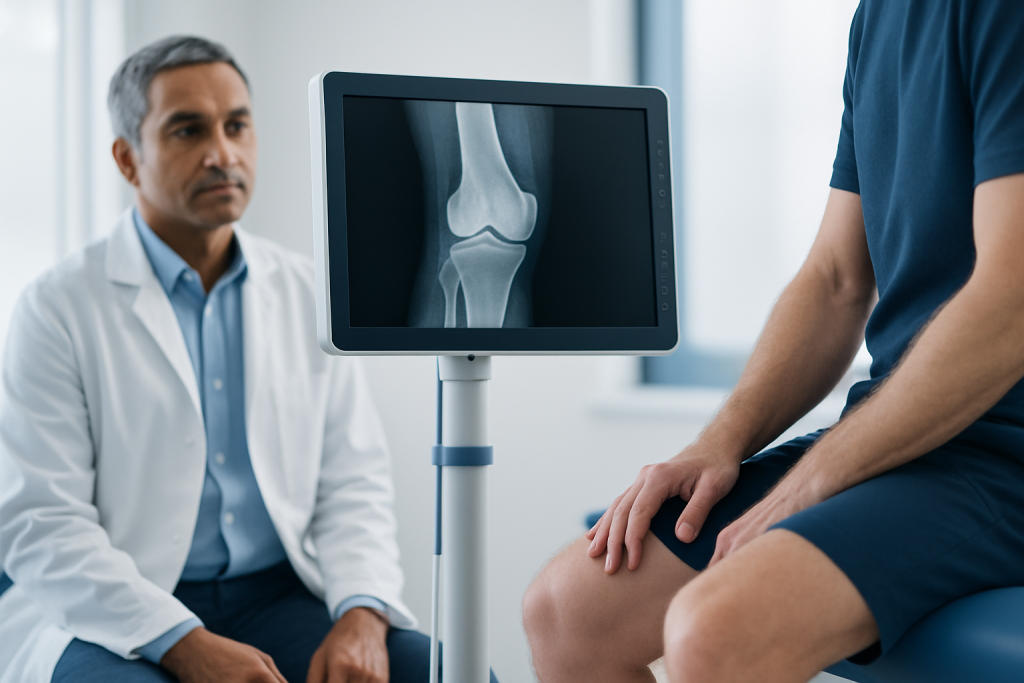
It is reasonable to arrange an appointment with a knee specialist when pain lasts more than a few days to a couple of weeks, keeps returning, or is getting worse rather than improving. Pain that limits walking, climbing stairs, kneeling, or standing up from a chair often deserves medical attention, especially if self-care has not helped.
Swelling is another common reason to seek evaluation. A knee that becomes visibly swollen after activity, stays puffy, or repeatedly fills with fluid may point to inflammation, internal injury, or wear within the joint. Warmth and stiffness can also occur, particularly in conditions such as arthritis or after a twist injury.
Instability should not be ignored. If the knee buckles, gives way, locks, catches, or feels unreliable during movement, there may be a problem with the ligaments, meniscus, kneecap tracking, or muscle control around the joint. A popping sensation at the time of injury, followed by swelling or loss of confidence in the knee, is also a common reason for specialist review.
- Pain that persists or worsens despite rest
- Recurrent or significant swelling
- Difficulty bearing weight or limping
- Locking, catching, or reduced range of motion
- A feeling of giving way or instability
- Symptoms that affect sleep, work, sport, or daily life
Common Causes of Knee Pain, Swelling, and Instability
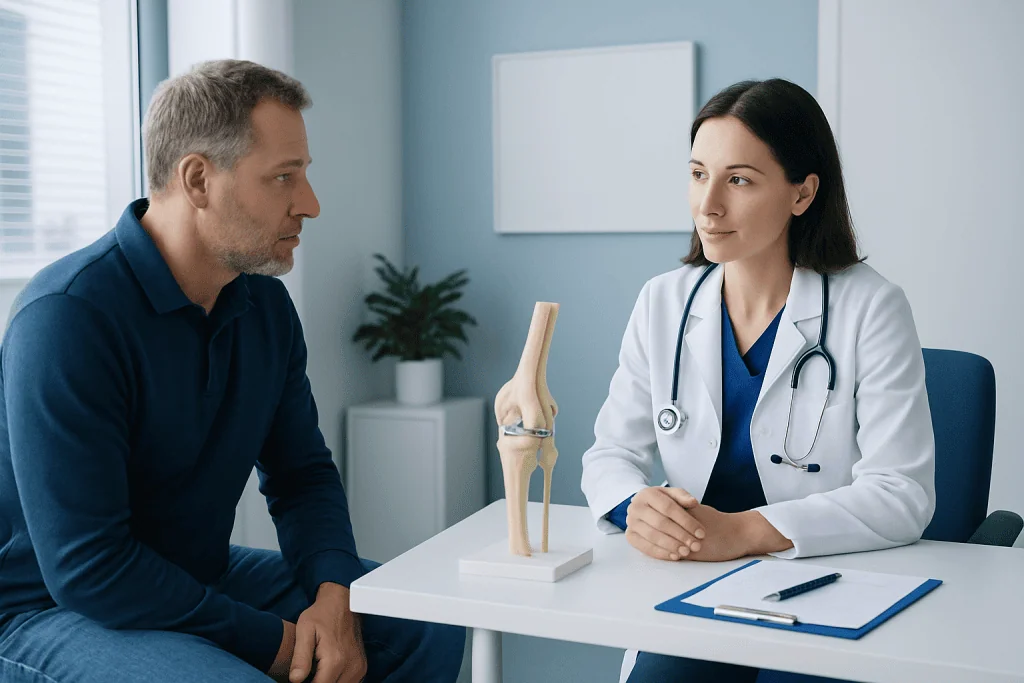
Knee symptoms can come from sudden injury or gradual wear and overuse. Acute injuries often happen during sports, exercise, falls, or awkward twisting movements. These may involve sprains, ligament tears, cartilage damage, bruising, or a meniscus tear. Tendon injuries can also occur, especially around the patellar tendon or quadriceps tendon.
Not all knee pain begins with a major accident. Repetitive stress from running, squatting, jumping, or prolonged standing can irritate the tissues around the joint. This can lead to conditions such as patellofemoral pain, bursitis, tendonitis, or iliotibial band irritation. Muscle weakness, poor movement patterns, or footwear issues may also contribute.
In older adults, wear-related and inflammatory conditions become more common. Knee osteoarthritis may cause pain, morning stiffness, swelling, grinding, and reduced mobility. Other possible causes include inflammatory arthritis, crystal-related arthritis, and less commonly infection. Because symptoms can overlap, an accurate diagnosis is important before deciding on treatment.
Risk factors vary depending on the condition, but often include previous knee injury, high-impact sports, excess body weight, weak thigh or hip muscles, age-related joint changes, certain occupations, and alignment problems in the legs or feet.
When Knee Symptoms Need Urgent Medical Attention
Some knee problems should be checked urgently rather than waiting for a routine appointment. Immediate medical care is recommended after a major injury if the person cannot bear weight, the knee looks deformed, there is severe swelling right away, or the pain is intense. These features can suggest a fracture, major ligament injury, dislocation, or significant internal damage.
Urgent evaluation is also important if the knee becomes hot, very swollen, and painful along with fever or general illness. These symptoms can sometimes indicate an infection in the joint, which needs prompt treatment. Sudden calf swelling, warmth, or shortness of breath should also be treated seriously because they may point to a condition outside the knee itself that needs emergency care.
A person should not continue sport or heavy activity after a major twisting injury if the knee feels unstable or locked. Delayed assessment can sometimes worsen tissue damage. When in doubt, seeking timely medical advice is the safest option.
How a Knee Specialist Diagnoses the Problem
Diagnosis begins with a detailed conversation about symptoms, activity level, previous injuries, and the exact way the problem started. The specialist will usually ask where the pain is located, whether swelling appeared immediately or gradually, and whether the knee locks, clicks, or gives way. This history often provides important clues about whether the source is likely to be the ligaments, cartilage, bone, tendon, or joint lining.
The physical examination usually includes checking walking pattern, alignment, swelling, tenderness, range of motion, and joint stability. Specific maneuvers may be used to assess structures such as the anterior cruciate ligament, collateral ligaments, or meniscus. Strength in the thigh and hip muscles may also be assessed because weakness can affect knee mechanics.
Imaging is chosen based on the likely cause. X-rays can show fractures, joint space narrowing, alignment changes, and signs of arthritis. MRI is often useful when soft tissues such as ligaments, cartilage, or meniscus are suspected to be injured, and it may help confirm findings such as an ACL tear. Ultrasound can be helpful for some tendon and fluid-related problems. In selected cases, blood tests or joint fluid analysis may be needed if inflammatory disease or infection is suspected.
Treatment Options a Knee Specialist May Recommend
Treatment depends on the diagnosis, severity of symptoms, age, activity goals, and overall health. Many knee conditions improve without surgery. Early treatment often includes activity modification, ice, short-term support or bracing when appropriate, and a structured rehabilitation program to restore movement, strength, and balance. Physiotherapy is a central part of care for many causes of knee pain and instability.
Medicines may be used to reduce pain and inflammation, though they are generally only one part of treatment. In some cases, a doctor may recommend injections to help with inflammation or pain, particularly in selected arthritis or overuse conditions. If the main issue is advanced wear within the joint, a specialist may discuss non-surgical management alongside procedures such as knee replacement surgery when symptoms are severe and function is significantly affected.
When there is a repairable structural injury, surgery may be considered. This may include minimally invasive knee arthroscopy for certain cartilage, meniscus, or loose-body problems, or ACL reconstruction surgery for selected patients with ongoing instability after ligament injury. Surgery is not necessary for every knee problem, and decisions are usually based on symptoms, exam findings, imaging, and the person’s goals.
In complex or persistent cases, multidisciplinary care can be helpful. Near the end of the treatment pathway, some international patients choose centers such as Acibadem International, where multidisciplinary specialists in JCI-accredited hospitals assess and treat a wide range of knee conditions.
Self-Care, Prevention, and What to Do Before the Appointment
While waiting to see a specialist, a person can often take practical steps to reduce symptoms. Resting from aggravating activities, using ice for short periods, elevating the leg, and avoiding repeated twisting or impact may help settle pain and swelling. Supportive footwear and temporary use of a brace or sleeve may provide comfort for some people, although these should not replace medical assessment when symptoms are significant.
Preventive habits can also lower the risk of future knee problems. These include warming up before exercise, progressing training gradually, strengthening the quadriceps, hamstrings, and hip muscles, and maintaining flexibility and balance. For people with excess body weight, even modest weight management can reduce the load on the knee joint.
It can be useful to prepare for the appointment by noting when symptoms started, what movements make them better or worse, whether swelling appears after activity, and what treatments have already been tried. Bringing previous scan results or a list of medicines can also help the specialist make an efficient and accurate assessment.
- Avoid activities that trigger sharp pain or repeated giving way
- Use ice after flare-ups if advised by a healthcare professional
- Track swelling, stiffness, locking, or instability episodes
- Seek urgent help if fever, marked redness, deformity, or inability to bear weight develops
Frequently asked questions
How do I know if knee pain is serious?
Knee pain may be more serious if it follows a significant injury, prevents weight-bearing, causes visible deformity, or comes with marked swelling or instability. Pain that persists, worsens, or repeatedly returns despite rest also deserves medical assessment.
Should I see a knee specialist or wait for it to improve?
Mild knee pain after unusual activity may improve with short-term rest and self-care. A knee specialist is usually a good idea if symptoms last beyond several days to a couple of weeks, limit normal activity, or include locking, buckling, or recurrent swelling.
Can knee swelling happen without a major injury?
Yes. Knee swelling can occur from overuse, arthritis, bursitis, tendon problems, or irritation inside the joint even without a clear accident. Repeated or unexplained swelling should be evaluated to find the underlying cause.
What doctor treats knee instability?
Knee instability is often evaluated by an orthopedic specialist, especially one with experience in sports injuries or knee conditions. Depending on the cause, care may also involve sports medicine doctors, physiotherapists, and rehabilitation specialists.
Will I always need an MRI for knee pain?
No. Many knee problems can be assessed with a detailed history, physical examination, and sometimes plain X-rays. MRI is usually reserved for situations where soft tissue injury or internal joint damage is suspected, or when symptoms do not match simpler findings.
Can knee pain get better without surgery?
Yes, many knee conditions improve with non-surgical care such as activity changes, physiotherapy, weight management, and symptom-relief measures. Surgery is generally considered only when symptoms are severe, the joint is structurally unstable, or conservative treatment has not provided enough improvement.
References
- American Academy of Orthopaedic Surgeons
- National Institute for Health and Care Excellence
- NHS
- Centers for Disease Control and Prevention
- Arthritis Foundation
This article is for general information only and is not a substitute for professional medical advice. Please consult a qualified doctor about your individual situation.
Joint and spine care in Turkey — expert assessment & treatment
JCI-accredited · board-certified surgeons · reply within 24h
Add us as a Preferred Source to see more of our trusted health content across Google Search, AI Overviews and Discover.