White Bits on Teeth: What Patients Need to Know

White bits on teeth may sit on the surface, like plaque or tartar, or come from inside the enamel, like white spot lesions or fluorosis. A simple dental examination can usually tell the difference between removable buildup and enamel changes.
Key Takeaways
- White bits on teeth may sit on the surface, like plaque or tartar, or come from inside the enamel, like white spot lesions or fluorosis.
- A simple dental examination can usually tell the difference between removable buildup and enamel changes.
- Good brushing, flossing, hydration, and regular professional cleanings help prevent many common causes.
- Pain, swelling, bleeding gums, bad breath, or a spot that is growing are reasons to seek dental care sooner.
- Treatment depends on the cause and may range from professional cleaning to fluoride care, remineralization, or cosmetic correction.
White bits on teeth are commonly caused by plaque buildup, tartar, food debris, or changes in enamel. Most causes are treatable, but a dental exam is the best way to tell whether the white material can be cleaned away or reflects a change within the tooth itself.
Overview: what white bits on teeth usually mean
White bits on teeth usually come from one of two broad sources: material sitting on the tooth surface or changes within the tooth enamel itself. Surface material can include plaque, tartar, food particles, or dry flakes of oral tissue. Enamel changes can appear as chalky white areas, lines, or patches that do not brush away.
This difference matters because a removable buildup is managed differently from an enamel spot. A person may notice white bits near the gumline, between teeth, or along orthodontic brackets, while others see flat white patches on the front teeth. Both patterns are common, and neither automatically means serious disease.
Many people use the phrase “white bits” to describe several different findings at once. For example, plaque can look soft and pale, tartar can look hard and off-white, and early enamel demineralization can look dull or chalky. A dentist can usually identify the cause during a routine exam and recommend the most appropriate next step.
What they can look like and common symptoms
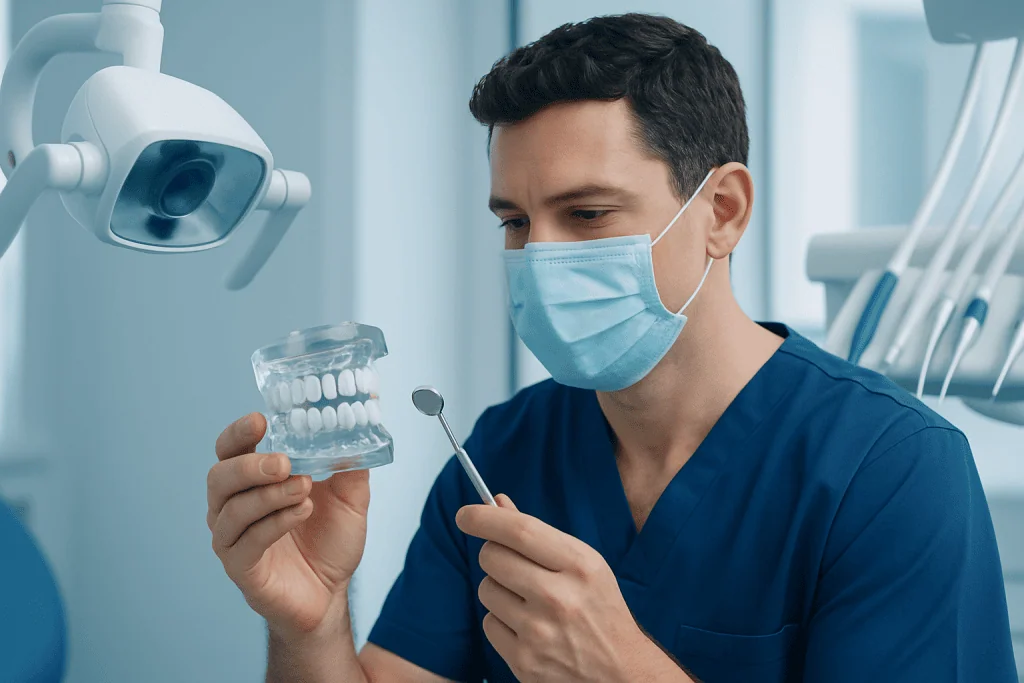
White bits on teeth may appear as tiny specks, rough deposits, thin lines, or larger cloudy patches. Some can be scraped away with brushing or flossing, while others remain in place because they are part of the enamel. Their appearance may change when the teeth are dry, making white enamel spots easier to see.
Often there are no other symptoms. However, some people also notice a rough feeling on the teeth, bad breath, gum irritation, bleeding while brushing, tooth sensitivity, or staining around the white area. These associated signs can help point toward plaque, tartar, or early decay rather than a harmless cosmetic variation.
- Soft, sticky, pale film: often plaque
- Hard, crusty deposit: often tartar (calculus)
- Flat chalky patch that does not wipe off: often enamel demineralization or another enamel change
- White lines or mottling on several teeth: may suggest developmental enamel differences or fluorosis
If the white area is new, spreading, painful, or affecting chewing, an assessment is helpful. Dental changes can look similar at home, and a professional exam is often the clearest way to tell them apart.
Causes of white bits on teeth

The most common cause is plaque, a sticky film of bacteria that forms on teeth every day. If plaque is not removed well with brushing and flossing, it can harden into tartar, which is more difficult to remove and often collects near the gumline or behind the lower front teeth. Food residue, especially after dairy products or starchy foods, can also leave temporary pale debris on the teeth.
Another important cause is enamel demineralization, sometimes called a white spot lesion. This happens when acids produced by oral bacteria begin to draw minerals out of the enamel surface. These spots often appear chalky and matte rather than shiny. They may develop around orthodontic brackets, in areas that are difficult to clean, or alongside diet patterns high in sugar and frequent snacking. In some cases, white spots can be linked with tooth decay.
Some white markings are developmental rather than acquired. Dental fluorosis can create faint white streaks or patches if a child has taken in too much fluoride while permanent teeth were developing. Enamel hypoplasia and other enamel defects may leave permanent white, cream, or yellow-brown areas due to the way the enamel formed.
Less commonly, dry mouth, mouth breathing, smoking, mineralized saliva deposits, and poor-fitting dental appliances can contribute to visible buildup or enamel changes. In children, teething products, oral habits, and inconsistent cleaning may make white debris easier to notice, though the exact cause still needs to be checked if it persists.
Risk factors and why some people notice them more
Several factors increase the chance of seeing white bits on teeth. Inadequate brushing, not cleaning between teeth, and skipping routine dental visits make plaque and tartar more likely. Orthodontic braces, retainers, and crowded teeth can create small areas where plaque accumulates and enamel begins to lose minerals.
Diet also plays a role. Frequent sugary snacks, acidic drinks, and sipping sweet beverages over long periods can support bacterial acid production. Low saliva flow from dehydration, certain medications, or medical conditions can make this worse because saliva normally helps wash away debris and protect enamel.
Children may be at higher risk of fluorosis if fluoride-containing products are swallowed regularly while teeth are developing. Adults may notice tartar more often if they naturally produce more mineral-rich saliva. People who breathe through the mouth or sleep with a dry mouth may also see chalky areas more clearly because the enamel surface dries out.
These risk factors do not mean a person has done something wrong. They simply help explain why white bits on teeth can recur and why prevention usually works best when daily habits and underlying contributors are addressed together.
How dentists diagnose the cause
Diagnosis usually starts with a visual examination under good lighting and a review of symptoms, home care habits, diet, fluoride exposure, and dental history. A dentist looks at whether the white material is soft or hard, whether it can be removed, and whether the surrounding enamel is shiny, rough, stained, or damaged.
If needed, the dentist may gently probe the area, dry the teeth to make enamel changes more visible, or take dental X-rays to check for hidden decay between teeth or under the surface. This helps separate simple surface buildup from early cavities, fluorosis, enamel hypoplasia, or other structural problems.
In some cases, a professional cleaning is both diagnostic and therapeutic. Once plaque and tartar are removed, any remaining white patch can be assessed more accurately. If there are cosmetic concerns or more complex enamel defects, a dentist may discuss referral or advanced options such as cosmetic dentistry to improve appearance while protecting tooth structure.
Treatment options
Treatment depends on the cause. If white bits are due to plaque, food debris, or tartar, improving home cleaning and having a professional dental cleaning are often enough. Tartar cannot usually be removed safely at home and is best treated by a dental professional. If gum inflammation is present, treatment may also include advice on brushing technique and care for gum disease.
When the cause is enamel demineralization, the goal is to stop progression and support remineralization. A dentist may recommend fluoride-based care, dietary changes, improved plaque control, and monitoring over time. In selected cases, treatments aimed at blending or strengthening early lesions may be used, depending on the tooth and severity.
If the white areas are developmental, such as fluorosis or enamel hypoplasia, treatment is often optional unless the person has sensitivity or is unhappy with the appearance. Options may include polishing, microabrasion, whitening in carefully chosen cases, resin infiltration, bonding, or other aesthetic approaches. For people with more extensive damage or structural loss, restorative dentistry may be considered, and some may benefit from a broader dental evaluation that includes dental treatment.
The right plan balances health, comfort, and appearance. A conservative approach is often preferred first, especially when the enamel is intact and the main issue is cosmetic.
Prevention and self-care
Daily oral hygiene is the main preventive step. Teeth should be brushed twice a day with fluoride toothpaste, and the spaces between teeth should be cleaned once a day with floss or an interdental cleaner. Gentle, consistent cleaning along the gumline helps prevent the pale, rough buildup that often causes white bits on teeth.
Dietary habits matter as well. Limiting frequent sugary snacks and acidic drinks can reduce acid exposure and lower the risk of white spot lesions. Drinking water regularly supports saliva flow and helps clear debris from the mouth. For people who wear braces or aligners, careful cleaning around attachments and following dental instructions are especially important.
Children should use fluoride products in age-appropriate amounts and be supervised to avoid swallowing toothpaste. Anyone prone to dry mouth may benefit from discussing possible causes with a clinician. Routine dental checkups and professional cleanings remain one of the most reliable ways to catch plaque buildup, early decay, or enamel changes before they become more difficult to manage.
Near the end of the care journey, some patients may need specialist support for diagnosis or cosmetic planning. Acibadem International’s multidisciplinary specialists and JCI-accredited hospitals diagnose and treat dental conditions for international patients, including preventive care and restorative options such as dental implants when tooth loss or advanced damage is present.
When to seek medical care
A dental appointment is advisable if white bits on teeth do not brush away, keep returning quickly, or are accompanied by pain, sensitivity, swelling, bleeding gums, or persistent bad breath. These features can suggest tartar buildup, gum inflammation, or early tooth decay rather than simple debris.
Prompt assessment is also sensible if the white area is spreading, affecting a child’s newly erupted permanent teeth, or causing concern about appearance. A dentist can confirm whether the change is harmless, reversible, or in need of treatment. Seeking care early often allows simpler and more conservative management.
Frequently asked questions
Are white bits on teeth always plaque?
No. White bits on teeth can be plaque, tartar, food debris, or a change in the enamel itself. A white area that does not brush away may be an enamel spot rather than surface buildup.
Can white bits on teeth be removed at home?
Soft debris and some plaque may improve with careful brushing and flossing. Hard tartar and enamel spots usually cannot be removed safely at home, so a dental assessment is best.
Do white spots mean a cavity is forming?
Sometimes they can. Early enamel demineralization may look chalky white and can be an early sign of decay, but not every white spot is a cavity. A dentist can tell whether the area is active decay, a developmental enamel change, or a cosmetic issue.
Why do white bits appear more around braces?
Braces create extra surfaces where plaque can collect and make brushing more difficult. If plaque stays in place, the enamel around brackets can begin to lose minerals and form white spot lesions.
Can dehydration cause white bits on teeth?
Dehydration can contribute indirectly by reducing saliva and making the mouth drier. Dry enamel may show chalky spots more clearly, and lower saliva can make debris and plaque easier to build up.
Should a child with white marks on teeth see a dentist?
Yes, especially if the marks are new, widespread, or affecting permanent teeth. White marks in children may be related to plaque, enamel development, or fluoride exposure, and a dentist can explain whether treatment or monitoring is needed.
References
- American Dental Association
- National Institute of Dental and Craniofacial Research
- Centers for Disease Control and Prevention
- World Health Organization
This article is for general information only and is not a substitute for professional medical advice. Please consult a qualified doctor about your individual situation.
Explore treatments in Turkey — costs, top hospitals & a free quote
JCI-accredited · board-certified surgeons · reply within 24h
Add us as a Preferred Source to see more of our trusted health content across Google Search, AI Overviews and Discover.

More from the Health Library

Erythrodermic Psoriasis: A Complete Medical Overview

Doxepin: An Evidence-Based Guide for Patients

Mouth Swab Drug Test: An Evidence-Based Guide for Patients

Romano Cheese Substitute: What Patients Need to Know

Aura — Explained by Medical Evidence, Not Myths