Who Needs Neuropsych Testing? Common Reasons Adults and Children Are Referred

Neuropsych testing looks at how the brain is functioning through standardized tasks and questions. Adults and children may be referred for concerns involving memory, attention, learning, behavior, language, or changes after illness or injury.
Key Takeaways
- Neuropsych testing looks at how the brain is functioning through standardized tasks and questions.
- Adults and children may be referred for concerns involving memory, attention, learning, behavior, language, or changes after illness or injury.
- The evaluation does not rely on one test alone; it combines history, observation, and a range of thinking and emotional measures.
- Results can help with diagnosis, treatment planning, school accommodations, and practical support at home or work.
- Neuropsych testing is usually noninvasive and tailored to a person’s age, symptoms, and referral question.
Neuropsych testing is used when there are concerns about thinking, learning, memory, attention, language, or behavior in children or adults. It helps clarify strengths and challenges, supports diagnosis, and guides treatment, school, work, and daily-life planning.
Overview: what neuropsych testing is
Neuropsych testing, also called a neuropsychological evaluation, is a detailed assessment of how a person’s brain is functioning in everyday life. It examines skills such as attention, memory, language, problem-solving, processing speed, visual-spatial abilities, and emotional or behavioral functioning. Rather than showing brain structure like a scan, it measures how well a person performs specific mental tasks.
These evaluations are used for both children and adults. A child may be referred because of learning difficulties, attention problems, developmental concerns, or a gap between expected and actual school performance. An adult may be referred after a concussion, stroke, seizure, medical illness, or because of concerns about memory, concentration, decision-making, or personality changes.
Neuropsych testing is not only for finding problems. It also identifies strengths, which can be just as important when planning treatment, school support, rehabilitation, or work accommodations. The goal is to create a clear picture of a person’s cognitive and emotional profile so care can be more personalized and practical.
Common reasons children are referred
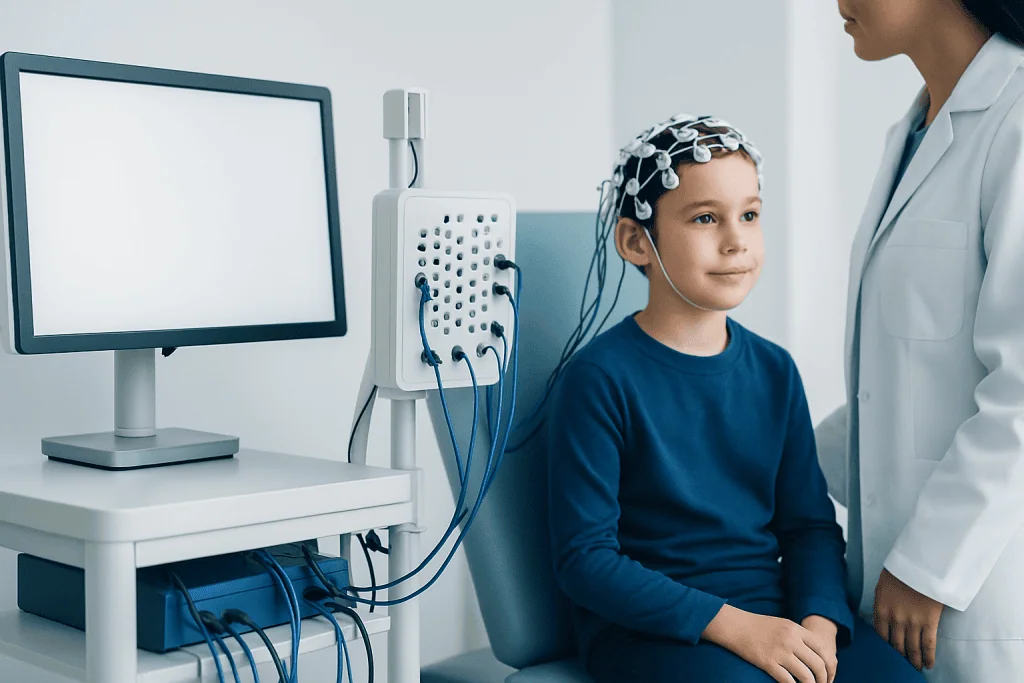
Children are often referred for neuropsych testing when parents, teachers, or doctors notice that development, learning, or behavior is not following the expected pattern. A child may be bright and curious but still struggle with reading, writing, math, attention, organization, or emotional regulation. Testing can help explain why these difficulties are happening and what kind of support is most likely to help.
Common referral concerns in children include possible attention-deficit/hyperactivity disorder, learning disorders, language-related difficulties, developmental delays, autism-related concerns, and problems with memory or executive functioning. It may also be recommended when a child has a medical or neurological condition that could affect brain function, such as epilepsy, brain injury, a genetic condition, or treatment for a serious illness.
Testing can also be useful when there is a complicated picture. For example, a child may seem inattentive in class but actually be struggling with reading, sleep, anxiety, hearing, or processing speed. A careful evaluation helps distinguish between these possibilities and may contribute to assessment of conditions such as ADHD when clinically appropriate.
- Unexpected decline in school performance
- Difficulty with reading, writing, spelling, or math
- Problems with attention, impulsivity, or hyperactivity
- Concerns about language, memory, or processing speed
- Behavior changes, emotional outbursts, or social difficulties
- Follow-up after concussion, seizures, or other neurological illness
Common reasons adults are referred

Adults may be referred for neuropsych testing when there are concerns about cognitive changes that affect daily life. This can include forgetfulness, trouble focusing, slowed thinking, word-finding problems, difficulty managing work tasks, poor organization, or changes in judgment. Sometimes these changes are sudden, such as after a head injury or stroke. In other cases, they develop gradually over time.
One major reason for referral is to help understand whether symptoms are related to a neurological condition, a mental health condition, a medical illness, medication effects, sleep problems, or a combination of factors. For example, depression, anxiety, chronic pain, poor sleep, and stress can all affect memory and concentration. Neuropsych testing helps place these symptoms in context rather than assuming a single cause.
Adults may also be evaluated after conditions such as traumatic brain injury, epilepsy, multiple sclerosis, brain tumors, infections affecting the nervous system, or suspected neurodegenerative disease. In some situations, the assessment helps determine what kind of rehabilitation or support is needed, including neurological rehabilitation. It can also help clinicians better understand concerns related to Alzheimer’s disease or other causes of cognitive decline.
What symptoms or situations may suggest a referral
Not every lapse in attention or memory means a person needs formal testing. Everyday stress, lack of sleep, and temporary life pressures can affect thinking in healthy people. A referral is more likely when symptoms are persistent, unexplained, worsening, or severe enough to interfere with school, work, relationships, independence, or safety.
Doctors may suggest neuropsych testing when there is a mismatch between what is expected and what is observed. Examples include a child who understands lessons verbally but cannot complete written work, or an adult whose medical scans look stable even though daily functioning has clearly changed. Testing can also help when there is disagreement about the cause of symptoms or when treatment decisions depend on a clearer understanding of brain function.
Situations that may prompt referral include:
- Noticeable memory loss or confusion
- Attention problems that affect learning or work
- Difficulty planning, organizing, or solving problems
- Speech or language changes
- Decline after concussion, stroke, or another brain-related illness
- Unclear academic or behavioral difficulties in a child
- Questions about readiness to return to school, work, or independent living
How the evaluation is done
A neuropsychological evaluation usually begins with a detailed interview. The clinician asks about symptoms, development, education, medical history, medications, mood, sleep, family history, and day-to-day functioning. For children, parents or caregivers usually provide background information, and school reports may also be reviewed. This history is important because test scores only make sense when interpreted in the context of the person’s life and health.
The testing itself involves a series of standardized tasks. These may include answering questions, remembering words or stories, solving puzzles, copying designs, naming objects, reading, writing, or performing computer-based tasks. Some parts measure emotional functioning, behavior, or personality. The exact tests vary depending on age and the reason for referral, so no two evaluations are exactly the same.
Neuropsych testing is noninvasive. It does not involve needles or surgery, but it can be tiring because it requires concentration. In some cases, it is combined with other assessments, such as EEG or MRI, if the broader clinical picture suggests a neurological cause. After testing, the neuropsychologist analyzes patterns across results rather than relying on one score in isolation.
What the results can show
The results of neuropsych testing can help answer several important questions. They may show whether a person’s cognitive abilities are generally intact, whether there is a specific area of weakness, or whether there is a broader pattern suggesting a neurological, developmental, or psychological condition. The findings may also show that some complaints are not supported by measurable impairment, which can still be helpful when planning next steps.
In children, results can help identify learning profiles, attention and executive functioning needs, language-related difficulties, or patterns that support school accommodations. In adults, testing can help clarify whether thinking changes fit with normal aging, the effects of stress or depression, post-injury changes, or a disorder affecting the brain. This is especially useful when symptoms overlap or when a diagnosis is uncertain.
The report usually includes practical recommendations. These may involve classroom strategies, workplace adjustments, therapy referrals, rehabilitation goals, sleep evaluation, mental health support, or follow-up with a neurologist or other specialist. The aim is not simply to label a problem, but to guide care in a way that improves daily functioning and quality of life.
What happens after testing
After the evaluation, the neuropsychologist reviews the results and explains what they mean in clear language. Many people find this discussion reassuring because it gives structure to concerns that may have felt confusing or overwhelming. The feedback often includes both strengths and weaknesses, along with specific recommendations for home, school, work, and medical care.
Next steps depend on the reason for referral. Some people may need medical follow-up, counseling, therapy, school planning, or rehabilitation. Others may benefit from lifestyle measures such as improving sleep, reducing stress, treating mood symptoms, or organizing tasks differently. In children, families may share the report with the school to discuss educational support. In adults, the information may help guide return-to-work decisions or safety planning.
When care is complex, a multidisciplinary approach can be helpful. Near the end of the care pathway, some patients seek coordinated support from neurology, psychiatry, rehabilitation, and neuropsychology teams. Acibadem International’s multidisciplinary specialists and JCI-accredited hospitals diagnose and treat brain-related conditions for international patients when more comprehensive evaluation is needed.
When to speak with a doctor
A doctor should be consulted if thinking, learning, memory, behavior, or emotional changes are persistent or interfere with daily life. This is especially important when symptoms appear after a head injury, seizure, stroke, severe infection, cancer treatment, or another serious medical event. It is also wise to seek medical advice if symptoms are getting worse over time or are affecting safety, independence, school progress, or work performance.
For children, parents may wish to speak with a pediatrician, child neurologist, psychiatrist, psychologist, or school professional if they notice ongoing struggles with learning, attention, behavior, or development. For adults, a primary care doctor, neurologist, psychiatrist, or rehabilitation specialist may help decide whether neuropsych testing is appropriate. The need for testing depends on the individual situation, not just the presence of one symptom.
Neuropsych testing is one tool within a broader medical assessment. It does not replace a full clinical evaluation, but it can add valuable detail when the reason for symptoms is unclear or when planning support. Early assessment can make it easier to understand what is happening and to take practical, informed next steps.
Frequently asked questions
What is the difference between neuropsych testing and a brain scan?
A brain scan such as MRI shows the structure of the brain, while neuropsych testing shows how the brain is functioning in areas like memory, attention, language, and problem-solving. Both can be useful, but they answer different questions. In some cases, doctors use them together.
Does neuropsych testing diagnose ADHD, dementia, or a learning disorder by itself?
Neuropsych testing can provide strong evidence that supports or argues against certain diagnoses, but it is usually not used alone. A diagnosis is made by combining test results with medical history, interviews, observations, and sometimes school or work information. This broader approach helps make the conclusions more accurate.
How long does a neuropsychological evaluation take?
The length varies depending on the person’s age, symptoms, and referral question. Some evaluations take a few hours, while more detailed assessments may be spread over a longer session or more than one visit. The clinician usually explains the expected schedule in advance.
Is neuropsych testing only for people with serious brain disease?
No. It is also used for more common concerns such as learning difficulties, attention problems, concussion recovery, unexplained memory complaints, or changes in work or school performance. The goal is to better understand how a person is functioning, whatever the cause may be.
Can anxiety, depression, or lack of sleep affect test results?
Yes. Mood symptoms, fatigue, pain, stress, and poor sleep can all influence attention, memory, and processing speed. That is one reason the evaluator asks detailed questions about mental and physical health and interprets results in context.
What should someone do to prepare for neuropsych testing?
It usually helps to get a normal night of sleep, eat regularly, bring glasses or hearing aids if needed, and take usual medications unless a doctor says otherwise. For children, bringing school records can be helpful. People should also plan for the session to require concentration and mental effort.
References
- American Academy of Clinical Neuropsychology
- American Psychological Association
- National Institute of Neurological Disorders and Stroke
- Centers for Disease Control and Prevention
- American Academy of Pediatrics
This article is for general information only and is not a substitute for professional medical advice. Please consult a qualified doctor about your individual situation.
Explore treatments in Turkey — costs, top hospitals & a free quote
JCI-accredited · board-certified surgeons · reply within 24h
Add us as a Preferred Source to see more of our trusted health content across Google Search, AI Overviews and Discover.