Who Performs Neuropsychological Testing and What Qualifications Matter?

Neuropsychological testing is usually led by a licensed clinical neuropsychologist. Important qualifications include doctoral education, supervised training, licensure, and experience in neuropsychological assessment.
Key Takeaways
- Neuropsychological testing is usually led by a licensed clinical neuropsychologist.
- Important qualifications include doctoral education, supervised training, licensure, and experience in neuropsychological assessment.
- Testing may also involve trained psychometrists or technicians, but interpretation should come from the supervising neuropsychologist.
- The purpose is to understand cognitive strengths and weaknesses, not simply to give a score.
- Results can help guide diagnosis, treatment planning, school or work support, and follow-up care.
Neuropsychological testing is a detailed evaluation of thinking, memory, attention, language, and other brain-based skills. The most qualified professional to perform and interpret it is typically a licensed clinical neuropsychologist with advanced training in brain-behavior relationships.
Overview: What Neuropsychological Testing Is
Neuropsychological testing is a structured evaluation of how the brain is functioning in daily life. It looks at areas such as attention, memory, language, problem-solving, processing speed, visual-spatial skills, mood, and behavior. The goal is to build a clear picture of cognitive strengths and weaknesses and to understand whether symptoms may relate to a neurological, psychiatric, developmental, or medical condition.
These assessments are different from brief screening tools sometimes used in a routine clinic visit. A full neuropsychological evaluation is more detailed, individualized, and interpreted within the context of a person’s medical history, education, language background, emotional health, and daily functioning. This makes it especially helpful when symptoms are complex or when several possible explanations need to be considered.
People may be referred for neuropsychological testing after a concussion, stroke, brain tumor, epilepsy, memory concerns, attention problems, learning difficulties, or changes in thinking after illness or treatment. It can also support care for conditions such as Alzheimer’s disease or other disorders that affect cognition over time.
Who Usually Performs Neuropsychological Testing?
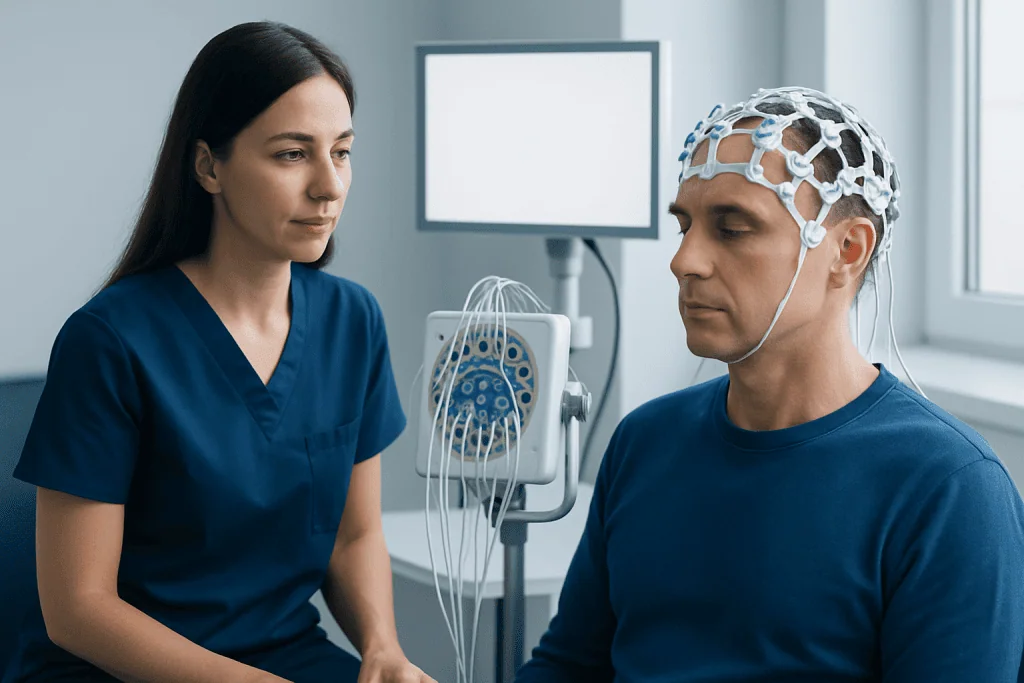
In most cases, neuropsychological testing is performed and interpreted by a licensed clinical neuropsychologist. This is a psychologist with advanced training in how brain conditions, injuries, and diseases affect thinking, emotion, and behavior. The neuropsychologist selects the right tests, considers the person’s background and symptoms, analyzes the results, and explains what they mean in practical terms.
During the testing session, some parts of the assessment may be administered by a trained psychometrist or psychology technician working under the neuropsychologist’s supervision. This can be a normal and appropriate part of care. However, the overall clinical responsibility, interpretation, diagnostic opinion, and written report should come from the supervising neuropsychologist.
Other professionals may assess cognition in more limited ways. Neurologists, psychiatrists, speech-language pathologists, occupational therapists, and school psychologists can all play valuable roles, but their evaluations are not the same as a full neuropsychological assessment unless they have the specific training and scope of practice required for this specialty. For patients and families, it is reasonable to ask who will administer the tests, who will interpret them, and what training that person has.
What Qualifications Matter Most?

The strongest qualifications usually begin with a doctoral degree in psychology, followed by formal clinical training in assessment and brain-behavior relationships. In many settings, a neuropsychologist has completed supervised internship and postdoctoral fellowship training in clinical neuropsychology. Licensure as a psychologist is also important, as it shows that the clinician meets legal and professional standards to practice independently.
Specialized experience matters because neuropsychological testing is not only about giving tests. It requires knowing which tools are appropriate, how medical and cultural factors influence performance, and how to distinguish between conditions with overlapping symptoms. For example, memory changes may reflect stress, depression, sleep problems, medication effects, dementia, or another neurological issue. Careful interpretation is essential.
Patients may also look for additional indicators of expertise, such as experience with adults or children, familiarity with a particular condition, academic or hospital-based practice, or board certification where available. Useful questions include:
- Is the clinician a licensed psychologist?
- Do they have specific training in clinical neuropsychology?
- Do they regularly evaluate the age group involved, such as children, adults, or older adults?
- Do they have experience with the suspected condition, such as epilepsy, traumatic brain injury, or memory disorders?
- Will they provide a clear written report and feedback session?
When Neuropsychological Testing May Be Recommended
Doctors may recommend neuropsychological testing when there are concerns about thinking, memory, concentration, language, planning, school performance, or behavior. It is often useful when symptoms are affecting everyday activities but the reason is not yet fully clear. In this setting, testing can help answer practical questions about diagnosis, severity, safety, and support needs.
Common reasons for referral include suspected dementia, concussion or other traumatic brain injury, stroke, epilepsy, multiple sclerosis, brain tumors, developmental disorders, attention-deficit/hyperactivity disorder, and complex psychiatric conditions. Testing can also help before and after certain medical treatments, including deep brain stimulation or epilepsy surgery, when understanding cognitive strengths and risks is an important part of planning.
In children and adolescents, testing may be requested for learning difficulties, developmental concerns, attention problems, or changes after illness or injury. In adults and older adults, the focus may be on work function, driving concerns, decision-making capacity, or distinguishing normal aging from more significant cognitive decline. In every age group, the assessment aims to turn symptoms into a clearer clinical picture.
What Happens During the Assessment
A neuropsychological evaluation usually begins with a detailed clinical interview. The clinician asks about current symptoms, medical history, education, language background, emotional health, medications, sleep, and daily functioning. Family members may also provide helpful observations, especially if there are concerns about memory or changes in behavior.
The testing itself may last several hours, sometimes split across more than one session. Tasks can include answering questions, remembering words or stories, solving problems, drawing shapes, naming objects, reading, writing, or using paper-and-pencil or computerized tools. The tasks are designed to measure specific cognitive functions in a standardized way.
Afterward, the neuropsychologist interprets the results in context rather than looking at test scores alone. A final report may describe patterns of strengths and weaknesses, possible diagnoses, and recommendations for treatment, school or workplace accommodations, rehabilitation, or follow-up care. Depending on the findings, the next steps may include referral to neurological rehabilitation or further review by a neurology team for conditions such as Parkinson’s disease.
How to Choose a Qualified Neuropsychology Service
Choosing the right service starts with confirming who is responsible for the evaluation. Patients may ask whether a licensed neuropsychologist will supervise the testing, interpret the results personally, and discuss the findings in a feedback appointment. This helps ensure that the assessment is clinically meaningful and not just a collection of scores.
It is also helpful to consider whether the clinic has experience with the person’s age group, symptoms, and medical condition. A child with learning concerns may need a different testing approach than an older adult with memory changes. Likewise, someone being evaluated after stroke or a brain tumor may benefit from a center that works closely with neurologists, neurosurgeons, psychiatrists, and rehabilitation specialists.
Practical questions can make the process smoother. People may want to ask how long testing takes, whether breaks are included, what language options are available, and whether hearing, vision, fatigue, or mobility issues can be accommodated. Near the end of the care pathway, some international patients choose multidisciplinary centers such as Acibadem International, where specialists in neuropsychology, neurology, psychiatry, and rehabilitation work together in JCI-accredited hospitals to diagnose and treat complex cognitive conditions.
Preparing for Testing and Knowing When to Seek Help
Good preparation can improve the testing experience. Patients are often advised to get adequate sleep, eat normally unless told otherwise, bring glasses or hearing aids if needed, and carry a list of medications and relevant medical records. It can also help to bring school reports, prior assessments, or a family member who can describe changes in everyday function.
Because many factors can affect cognition, it is important to mention mood symptoms, pain, stress, alcohol or substance use, recent illness, and language or cultural issues. This information does not invalidate the assessment. Instead, it helps the clinician interpret results accurately and fairly.
A person should consider medical evaluation if there is new or worsening memory loss, confusion, major personality change, language difficulty, or decline in school, work, or daily tasks. Urgent care is especially important if cognitive changes come on suddenly, follow a head injury, or occur with weakness, severe headache, seizure, loss of consciousness, or stroke-like symptoms. In less urgent cases, a referral from a neurologist, psychiatrist, pediatrician, geriatrician, or primary care doctor can help identify whether neuropsychological testing is appropriate.
Frequently asked questions
Is a neuropsychologist the same as a neurologist?
No. A neurologist is a medical doctor who diagnoses and treats disorders of the brain, spinal cord, and nerves, while a neuropsychologist is a psychologist who specializes in how brain function affects thinking, mood, and behavior. They often work together, but their training and roles are different.
Can a technician perform neuropsychological testing?
Some test administration may be done by a trained psychometrist or technician under supervision. However, the evaluation should be directed, interpreted, and signed by a qualified licensed clinical neuropsychologist. That professional is responsible for the clinical meaning of the results.
How long does neuropsychological testing usually take?
The length varies depending on the reason for referral and the complexity of symptoms. Some evaluations take a few hours, while others are split into multiple sessions. The clinician usually explains the expected schedule in advance.
Does neuropsychological testing diagnose dementia or other brain conditions?
Testing can provide strong evidence about patterns of cognitive change and can support or clarify a diagnosis. Still, it is usually interpreted alongside medical history, neurological examination, brain imaging, and laboratory results when needed. It is one important part of a broader clinical assessment.
What should a patient ask before booking an evaluation?
Helpful questions include who will supervise the testing, whether that person is a licensed neuropsychologist, and whether a written report and feedback session are included. It is also reasonable to ask about experience with the patient’s age group and specific symptoms or condition.
Are neuropsychological tests only for people with severe memory problems?
No. They are used for many concerns, including attention problems, learning issues, concussion, stroke recovery, epilepsy, mood-related cognitive symptoms, and questions about daily functioning. The purpose is to understand cognition more clearly, even when problems are mild or subtle.
References
- American Psychological Association
- National Academy of Neuropsychology
- International Neuropsychological Society
- National Institute of Neurological Disorders and Stroke
- World Health Organization
This article is for general information only and is not a substitute for professional medical advice. Please consult a qualified doctor about your individual situation.
Explore treatments in Turkey — costs, top hospitals & a free quote
JCI-accredited · board-certified surgeons · reply within 24h
Add us as a Preferred Source to see more of our trusted health content across Google Search, AI Overviews and Discover.

More from the Health Library



Related Specialists

Dr. İkbale Yılmaz Can
Pediatrics
Dr. Emel Eskitaşçıoğlu
Anesthesiology
Asst. Prof. Dr. Mahmut Ozan Fındık
Otorhinolaryngology
Fzt. Demet Orhan
Physical Medicine & Rehabilitation