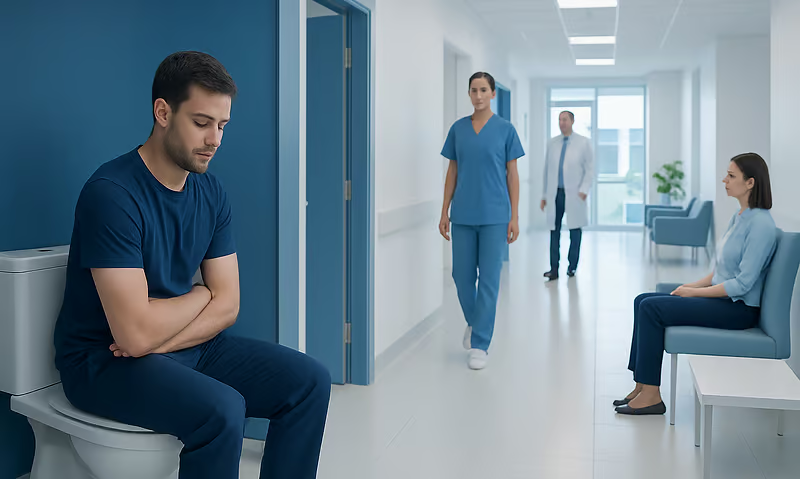
Why Does Pooping Feel Good? A Doctor-Reviewed Answer

A satisfying feeling after a bowel movement is usually caused by pressure relief and normal gut-nerve signaling. The rectum and anal canal contain nerves that can create a sense of release when stool passes.
Key Takeaways
- A satisfying feeling after a bowel movement is usually caused by pressure relief and normal gut-nerve signaling.
- The rectum and anal canal contain nerves that can create a sense of release when stool passes.
- Feeling better after pooping is common, but it should not be painful or associated with bleeding.
- Red flags include ongoing abdominal pain, black or bloody stools, weight loss, fever, or new bowel changes lasting more than a few weeks.
- Doctors evaluate concerning symptoms with a history, physical exam, and sometimes stool tests, blood tests, imaging, or colonoscopy.
For many people, pooping feels good because it relieves pressure in the rectum and activates normal nerve pathways linked to relaxation. This is usually harmless, but pain, bleeding, persistent constipation, diarrhea, or a major change in bowel habits should be assessed by a doctor.
Overview: Why a bowel movement can feel good
Pooping can feel good for a very simple reason: it often relieves built-up pressure. As stool collects in the rectum, the walls stretch and send signals that a bowel movement is needed. Once that pressure is released, many people notice comfort, relaxation, or even a mild sense of well-being.
There is also a nerve component. The rectum, anus, and pelvic floor are connected to the nervous system, including pathways involved in body awareness and relaxation. When a normal bowel movement happens, these nerves can contribute to a feeling of release. This does not usually mean anything is wrong.
In most cases, the sensation is harmless and reflects healthy body function. The more important question is whether the bowel movement is comfortable and regular. If the feeling is accompanied by pain, straining, bleeding, urgency, or a major change in bowel habits, it deserves medical attention.
What happens in the body during a bowel movement
The digestive tract moves stool forward through coordinated muscle contractions called peristalsis. When stool reaches the rectum, stretch receptors signal the brain that it is time to go. The internal anal sphincter relaxes automatically, and the external sphincter can be relaxed voluntarily when a person is ready to use the bathroom.
As stool passes, rectal pressure drops. That reduction in pressure is one of the main reasons pooping can feel satisfying. Some people also experience a short-lived calming effect because of parasympathetic nervous system activity, sometimes loosely described as a “rest and digest” response.
The pelvic floor muscles also matter. When they coordinate well, stool passes with less effort and less discomfort. A smooth, complete bowel movement is more likely to feel relieving than one that involves prolonged straining, hard stool, or a sense of incomplete emptying.
These sensations vary from person to person. Diet, hydration, stress, medications, activity level, and underlying digestive conditions can all influence how a bowel movement feels.
Common reasons it may feel especially relieving

A bowel movement may feel especially good after a period of constipation, bloating, or gas. In those situations, the intestines and rectum may be under more pressure than usual. Passing stool can reduce fullness, cramping, and abdominal tension.
People may also notice symptom relief if they have functional bowel patterns such as constipation-predominant or diarrhea-predominant changes. For example, someone with irritable bowel syndrome may feel temporary relief after passing stool, especially if abdominal discomfort was linked to the urge to go.
Other common contributors include:
- Relief of rectal stretching from a full bowel
- Release of trapped gas along with stool
- Relaxation of pelvic floor muscles after straining stops
- Reduction in abdominal discomfort from bloating
- A sense of routine or completion after normal gut emptying
These experiences are usually normal when they happen occasionally and without other symptoms. The key is that the bowel movement should not regularly cause pain, severe urgency, or bleeding.
When the sensation may point to a problem
Although feeling relief after pooping is common, some patterns suggest an underlying condition. If bowel movements are painful, very difficult to pass, or followed by persistent discomfort, medical review may be needed. Problems can involve the colon, rectum, anus, pelvic floor, or the broader digestive system.
Constipation is one of the most frequent reasons bowel movements become uncomfortable. Hard stools and straining can irritate the anal canal and increase the risk of conditions such as hemorrhoids. Diarrhea can also cause irritation, urgency, and a burning sensation that makes bowel movements feel less like relief and more like distress.
Sometimes the issue is not the stool itself but inflammation or structural disease. Examples include anal fissures, inflammatory bowel disease, rectal prolapse, pelvic floor dysfunction, or less commonly a blockage or growth in the colon. Persistent abdominal pain, blood in the stool, or unexplained changes in bowel habits should not be ignored.
If symptoms continue, a specialist in gastroenterology care can help determine whether the sensation is part of a normal bowel pattern or a sign of a treatable disorder.
Red flags: when to seek medical care
Most people do not need medical care simply because pooping feels good. However, they should seek advice if the sensation comes with warning signs or if bowel habits change in a lasting way. This is especially important when symptoms are new, persistent, or getting worse.
Medical review is recommended for:
- Blood in the stool, on toilet paper, or black tarry stools
- Severe or ongoing abdominal pain
- Painful bowel movements or pain around the anus
- Constipation or diarrhea lasting more than a few weeks
- Unintentional weight loss, fatigue, or fever
- A feeling of incomplete emptying that keeps returning
- New bowel changes in an older adult or in someone with a family history of colon disease
In urgent situations, such as heavy rectal bleeding, severe dehydration, vomiting with abdominal swelling, or inability to pass stool or gas, prompt medical care is important. These symptoms can point to a condition that needs immediate attention.
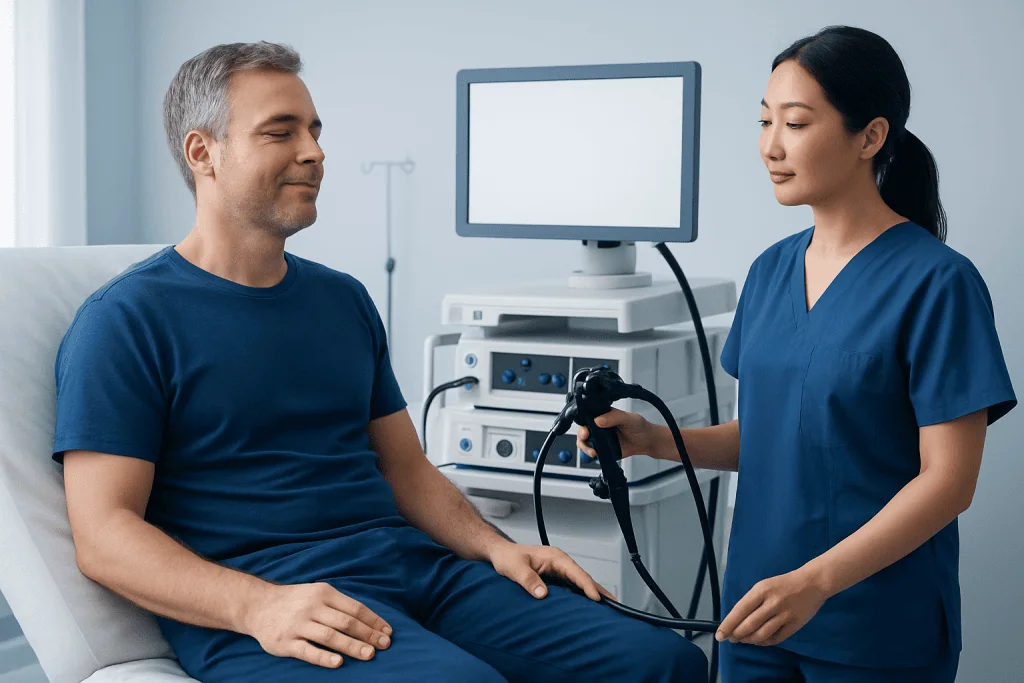
At the end of the evaluation pathway, some people may need procedures such as colonoscopy to identify the cause of bleeding, long-term bowel changes, or unexplained symptoms.
How doctors evaluate bowel symptoms
When someone seeks care, the doctor usually starts with a detailed history. They ask how often bowel movements happen, whether stool is hard or loose, whether there is pain, bleeding, urgency, mucus, bloating, or a sense of incomplete emptying, and how long the symptoms have been present. Diet, fluid intake, medications, travel, and family history also matter.
A physical examination may include an abdominal exam and, when appropriate, a rectal exam. These steps can help identify constipation, fissures, hemorrhoids, pelvic floor tension, or signs of inflammation. Doctors often use this information to decide whether the problem is most likely functional, inflammatory, infectious, or structural.
Testing is based on symptoms rather than done automatically for everyone. A doctor may recommend blood tests, stool studies, imaging, or endoscopic evaluation if there are red flags or persistent symptoms. In some cases, if inflammation is suspected, assessment related to Crohn’s disease or other bowel disorders may be considered.
If symptoms are complex or long-lasting, care may involve more than one specialty. At Acibadem International, multidisciplinary specialists in JCI-accredited hospitals evaluate digestive symptoms and provide care for international patients when further testing or treatment is needed.
Self-care and ways to support comfortable bowel movements
Good bowel habits can make bowel movements feel more comfortable and reduce straining. Many people benefit from gradual increases in dietary fiber, adequate fluid intake, regular physical activity, and a consistent bathroom routine. It also helps not to ignore the urge to go, since delaying bowel movements can make stool harder and more difficult to pass.
Bathroom posture can matter as well. Taking enough time, relaxing the pelvic floor, and avoiding excessive pushing may help stool pass more easily. If constipation is frequent, a doctor may suggest additional strategies and, in some cases, treatments that fit the person’s symptoms and medical history.
People with ongoing reflux, bloating, or digestive discomfort sometimes have more than one gastrointestinal issue at the same time. Depending on symptoms, a physician may also consider evaluation or support through services such as GERD treatment.
Even when the sensation of relief is normal, persistent bowel symptoms deserve a professional opinion. The goal is not only to explain why pooping feels good, but to make sure bowel movements are regular, comfortable, and free of warning signs.
Frequently asked questions
Is it normal that pooping feels good?
Yes. For many people, it feels good because it relieves rectal and abdominal pressure and involves normal nerve signaling. As long as bowel movements are not painful and there are no warning signs like bleeding or major bowel changes, this is usually harmless.
Can the vagus nerve play a role in the feeling after pooping?
It may contribute indirectly through the body’s parasympathetic, or relaxation, response. Many people describe a brief sense of calm after a bowel movement, but the main reason is still relief of pressure and muscle relaxation. Symptoms such as fainting, severe sweating, or dizziness should be discussed with a doctor.
Why do I feel better after pooping when I am bloated?
Bloating can happen when stool and gas build up in the intestines or rectum. Passing stool may reduce pressure, cramping, and fullness, so the body feels more comfortable. If bloating is persistent, severe, or associated with weight loss or vomiting, medical assessment is important.
Does a very satisfying bowel movement mean I was constipated?
Not always, but it can. If stool had been sitting in the rectum for longer than usual, the release may feel more dramatic. Ongoing constipation, hard stools, or regular straining should be evaluated and managed, especially if symptoms keep returning.
When should someone worry about bowel movements?
They should seek medical advice if bowel movements are painful, contain blood, look black, or are linked to ongoing diarrhea, constipation, weight loss, fever, or significant abdominal pain. A change in bowel habits that lasts more than a few weeks is also worth discussing with a doctor. Urgent symptoms such as heavy bleeding or inability to pass stool or gas need prompt care.
How do doctors check whether bowel symptoms are normal or a sign of disease?
Doctors usually begin with questions about stool pattern, pain, bleeding, diet, medications, and family history. They may perform an exam and then decide whether tests such as stool studies, blood tests, imaging, or colonoscopy are needed. The exact workup depends on the person’s age, symptoms, and risk factors.
References
- National Institute of Diabetes and Digestive and Kidney Diseases
- American College of Gastroenterology
- Mayo Clinic
- Cleveland Clinic
- Merck Manual Consumer Version
This article is for general information only and is not a substitute for professional medical advice. Please consult a qualified doctor about your individual situation.
Persistent digestive symptoms? Get evaluated in Turkey
JCI-accredited · board-certified surgeons · reply within 24h
Add us as a Preferred Source to see more of our trusted health content across Google Search, AI Overviews and Discover.