Zoom Teeth Whitening — Explained by Medical Evidence, Not Myths

Zoom teeth whitening is a dentist-supervised bleaching treatment designed to lighten external tooth stains. It works best for common yellowing and surface discoloration, but it may not change crowns, veneers, fillings, or some deep internal stains.
Key Takeaways
- Zoom teeth whitening is a dentist-supervised bleaching treatment designed to lighten external tooth stains.
- It works best for common yellowing and surface discoloration, but it may not change crowns, veneers, fillings, or some deep internal stains.
- Temporary tooth sensitivity and mild gum irritation are the most common side effects.
- A dental exam before whitening is important to rule out cavities, gum disease, cracks, and other causes of discomfort or discoloration.
- Longer-lasting results depend on oral hygiene and limiting stain-causing habits such as smoking and frequent dark-colored drinks.
Zoom teeth whitening is a professional in-office treatment that uses a hydrogen peroxide whitening gel, often activated with a light, to reduce common tooth stains. It can brighten teeth faster than many home methods, but results, comfort, and suitability depend on the cause of discoloration and the overall health of the teeth and gums.
Overview: what Zoom teeth whitening is and what it can realistically do
Zoom teeth whitening is a professional tooth-bleaching procedure performed in a dental setting. It uses a peroxide-based whitening gel that is applied to the teeth after the lips and gums are protected. In many protocols, a special light is used during part of the treatment. The goal is to break down stain molecules in the enamel and outer dentin so the teeth look lighter.
Medical evidence suggests that professionally supervised whitening can be effective for many types of common discoloration, especially yellowing related to age, food, drinks, and smoking. However, it is not a cure for every cause of tooth darkening. Teeth with internal discoloration, trauma-related color changes, some medication-related stains, or visible dental restorations may respond differently or unevenly.
A careful, evidence-based discussion matters because teeth whitening is often surrounded by marketing claims and myths. The most useful question is not whether the treatment can make teeth whiter in general, but whether it is appropriate for that person’s teeth, dental history, expectations, and sensitivity level. A dentist helps answer that by examining the mouth first.
How the treatment works and what happens during the appointment
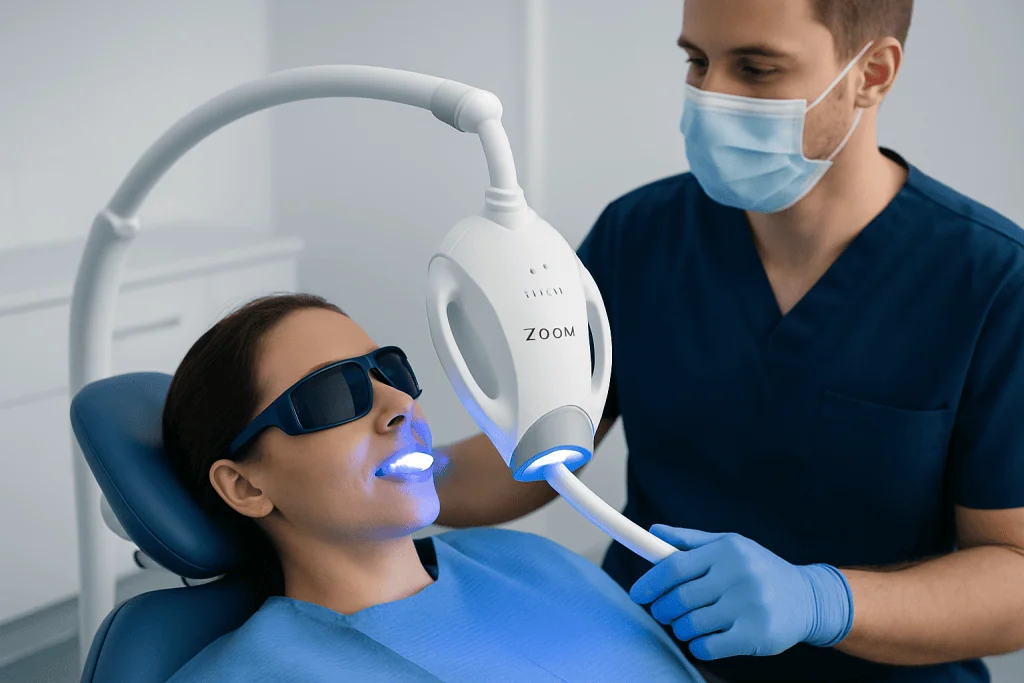
The active ingredient in Zoom teeth whitening is usually hydrogen peroxide or a closely related bleaching agent. Peroxide releases oxygen molecules that penetrate the tooth structure and alter compounds responsible for discoloration. This is different from abrasive whitening toothpastes, which mainly polish away surface stains rather than bleach the tooth itself.
Before treatment begins, the dentist or dental professional checks the teeth and gums and records the starting tooth shade. Soft tissues are protected, and the whitening gel is placed on the visible front teeth. Depending on the system used, the gel may be refreshed in cycles, and a light may be used to support the process. The exact protocol can vary, but the treatment is generally completed in one visit.
Afterward, the teeth are cleaned, the new shade is reviewed, and aftercare instructions are given. Some people also receive take-home trays or guidance to help maintain results. Patients considering professional cosmetic dental care may discuss options through dental treatment if whitening is only one part of a broader plan.
Who may benefit most and who may need another approach

Zoom teeth whitening tends to work best for adults with healthy teeth and gums who have mild to moderate external staining. Common examples include discoloration linked to coffee, tea, red wine, tobacco, and gradual age-related yellowing. People who want faster results than home whitening products may find in-office whitening more convenient because it is supervised and completed in a shorter time.
It may be less effective for gray tones, stains caused by certain medications during tooth development, or discoloration that starts inside the tooth after trauma. A tooth that has darkened following an injury may need a different evaluation, especially if the nerve has been affected. In those cases, the issue is not simply cosmetic and should be assessed as part of tooth discoloration or another underlying dental condition.
Whitening also does not change the color of crowns, veneers, bridges, or tooth-colored fillings. This matters because natural teeth may lighten while restorations stay the same shade, leading to a mismatch. If there are old fillings or front-tooth restorations, a dentist may advise planning the final color carefully before replacing visible dental work.
Benefits, limits, and what the evidence does and does not support
The main advantage of Zoom teeth whitening is speed: many patients notice visible whitening after a single professional session. Because the treatment is supervised, the concentration of whitening gel can be used more safely than unsupervised methods, and the dentist can protect the gums and monitor for sensitivity during the appointment. For suitable candidates, this can make treatment more predictable and more comfortable.
At the same time, realistic expectations are important. No whitening method can guarantee a particular shade, and teeth do not all respond equally. The natural starting color, enamel thickness, presence of restorations, smoking status, and the type of stain all influence the outcome. Results are usually best understood as improvement rather than perfection.
Evidence does not support common myths such as the idea that whitening permanently damages healthy teeth when performed properly under professional supervision. However, evidence also does not support exaggerated claims that every smile can become extremely white without trade-offs. A balanced dental assessment helps determine whether whitening alone is appropriate or whether cleaning, restoration, or a different cosmetic approach would be more suitable.
Safety, side effects, and who should be cautious
For most appropriately selected patients, professional teeth whitening is considered safe. The most common side effect is temporary tooth sensitivity, especially to cold air or drinks. Mild gum irritation can also happen if the whitening gel contacts soft tissue, although protective barriers used in the dental office are designed to reduce this risk.
Sensitivity usually improves within a short time, but people with pre-existing sensitive teeth may need adjustments such as a lower-intensity approach, shorter sessions, or desensitizing products. Dentists often advise postponing whitening if there are untreated cavities, worn enamel, gum recession, exposed roots, cracked teeth, or active gum inflammation, because these conditions can increase discomfort and may need treatment first.
Whitening should also be approached carefully in people with extensive dental restorations in the smile zone, because shade mismatch can become more obvious afterward. If gum disease, decay, or tooth pain is present, those problems should be evaluated before cosmetic treatment. A person with signs of gum disease may need periodontal or restorative care before considering whitening.
How dentists decide if Zoom whitening is appropriate
A professional assessment is one of the most important parts of safe whitening. The dentist examines the teeth, gums, existing fillings, crowns, areas of recession, and any signs of decay or wear. They also ask about habits, previous whitening, sensitivity, pregnancy status, and the patient’s goals. This helps separate cosmetic staining from medical or dental problems that need attention.
Sometimes the first recommended step is not whitening but a dental cleaning. Plaque and tartar can hold stains and make the teeth appear dull. In other cases, a dentist may suggest repairing decay, treating gum inflammation, or evaluating a dark tooth for internal damage before any bleaching is considered. Patients with widespread restorative needs may require a broader plan through restorative dentistry.
Shade assessment and photography may be used to document the starting point. This helps make results easier to judge realistically. The dentist can also explain whether maintenance with at-home trays is likely to be useful, how long results may last, and whether another option would offer a better cosmetic match.
Aftercare, maintenance, and reducing future staining
The durability of whitening results varies from person to person. Teeth can gradually darken again over time because of diet, smoking, aging, and normal exposure to pigments. Good aftercare helps preserve the result for longer, although no method prevents future staining completely.
Common advice after whitening includes brushing twice daily with fluoride toothpaste, cleaning between the teeth, attending regular dental checkups, and limiting frequent exposure to strongly pigmented drinks and tobacco. If coffee, tea, or red wine are consumed, rinsing with water afterward may help reduce fresh surface staining. Some dentists also advise avoiding deeply colored foods and drinks for a short period immediately after treatment.
Maintenance may involve occasional touch-up treatment, depending on the dentist’s guidance and the person’s habits. Whitening should not be overused. Repeated unsupervised bleaching can increase sensitivity without necessarily improving the appearance further. Near the end of the care pathway, some patients may seek follow-up with multidisciplinary dental specialists; Acibadem International’s JCI-accredited hospitals and dental teams evaluate and treat international patients when whitening, oral health, and aesthetic concerns overlap.
When to seek medical care
A dental review is advisable before whitening if there is tooth pain, gum bleeding, swelling, loose teeth, bad breath that persists, visible holes in the teeth, or a single tooth that has become darker than the others. These features may point to infection, decay, trauma, or gum disease rather than a simple cosmetic stain. Treating the cause comes first.
Medical or dental care should also be sought after whitening if severe sensitivity lasts beyond a short period, if the gums become very sore, or if patchy color changes seem unusual. People with a history of significant enamel wear, recent dental trauma, or extensive crowns and fillings in the front teeth should ask for individualized advice before booking whitening.
If there is uncertainty about the source of discoloration, a dentist may recommend imaging, vitality testing, cleaning, or other targeted evaluation. In some cases, whitening is only one step in a broader oral health plan that may include preventive care, restoration, or management of a painful tooth condition.
Frequently asked questions
How long does Zoom teeth whitening last?
Results can last for months to longer, but there is no single timeline for everyone. Diet, smoking, oral hygiene, age, and whether maintenance is used all affect how quickly teeth pick up new stains. A dentist can advise how to maintain the result safely.
Does Zoom teeth whitening damage enamel?
When performed appropriately under professional supervision, whitening is generally considered safe for enamel. Temporary sensitivity is more common than lasting damage. Problems are more likely if whitening is overused or done when there are untreated dental conditions.
Is Zoom teeth whitening painful?
Most people do not describe the procedure as painful, but some experience short-term sensitivity during or after treatment. This can feel like brief zingers or increased sensitivity to cold. The dental team can adjust the approach if a person is known to have sensitive teeth.
Will whitening work on crowns, veneers, or fillings?
No, whitening products do not bleach dental restorations in the way they bleach natural teeth. If front teeth have crowns, veneers, or visible fillings, the shade difference may become more noticeable after treatment. A dentist can help plan around this before whitening begins.
Who should avoid or postpone Zoom teeth whitening?
People with untreated cavities, gum disease, cracked teeth, significant enamel wear, or unexplained tooth pain should usually be assessed and treated first. Whitening may also need extra caution in those with severe sensitivity or many front-tooth restorations. A dental exam helps determine safety and suitability.
Is Zoom better than home whitening kits?
It depends on the goal, the cause of staining, and the condition of the teeth. In-office whitening is faster and professionally supervised, while home options may be slower and more variable. A dentist can explain which method is more appropriate for a particular case.
References
- American Dental Association
- National Institute of Dental and Craniofacial Research
- Mayo Clinic
- Cochrane
- FDI World Dental Federation
This article is for general information only and is not a substitute for professional medical advice. Please consult a qualified doctor about your individual situation.
Teeth Whitening in Turkey — costs, top hospitals & a free quote
JCI-accredited · board-certified surgeons · reply within 24h
Add us as a Preferred Source to see more of our trusted health content across Google Search, AI Overviews and Discover.

More from the Health Library

Ep: An Evidence-Based Guide for Patients
Supraventricular Tachycardia: A Complete Medical Overview
Rescue Breathing — Explained by Medical Evidence, Not Myths

Lifespan: What Patients Need to Know

Hydrocodone: An Evidence-Based Guide for Patients