

Rescue Breathing — Explained by Medical Evidence, Not Myths
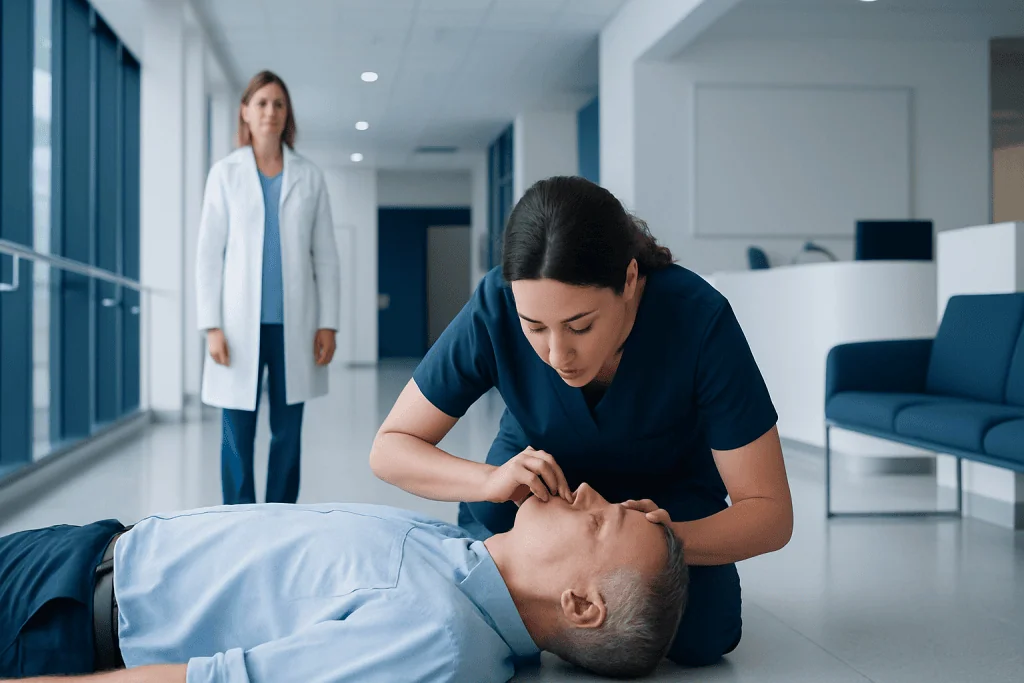
Rescue breathing is used for someone who is unresponsive, has a pulse, and is not breathing normally. Gasping or irregular breaths are not normal breathing and should be treated as an emergency.
Key Takeaways
- Rescue breathing is used for someone who is unresponsive, has a pulse, and is not breathing normally.
- Gasping or irregular breaths are not normal breathing and should be treated as an emergency.
- For adults, CPR with chest compressions is usually needed if no definite pulse is present or the rescuer is unsure.
- A barrier device, such as a face shield or pocket mask, can reduce direct mouth-to-mouth contact when available.
- First-aid and CPR training is the best way to learn safe, effective rescue breathing.
Rescue breathing is an emergency first-aid technique used when a person has a pulse but is not breathing normally or is only gasping. It supplies oxygen while emergency services are contacted and monitored care continues.
What Is Rescue Breathing?
Rescue breathing, also called rescue breaths, is a first-aid technique that delivers air into another person’s lungs when they are not breathing normally but still have a pulse. It may be needed after drowning, choking that has been relieved, drug overdose, severe asthma, or other events that stop or severely slow breathing.
The goal is to provide oxygen until the person begins breathing effectively or trained emergency responders take over. Rescue breathing is not the same as cardiopulmonary resuscitation (CPR). CPR combines chest compressions with breaths in situations where the heart may have stopped or when a rescuer cannot confidently identify a pulse.
In a real emergency, contacting local emergency services immediately is essential. A dispatcher can provide instructions while help is on the way, including guidance on CPR, use of an automated external defibrillator (AED), and age-appropriate breathing support.
When Rescue Breathing May Be Needed
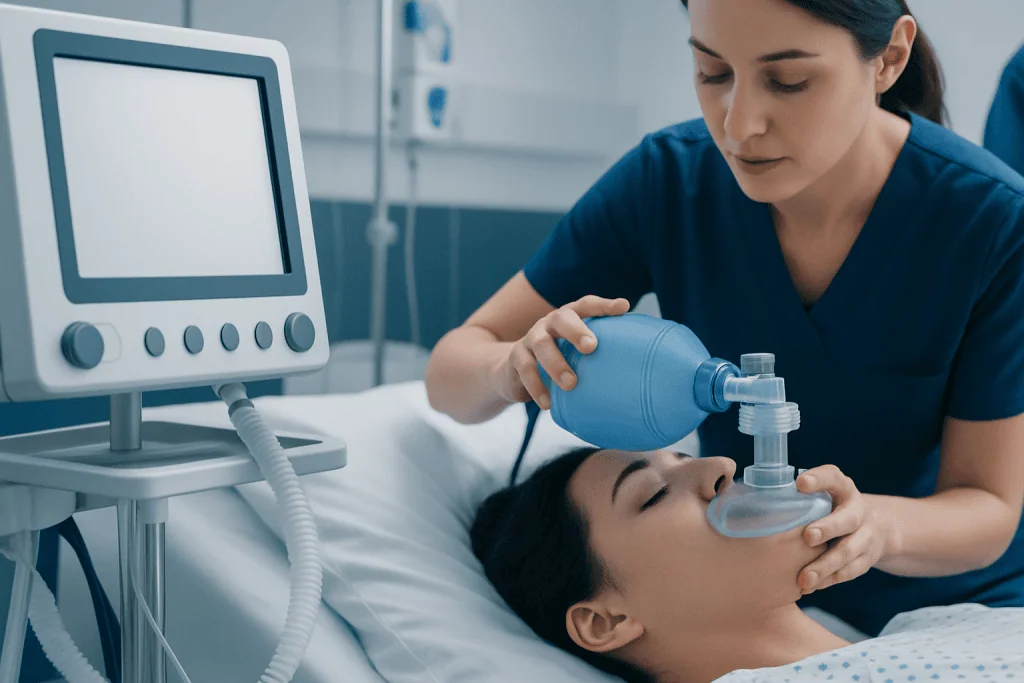
Rescue breathing may be appropriate when a person is unresponsive, has an identifiable pulse, and is not breathing or is breathing only with occasional gasps. Agonal gasps can look like breathing, but they are irregular, ineffective breaths that may occur during cardiac arrest or severe oxygen deprivation.
Breathing emergencies can develop for several reasons. Examples include near-drowning, poisoning or overdose, electrocution, smoke inhalation, serious allergic reactions, severe respiratory illness, head injury, or obstruction of the airway. In infants and children, breathing problems are a relatively common cause of cardiac arrest, which is why prompt recognition is particularly important.
A person who is conscious, can speak, and is breathing with difficulty should not receive rescue breaths. They need urgent medical assessment, a comfortable upright position if possible, and help with any prescribed emergency medicine they can use safely. Conditions such as asthma can cause severe breathlessness and require prompt evaluation when symptoms do not improve quickly.
Rescue Breathing and CPR: Understanding the Difference
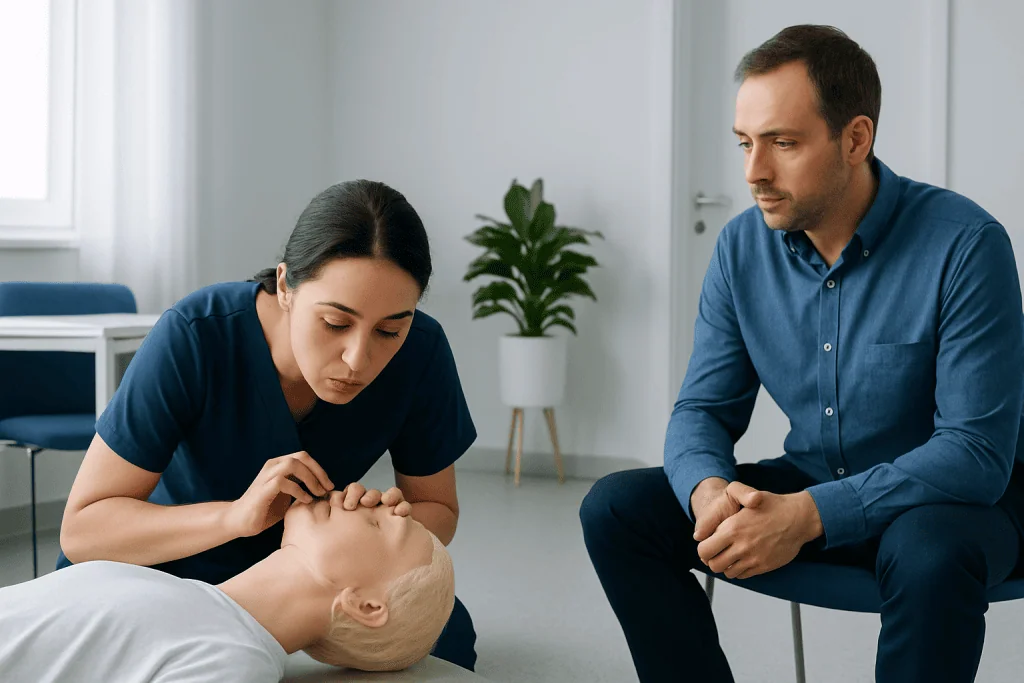
Rescue breathing is intended for respiratory arrest, meaning breathing has stopped while circulation is still present. CPR is used for suspected cardiac arrest, when a person is unresponsive and is not breathing normally. Because checking a pulse can be difficult for untrained bystanders, emergency guidelines generally advise lay rescuers to begin CPR when an adult or child is unresponsive and not breathing normally.
For adults and adolescents, hands-only CPR—continuous chest compressions without breaths—may be recommended by emergency dispatchers for sudden witnessed collapse. However, breaths are especially important when the likely cause is lack of oxygen, such as drowning, overdose, or a breathing emergency, and for infants and children when a trained rescuer is available.
An AED should be used as soon as it is available for a person in suspected cardiac arrest. The device gives spoken instructions and analyzes the heart rhythm; it will only advise a shock when one is appropriate. CPR training can help people understand how to combine compressions, breaths, and AED use in different emergencies.
How Rescue Breathing Is Given
Emergency protocols vary by age, setting, and level of training. The safest approach is to call local emergency services, put the phone on speaker if possible, and follow the dispatcher’s instructions. If a person is not breathing normally, act quickly rather than waiting to see whether they improve.
For a trained rescuer assisting an adult, the basic approach is to open the airway with a head-tilt, chin-lift unless neck trauma is strongly suspected; pinch the nose closed; make a seal over the mouth; and give a breath lasting about one second. The chest should visibly rise. Allow the chest to fall before giving the next breath. If the chest does not rise, reposition the airway and look for an obvious obstruction that can be removed safely.
For infants and small children, technique differs because the airway is smaller and the amount of air needed is less. A rescuer may cover both the infant’s mouth and nose with their mouth and give gentle puffs, only enough to see the chest rise. Excessive force can be harmful, so formal pediatric first-aid training is strongly recommended.
- Check that the scene is safe before approaching.
- Call emergency services and obtain an AED if available.
- Use a face shield or pocket mask if one is readily available, but do not delay lifesaving care to search for one.
- Continue care until normal breathing returns, emergency professionals take over, or the rescuer cannot continue.
Common Myths and Safety Considerations
One common myth is that rescue breathing should be used whenever someone seems short of breath. It should not. A conscious person who is breathing, even if breathing is difficult, needs urgent medical help and condition-specific support rather than forced breaths. Rescue breathing is for a person who is unresponsive and not breathing normally.
Another misconception is that a rescuer must be completely certain that a pulse is present before acting. Untrained people may have trouble checking a pulse accurately. If there is any doubt and the person is unresponsive with absent or abnormal breathing, emergency dispatch guidance and CPR are generally safer than waiting.
Rescuers may worry about infection exposure during mouth-to-mouth breathing. Barrier devices can reduce direct contact, and trained responders often use masks with one-way valves. Still, the immediate danger of absent breathing is serious. A dispatcher can help a caller decide what to do if direct rescue breathing is not possible or if the rescuer is unwilling to provide it.
After Breathing Returns
If the person begins breathing normally, they still need emergency medical assessment. Keep monitoring their breathing and responsiveness. If they are unconscious but breathing normally and there is no reason to suspect a spinal injury, placing them on their side in a recovery position can help keep the airway open and reduce the risk of choking on vomit.
Do not give food, drink, or medication to an unconscious or drowsy person. Keep them warm, avoid unnecessary movement after a fall or possible injury, and be ready to start CPR if normal breathing stops again. After drowning, smoke inhalation, overdose, or a severe allergic reaction, symptoms can recur or worsen even if the person initially appears to recover.
Hospital care may include monitoring oxygen levels, heart rhythm, brain function, and the underlying cause of respiratory arrest. Evaluation is important because treating the cause—such as airway swelling, lung injury, infection, poisoning, or a heart rhythm problem—helps prevent further emergencies.
When to Seek Medical Care
Call emergency services immediately for any person who is unresponsive, has no normal breathing, turns blue or gray around the lips, has severe choking, or suddenly collapses. Do not drive an unresponsive person to hospital yourself unless emergency services are unavailable and there is no safer option.
Urgent medical care is also needed for persistent chest pain, severe wheezing, increasing sleepiness, confusion, a suspected overdose, a significant allergic reaction, or breathing difficulty after a near-drowning event. People with recurrent fainting, sleep-related breathing pauses, or unexplained episodes of low oxygen should discuss these symptoms with a qualified doctor.
At Acibadem International, multidisciplinary specialists in JCI-accredited hospitals can assess respiratory and cardiac emergencies and their underlying causes for international patients. For future preparedness, an accredited first-aid and CPR course is the most reliable way to learn rescue breathing skills and practice them safely.
Frequently asked questions
Is rescue breathing the same as mouth-to-mouth?
Mouth-to-mouth is one method of giving rescue breaths. Rescue breathing is the broader first-aid concept of providing breaths to someone who is not breathing normally but may still have a pulse. A pocket mask or bag-mask device may also be used by trained responders.
Should a bystander give rescue breaths to an adult who collapses?
If an adult is unresponsive and not breathing normally, call emergency services immediately. For many sudden adult collapses, dispatchers may advise hands-only CPR until an AED or trained help arrives. Rescue breaths are particularly important when lack of oxygen is suspected, such as after drowning or overdose.
What if the chest does not rise during a rescue breath?
Reposition the head and chin to reopen the airway, then try again with a gentle breath. Look for an obvious object in the mouth only if it can be removed safely; do not perform blind finger sweeps. If normal breathing is absent, follow emergency dispatcher instructions and begin or continue CPR as advised.
Can rescue breathing cause harm?
Breaths that are too forceful or too large can push air into the stomach and may cause vomiting. This is why breaths should be gentle and only sufficient to make the chest rise. The greater immediate risk is untreated respiratory arrest, so emergency guidance should be followed promptly.
How is rescue breathing different for children and infants?
Children and infants need smaller, gentler breaths because their lungs and airways are smaller. Breathing emergencies are also more commonly involved in pediatric cardiac arrest, making ventilations an important part of trained pediatric CPR. Anyone who cares for children should consider pediatric CPR and first-aid training.
Do I need a barrier device to give rescue breaths?
A face shield or pocket mask is helpful when available because it reduces direct contact. However, a rescuer should not delay calling emergency services or starting the recommended response while looking for equipment. Dispatchers can provide options based on the situation and the rescuer’s level of comfort.
This article is for general information only and is not a substitute for professional medical advice. Please consult a qualified doctor about your individual situation.
Explore treatments in Turkey — costs, top hospitals & a free quote
JCI-accredited · board-certified surgeons · reply within 24h
Add us as a Preferred Source to see more of our trusted health content across Google Search, AI Overviews and Discover.

More from the Health Library

Paradoxical Insomnia: What Patients Need to Know

L-glutamine — Explained by Medical Evidence, Not Myths

Optic Nerve: An Evidence-Based Guide for Patients

Dermabrasion: A Complete Medical Overview

Foaming at the Mouth: What Patients Need to Know

Vldl Cholesterol: What Patients Need to Know
Pulmonary Medicine Specialists at Acibadem

Assoc. Prof. Dr. Murat Sezer
Pulmonary Medicine
Prof. Dr. Muzaffer Metintaş
Pulmonary Medicine
Dr. Nihal Özşeker
Pulmonology
Assoc. Prof. Dr. Nilüfer Aykaç
Pulmonary Medicine