

Quick answer
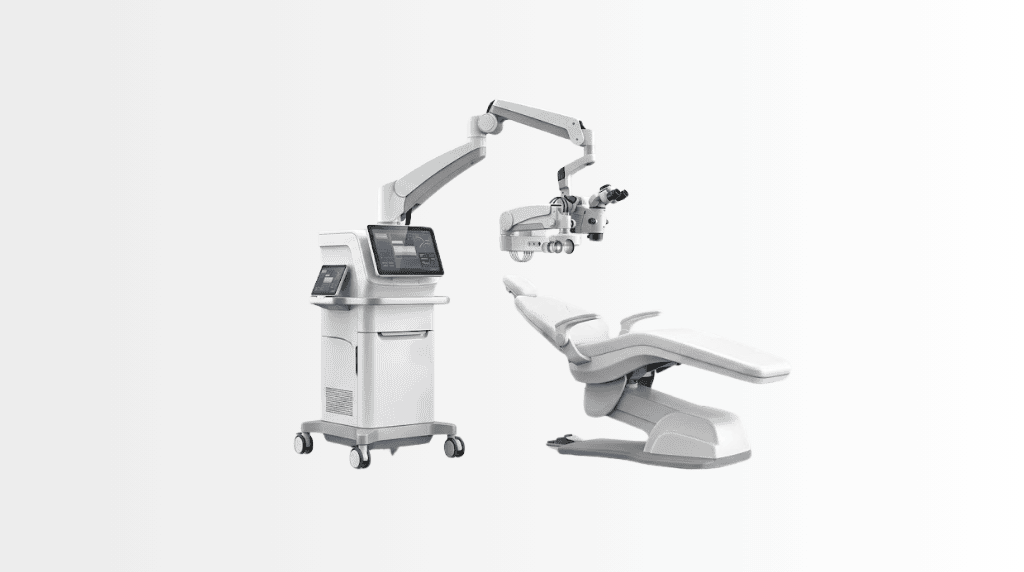
A femtosecond laser is an ultra-fast ophthalmic technology used to create precise corneal incisions for laser vision correction. At Acibadem in Turkey, it may be used for blade-free LASIK flap creation and selected flap-free procedures after detailed eye assessment and corneal measurements.
Femtosecond Laser for Advanced Vision Correction
Femtosecond laser technology is an ultra-fast ophthalmic laser used in advanced vision correction procedures. It allows eye surgeons to create highly precise corneal incisions and tissue planes without using a mechanical blade.
At Acibadem International, femtosecond laser technology supports personalised refractive surgery planning for eligible international patients. It may be used for blade-free LASIK flap creation and selected flap-free laser vision correction techniques, depending on the structure of your cornea, your prescription, your eye health and your lifestyle needs.
Every eye is different. A detailed ophthalmic examination is essential before deciding whether femtosecond laser treatment is appropriate. Your ophthalmologist will assess your corneal thickness and shape, refractive error, tear film, pupil characteristics, eye pressure and general eye health before recommending a treatment plan.
What Is a Femtosecond Laser?
A femtosecond laser delivers pulses of light that last only a tiny fraction of a second. These extremely short pulses can create microscopic separations within corneal tissue at a carefully controlled depth.
In vision correction, the technology is commonly used to create a thin corneal flap during LASIK surgery. The flap is then gently lifted so that a separate excimer laser can reshape the underlying corneal tissue and improve the way light focuses on the retina.
Because the flap can be created with laser energy rather than a handheld blade, femtosecond laser-assisted LASIK is often described as blade-free LASIK. In selected cases, femtosecond technology may also support flap-free corneal procedures, where the laser creates a small incision or lenticule within the cornea instead of a traditional flap.
The goal is not simply to reduce dependence on glasses or contact lenses. The goal is to select a technique that is medically suitable for your eyes and aligned with your expectations, visual needs and long-term eye health.
How Femtosecond Laser Technology Works
The cornea is the clear front surface of the eye. It plays a major role in focusing light. In people with refractive errors such as short-sightedness, long-sightedness or astigmatism, light does not focus precisely on the retina, which can cause blurred vision.
Femtosecond laser technology works by placing thousands of precisely positioned laser pulses inside the cornea. The pulses create tiny microscopic bubbles at a planned depth and in a planned pattern. This enables the surgeon to create a corneal flap or a small internal tissue layer with a high degree of control.
For LASIK, the femtosecond laser creates the flap. An excimer laser is then used to reshape the cornea according to your prescription. Once the reshaping is complete, the flap is repositioned naturally.
For selected flap-free procedures, the femtosecond laser may create a small lens-shaped piece of tissue inside the cornea. The surgeon removes this tissue through a very small opening, changing the corneal shape and correcting the refractive error. Not all patients are suitable for flap-free treatment, and the most appropriate approach is determined after comprehensive testing.
Personalised Treatment Planning
Femtosecond laser treatment is planned using detailed diagnostic measurements. Your ophthalmology team may perform corneal topography and tomography, refraction testing, visual acuity assessments, eye pressure measurements, retinal evaluation and tear film analysis.
These examinations help identify whether laser vision correction is safe and appropriate. They also help the surgeon choose the best technique, treatment parameters and recovery plan for your individual eyes.
Clinical Applications
Femtosecond laser technology is primarily used in refractive ophthalmology. It can support different forms of laser vision correction and may also be used in certain corneal surgical applications when clinically indicated.
| Clinical application | How femtosecond laser may be used | Who may benefit |
|---|---|---|
| Blade-free LASIK | Creates a precise corneal flap before excimer laser reshaping. | Eligible adults with stable refractive error, healthy corneas and suitable corneal measurements. |
| Myopia correction | May support LASIK or selected flap-free procedures designed to reduce short-sightedness. | Patients who rely on glasses or contact lenses for distance vision and meet clinical suitability criteria. |
| Astigmatism correction | Supports precise corneal treatment planning to improve irregular focusing caused by astigmatism. | Patients with appropriate corneal shape, thickness and stable astigmatism measurements. |
| Hyperopia correction | May be used as part of selected laser vision correction plans for long-sightedness. | Suitable patients following detailed assessment by a refractive ophthalmologist. |
| Flap-free laser vision correction | Can create an internal corneal lenticule or small incision in selected procedures. | Some patients who are suitable for flap-free options based on prescription and corneal evaluation. |
| Selected corneal procedures | May assist surgeons in creating precise corneal incisions for certain medically indicated treatments. | Patients whose corneal condition and treatment plan require this approach. |
Laser vision correction is not appropriate for every refractive error or every eye. In some cases, alternatives such as implantable lenses, refractive lens exchange, cataract surgery or non-surgical vision correction may be more suitable. Your specialist will explain all relevant options clearly.
Conditions Femtosecond Laser Can Help Address
Femtosecond laser technology may be considered for people with common refractive errors. These include myopia, also known as short-sightedness; hyperopia, or long-sightedness; and astigmatism, where the cornea has an uneven curvature that affects focus.
It may be particularly relevant for patients who want to reduce their dependence on glasses or contact lenses for daily activities such as driving, working on screens, sports, travel or social occasions. However, reduced dependence on corrective eyewear cannot be guaranteed, and some people may still need glasses in particular situations.
Age-related near vision changes, known as presbyopia, require separate consideration. Femtosecond laser treatment may be part of an overall refractive strategy for selected patients, but it does not automatically eliminate the need for reading glasses. Your surgeon will discuss the visual trade-offs of monovision, blended vision or other suitable options where relevant.
Benefits and Advantages for Patients
One of the most important advantages of femtosecond laser technology is precision. The laser can be programmed to create corneal incisions at a planned depth, diameter and position based on detailed measurements of your eye.
For eligible patients, blade-free laser flap creation can offer a highly controlled alternative to mechanical flap creation. It also supports modern approaches to refractive surgery that aim to minimise disruption to the corneal surface while maintaining careful surgical control.
Recovery varies by procedure and by individual. Many patients notice clearer vision relatively soon after treatment, but vision can fluctuate during the early healing period. Your eye surgeon will provide realistic guidance about recovery, activities, medication and follow-up requirements.
| Patient benefit | What it may mean for your experience |
|---|---|
| Blade-free precision | Laser-created corneal flaps or incisions can be planned with detailed measurements rather than a mechanical blade. |
| Personalised treatment | Your procedure is selected according to your prescription, corneal structure, eye health and visual goals. |
| Minimally invasive options | Selected procedures may use small incisions or flap-free techniques when clinically appropriate. |
| Efficient procedure experience | The laser stage itself is usually brief, although preparation, examination and recovery time are all important parts of the visit. |
| Potentially faster visual recovery | Many patients experience an early improvement in vision, with healing and stabilisation continuing over time. |
| Reduced reliance on eyewear | Successful treatment may reduce dependence on glasses or contact lenses, subject to your individual outcome and future visual needs. |
What to Expect Before, During and After Treatment
Before Your Procedure
Your journey begins with a detailed consultation and eye examination. If you are travelling from abroad, the Acibadem International patient team can help coordinate your consultation process, review available reports and arrange appointments with the appropriate ophthalmology specialists.
You may be asked to stop wearing contact lenses before your assessment because lenses can temporarily alter corneal shape and affect measurement accuracy. Your clinical team will provide specific instructions based on the type of lenses you use.
During the evaluation, your ophthalmologist will discuss your medical history, current medications, previous eye treatments, work and lifestyle requirements, and expectations for vision after surgery. You will also receive information about possible alternatives, limitations and risks.
During the Procedure
Femtosecond laser vision correction is generally performed as an outpatient procedure. You remain awake, and numbing eye drops are used to keep you comfortable. Sedation is not typically required, although individual needs are assessed by the clinical team.
You will lie comfortably beneath the laser system. The surgeon and ophthalmic team will guide you throughout each stage. A device helps keep the eyelids open, and you may be asked to focus on a fixation light.
During the femtosecond laser stage, you may feel gentle pressure around the eye for a short time. The laser treatment itself is very quick. If your procedure includes excimer laser reshaping, this follows according to the personalised treatment plan.
After the treatment, the surgeon checks the eye carefully. You will rest briefly before receiving post-procedure instructions and medication guidance. Because vision may be temporarily blurred, you should not drive yourself after treatment.
After Your Procedure
Early recovery depends on the technique used. Some patients experience mild watering, light sensitivity, scratchiness or blurred vision shortly after treatment. These symptoms are usually temporary, but it is important to use prescribed drops exactly as directed and avoid rubbing your eyes.
Your team will advise you about returning to work, using screens, exercising, swimming, wearing eye makeup and travelling. Follow-up examinations are an essential part of care, particularly for international patients planning their return journey.
Before you travel home, your coordinator and ophthalmology team will help ensure that you understand your follow-up schedule, medication plan and any warning symptoms that require urgent attention. Where appropriate, documentation can be prepared to support continued care with your local eye doctor.
Safety, Suitability and Accreditation
Femtosecond laser technology is widely used in modern ophthalmology, but safety depends on more than the equipment itself. Appropriate patient selection, comprehensive diagnostics, experienced surgeons, sterile clinical processes and structured follow-up are all essential.
At Acibadem International, femtosecond laser procedures are performed by trained ophthalmology specialists in JCI-accredited hospital environments. JCI accreditation reflects a commitment to recognised standards for quality of care, patient safety, infection prevention, clinical governance and continuous improvement.
Before treatment, your ophthalmologist will assess whether laser vision correction is suitable for you. Certain conditions may mean that another option is safer or more effective. These can include unstable prescription, very thin or irregular corneas, active eye disease, significant dry eye, uncontrolled medical conditions, pregnancy or breastfeeding, and some retinal or autoimmune conditions.
As with any procedure, laser vision correction has potential risks and side effects. These may include temporary dry eye, glare, halos, light sensitivity, fluctuating vision, under-correction, over-correction or the need for enhancement treatment. Less common complications can occur. Your surgeon will explain the considerations relevant to your eye health and the procedure being proposed.
Why Femtosecond Laser Matters for International Patients
Travelling for eye treatment requires clear planning and reliable communication. International patients need to understand not only the procedure, but also whether it is suitable, how long they should remain in Türkiye and what follow-up care will be needed after they return home.
Acibadem International provides coordinated support throughout the treatment journey. Our international patient team can help organise appointments, coordinate medical documentation, support communication in your preferred language and guide you through the practical steps of your visit.
Before travel, you may be able to share previous eye examination results, prescriptions and medical reports for preliminary review. A final decision about treatment is always made after an in-person examination and complete diagnostic assessment by the ophthalmology team.
During your visit, your care is coordinated around your individual plan. This may include diagnostic testing, consultation with a refractive surgery specialist, treatment scheduling and post-procedure review. Your team will also discuss a realistic travel timeline based on the procedure performed and your early recovery.
After treatment, you will receive clear guidance about medication, eye protection, activity restrictions and follow-up. If you are returning overseas, the team can help you understand how to continue monitoring your recovery with your local ophthalmologist when appropriate.
Frequently Asked Questions
Is femtosecond laser treatment safe?
Femtosecond laser systems are routinely used in modern refractive surgery. For suitable patients, they can provide a highly precise way to create corneal flaps or incisions. Your safety depends on careful assessment, experienced surgical care and appropriate follow-up. Your ophthalmologist will explain the risks, expected benefits and alternatives for your specific case.
Is femtosecond laser the same as LASIK?
Femtosecond laser is a technology used in some LASIK procedures and other laser vision correction techniques. In blade-free LASIK, the femtosecond laser creates the corneal flap, while an excimer laser reshapes the cornea. Some femtosecond-based procedures are flap-free and use a small incision instead.
Will I be suitable for flap-free laser vision correction?
Suitability for flap-free treatment depends on several factors, including your prescription, corneal thickness, corneal shape, eye health and visual requirements. A detailed examination is needed before your surgeon can recommend the most appropriate technique.
How long does recovery take?
Recovery varies according to the procedure and the individual patient. Many people notice improved vision soon after treatment, but vision may continue to stabilise over the following days or weeks. Your team will provide personalised advice about work, travel, sports and follow-up appointments.
Will I still need glasses after treatment?
Many patients achieve a meaningful reduction in dependence on glasses or contact lenses. However, results vary, and glasses may still be needed for some tasks. Reading glasses may become necessary with age because of presbyopia, even after successful distance vision correction.
Will my insurance cover femtosecond laser vision correction?
Insurance coverage depends on your policy and whether the treatment is considered medically necessary or elective. You can share your insurance information with the Acibadem International team, who can help review available options and explain the process before your treatment plan is finalised.
Start Your Personalised Vision Assessment
Femtosecond laser technology can support precise, blade-free and minimally invasive approaches to vision correction for appropriately selected patients. The first step is a comprehensive ophthalmic assessment to understand your eye health and identify the treatment option that best fits your needs.
Share your available reports through a consultation request, and the Acibadem International team will help coordinate specialist review. Your ophthalmologist will then explain whether femtosecond laser treatment may be suitable and prepare an individual plan for your care in Türkiye.
Related Medical Units
Available at these Hospitals

















Related Treatments
Speak with our medical team
Find out how this technology could support your diagnosis or treatment.