

After Sedation or Anesthesia in Turkey: When You Can Eat, Walk, and Travel

After sedation or anesthesia in Turkey, most patients start with small sips of water once nurses confirm they are alert and swallowing normally, then move to light food. First walks are supervised because dizziness is common. Driving, alcohol and important decisions are off the table for roughly 24 hours, and travel timing depends on the procedure as much as the anesthetic — your treating team confirms both before you leave.
Can you eat dinner tonight? Can you walk back to your hotel without help? Is the flight home in two days realistic? These are the questions most patients start asking the moment the sedation begins to wear off — and the honest answer to each one is: it depends on what was done, what anesthetic was used, and how steadily you recover.
This guide explains what typically happens after sedation or anesthesia in Turkey: when drinking, eating, standing and walking usually become possible, why the first 24 hours are treated as a protected period, and how discharge and travel decisions are actually made. It describes the general pattern. Your own timings come from your treating team, in writing, before you leave the hospital.
At a glance
- Best for: International patients recovering in Turkey after sedation, general anesthesia, or a procedure day
- Main question: When eating, walking, showering, and travelling become realistic again
- What sets the timing: The anesthetic type, the procedure itself, nausea, pain control, age, and your medical history
- The protected period: Roughly the first 24 hours — no driving, no alcohol, no important decisions, no long-distance travel without clearance
- The key distinction: Feeling awake is not the same as being recovered; judgement and reaction time lag behind alertness
What comes after sedation or anesthesia: the first hours
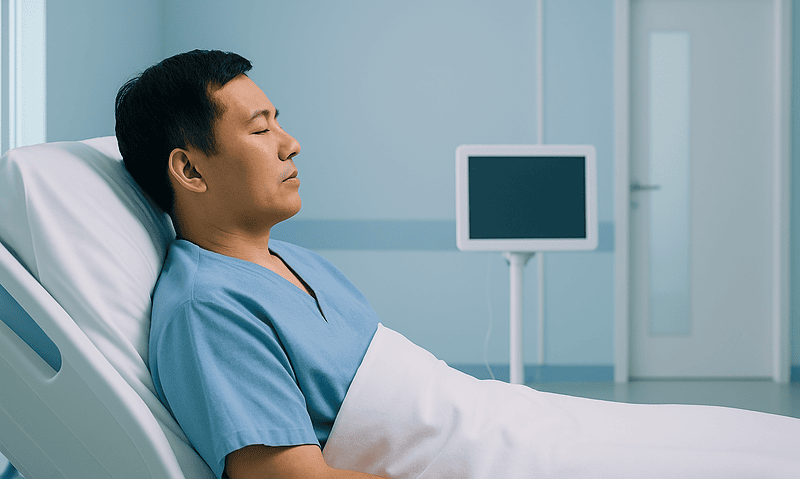
Waking up after sedation or anesthesia in Turkey follows the same clinical sequence as anywhere with modern anesthesia practice. You are monitored — breathing, blood pressure, pain, alertness — until the team is satisfied you are stable. Only then do the next steps open up: sips of fluid, sitting up, standing, and eventually discharge.
It is normal to feel sleepy, thirsty, cold, emotional, or mildly confused at first. A dry mouth or sore throat is common, particularly after general anesthesia with a breathing tube. Mild dizziness, nausea, and poor balance often appear when you first change position. Some people feel clear-headed quickly; others need several hours, especially after a long procedure or deeper anesthesia. Neither pattern says much about how the rest of your recovery will go.
The single most useful thing to understand about this phase is that “awake” does not mean “recovered”. Sedative and anesthetic drugs continue to affect judgement, reaction time, memory, and coordination after you feel fine. This is why recovery teams work from how you are actually doing — not just the clock — before letting you drink, stand, or leave. If you want a fuller picture of the recovery room itself, see our guide to the recovery room, nausea, and going back to your room.
When you can drink and eat again

Fluids come first. In most cases, a nurse confirms you are alert enough and swallowing normally, then allows small sips of water. If those stay down and you do not feel sick, you move on to clear fluids and then light food. How quickly this progresses depends on three things: the anesthetic used, whether you have nausea, and whether the procedure involved your stomach or digestive system. Abdominal and bariatric procedures often come with their own strict diet plan that overrides everything in this section.
For a first meal, plain and gentle wins. Reasonable options include soup, yoghurt, toast, crackers, plain rice, banana, mashed potato, or plain pasta. Heavy, greasy, spicy or very large meals are usually the wrong choice on day one — they tend to make nausea and bloating worse, not better.
If you feel nauseated, slow down rather than push through. A few sips, a pause, a few more. Building up gradually keeps most mild nausea manageable. Persistent vomiting, or an inability to keep any fluids down, is not part of normal recovery — it is one of the situations your discharge paperwork and its contact numbers exist for, which is why teams put those numbers in your hand before you leave.
When you can stand, walk, and move around safely

Gentle movement is usually encouraged once it is safe, because walking helps circulation and reduces stiffness. But the first time you sit up or stand should be supervised. Light-headedness on standing is extremely common — more so if you have not eaten, have had strong pain medicine, or spent a long time lying flat.
The sequence that works: sit up first, pause, then stand with someone nearby. Take short, slow walks and wear supportive shoes or non-slip socks. If you had surgery, the team may also show you how to protect the treated area, manage a drain or catheter, and get in and out of bed without straining. Procedure-specific movement restrictions — after joint, spine, abdominal or eye surgery, for example — override any general advice here.
Being able to walk across a room is not the same as being ready for normal activity. On the day of a procedure, stairs without support, luggage, gym sessions, long shopping trips and sightseeing are generally out, even if you feel capable. Our separate guide to walking and gentle movement after surgery in Turkey covers how activity typically builds over the following days.
- Ask for help the first time you stand.
- Walk short distances, then rest.
- Stop and sit if you feel dizzy, faint, or suddenly weak.
- Follow any procedure-specific restriction exactly — it exists for a reason specific to your operation.
Going back to your hotel: how discharge is decided
For many day-case procedures, returning to your hotel the same day is realistic — but only after discharge criteria are met. Broadly, teams look for the same things: you are alert, you can drink and keep fluids down, your pain is manageable with the medicines you have been given, and you can move safely at the level expected for your procedure. After deeper sedation or general anesthesia, most teams also require a responsible adult to accompany you and stay with you; the reasoning behind that requirement is explained in our guide on when you need someone with you.
Discharge decisions after sedation or anesthesia in Turkey are based on how you are recovering, not on a fixed number of hours. Two patients who had the same procedure in the morning may leave at very different times in the afternoon, and both departures can be correct. Treat your own discharge time as information about you, not as a benchmark.
Before you leave, make sure you hold three things: written discharge instructions, a medication plan you understand, and contact numbers for office hours and after hours. Acibadem’s international patient services provide discharge documentation and interpreter support in English, which matters most at exactly this moment — when instructions are detailed and you are still tired.
Flying home and long-distance travel
Travel is where planning after sedation or anesthesia in Turkey differs most from recovering at home. A short car transfer to a hotel is a much smaller undertaking than an intercity coach, a long drive, or a flight — and the anesthetic itself is often the least of the reasons.
What actually drives travel timing after a procedure:
- The procedure, not just the anesthetic. Swelling, bleeding risk, drains, dressings, and pressure changes in an aircraft cabin all depend on what was done.
- Mobility. Airports involve queues, distances, and stairs. If walking is still limited, the journey needs assistance arranged in advance.
- Sitting time. Long periods immobile in a seat raise circulation concerns after some procedures; this is one reason teams sometimes discuss compression stockings for the journey home.
- Delayed problems. Nausea, dehydration, and pain can peak a day or two after a procedure — mid-flight is the worst place to discover this.
There is no universal “safe to fly after X hours” rule that covers every procedure, which is why the useful question to ask before discharge is specific: given my procedure and my recovery so far, when is my flight realistic? Our dedicated guide, Flying Home After Sedation or Anesthesia: When Is It Safe?, goes deeper into how that decision is made. If your return date is flexible, keeping it flexible until the first day or two of recovery is behind you is often the least stressful approach.
The first 24 hours: what to avoid
Even after a smooth recovery, treat the first 24 hours as protected time. Anesthetic drugs can keep affecting concentration, memory, balance and judgement well after discharge, which is why standard advice for this period includes:
- No driving or operating machinery.
- No alcohol.
- No signing of legal or financial documents, and no important decisions.
- No cooking over an open flame or tasks where a lapse in attention is dangerous.
- No being alone, if deeper sedation or general anesthesia was used and your team advised company.
Medicines deserve particular care. Sleep aids, strong pain medicines and alcohol each increase drowsiness, and combinations amplify the effect. Any question about restarting your regular medicines — for blood pressure, diabetes, heart conditions or anything else — is answered by your treating doctor’s written instructions, not by guesswork or by a general guide like this one.
The other trap in the first 24 hours is enthusiasm. Feeling well is welcome, but rushing through an airport, carrying bags, or climbing several flights of stairs can be surprisingly exhausting on the day of a procedure. A quiet first evening — fluids, light food, short walks, early rest, instructions and phone numbers within reach — is the boring plan that works. For a full picture of what lingering effects look like once you are back at the hotel, see our guide to post-anesthesia side effects after discharge in Turkey.
How the type of anesthesia changes the timeline
Not all anesthesia is the same, and the differences show up directly in when you can eat, walk and travel:
- Local anesthesia numbs a small area while you stay fully awake. Recovery restrictions usually come from the procedure, not the anesthetic.
- Sedation ranges from light (relaxed but responsive) to deep (close to general anesthesia). Deeper sedation carries the same 24-hour restrictions as general anesthesia, even when patients feel alert quickly afterwards.
- Regional anesthesia (spinal, epidural, nerve blocks) numbs a body region. Walking waits until sensation and strength have fully returned to the affected limbs, which is checked before you mobilise.
- General anesthesia means being fully unconscious. It typically involves the longest monitored recovery and the firmest first-24-hours rules.
If you have not yet had your procedure and want to understand what your anesthetist will discuss with you, our comparison of sedation vs general anesthesia in Turkey sets out what each involves for an international patient.
What discharge paperwork usually flags
Most recoveries are uneventful, and discharge instructions say so — while also listing the situations that fall outside “routine”. Typical entries on that list include repeated vomiting, pain that keeps worsening despite the prescribed medicines, breathing difficulty, chest pain, fainting, worsening confusion, new heavy bleeding from the procedure site, fever, inability to pass urine when expected, or a companion finding you unusually hard to wake. Mild soreness, tiredness and grogginess, by contrast, are expected parts of the first day or two.
The practical point is not to memorise the list but to keep it. Before you leave the hospital, confirm you have the written version, that you understand which numbers cover office hours and which cover nights and weekends, and that your companion knows where the papers are. Keeping passport, discharge documents, medication list and local contact numbers together in one place removes friction at exactly the moment you least want any.
Common questions from patients planning treatment in Turkey
What do people typically travel to Turkey for?
International patients commonly travel to Turkey for dental treatment, eye surgery, cosmetic and plastic surgery, hair restoration, orthopaedic and spine procedures, bariatric surgery, fertility treatment, cardiac care and oncology. Almost all of these involve some form of sedation or anesthesia, which is why the recovery rules in this guide apply across very different treatment journeys.
How is anesthesia priced in Turkey?
Anesthesia is normally not quoted on its own. It sits inside the overall procedure quote, and what it contributes to that quote depends on the type of anesthesia, how long the procedure runs, the anesthetist’s involvement before and during the procedure, and the hospital setting. The useful move is to ask for an itemised quote and confirm in writing that anesthesia, the anesthetist’s pre-assessment, and recovery-room care are included — so nothing appears later as an extra.
Is Turkey safe to travel to for surgery?
Safety is a property of the specific hospital, the specific clinical team, and the quality of your planning — not of a country as a whole. Turkey has a large, established hospital infrastructure serving international patients. What you can control: choose a full-service hospital rather than an unaccompanied clinic for anything requiring general anesthesia, confirm who your anesthetist is and how the pre-assessment works, build genuine recovery days into your trip before the return flight, and get every instruction in writing in a language you read comfortably.
Step by step
- Start with fluids, slowly. Once your nurse confirms it is safe, take small sips of water or approved clear fluids. Increase gradually rather than drinking a large amount at once.
- Try a light first meal. Bland, easy-to-digest food unless you were given a specific diet plan. Skip heavy or greasy meals on day one.
- Sit, pause, stand, walk — with support. Move in stages, keep the first walks short, and stop if you feel dizzy or shaky.
- Rest for the remainder of the day. Reaction time and judgement lag behind how you feel. Plan a quiet evening, with a responsible adult present if that was advised.
- Follow medication and wound instructions exactly. Take medicines only as instructed, and ask your team before your discharge if anything is unclear — not after, from a hotel room.
- Get travel timing in writing. Discharge from hospital is not the same as clearance to fly. Ask specifically when stairs, long sitting, and your flight become realistic.
- Keep the paperwork within reach. Discharge instructions, medication list, and contact numbers stay together — with your companion knowing where.
Your checklist
- Bring your discharge papers and medication list back to the hotel.
- Arrange for a responsible adult to stay with you if advised.
- Stock your room with water, light snacks, and your prescribed medicines.
- Wear loose, comfortable clothes and non-slip footwear.
- Save hospital, surgeon, and emergency contact numbers in your phone.
- Ask when you can shower, drive, work, exercise, and fly — before discharge, not after.
- Avoid alcohol for the period your doctor specifies.
- Set alarms for medicines if you are likely to fall asleep early.
Key takeaways
- Sips first, then light food — timing comes from your team, not the clock.
- Your first walk should be supervised; dizziness on standing is common and usually brief.
- The first 24 hours are protected: no driving, alcohol, machinery, or major decisions.
- Travel timing depends on the procedure as much as the anesthetic, and there is no universal flight rule.
- Leave the hospital with written discharge instructions, a medication plan, and contact numbers you understand.
Frequently asked questions
What comes after sedation?
Monitored recovery. Nurses check your breathing, blood pressure, pain and alertness until you are stable, then allow sips of fluid, sitting up, standing, and — once discharge criteria are met — leaving with written instructions. Residual drowsiness and slowed judgement can persist for the rest of the day even when you feel fine, which is why the first 24 hours carry standard restrictions.
How soon can you eat after sedation or anesthesia in Turkey?
Most patients start with small sips of water once a nurse confirms they are alert and swallowing normally, then progress to light food if nausea stays away. The exact timing depends on the anesthetic, the procedure, and whether the digestive system was involved — procedures on the stomach or bowel come with their own diet plan that takes priority.
Can you walk right after anesthesia?
Often on the same day, but the first standing and walking should be supervised. Light-headedness on standing is common at first. After regional anesthesia such as a spinal, walking waits until full sensation and strength have returned to your legs, which the team checks before you mobilise.
When is it safe to fly after sedation or anesthesia?
There is no single answer, because flight timing depends on the procedure — swelling, bleeding risk, mobility, long sitting — as much as the anesthetic itself. The realistic flight date is set by your treating doctor for your specific case, ideally before you confirm or change any booking.
How much does anesthesia cost in Turkey?
Anesthesia is normally included within the overall procedure quote rather than priced separately. What it contributes depends on the anesthesia type, the duration of the procedure, the anesthetist’s involvement, and the hospital setting. Ask for an itemised quote and written confirmation that anesthesia, pre-assessment, and recovery care are included.
Is Turkey safe to travel to for surgery?
Safety depends on the specific hospital and team, not the destination alone. Turkey has extensive hospital infrastructure serving international patients. Sensible checks include choosing a full-service hospital for anything under general anesthesia, confirming the anesthetist’s pre-assessment process, planning genuine recovery days before flying home, and getting all instructions in writing in a language you read well.
What should you avoid for the first 24 hours?
Driving, alcohol, operating machinery, signing important documents, and — after deeper sedation or general anesthesia — being alone if your team advised company. Extra doses of sleep aids or pain medicines beyond what was prescribed also belong on the avoid list unless your doctor specifically approved them.
Is nausea normal after anesthesia?
Mild nausea is common and often settles with rest, slow fluids, and any anti-nausea medicine you were prescribed. Repeated vomiting or being unable to keep fluids down is not part of normal recovery — it is one of the situations listed on discharge paperwork, alongside the numbers to use if it happens.
Add us as a Preferred Source to see more of our trusted health content across Google Search, AI Overviews and Discover.

Update history
- PublishedJuly 8, 2026
- Medical review approvedSeptember 1, 2026
- Last content updateSeptember 1, 2026
References2
- General anaesthesia — NHS — nhs.uk
- Anesthesia — MedlinePlus, U.S. National Library of Medicine — medlineplus.gov
More Patient Guides

Flying After a C-Section: Timing for New Mothers
A C-section is real abdominal surgery that happens to come with a newborn attached — so the flying question has two clocks…

When Can You Drive After Anesthesia or Sedation?
You feel fine an hour after the procedure. You are chatting, you walked to the car unaided, you could obviously drive it.…
Flying After Hip Replacement: When Is It Safe?
Hip replacement recovers famously well — many patients walk further at three weeks than they had in three years. Flying is part…

Flying After Knee Replacement: When Is It Safe?
The knee is new, the physio is going well, and there is a boarding pass with your name on it. Flying after…