

Sedation vs General Anesthesia in Turkey: What International Patients Should Expect

Sedation relaxes you to varying depths while you usually keep breathing on your own; general anesthesia makes you fully unconscious while the team supports your breathing and vital functions. In Turkey, as elsewhere, the choice depends on your procedure, medical history and airway assessment, not preference alone. The decision also shapes your fasting, whether you need a companion, and how soon you can fly home.
Will you be fully asleep for your procedure in Turkey, or relaxed and drowsy but still breathing on your own? It is one of the most common questions international patients ask before booking flights, and the answer shapes more than the day itself. It affects your fasting, whether you need a companion, how long you should stay near the hospital, and when it is sensible to travel home.
This guide explains what sedation and general anesthesia usually involve, how the anesthesia team decides between them, what the assessment covers, and the practical planning that makes the difference for a patient treated far from home. It is informational: your own anesthesia team’s instructions always take priority over anything written here.
At a glance
- Best for: International patients planning a procedure in Turkey and comparing anesthesia options
- Main question: Whether sedation or general anesthesia is more likely for your treatment, and why
- Key difference: Sedation ranges from light drowsiness to deep sleepiness; general anesthesia is full unconsciousness with supported breathing
- Who decides: The anesthesia team, together with your surgeon or procedural specialist, after a pre-anesthesia assessment
- What you control: The completeness of your medical history, your fasting discipline, and realistic travel dates
- Travel impact: Both options usually mean a companion at discharge and a buffer before flying; general anesthesia often means a longer one
Sedation vs general anesthesia in Turkey: the difference in plain terms
The clearest way to understand sedation vs general anesthesia in Turkey, or anywhere, is to look at three things: awareness, breathing, and recovery. Sedation uses medication to make you calm, drowsy and comfortable during a test or procedure. Depending on the depth, you may be awake but relaxed, dozing but rousable, or deeply sleepy. You usually keep breathing on your own, often with supplementary oxygen. General anesthesia goes further: you are fully unconscious, you feel and remember nothing of the procedure, and the anesthesia team monitors and supports your breathing and vital functions from start to finish, often with an airway device in place.
The levels of sedation
Sedation is not one single state. Anesthesia teams commonly describe it in levels. With minimal sedation, you are relaxed but awake and can answer questions normally. With moderate sedationoften called conscious sedation: you are drowsy, may slur your words, and might remember little of the procedure afterwards, but you respond when spoken to or touched. With deep sedation, you are on the edge of sleep and respond only to firm stimulation; breathing sometimes needs a degree of support. Deep sedation sits close enough to general anesthesia that it is typically managed by an anesthesiologist with the same monitoring standards.
Which is “stronger”?
Patients often ask which is stronger. General anesthesia is the deeper state: it removes consciousness entirely and takes over more of the body’s own control, which is exactly why it comes with fuller monitoring and airway support. But “stronger” does not mean “better” or “worse”. A deep sedation for a long endoscopy can involve more medication than a brief general anesthetic for a short operation. What matters is not strength but fit: the right depth for the procedure, delivered with the right monitoring. Alongside both options, many operations also use regional anesthesianumbing a specific area with a spinal, epidural or nerve block, sometimes combined with sedation. If that is relevant to your treatment, your team will explain it during the assessment.
When sedation may be used, and when general anesthesia may be needed
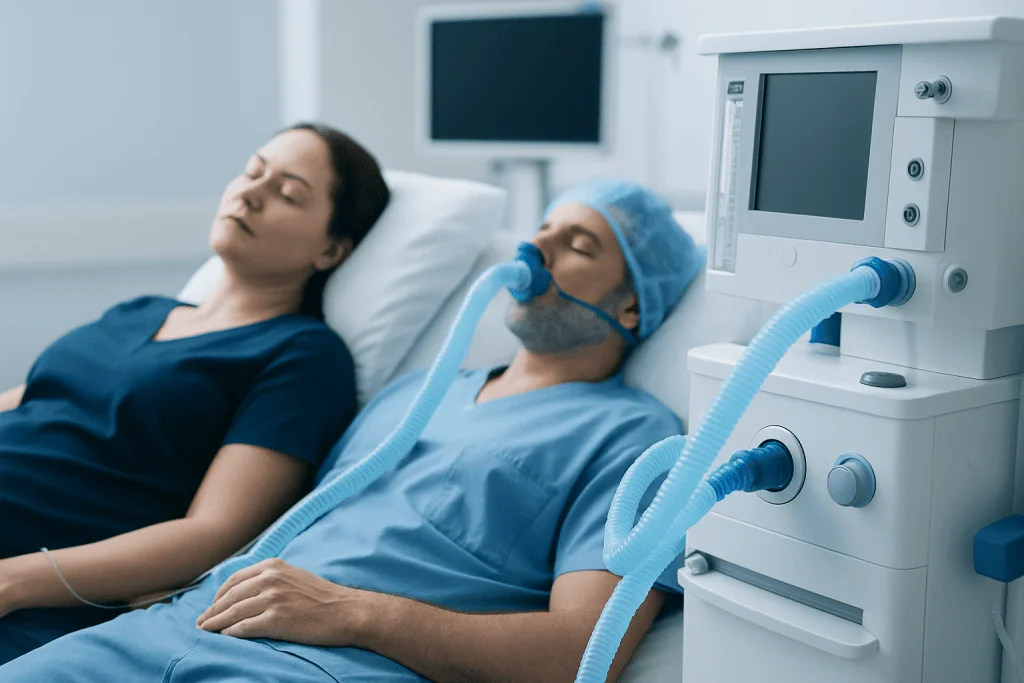
Sedation is commonly considered for shorter or less invasive work: endoscopy and colonoscopy, some imaging, certain dental treatments, minor surgical procedures, and situations where the main goal is to reduce anxiety and keep you still. Recovery is often quicker than after general anesthesia, though you still need monitored recovery time and formal discharge criteria before you leave.
General anesthesia becomes more likely when a procedure is longer, more complex, more painful, or requires you to be completely still and unaware, abdominal surgery, many orthopaedic operations, and most procedures where protecting the airway matters. It may also be chosen when your health profile makes controlled, supported unconsciousness the safer route, for example with significant reflux or a difficult airway. Some treatments simply cannot be done appropriately under sedation alone.
When international patients research sedation vs general anesthesia in Turkey, the honest answer is that the decision framework is the same one used in any well-run hospital: procedure requirements first, then your medical history, airway and breathing risk, age, weight, and conditions such as sleep apnoea, heart disease, lung disease or previous anesthesia complications. There is no universally “better” option, and the final recommendation should focus on safety rather than convenience or marketing.
| Sedation | General anesthesia | |
|---|---|---|
| Awareness | Ranges from relaxed and awake to deeply sleepy | Fully unconscious throughout |
| Breathing | Usually your own, often with oxygen | Supported by the team, often via an airway device |
| Memory of procedure | Partial or none, depending on depth | None |
| Typical recovery | Often shorter; same-day discharge is common for suitable procedures | Longer observation; overnight stay depends on the operation |
| Pain control | Usually combined with local anaesthetic or analgesics | Built into the anaesthetic plan |
| Who manages it | Trained clinician; deep sedation typically an anesthesiologist | Anesthesiologist and anaesthesia team |
What your pre-anesthesia assessment usually includes

Before either option, you complete a health questionnaire and discuss your history in detail. Expect questions about past operations, previous reactions to anesthesia or sedation, allergies, regular medicines, herbal supplements, smoking, alcohol use, pregnancy status where relevant, and chronic conditions. Details that seem minor to you, loose teeth, snoring, reflux, a difficult IV line in the past, can genuinely change the plan, which is why the questionnaire is long.
Depending on your age, condition and procedure, you may also need tests before clearance: blood tests, an ECG, chest imaging, or a consultation with a cardiologist or respiratory physician. Our guide to pre-op tests in Turkey explains what these usually involve. If you are travelling from abroad, part of this review may begin remotely before you fly, and parts may be repeated after arrival to confirm the plan is still valid. That repetition is normal, not a sign of doubt.
Bring your documents from home, in English if possible: medication lists, operation notes, cardiology or respiratory reports, sleep study results, allergy details and recent test results. At Acibadem, international patient services can arrange interpreting and coordinate between departments so information does not get lost between your file and the anesthesia team. Points particularly worth raising:
- Loose teeth, crowns, bridges or dental implants: these matter for airway devices.
- Snoring, diagnosed or suspected sleep apnoea, or difficulty lying flat.
- Nausea, vomiting or slow waking after any previous anesthetic.
- All blood thinners, diabetes medicines, injections and supplements: your doctor decides what to do with each; never change them on your own.
Fasting and the 2-4-6 rule
Both sedation and general anesthesia come with fasting instructions, because food or liquid in the stomach increases the risk of it entering the lungs while your protective reflexes are suppressed. Many anesthesia teams internationally use some version of the 2-4-6 rule as a starting point: clear fluids such as water may be allowed up to about two hours before, breast milk (for infants) up to about four hours before, and light food up to about six hours before. Heavier or fatty meals often need longer.
Treat those numbers as background knowledge only. Your hospital’s written instructions override any general rule, and they may be stricter depending on your condition and procedure. The practical points for a travelling patient are simple: get the fasting times in writing, set alarms rather than estimating, and tell the team honestly if you slipped: a delayed procedure is a far better outcome than a concealed breakfast. Our guide on preparing for general anesthesia in Turkey covers preparation in more depth.
What to expect on the day of your procedure
On arrival, nurses and the anesthesia team confirm your identity, the planned procedure, your consent, allergies, fasting status, medicines taken that morning, and final test results. These repeated checks are a standard safety routine, not disorganisation. An IV line is usually placed, and monitors track your blood pressure, heart rate, oxygen level and breathing throughout, for sedation as well as for general anesthesia.
With sedation, medication through the IV takes effect quickly; many patients describe drifting into a heavy, pleasant drowsiness within minutes. With general anesthesia, you go through a controlled induction, typically IV medication, sometimes with a mask, and the next thing you register is waking in a recovery area with staff nearby. In both cases, drowsiness, a dry mouth, mild nausea or brief disorientation afterwards are common and usually settle with rest.
Are you awake during sedation, and does it hurt?
Whether you are “awake” during sedation depends on depth. Under minimal or moderate sedation you may hear voices, follow simple instructions and feel that time passed strangely fast; many patients remember little or nothing afterwards even though they responded during the procedure. Under deep sedation, most patients have no awareness at all.
Sedation itself relaxes you; it is not primarily a painkiller. That is why it is usually combined with local anaesthetic at the procedure site or with analgesic medication through the IV. With a well-planned combination, you should not feel sharp pain, though sensations of pressure, movement or stretching are possible and normal. If you do feel discomfort during conscious sedation, say so: the team can adjust medication in real time, and telling them is exactly what they expect you to do.
Recovery, discharge and travel planning
The biggest practical difference between the two options is what happens afterwards. Sedation for a suitable procedure often allows same-day discharge once you meet the recovery criteria, stable observations, controlled pain, the ability to drink, and a responsible adult to accompany you. Our guide to day surgery in Turkey walks through that pathway. General anesthesia usually means a longer monitored recovery, and depending on the operation, an overnight stay. Occasionally plans change on the day for safety reasons, which is why it helps to know what an unexpected overnight stay involves before you book anything rigid.
Assume you will need an adult companion at discharge after either option, even for treatment described as minor. For a period afterwards, your team will tell you how long in your case, driving, signing important documents, making significant decisions, drinking alcohol and returning to work are usually not advised, because judgment, balance and reaction time can lag behind how alert you feel. Your doctor decides when you are medically ready to leave, not the clock and not your flight itinerary.
Do not book your return flight tightly around the procedure date. Recovery time varies with the anesthesia, the treatment itself and your general health, and most treating teams want to review you at least once before you fly. Build in slack for that review, for rest, and for the ordinary friction of being unwell in an unfamiliar city. What normal recovery feels like in the days afterwards, and what pain relief you should expect, is covered in our guide to the days after general anesthesia.
How the anesthesia plan affects your quote and paperwork
The type of anesthesia is one of the structural elements behind any treatment quote: it affects theatre time, staffing, monitoring and recovery arrangements. This guide deliberately avoids figures, but the mechanism is worth understanding, if the plan changes from sedation to general anesthesia after your assessment, or an overnight stay is added, the estimate can change with it. Our guide on estimated quotes versus final invoices explains how those adjustments work and what to check line by line. It is also worth confirming what your travel or health insurance says about anesthesia and any complication cover before you fly.
Questions worth asking before you agree to the plan
You do not need medical vocabulary to ask useful questions. It is entirely appropriate to ask whether sedation or general anesthesia is planned and why, whether that could change on the day, what the main risks are in your specific case, how pain and nausea will be managed, and what monitoring you will have during and after the procedure. A good anesthesia team expects these questions and answers them plainly.
Ask the practical questions too: when to stop eating and drinking, which of your regular medicines to take on the morning of the procedure, whether someone needs to stay with you overnight, and how soon you can walk, shower, travel by car or fly. If you use a CPAP machine, hearing aids, dentures or glasses, ask when to bring or remove them. If English is not your first language, arrange interpreter support early, consent and discharge instructions only protect you if you actually understand them.
Step by step
- Assemble your health history early. A complete medication list, allergy details, operation notes and any past anesthesia problems give the treating team time to review properly and reduce the chance of last-minute changes or delays after you have already travelled.
- Confirm which type of anesthesia is planned. Ask whether your procedure is expected to use sedation or general anesthesia, why, and whether that could change on the day. The answer determines your fasting, companion arrangements and realistic travel dates.
- Follow fasting and medication instructions exactly. Your team will tell you when to stop eating and drinking and what to do with each regular medicine. If anything is unclear, ask before the day of treatment rather than guessing, and never adjust medicines on your own.
- Prepare for the recovery period. Arrange an adult companion for discharge, a quiet place to rest, and easy access to water and light food if allowed. Check that your hotel can accommodate a companion and how far it is from the hospital.
- Do not plan immediate sightseeing or travel. Even after a quick-seeming recovery, sedation and general anesthesia can affect judgment, balance and energy for longer than you expect. Leave room for review appointments, rest and schedule changes.
- Keep documents and contacts in one place. Hospital numbers, passport copy, insurance details, hotel address and your coordinator’s contact should all be reachable without effort while you are groggy.
Your checklist
- Bring a current list of all medicines, vitamins and supplements.
- Tell the team about allergies and any past reaction to sedation or anesthesia.
- Follow the fasting instructions exactly as written by your hospital.
- Ask your doctor what to do with blood thinners, diabetes medicines and injections, do not decide alone.
- Arrange an adult companion for discharge and the first night if advised.
- Pack your glasses case, denture container, CPAP machine and any essential medical devices.
- Leave a buffer between the procedure and your return flight.
- Arrange interpreter support in advance if you need it.
Key takeaways
- Sedation and general anesthesia differ mainly in awareness, breathing support and recovery needs, and sedation itself has levels, from light to deep.
- The recommendation depends on your procedure, medical history and the pre-anesthesia assessment, not on preference or convenience.
- Fasting rules such as the 2-4-6 guideline are common starting points, but your hospital’s written instructions always take priority.
- Sedation relaxes rather than numbs, so it is usually paired with local anaesthetic or analgesics; pressure sensations can still be normal.
- Plan for a companion, flexible travel dates and a review before flying, whichever option is used.
Frequently asked questions
Which is stronger, sedation or general anesthesia?
General anesthesia is the deeper state: it removes consciousness completely and involves fuller support of your breathing and vital functions. Sedation ranges from light relaxation to deep sleepiness. “Stronger” is not the same as safer or better: the appropriate option is the one matched to your procedure and health profile after assessment.
What is the 2-4-6 rule for anesthesia?
It is a common fasting guideline used by many anesthesia teams: clear fluids may be allowed up to about two hours before the procedure, breast milk (for infants) up to about four hours, and light food up to about six hours. It is a starting point only: your own hospital’s written fasting instructions may differ and always take priority.
Do you still feel pain with conscious sedation?
Sedation relaxes you but is not primarily a painkiller, so it is usually combined with local anaesthetic at the site or analgesic medication through the IV. With a well-planned combination you should not feel sharp pain, though pressure, movement or stretching sensations are possible. If you feel discomfort, tell the team: they can adjust medication during the procedure.
Are you awake during sedation anesthesia?
It depends on the depth. Under minimal or moderate sedation you may respond to voices and follow simple instructions, yet remember little or nothing afterwards. Under deep sedation, most patients have no awareness at all. Your team can tell you which depth is planned for your procedure.
Is sedation safer than general anesthesia?
Neither is automatically safer in every situation. The safer choice is the one that fits your procedure, medical history, airway risk and overall condition after assessment by the anesthesia team. For some treatments, general anesthesia is the more controlled and therefore more suitable option.
Can I choose sedation instead of general anesthesia?
You can always discuss your preference, concerns and previous experiences, and a good team will listen. The final recommendation, however, is based on what is appropriate and safe for the procedure and your health profile. If general anesthesia is advised, it is usually because it offers better control, comfort or safety in your specific case.
How long should I stay in Turkey after anesthesia?
There is no single answer. A short outpatient procedure under sedation may need only brief local recovery, while more complex surgery under general anesthesia may require longer observation and a follow-up review before flying. Your treating team advises based on your individual plan, so keep travel dates flexible until you have that guidance.
Do I need someone with me after sedation or general anesthesia?
In most cases, yes, especially on the day of discharge. Even if you feel alert, judgment, balance and reaction time can remain affected for a while. A companion also helps with transport, collecting medication, meals and contacting the hospital if anything concerns you during the first night.
Add us as a Preferred Source to see more of our trusted health content across Google Search, AI Overviews and Discover.

Update history
- PublishedJuly 8, 2026
- Medical review approvedSeptember 13, 2026
- Last content updateSeptember 12, 2026
References2
- General anaesthesia: NHS nhs.uk
- Conscious sedation for surgical procedures: MedlinePlus medlineplus.gov
More Patient Guides

How Long Does Anesthesia Last? Wear-Off Times by Type
Coming round from an operation, almost everyone asks the same two questions: when will my head feel normal, and how long is…

Flying to Turkey After a Recent Illness: When Is It Safe to Travel?
Flying to Turkey after a recent illness may be safe once you are medically stable and cleared to travel; plan airline support…

Braces, Retainers, and Dental Work Before Surgery in Turkey: What to Tell Your Team
Braces, retainers and dental work before surgery in Turkey should be shared with your care team early to plan safe anaesthesia and…

When to Stop Eating, Drinking, or Smoking Before a Procedure in Turkey
When to stop eating before a procedure in Turkey depends on your anesthesia plan; follow your care team’s exact fasting instructions for…