

At Acibadem, How We Manage Pain After Surgery or Procedures

Pain after surgery or a procedure is planned before you arrive, monitored in hospital with regular checks, and treated with a combination of medicines and non-medicine methods matched to your operation and health history. Before discharge, you receive written instructions covering medication timing, activity limits and warning signs, so your recovery in a hotel or back home follows a clear, coordinated plan rather than guesswork.
You are planning treatment in a country that is not your own, and one question sits behind all the others: how much will it hurt afterwards, and what happens if the pain gets worse in a hotel room at 2am? That question deserves a straight answer, not reassurance. This guide explains how we manage pain after surgery or procedures at Acibadem, before you arrive, during your hospital stay, and after you leave.
Two things are true at once. Some pain after surgery is normal and expected; no honest hospital will tell you otherwise. And pain that is planned for, measured and treated early is very different from pain that is simply endured. The difference lies in preparation, and most of it happens before the operating theatre.
At a glance
- Best for: Patients who want to understand how pain is planned, measured and treated around surgery or procedures
- What to expect: Pre-assessment, a written pain plan, regular pain scoring in hospital, and structured discharge instructions
- Methods used: Combinations of medicines, regional anaesthesia techniques where suitable, and non-medicine strategies such as positioning and early movement
- Support available: International patient coordinators, interpreters, nursing guidance, and follow-up arrangements
- Honest limit: No plan removes all discomfort: the goal is pain controlled well enough that you can breathe deeply, sleep, move and heal
How we manage pain after surgery or procedures: the approach
Pain management at Acibadem is not a single medicine handed to you in recovery. It is a plan built around three questions: what kind of pain does this specific procedure usually cause, what does your medical history rule in or out, and how will the team know quickly if the plan is not working?
The answer to the third question is the most practical one. Nurses check your pain at regular intervals throughout your stay, not just once in the recovery room. They ask you to score it, describe it and say whether it changes with movement. Those answers feed back to the doctors, and the plan is adjusted. When patients ask how we manage pain after surgery or procedures, the honest summary is: we measure it often and act on what we find, rather than assuming a standard dose fits everyone.
Most plans also use more than one method at the same time: a combination approach sometimes called multimodal analgesia. Using two or three different mechanisms in smaller amounts often controls pain better than a large dose of a single drug, and it reduces the chance of heavy sedation, nausea or constipation getting in the way of your recovery.
How your team plans pain control before your procedure
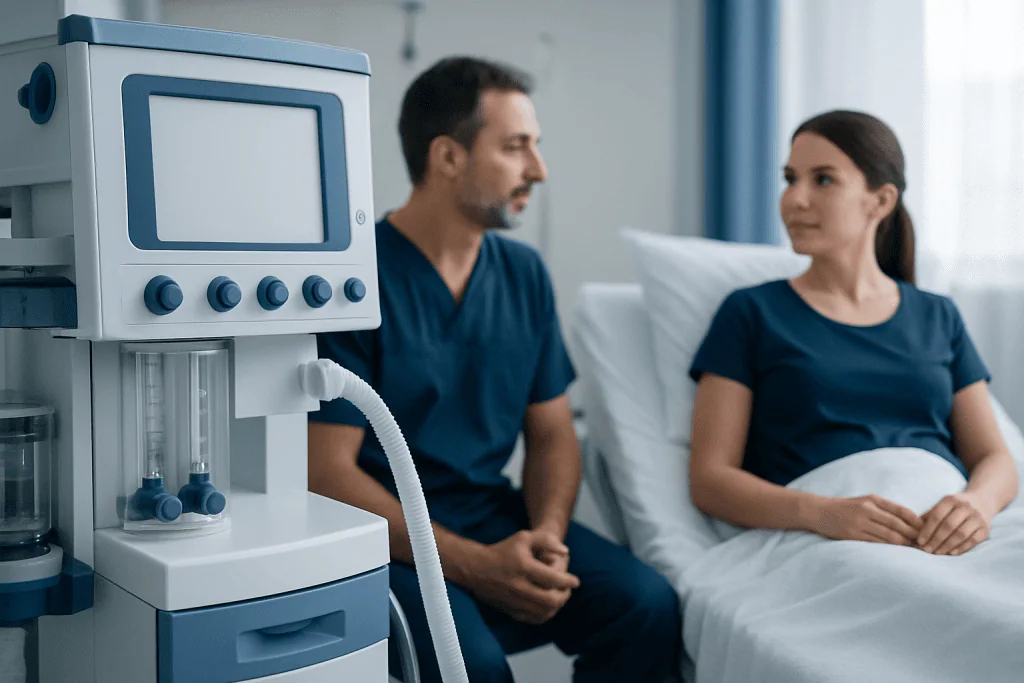
Your pain plan starts at pre-assessment, often days before the procedure itself. You will be asked about chronic pain conditions, migraines, nerve pain, sleep apnoea, stomach sensitivity, kidney or liver problems, and any past trouble with anaesthesia or painkillers, nausea, itching, confusion, constipation. None of these questions is routine box-ticking. Each one can change which medicines are safe for you and which should be avoided.
Be equally open about what you already take. Regular painkillers, blood thinners, sedatives, antidepressants and herbal supplements can all affect bleeding risk, drowsiness or how well certain pain medicines work. A supplement that seems harmless at home can matter a great deal in an operating theatre. Bring a written list; do not rely on memory in a second language.
This conversation is also your chance to ask questions while there is still time to act on the answers. Our separate guide on questions to ask about pain control after surgery in Turkey gives you a practical list to bring to that appointment.
- Share your full medication list, including vitamins and supplements
- Mention allergies and any past reactions to anaesthesia or pain medicine
- Describe long-term pain conditions and what has or has not helped before
- Ask how pain will be measured in hospital and what your discharge plan will include
What happens in hospital after surgery or a procedure

How pain is measured
When you wake, nurses will not simply ask whether you have pain. They will ask how strong it is, usually on a scale from zero to ten, where you feel it, and whether it is sharp, aching, cramping, burning, or worse when you move. Burning or shooting pain points towards irritated nerves; a deep ache near the wound is more typical surgical pain. Different types respond to different treatments, which is why the description matters as much as the number.
How relief is given
Depending on your procedure and how soon you can safely eat and drink, pain relief may be given by mouth, through a drip, or by regional techniques such as local anaesthetic placed near the wound or around specific nerves. For some larger operations, anaesthesiologists may use an epidural or a nerve block placed during surgery, so that the first hours of recovery are covered before you feel anything at all. Some patients are given a patient-controlled analgesia pump, which lets you deliver a pre-set, safety-limited dose yourself when you need it.
Throughout, the team balances comfort against other priorities: alertness, breathing, blood pressure, nausea prevention and early mobility. If pain is making it hard to cough, breathe deeply, turn in bed or stand with help, say so straight away. Uncontrolled pain is not something to tolerate politely: it works against the very things that help you heal, and your nurses can only adjust what they know about.
Your surgeon, the anaesthesiology team and the ward nurses work from the same plan, and international patient coordinators and interpreters are available so that nothing is lost in translation when you describe what you feel. How we manage pain after surgery or procedures depends heavily on that flow of information; the system only works when you feed it honestly.
The medicines and non-medicine strategies you may be advised about
No two plans are identical, but most draw from the same set of building blocks. The table below describes the categories in general terms, which medicines you receive, in what combination and for how long, is always decided by your treating doctor.
| Category | What it does | What to know |
|---|---|---|
| Paracetamol | The base layer of many plans, often given on a fixed schedule | Works best taken regularly rather than only when pain peaks |
| Anti-inflammatories (NSAIDs) | Reduce inflammation and swelling-related pain | Not suitable for everyone, kidney, stomach and bleeding history matter |
| Opioids | Reserved for stronger pain, usually in short, tapering courses | Can cause drowsiness, nausea and constipation; monitored closely |
| Nerve-targeting medicines | Address burning, shooting or electric-type nerve pain | Work differently from ordinary painkillers; prescribed only when the pain pattern fits |
| Local anaesthetic techniques | Numb the wound area or specific nerves directly | Includes wound infiltration, nerve blocks and epidurals, chosen by the anaesthesiology team |
| Supportive medicines | Anti-nausea medicines and laxatives | Manage the side effects of pain relief so it stays tolerable |
Timing matters as much as the medicine itself. In the first days, taking prescribed doses on schedule usually works better than waiting until pain becomes severe and then chasing it. If side effects worry you, drowsiness, nausea, difficulty eating, raise it early with your team rather than skipping doses on your own.
Non-medicine strategies carry real weight too. Supporting the surgical area with a pillow when you cough or change position, taking short approved walks, doing breathing exercises, staying hydrated and sleeping with the treated area elevated where advised can each take a measurable edge off your discomfort. They are not substitutes for medicine in the early days, but they reduce how much medicine you need.
Nerve pain after surgery: what it is and how it is assessed
Some patients notice a different kind of pain in the days or weeks after an operation: burning, tingling, electric shocks, or numbness spreading along a limb. After foot or ankle surgery this may run along the top of the foot or into the toes; after spinal surgery it can travel down one or both legs. This is nerve-related pain, and it behaves differently from wound pain, ordinary painkillers often do little for it.
What helps is accurate assessment rather than stronger doses of the same medicine. Doctors look at the pattern of the pain, examine sensation and strength, and sometimes use imaging or nerve studies to understand whether a nerve is irritated, compressed or simply recovering from the normal disturbance of surgery, nerves heal slowly, and some symptoms settle on their own over weeks. Where nerve pain persists, treatment may combine medicines designed for nerve pain, physiotherapy, and targeted injections, planned by the treating surgeon together with the pain management (algology) department. For pain after spinal procedures, assessment may also involve the neurosurgery team to check the surgical site itself.
The honest message: nerve pain is common enough that hospitals have structured pathways for it, and it is assessed rather than guessed at. What it means in any individual case is a question only the examining doctor can answer.
When pain outlasts healing: interventional options
Occasionally, patients ask about surgical or procedural treatments for pain itself. These exist, and they sit at the far end of a stepped process, considered when pain persists after healing and simpler measures have been properly tried. Algology specialists use techniques such as diagnostic and therapeutic nerve blocks, epidural and joint injections, radiofrequency treatment of specific nerves, and in selected chronic cases, spinal cord stimulation. Each is offered on the basis of a specific diagnosis, not on the strength of pain alone.
You can read more about how these techniques work on our interventional pain management page. For most patients recovering from surgery, they never become relevant, early, well-organised pain control in the first days and weeks is what does the work.
Recovering in a hotel and travelling home
Many patients worry less about pain in hospital, where help is one button away, than about the days afterwards in a hotel. That worry is reasonable, and the answer to it is preparation, not optimism.
Before discharge, you receive written instructions covering what level of discomfort is expected for your procedure, your medication schedule, activity limits, and the specific warning signs your team wants to hear about. Keep these papers, your medicines and the contact numbers printed on your discharge summary within reach in your hotel room, not packed in luggage. If a wound is involved, our guide on managing wound care and dressings after discharge explains what routine care looks like day by day.
Structure your hotel days around the plan: medication times, short approved walks, fluids, meals that suit your stomach, and rest. If you have a companion, ask them to sit in on the discharge teaching, two sets of ears catch more, especially when you are tired and medicated. International patient coordinators can help align your discharge paperwork, interpreter needs and follow-up arrangements, including handover information for a doctor in your home country.
Finally, do not book your return flight around hope. The right time to travel depends on your procedure and how your early recovery is going, and your treating team will tell you when it is reasonable. Our guide on when it is safe to fly home after surgery in Turkey explains what that decision depends on.
Step by step
- Tell the full story at pre-assessment. Past experiences with surgery, anaesthesia and painkillers, including nausea, constipation or confusion, plus every regular medicine and supplement. This is where your plan is shaped.
- Understand the plan before the procedure. Ask how pain will be measured in hospital, what methods are planned for your operation, and what discomfort is considered normal for it.
- Report pain early, not stoically. Once awake, tell your nurses if pain is interfering with breathing, resting or moving. Pain that is caught early is easier to settle than pain that has built up.
- Describe, don’t just score. Where it is, what it feels like, what makes it worse, and whether the medicine helps a little or not at all. Sharp, aching, burning and cramping pain are treated differently.
- Follow the medication schedule exactly. Take only what has been prescribed or approved for you, on time. Do not add over-the-counter products on your own, combinations can be unsafe after surgery.
- Use the non-medicine tools. Positioning, pillow support when coughing, approved short walks, hydration and rest all reduce how much medicine you need.
- Leave hospital prepared, not hopeful. Before discharge, make sure you understand your medication schedule, activity limits, wound-care instructions where relevant, and where the warning signs and contact numbers are written in your papers.
Your checklist
- Bring a written list of all medicines, vitamins and supplements
- Tell your team about allergies and past reactions to pain medicine or anaesthesia
- Keep discharge papers, medicines and contact numbers accessible in your hotel room, not in luggage
- Check that your discharge summary lists the warning signs and the numbers to use, day and night
- Arrange a companion for the first 24–48 hours after discharge if you can
- Set phone reminders for medication times so doses are not missed
- Stay hydrated and follow the eating plan your team gives you
- Do not drive, drink alcohol or sign important documents while taking sedating medicine
Key takeaways
- Pain management starts at pre-assessment, with a plan built around your procedure and your health history
- Most plans combine several methods, medicines, regional techniques and practical strategies, rather than relying on one drug
- Nurses measure pain regularly in hospital and adjust the plan based on what you report, so describing pain accurately is part of your treatment
- Nerve-type pain behaves differently from wound pain and is assessed through a structured pathway, not treated with stronger doses of the same medicine
- Written discharge instructions, schedule, limits, warning signs, contacts, are what make recovering in a hotel manageable
Frequently asked questions
How much does post-surgery pain actually hurt?
It varies with the procedure, the technique used and the person. As a general pattern, discomfort tends to be strongest in the first two to three days and then eases gradually, and keyhole or minimally invasive approaches usually cause less wound pain than open surgery. Your team can tell you what is typical for your specific operation, which is a far more useful answer than any general one.
Will I only get tablets, or are there other methods?
Depending on the procedure, relief may be given by mouth, through a drip, via a patient-controlled pump, or through regional techniques such as nerve blocks, wound infiltration with local anaesthetic, or an epidural. The anaesthesiology team chooses the combination that fits your operation and your health history.
How is nerve pain after foot surgery treated?
First by assessment: doctors examine sensation and the pattern of the pain to establish whether a nerve is irritated, compressed, or simply recovering, nerves often settle over weeks as part of normal healing. Where treatment is needed, it may combine medicines designed for nerve pain, physiotherapy and targeted injections, planned by the treating team. Ordinary painkillers alone often help little with nerve-type pain, which is why the assessment step matters.
What helps nerve pain in the legs after back surgery?
The approach depends on the cause, which is why leg pain after spinal surgery is formally assessed, sometimes with imaging or nerve studies, rather than treated blind. Options a doctor may consider include nerve-targeting medicines, physiotherapy, and epidural or nerve-root injections. What applies in an individual case is a decision for the treating surgeon and pain specialist together.
What are the surgical or interventional options for pain management?
For persistent pain that outlasts healing, algology specialists can use interventional techniques: diagnostic and therapeutic nerve blocks, epidural and joint injections, radiofrequency treatment of specific nerves, and in carefully selected chronic cases, spinal cord stimulation. These sit at the end of a stepped process and are offered on the basis of a specific diagnosis, not pain intensity alone.
Can I use my usual over-the-counter painkillers?
Not unless your doctor confirms they are appropriate after your procedure. Some common painkillers increase bleeding risk, interact with prescribed medicines, or are unsuitable depending on your surgery and health conditions. Always check before adding anything to your prescribed plan.
What if I don’t speak Turkish?
Interpreter and coordination services support international patients throughout, from pre-assessment to discharge teaching. This matters most for medication timing, activity limits and understanding your written discharge instructions, so make use of it rather than nodding through anything unclear.
Add us as a Preferred Source to see more of our trusted health content across Google Search, AI Overviews and Discover.

Update history
- PublishedJune 25, 2026
- Medical review approvedSeptember 13, 2026
- Last content updateSeptember 12, 2026
References2
- Postoperative Pain Control – StatPearls, NCBI Bookshelf ncbi.nlm.nih.gov
- After Surgery – MedlinePlus medlineplus.gov
More Patient Guides

Choosing Between Inpatient and Day-Case Treatment in Turkey
Inpatient and day-case treatment in Turkey differ mainly in overnight monitoring, recovery needs and travel planning. Learn how to choose safely.

How to Compare Hospitals in Turkey for Complex Treatment
Compare hospitals in Turkey for complex treatment by checking accreditation, specialist teams, ICU support, coordination, and follow-up.

At Acibadem, How We Explain Surgical Risks and Safety Checks Before You Travel
Surgical risks and safety checks before travel means understanding your personal risk, required tests, and travel timing before coming to Turkey.

At Acibadem, What to Check Before Comparing Treatment in Turkey With Care at Home
Comparing treatment in Turkey with care at home starts with safety, records, follow-up, travel timing and total support in Istanbul.