

DEXA Bone Density Scan in Turkey: Quick Patient Guide

A DEXA bone density scan in Turkey is a short, non-invasive outpatient X-ray examination that measures bone mineral density, usually at the hip and lower spine. Preparation is minimal, there are no injections, and most people continue their day normally afterwards. Bring previous reports and a medication list so the result can be compared and interpreted properly.
A DEXA scan is one of the easiest tests to fit into a medical trip. It is short, it is non-invasive, and it rarely disrupts the rest of your day. What it tells your doctor, however, matters for years: how dense your bones are, and how that density compares with what would be expected for someone of your age and background.
This guide explains what the scan measures, when doctors recommend it, how to plan the appointment around travel, what happens in the scanner room, and how to make sense of the report you take home. It is informational, decisions about whether you need the scan, and what the result means for you, belong with the clinician who knows your history.
At a glance
- What it is: A low-dose X-ray examination that measures bone mineral density, usually at the hip and lower spine
- Appointment: A short outpatient visit; no injections, no sedation, no recovery period
- Preparation: Minimal, comfortable clothing without metal near the waist and hips, plus previous reports and a medication list
- Travel fit: Usually easy to schedule alongside blood tests, consultations or check-ups on the same trip
- Afterwards: Most people eat, walk and travel normally straight away
- Support: Interpreters, appointment coordination and report assistance are available for international patients
What a DEXA scan measures and why it matters
DEXA stands for dual-energy X-ray absorptiometry. The scanner passes two low-dose X-ray beams through the bone being examined and measures how much of each beam is absorbed. From the difference, it calculates bone mineral density: a reliable indicator of how strong the bone is and how likely it is to fracture under stress it should normally withstand.
A DEXA bone density scan in Turkey works the same way it does anywhere else in the world: the technology, the measurement sites and the scoring systems are internationally standardised. What changes for you as an international patient is the logistics, timing, documents, language and how the report travels home with you. That is what most of this guide covers.
Doctors typically request DEXA to assess osteoporosis risk, to confirm or grade low bone density, or to track how bone density changes over time, for example, during long-term treatment. The scan is one piece of a larger picture. It is read alongside your age, sex, fracture history, medications and sometimes blood tests for vitamin D or hormone levels. That is why older reports and medical notes are genuinely useful, not just paperwork: they let the reporting doctor compare rather than guess.
Bone density sits within a wider field of bone health that also covers nutrition, endocrine function, fall prevention and, where needed, medication. A DEXA result usually opens that conversation rather than ending it.
When doctors recommend a DEXA scan
DEXA is most often recommended when there are established risk factors for bone loss. Common examples include a previous fracture from a low-impact fall, bone changes after menopause, long-term corticosteroid use, certain endocrine or digestive conditions that affect calcium absorption, a family history of osteoporosis, low body weight, and monitoring after cancer treatment, transplant or long-term rheumatology therapy.
The scan is also sometimes added to a broader check-up when a patient is already travelling for other consultations. Because DEXA needs little preparation and takes little time, it slots into a mixed itinerary more easily than most imaging.
Whether a scan is appropriate, and whether a previous scan is recent enough to make a repeat unnecessary, is a clinical judgement, not something a patient needs to work out alone. Doctors weigh the interval since your last scan, any change in your health or medication, and the reason the measurement is wanted now. Repeating a scan too soon rarely adds information, because bone density changes slowly; this is the same logic explained in our guide on why tests and scans are sometimes repeated in Turkey.
How DEXA differs from MRI, CT and ordinary X-rays
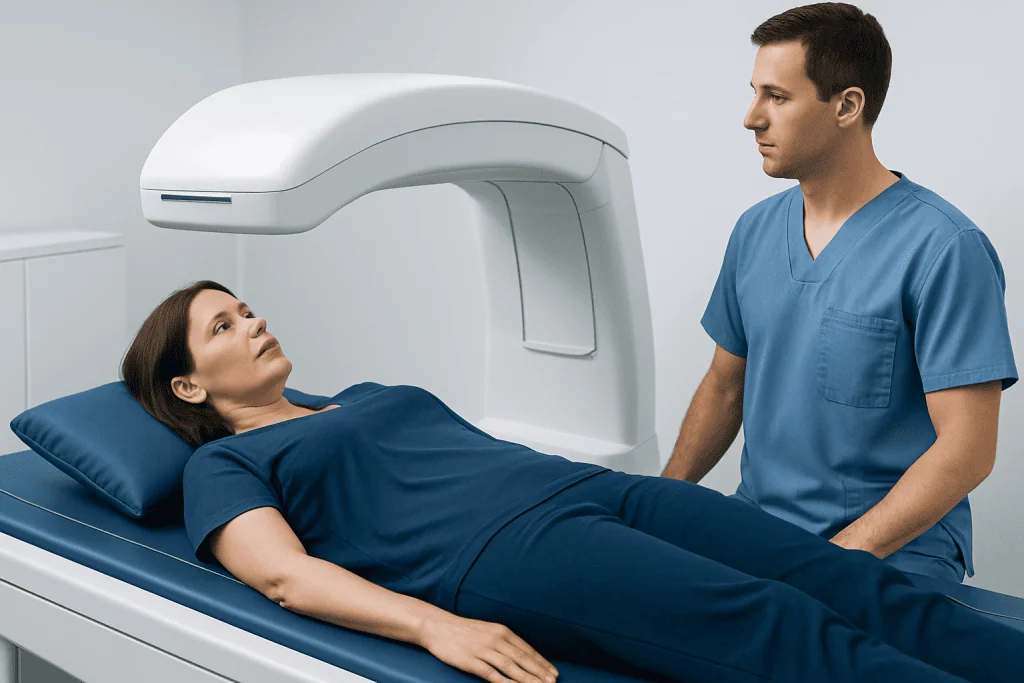
Patients often arrive assuming DEXA resembles the larger scans they have read about. It does not. There is no tunnel, no loud machine, no contrast injection and no need to hold your breath. You lie on an open, padded table while a scanning arm moves slowly above you. People who find MRI machines confining generally find DEXA easy.
The radiation dose is also very low: DEXA is among the lower-dose X-ray examinations in routine use. That is one reason it can be repeated periodically to monitor change over time, always at intervals a doctor considers justified.
DEXA answers one specific question: how dense is the bone? It does not show soft tissue, tumours, disc problems or joint damage. If your doctor needs anatomical detail, a different examination is chosen: our guides to MRI scans in Turkey and CT scan appointment days explain what those involve. It is normal for a bone-health work-up to include both DEXA and ordinary X-rays of the spine, because they answer different questions.
Planning your DEXA bone density scan in Turkey
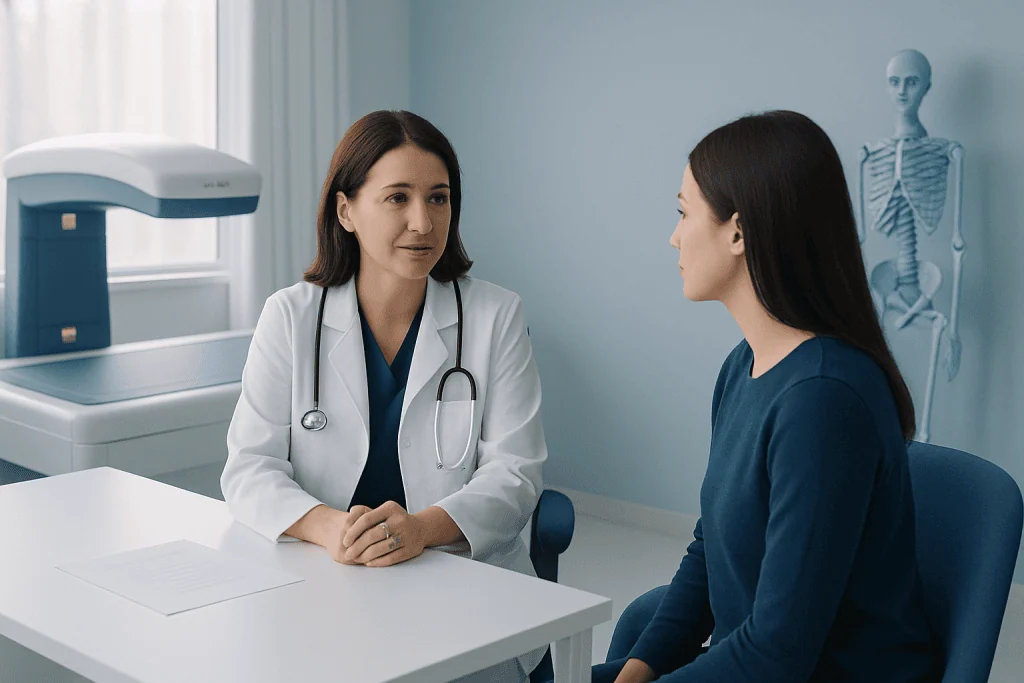
When a DEXA appointment is arranged for an international patient, the scheduling team usually asks for a few details in advance: your age, the reason for the scan, the dates of any previous DEXA examinations, your current medications, and whether you are or might be pregnant. These details determine the right type of appointment and whether a specialist reviewendocrinology, rheumatology, orthopaedics or gynaecology, depending on your situation, makes sense before or after the imaging.
A DEXA bone density scan in Turkey is straightforward to schedule, but the scan is rarely the whole story of the visit. Many patients combine it with blood tests, a physician consultation or a second opinion, and those steps have their own timing. Reports also take time to finalise. Build buffer into your itinerary rather than planning the scan as the last item before your flight.
The order of appointments matters more than most people expect. If the scan happens early in the trip, the report can be ready in time for a doctor to discuss it with you face to face before you leave. If it happens on your final day, the discussion may need to happen remotely. Our guide on preparing for blood tests, scans and pre-op checks at Acibadem covers how these multi-appointment days are usually structured.
Acibadem’s international patient services can assist with appointment coordination, interpreter arrangements, and practical guidance on getting between hotel and hospital. If you will need the report translated or formatted for a doctor at home, raise this before the appointment so the language and format can be agreed in advance rather than retrofitted afterwards.
How to prepare before the appointment
Preparation for DEXA is genuinely minimal, which is part of why it travels well. Wear comfortable clothing without metal around the waist and hips, zips, buckles, metal buttons and underwire can interfere with the image. If your clothing is unsuitable, you will simply be asked to change into a gown.
Bring your passport or ID, appointment confirmation, previous DEXA reports and images if you have them, any notes about fractures or bone surgery, and a written list of your medications and supplements. Calcium supplements are sometimes paused for a short period before the scan, because undissolved tablets in the digestive tract can affect spine measurements, but this is a decision for the imaging team, and you should follow the instructions you are given rather than changing anything yourself.
Tell the team if you have recently had imaging with contrast material, a nuclear medicine test or a barium study; these can temporarily affect DEXA accuracy, and the scan may simply be scheduled a little later. Also mention pregnancy or possible pregnancy, severe back or hip pain, difficulty lying flat, a hip replacement, previous spine surgery or any mobility limitation. None of these are obstacles: they change how the technologist positions you and which sites are measured, and staff plan better when they know beforehand.
If you are carrying prior imaging from home, it helps to have it organised before you fly. See our guide on flying to Turkey with recent scan results for how to prepare discs, files and reports so nothing is missing on the day.
What happens on the day
You check in, confirm your identity and usually complete a short form covering your medical history and risk factors. An interpreter can be arranged for registration, consent and questions, and it is always reasonable to ask staff to repeat or slow down an instruction.
In the scanner room, you lie on your back on a padded table. The technologist positions you for the areas being measured, most commonly the hip and lower spine, and may place a foam block under your legs to flatten the lower back for a clearer image. The scanning arm then passes slowly over you. Your job is simply to stay still and relaxed for the brief scanning periods. You will feel nothing; there are no needles and no enclosed space.
The whole visit is typically short, though registration, changing and any same-day consultation add time around it. Afterwards you can eat, walk, take taxis or public transport, and continue your day as planned, unless your doctor has arranged further tests or given you specific advice related to your wider condition.
Understanding T-scores, Z-scores and your report
Your report will usually include two figures for each site measured. The T-score compares your bone density with that of a healthy young adult; a T-score of −2.5 or lower is the internationally used threshold for describing osteoporosis, with values between −1 and −2.5 often described as low bone density, or osteopenia. The Z-score compares you with people of your own age and sex, and is the more relevant figure for younger patients.
These thresholds are definitions, not verdicts. The same score can lead to different recommendations depending on age, fracture history, medications and other risk factors, and doctors often combine the density result with structured fracture-risk assessment before suggesting anything. This is why the printed score should never be treated as a treatment decision on its own, interpretation belongs with a clinician who knows your background.
One technical point worth knowing: bone density measurements are most comparable when follow-up scans are done on the same machine, or at least the same manufacturer’s equipment, because scanners are calibrated differently. Keep a record of where and when each scan was performed and which device was used: your report usually states this. Future doctors will thank you for it.
Reports, images and follow-up at home
Before leaving Turkey, confirm three things: whether your report is final or preliminary, how you will receive digital copies, and whom your home doctor can contact with questions. If your doctor at home wants the underlying image files rather than just the written report, our guide on requesting DICOM images after a scan in Turkey explains how that works.
Ask for a clear written summary of findings and any recommended follow-up interval. Your doctor may discuss nutrition, vitamin D, exercise, fall prevention, medication options or further testing, but the right combination depends on your individual situation, and any decision about starting, stopping or changing a medication rests with the doctor treating you.
Step by step
- Gather your medical background. Collect previous DEXA reports with dates, fracture and surgery history, your medication and supplement list, and any recent relevant blood results. Having these ready when the appointment is arranged helps the team decide whether the scan should be paired with a specialist consultation.
- Confirm timing and location. Check the hospital site, arrival time, estimated visit length, and whether other departments are involved the same day. Allow extra time for registration, interpretation and Istanbul traffic.
- Follow the preparation instructions you are given. Wear clothing without metal near the waist and hips. Do not pause any prescribed medication or supplement on your own initiative, follow the imaging team’s instructions, and raise questions with them.
- Bring useful documents. Passport, appointment confirmation, medication list, and prior DEXA or X-ray reports. If you have had hip or spine surgery, bring the operation notes or implant details if available.
- Tell staff about special needs. Pregnancy possibility, mobility limits, pain when lying flat, hearing or vision needs, anxiety, language preference, all of these are easier to accommodate when mentioned in advance.
- Review the result with a doctor. Ask what the scores mean in the context of your history, whether follow-up is recommended, and after what interval a repeat scan would be informative.
- Collect everything before leaving. Confirm the report is final, obtain digital copies, note the scan date and the machine used, and agree how any pending results will reach you at home.
Your checklist
- Passport or national ID and appointment confirmation
- Previous DEXA reports, images or osteoporosis-related test results
- Current medication and supplement list, including calcium and vitamin D
- Notes about fractures, falls, spine surgery, hip replacement or implants
- Comfortable clothing without metal around the waist or hips
- Information about pregnancy possibility or recent contrast, nuclear medicine or barium studies
- Interpreter request or companion details if you need language support
- A plan for receiving reports and sharing them with your home doctor
Key takeaways
- A DEXA bone density scan in Turkey is a short, low-dose, non-invasive outpatient examination, no injections, no tunnel, no recovery time.
- Bring previous reports and a medication list; comparison over time is where DEXA is most valuable.
- Tell the team about pregnancy possibility, recent contrast or barium studies, implants, or difficulty lying flat.
- T-scores and Z-scores are definitions, not verdicts: a clinician interprets them against your full history.
- Schedule the scan early in your trip so results can be reviewed before you leave, and record where and on which machine it was done.
Frequently asked questions
How long does a DEXA bone density scan take?
The scanning itself is brief, typically a matter of minutes per measurement site, and the whole visit is an ordinary outpatient appointment. Allow extra time for registration, changing clothes if needed, interpreter support and any consultation arranged the same day.
Is a DEXA scan painful, and does it involve an injection?
No injections, no contrast material and no discomfort from the scan itself. You lie still on an open, padded table while the scanning arm moves above you. If back, hip or mobility problems make lying flat difficult, tell the technologist so positioning can be adjusted.
Do I need to fast before a DEXA scan?
Fasting is not normally required. The most common instruction relates to calcium supplements, which are sometimes paused shortly before the scan. Follow the specific instructions the imaging team gives you rather than adjusting anything on your own.
Can I fly home or continue my trip on the same day?
Usually, yes. DEXA has no recovery period, so most patients continue normal activities immediately. The practical constraint is the report rather than the scan, if you want to discuss the result with a doctor in person, leave enough time in your itinerary for that conversation.
Do I need a referral for a DEXA bone density scan in Turkey?
Requirements vary with your medical situation and how the appointment is arranged. When scheduling begins, the hospital confirms whether a referral, a specialist review or additional documentation is needed for your specific case.
Will I receive the report in English?
Report language and translation options can be confirmed when the appointment is arranged. If your home doctor needs a particular language or format, raising this before the scan makes the process smoother than requesting changes afterwards.
How often should a DEXA scan be repeated?
Bone density changes slowly, so repeat intervals are usually measured in years rather than months. The right interval depends on your first result, your risk factors and any treatment underway, and is set by your doctor. A recent previous scan may make a repeat unnecessary for now.
What is the difference between a T-score and a Z-score?
The T-score compares your bone density with that of a healthy young adult and is the basis for the standard osteoporosis definitions. The Z-score compares you with people of your own age and sex, which matters more for younger patients. Both need a clinician’s interpretation alongside your history.
Add us as a Preferred Source to see more of our trusted health content across Google Search, AI Overviews and Discover.

Update history
- PublishedJune 16, 2026
- Medical review approvedAugust 30, 2026
- Last content updateAugust 30, 2026
References2
- Bone density scan (DEXA scan): NHS nhs.uk
- Bone Density Scan: MedlinePlus medlineplus.gov
More Patient Guides
Sleep Apnea Testing in Turkey: What Happens During Your Evaluation
Sleep apnea testing in Turkey may include a consultation, overnight sleep study or home test, and a clear review of your results…

How to Organize Your Test Results Before Traveling to Turkey
Organize your test results before traveling to Turkey by sorting records, images, medicines and timelines so your Istanbul care team can review…

When Extra Tests Are Needed Before Treatment in Turkey
Extra tests before treatment in Turkey may be needed to confirm diagnosis, timing, and safety. Here is what you can expect in…

At Acibadem, How to Prepare for Blood Tests, Scans, and Pre-Op Checks
Blood tests, scans, and pre-op checks at Acibadem in Turkey help confirm you are ready for treatment and avoid delays on the…