

How to Prepare for General Anesthesia in Turkey

To prepare for general anesthesia in Turkey, share your full medical history with your care team early, follow your hospital's exact fasting instructions, review every medication and supplement with the anesthesiology team, and plan the day itself: documents, arrival timing, interpreter support, and who will be with you after discharge. Most of this can be organised before you fly, which makes the day of surgery far calmer.
You have a procedure booked, a flight to catch, and a list of instructions that mention fasting times, medication reviews and consent forms. If you are wondering what you are actually supposed to do the night before — or whether a morning coffee could cancel your surgery — this guide is for you. It walks through how to prepare for general anesthesia in Turkey step by step, from the paperwork you send before you travel to the person who takes you back to your hotel afterwards.
At a glance
- When to start preparing: One to two weeks before your procedure, earlier if you take regular medication
- The rule that matters most: Follow your hospital’s fasting instructions exactly — solids and liquids have different cut-off times
- What to bring: Passport, recent test results, a complete medication list, and your consent documents
- After the procedure: Plan for a responsible adult or transport support if the hospital advises it
- Who guides you: Your surgeon, the anesthesiology team, and the international patient coordinator
What it means to prepare for general anesthesia in Turkey
General anesthesia is a medically controlled state of unconsciousness. You are given anesthetic medicines — usually through an intravenous line to send you to sleep, then maintained with a continuous infusion or an inhaled anesthetic gas — and an anesthesiologist monitors your breathing, heart rate, blood pressure and oxygen levels throughout. What keeps you asleep is not one injection at the start but a steady, adjusted supply of anesthetic, managed in real time by a specialist who stays with you for the whole procedure. When the surgery ends, the medicines are stopped and you wake gradually in a monitored recovery area.
Preparing for it has two sides. The medical side is about giving the anesthesiology team an accurate picture of your health so they can plan safely. The practical side — and this is where international patients have more to organise — covers fasting, documents, arrival timing, language support and what happens in the first 24 hours after you wake up. When you prepare for general anesthesia in Turkey as a visitor, both sides run in parallel with your travel plans, so starting early makes a real difference.
At hospitals that treat international patients, including Acibadem, this preparation is usually coordinated through a pre-assessment process and a patient services team. You send your records ahead, the anesthesiology team reviews them, and any extra tests or questions are raised before you fly rather than on the morning of surgery. A separate guide covers how to prepare for your pre-anesthesia assessment in detail; the sections below cover everything around it.
The key medical details to confirm before you travel
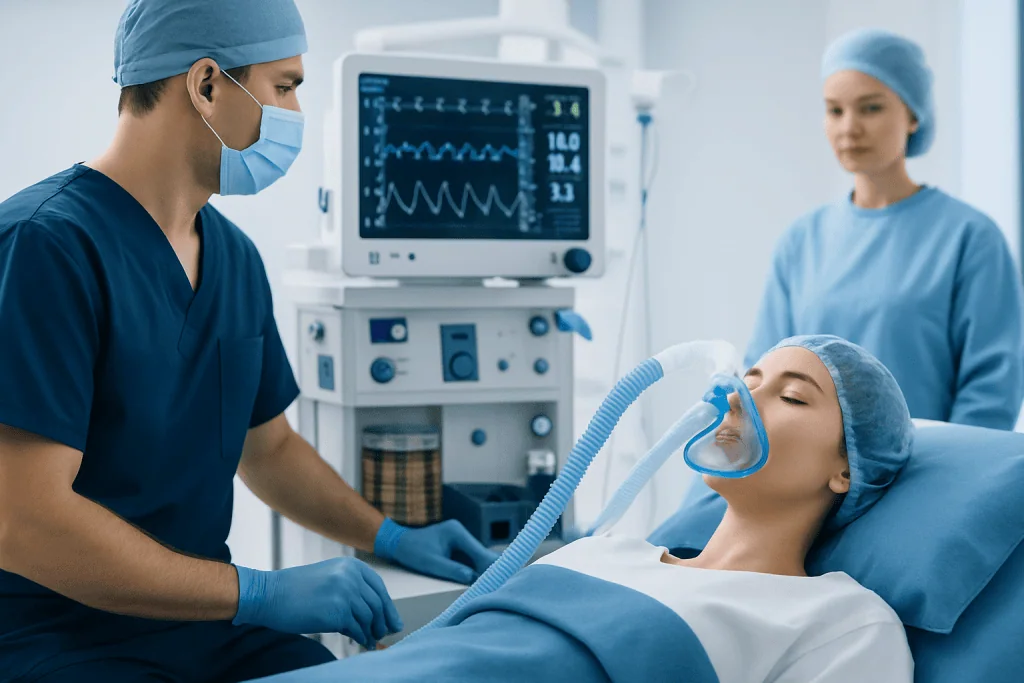
The anesthesiology team can only plan around what they know. As early as possible, send a complete medical summary: your diagnoses, previous operations, chronic conditions, allergies, and every medicine you take — including vitamins, herbal products, injections and over-the-counter tablets. Details that feel minor to you can matter to an anesthesiologist. Sleep apnea, reflux, loose teeth, a recent chest infection, smoking, and regular alcohol use all influence how anesthesia is planned and delivered.
If you have had problems with anesthesia before, put them in writing. That includes severe nausea and vomiting after a previous operation, a difficult intubation, slow waking, an allergic reaction, or any family history of anesthesia complications. These are exactly the things anesthesiologists want to know in advance, and none of them are embarrassing to mention — they are routine planning information.
Ask whether you need updated tests before the procedure. Depending on your age, health history and the planned treatment, the team may request blood work, an ECG, chest imaging or a specialist opinion. Do not assume that tests done months ago at home will be accepted; ask the coordinator which results are current enough and which need repeating. It is far easier to repeat a blood test at home than to discover a gap on admission day.
- Prepare a written medication list with names, doses and timings — the guide on how to prepare a medication list for treatment in Turkey shows a format that works well
- Include vitamins, herbal supplements, injections and anything bought without a prescription
- Bring copies of recent reports, translated into English where available
- Report any change in your health before you fly, however small it seems
One more point worth checking before travel: whether your procedure actually needs general anesthesia at all. Some treatments can be done under sedation or regional anesthesia instead, and the preparation differs. If you are unsure which applies to you, the comparison in sedation vs general anesthesia in Turkey explains how the two approaches differ and how the decision is made.
Fasting, medications, and the night before

Fasting is the single most important instruction you will receive. When you are under general anesthesia, the reflexes that normally keep food and liquid out of your airway are switched off. An empty stomach reduces the risk of stomach contents entering the lungs, which is why anesthesiologists take fasting cut-offs seriously and why a missed cut-off can delay or postpone a procedure.
The detail most patients get wrong is that solids and liquids have different rules. Typically you stop solid food several hours before anesthesia, while clear fluids — plain water, not milk, juice with pulp or coffee with milk — are often allowed until a later cut-off. But the exact times depend on your procedure, your health and the hospital’s protocol, so treat your written instructions as the only version that counts. If the instructions do not mention chewing gum, sweets or clear fluids specifically, ask. Guessing is the one thing you should not do here.
The same principle applies to medicines. Some should be taken on the morning of surgery with a small sip of water; others need to be paused or their timing adjusted. Which is which depends entirely on your situation, and only your treating team can tell you. This is especially true if you use blood thinners, diabetes medication, insulin, weight-loss injections, steroids, blood pressure tablets or heart medicines — categories where the plan is individual and where a written instruction from the hospital is worth requesting. Never stop or change a medicine on your own initiative before surgery.
For the evening before, keep the routine quiet and mechanical. Confirm your pickup or taxi time. Set out your documents and hospital bag. Remove nail polish and jewellery if you have been asked to. Charge your phone. Avoid alcohol, and if your team has asked you to stop smoking or using recreational substances before anesthesia, follow that instruction — both affect how anesthetic medicines behave and how your lungs cope afterwards. Then sleep as much as you reasonably can. A slightly nervous night is normal; the fasting clock, not perfect rest, is what the morning depends on.
What to pack and how to plan your hospital day
Keep your admission bag small and deliberate. You need your passport or ID, your hospital paperwork and consent documents, insurance or payment paperwork if relevant, your medication list, and any original test results the team asked you to bring. Wear loose, comfortable clothing that is easy to remove and put back on — front-opening tops and slip-on shoes make the day easier. If you want a tested packing approach, the guide on preparing a carry-on bag for treatment travel covers what belongs in the bag that stays with you.
Leave valuables at your hotel or with a companion unless the hospital tells you otherwise. If you use glasses, hearing aids, dentures, a CPAP machine, inhalers or mobility aids, mention them in advance and bring them — several of these matter directly to anesthesia care. A CPAP machine, for example, is something the team will want to know about because sleep apnea affects how you are monitored after anesthesia; dentures and loose teeth matter because of the airway equipment used while you are asleep.
Plan the whole day, not just the operation. Istanbul traffic is unpredictable, so build in a margin for the journey to the hospital. Confirm your check-in time, ask roughly how long your companion should expect to wait, and think through how you will get back to your accommodation. Acibadem hospitals support overseas patients with interpreters and coordination services, which takes much of the navigation off your shoulders — but the smoothest days belong to patients who confirmed the timings in advance rather than working them out on arrival.
Questions to ask your anesthesiology and surgical team
You do not need to understand the pharmacology. You do need to be completely clear on the practical instructions. Before the day, make sure you can answer these questions from your own notes:
- When exactly do I stop solid food, and when do I stop clear fluids?
- Which of my medicines do I take on the morning of surgery, and which do I hold?
- What time do I arrive, and where do I check in?
- Will I stay overnight, or is same-day discharge planned?
- Does the hospital require a responsible adult with me after discharge?
- Whom do I inform if my health changes before the procedure?
That last question matters more than most patients expect. A new fever, cough, vomiting bug, wheeze, or the possibility of pregnancy can change whether anesthesia goes ahead as planned, so hospitals ask patients to report any such change as soon as it appears — even the night before. Anesthesiology teams would always rather adjust a plan early than discover a problem at admission, and reporting a symptom is never treated as an inconvenience.
If language is a concern, request interpretation when the procedure is booked rather than on admission day. Consent forms, fasting instructions and discharge advice are exactly the documents you want to understand fully, and international patient teams at large Turkish hospitals, including Acibadem, routinely coordinate interpreters so that nothing important is signed or agreed through guesswork.
What recovery logistics to arrange in advance
Preparation does not end when you fall asleep. After general anesthesia, it is common to feel drowsy, mildly nauseated, forgetful or unsteady for a period, and hospitals typically advise against driving, working, drinking alcohol or signing important documents during the first 24 hours. What that period looks like in practice — the recovery room, managing nausea, returning to your room — is covered in the guide on what happens after general anesthesia in Turkey.
If you are returning to a hotel the same day, arrange a responsible adult to accompany you if the hospital advises it — and confirm that requirement before the procedure, not after. Set up your room so the first evening is easy: water within reach, light food if permitted, your regular medicines, and a phone charger by the bed. If you are travelling alone, say so early; hospitals that treat international patients have handled this situation many times, and there is a separate guide on preparing for discharge when you are recovering alone.
Before you leave the hospital, make sure you hold three things in writing: your discharge instructions, your medication plan for the coming days, and the contact route the hospital gives you for problems overnight. Good discharge paperwork answers the questions you will only think of at midnight, so read it before you leave rather than after.
Step by step
- Share your full medical history early. Send reports, your medication list, allergies and any previous anesthesia history as soon as the procedure is being planned. Early review gives the team time to request extra tests or specialist opinions before you travel.
- Confirm all fasting instructions in writing. Ask exactly when to stop solid food, milk, clear liquids and chewing gum. If any point is unclear, ask again rather than guessing — fasting rules exist for airway safety, not convenience.
- Review every medication and supplement with your team. Prescription medicines, injections, herbal products and vitamins all count. Some continue, some are re-timed, some are paused — but only your treating doctors decide which is which.
- Plan your arrival with a margin. Arrive in Turkey with enough time for pre-assessment, any required tests and a night of rest. A late-evening landing before an early-morning procedure leaves no room for anything to go wrong.
- Pack for admission and discharge together. ID, reports, phone, charger and essentials in one small bag; loose clothing; valuables left behind. Bring the devices you rely on — glasses, hearing aids, CPAP, inhalers.
- Arrange support for after anesthesia. Confirm whether a responsible adult must accompany you back to your hotel or stay overnight. Organising this in advance is far easier than improvising it in an unfamiliar city.
- Report any last-minute health change. A cold, fever, vomiting or new breathing symptoms can change the anesthesia plan, so hospitals ask you to flag them immediately — even hours before admission.
Your checklist
- Passport or government ID
- Hospital confirmation and consent documents
- Up-to-date medication and allergy list
- Recent test results and imaging reports
- Fasting instructions saved on your phone, in writing
- Comfortable, loose clothing and slip-on shoes
- Glasses, hearing aids, CPAP, inhalers or other devices you use
- Companion or transport plan for after discharge
- Interpreter request confirmed in advance if needed
Key takeaways
- Follow your fasting instructions exactly — solids and clear fluids have different cut-offs, and your written instructions override anything you read online.
- Tell the team about every medicine, supplement, allergy and previous anesthesia experience; the plan is built from what they know.
- Never change a medication yourself before surgery — the decision on what to take, hold or re-time belongs to your treating doctors.
- Plan the whole day: documents, arrival timing, interpreter support and the journey back, not just the procedure itself.
- Arrange the first 24 hours after anesthesia in advance, including a companion if the hospital advises one.
Frequently asked questions
Do you have to stop eating before general anesthesia?
Yes. An empty stomach reduces the risk of stomach contents entering your lungs while the anesthetic suppresses your normal protective reflexes. Your hospital will give you an exact cut-off time for solid food based on your procedure and health. Follow that time precisely — eating after the cut-off usually means the procedure is delayed for safety.
Can I drink water before general anesthesia?
Often, yes — many hospitals allow plain water and other clear fluids until a cut-off closer to the procedure than the one for solid food. But the exact rule varies by patient and protocol, so use only the times your own hospital gives you in writing. If your instructions do not mention water specifically, ask rather than assume.
What keeps you asleep during general anesthesia?
A continuous, carefully adjusted supply of anesthetic medicine — delivered through your intravenous line, as an inhaled anesthetic gas, or a combination of both. An anesthesiologist monitors your depth of anesthesia, breathing, heart rate and blood pressure throughout and adjusts the medicines in real time. When surgery ends, the anesthetic is stopped and you wake gradually in a monitored recovery area.
Can I take my regular medicines on the morning of surgery?
Some are taken with a small sip of water, others are paused or re-timed — and only your hospital can tell you which applies to you. This matters most for blood thinners, diabetes medicines, insulin, weight-loss injections, and blood pressure or heart medications. Ask for a written medication plan so there is no guesswork on the morning itself.
What should I tell the anesthesiologist before my procedure?
Everything relevant to how your body handles anesthesia: allergies, all medicines and supplements, smoking and alcohol use, sleep apnea, reflux, chronic conditions, loose teeth or dentures, the possibility of pregnancy, recent infections, and any previous problems with anesthesia — yours or in your family. None of it is judged; all of it helps the team plan safely.
Is it wise to fly to Turkey the day before having anesthesia?
Many patients travel shortly before treatment, but arriving with a margin is better. You may need pre-assessment appointments or updated tests, and a rested night before anesthesia makes the day easier. A very late arrival before an early procedure leaves no room if a flight is delayed or a test needs repeating.
Will I need someone with me after general anesthesia?
Often, yes — especially with same-day discharge. You may be drowsy, unsteady or slower to react for a period after waking, so hospitals commonly require a responsible adult to accompany you back to your accommodation. Confirm the exact requirement before the procedure day so you can arrange it in advance.
Which procedures in Turkey use general anesthesia?
General anesthesia is used across the full range of treatments international patients travel for — from general surgery and orthopaedic operations to dental, plastic and ophthalmic procedures, depending on the case. Whether your specific procedure needs general anesthesia, sedation or regional anesthesia is decided by your surgical and anesthesiology teams based on the operation and your health.
Add us as a Preferred Source to see more of our trusted health content across Google Search, AI Overviews and Discover.

Update history
- PublishedJune 25, 2026
- Medical review approvedAugust 31, 2026
- Last content updateAugust 31, 2026
References2
- General anaesthesia — NHS — nhs.uk
- General anesthesia — MedlinePlus Medical Encyclopedia — medlineplus.gov
More Patient Guides
How Long Does Anesthesia Last? Wear-Off Times by Type
Coming round from an operation, almost everyone asks the same two questions: when will my head feel normal, and how long is…

Flying to Turkey After a Recent Illness: When Is It Safe to Travel?
Flying to Turkey after a recent illness may be safe once you are medically stable and cleared to travel; plan airline support…
8 min read
Braces, Retainers, and Dental Work Before Surgery in Turkey: What to Tell Your Team
Braces, retainers and dental work before surgery in Turkey should be shared with your care team early to plan safe anaesthesia and…
8 min read
When Hospital Admission Happens the Day Before Treatment in Turkey
Hospital admission before treatment in Turkey usually includes registration, tests, consent and preparation; your care team confirms your exact schedule.
8 min read