

Oxygen Needs During Medical Travel to Turkey

Start planning three to six weeks before you fly. Ask your doctor for a medical summary stating your oxygen flow rate, get written airline approval for a portable oxygen concentrator with enough batteries, and arrange oxygen separately for transfers, your hotel and the days between appointments. Reconfirm everything before your return flight, because your needs may change after treatment.
Will the airline let you bring your oxygen device on board? Who arranges oxygen for the taxi, the hotel room and the days between appointments? These are the right questions, and they are best answered weeks before you fly, not at the check-in desk.
If you use oxygen at home, or your doctor thinks you may need it during travel, planning your oxygen needs during medical travel to Turkey is mostly a matter of sequence: your doctor documents what you need, the airline approves how you carry it, and everyone on the ground knows before you arrive. This guide walks through each step, flight clearance, batteries, airport assistance, transfers, hotel arrangements and hospital communication, and is honest about what can and cannot be arranged for you.
At a glance
- Best time to start: at least 3 to 6 weeks before travel; earlier if your route has connections or more than one airline
- Key document: a recent medical summary or fit-to-fly letter stating your oxygen flow rate and device type, ideally in English
- Most widely accepted device: an airline-approved portable oxygen concentrator (POC) with enough batteries for the flight plus a safety margin
- Usually not allowed in the cabin: personal compressed oxygen cylinders, check the operating airline for every segment
- Plan beyond the flight: oxygen for airport time, transfers, the hotel, appointment days and the return journey are all separate arrangements
- Who does what: your treating doctor confirms medical need, the airline medical desk controls in-flight rules, and Acibadem International Patient Services can help with hospital-side planning
Why oxygen planning needs special attention
Medical travel is tiring even when everything goes to plan. Long airport walks, queues, delays, changes in cabin pressure and unfamiliar accommodation all add load. If you use supplemental oxygen, have reduced lung capacity, get breathless on exertion or are recovering from illness or surgery, that load matters more, which is why oxygen needs during medical travel to Turkey deserve attention before you book anything, not after.
Planning does not mean your journey is unsafe. It means you are removing surprises. The useful way to think about it is in segments: home to the departure airport, check-in and security, waiting at the gate, the flight itself, arrival in Turkey, the transfer to your hotel or hospital, daily movement between appointments, and the journey home. Each segment needs its own answer to one question: where does my oxygen come from during this part?
One point worth stating plainly: aircraft cabins are pressurised to the equivalent of moderate altitude, not sea level. The oxygen available in cabin air is lower than on the ground. Most travellers never notice. If you have significant heart or lung disease, severe anaemia, a recent chest infection or recent chest surgery, you may need more oxygen in flight than you use at home, or may need oxygen in flight even if you use none at home. Only your doctor can assess this, and it is one of the main reasons to start early.
No single organisation manages the whole chain. Your local doctor confirms your medical oxygen needs, the airline approves the in-flight arrangement, your accommodation or an oxygen supplier covers ground time, and the hospital team in Turkey manages oxygen inside clinical settings. Your job, usually with a companion or coordinator helping, is to make sure the segments join up. If you also travel with other health equipment, our guide to using battery-powered medical devices during travel to Turkey covers the overlapping rules on batteries and chargers.
Start with a clear medical oxygen summary
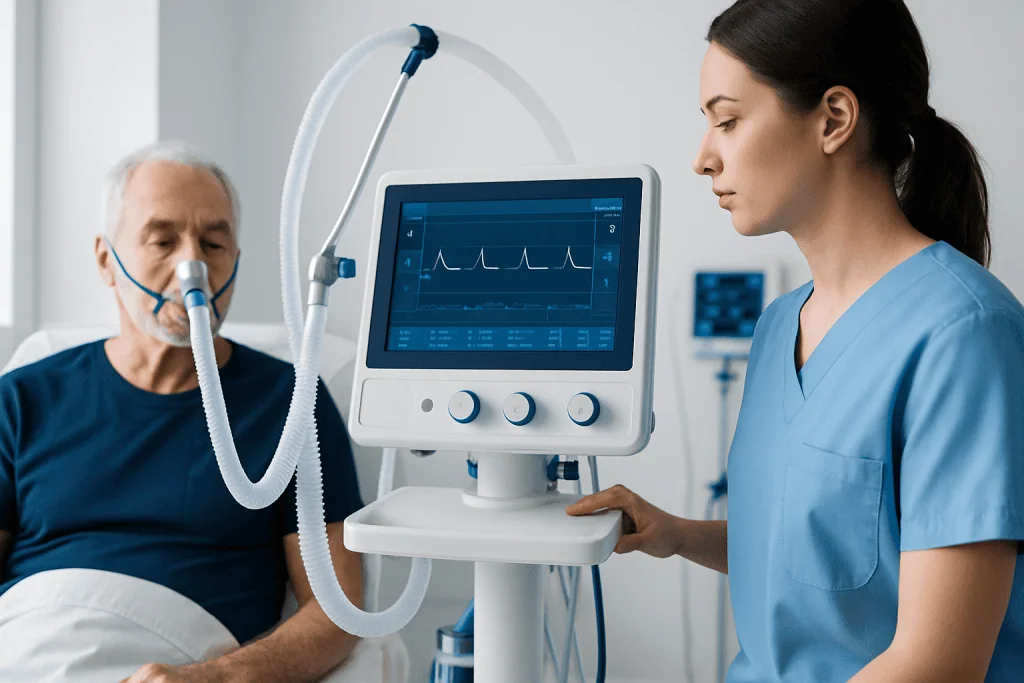
Before you contact any airline, ask your treating doctor for a current medical summary. It should state, in plain terms: your relevant diagnosis, your usual oxygen flow rate, when you use oxygen (continuously, at night, on exertion), what device you use, and whether you are stable enough to travel. If your doctor is willing to write a fit-to-fly opinion, keep it with your travel documents and carry a photographed copy on your phone.
Airlines and airport medical teams tend to want practical answers rather than a full clinical history. Expect questions such as: can you sit upright for the whole flight, walk short distances, manage stairs, cope without oxygen for a brief security screening, and operate your own portable concentrator? Write these answers down with your doctor so you are not improvising them on a form later.
Be honest with yourself about recent changes. If you have been in hospital recently, if your breathlessness is new or worsening, or if your oxygen settings changed in the last few weeks, tell your doctor before booking. It is far easier to adjust a travel date than to be refused boarding, or to become unwell mid-journey. If you manage other long-term conditions alongside your lungs or heart, our guide on managing chronic conditions during medical travel covers the wider preparation, and keeping your regular medicines on schedule matters just as much as the oxygen itself. Any decision about starting, stopping or changing a medicine before you fly belongs to your treating doctor, not to a checklist.
Airline approval and portable oxygen concentrators
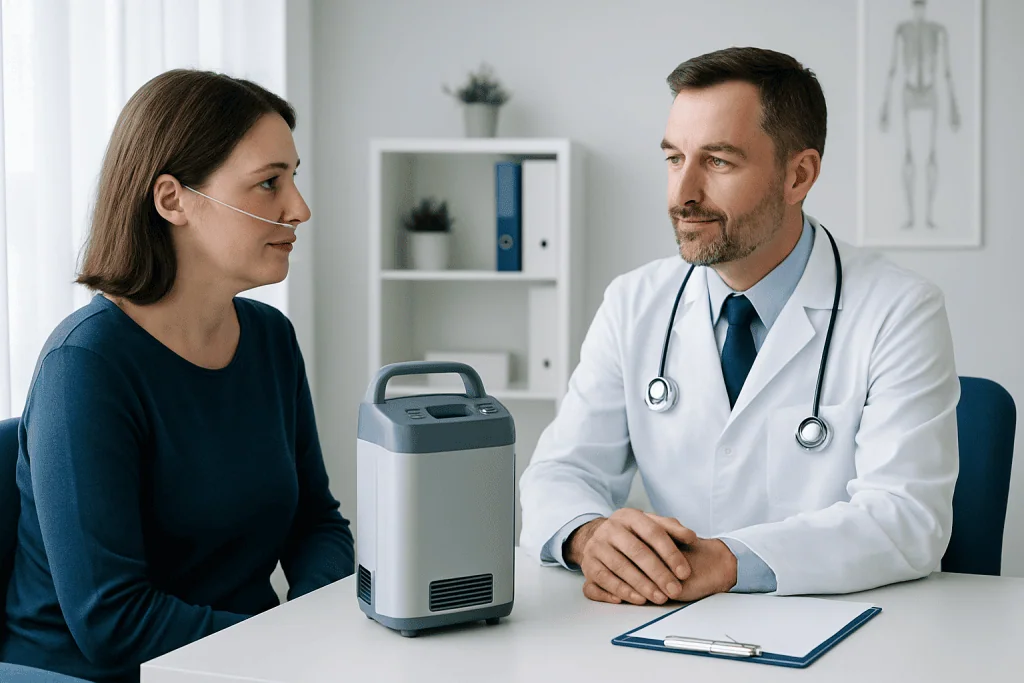
Most airlines do not allow passengers to bring personal compressed oxygen cylinders into the cabin. What many do allow is an approved portable oxygen concentrator, a POC, which draws in cabin air and concentrates the oxygen from it. Rules differ by airline, aircraft type and route, so never assume approval carries over from a previous trip. Contact the airline’s medical or special assistance desk before booking if you can, or immediately after booking if your dates are fixed.
Ask the airline four things in writing:
- Which POC models are accepted on your specific flights, and whether pulse-dose and continuous-flow use are both permitted.
- Which medical forms are required, who signs them, and the deadline for submitting them.
- The battery requirement, most airlines require battery power for the full scheduled flight time plus a stated safety margin for delays, boarding and taxiing, and many do not allow you to rely on aircraft power sockets.
- Whether special assistance (wheelchair, help through the terminal, priority boarding) needs a separate request, and how to make it.
Batteries deserve particular care. Lithium batteries for medical devices normally travel in hand luggage with the terminals protected, never in checked bags. Carry your prescription or medical letter in English if possible, along with the device manual or a label showing the POC model and battery specification, because security and cabin crew may ask to see them.
If your route involves more than one airline, each carrier can run its own approval process. Codeshare flights are the classic trap: the airline that sold your ticket may not operate the aircraft, and it is the operating airline’s rules that apply. Confirm the operating carrier for every segment and keep all written approvals together, ideally in the same folder as your passport and medical letters. Our guide on keeping medical documents safe during treatment travel has a practical system for this.
Planning oxygen from door to door
The flight is usually the most regulated part of the journey, but rarely the longest. Delays are normal in international travel, so build your plan around a buffer, not around the ideal timetable. A realistic door-to-door day can run twelve hours or more once you count the drive to the airport, check-in, security, gate waiting, the flight, immigration, baggage and the transfer at the other end. Your batteries, and your stamina, need to cover all of it.
Airport special assistance is worth requesting even if you are unsure you need it. You can ask the airline in advance for wheelchair support, help with long walking distances, assistance during connections and support to the boarding gate. The service is provided at the airport but must usually be booked through the airline. If walking makes you breathless, this single request can transform the day.
For arrival in Turkey, decide whether a standard taxi is enough or whether you need a pre-arranged transfer with room for your device, your companion, luggage and any mobility equipment. If you are arriving directly for a hospital admission, or your condition is fragile, tell Acibadem International Patient Services before you travel; the team can help coordinate arrival communication and advise on transfer planning that fits your care schedule. Season matters too, summer heat and winter conditions both change how tiring the ground journey feels, so factor the weather into your transfer and rest plans.
Hotels, accommodation and daily movement in Turkey
If you will stay in a hotel or serviced apartment, confirm the practical details before arrival: reliable electrical sockets near the bed, lift access, the walking distance from your room to the lobby, the smoking policy, room ventilation and whether staff can help with luggage. If you use a stationary concentrator, ask the oxygen supplier, arranged in advance through a trusted provider, exactly how it will be delivered, installed and serviced, and what happens if your flight is delayed past the delivery window.
Do not plan to buy or rent oxygen equipment after you land unless this has already been organised. Availability, device compatibility, prescription requirements and language barriers can all cause delays that you do not want to absorb while unwell. Get delivery arrangements confirmed in writing, with the address, a named contact and a time window.
Plan your daily movement realistically. Istanbul and other Turkish cities involve traffic, hills, large buildings and busy public spaces. Leave generous time between transfers, appointments, meals and rest. Where possible, share your oxygen and mobility needs with the international patient team before your itinerary is finalised, so appointment timing and on-site assistance can be built in rather than improvised. A working phone connection helps here too, so make sure you can reach your coordinator, driver or hotel at any point in the day.
Hospital visits and communication with your care team
On appointment days, bring your device, charger, a spare battery, tubing or cannula and your medical documents. Tell reception or your international patient coordinator that you use oxygen, even when it seems obvious. This helps staff seat you in the right waiting area, cut unnecessary walking and alert the clinical team quickly if you feel unwell.
At Acibadem hospitals, international patients can be supported by interpreters and patient service teams who deal with the added logistics of travelling for care. They can pass your accessibility needs to the clinical team, help sequence a busy day of imaging, pre-operative checks or consultations, and make sure everyone treating you knows about your oxygen use.
Keep one distinction clear: hospital oxygen, in-flight oxygen and hotel oxygen are three separate arrangements. Oxygen inside a clinical setting is managed by the hospital team, but you still need your own plan for the journeys between locations and for non-clinical time. And if your oxygen requirement changes during your stay, up or down, ask the treating team what that means for your return flight before you touch your ticket.
Return travel and unexpected changes
Plan the journey home as carefully as the journey out. After treatment, your stamina, oxygen requirement and mobility may not be what they were when you arrived. Before flying, ask your treating team whether your fit-to-fly letter needs updating, whether your oxygen plan should change, and whether you should allow more recovery time or request additional airport assistance.
Airline medical clearance is often issued for a specific date, route and condition. It may not carry over automatically if your return flight changes. Contact the airline again if your flow rate changes, if you need a different device setting, if you were hospitalised unexpectedly, or if you now need a stretcher or medical escort: these arrangements take time and are not available on every flight.
Know the emergency route before you need it. In Turkey, 112 is the national emergency number for ambulance services. If you or your companion notice chest pain, severe or sudden breathlessness, confusion, blue lips or any rapid deterioration, call your local emergency number or go to the nearest emergency department now. Do not wait to reach your coordinator, your airline or anyone else first: those conversations come after emergency care, never instead of it. Our guides on emergency contacts and urgent care in Turkey and using ambulance services in Turkey explain how the system works so you can act without hesitation.
For non-urgent problems, a failing battery, a delayed oxygen delivery, a device fault, a calm written plan prevents panic: your companion’s number, hotel reception, your transfer provider, the airline assistance desk, your travel insurer and your hospital international patient contact, all in one place on paper and on your phone.
Step by step
- Speak with your doctor before booking. Confirm you are stable enough to travel and ask whether your oxygen needs may change in flight. Request a medical summary or fit-to-fly letter stating your flow rate, device type and any mobility limits.
- Choose flights with simpler logistics. Prefer direct routes or generous connection times. Tight connections are hard when you need wheelchair assistance, battery changes or rest.
- Contact the airline medical desk early. Confirm accepted POC models, required forms and the battery rule in writing. Keep the approval with your passport and a copy on your phone.
- Arrange oxygen for ground time. Cover the journey to the airport, arrival in Turkey, transfers and your accommodation. Never assume airport or hotel oxygen exists without prior written arrangement.
- Tell Acibadem International Patient Services what you need. Share your oxygen use, wheelchair needs and stamina limits before arrival so appointment timing, interpreter support and hospital navigation can be planned around them.
- Pack a protected oxygen travel kit in hand luggage. Device, batteries with terminals protected, charger, plug adaptor, tubing, cannulas, prescription, medical letters and a simple written schedule of your settings.
- Reconfirm before flying home. If your treatment, symptoms or settings changed in Turkey, check with your treating team first, then update the airline and your travel insurer, especially after any hospitalisation or change in mobility.
Your checklist
- Recent medical summary or fit-to-fly letter, in English if possible
- Written airline approval for your portable oxygen concentrator, for every flight segment
- Enough charged batteries for the full flight time plus the airline’s required safety margin
- Device manual or label showing the POC model and battery specification
- Spare cannula, tubing, filters and the small accessories you normally use
- International plug adaptor and charger packed in hand luggage
- Wheelchair or special assistance request confirmed with the airline
- Hotel or accommodation oxygen arrangements confirmed in writing
- Acibadem International contact details and your appointment schedule
- Travel insurance documents and a written emergency contact list, including 112 in Turkey
Key takeaways
- Start oxygen travel planning three to six weeks ahead, and earlier for multi-airline routes needing separate clearances.
- Personal oxygen cylinders are usually barred from the cabin; an airline-approved portable concentrator with strict battery cover is the standard route.
- Batteries belong in hand luggage with terminals protected, never in checked bags.
- Your plan must cover the whole door-to-door journey, hospital, in-flight and hotel oxygen are three separate arrangements.
- Tell your hospital coordinator about oxygen and mobility needs before arrival, and reconfirm fitness to fly if anything changes during your stay.
Frequently asked questions
Can I put my oxygen concentrator in my checked luggage?
The lithium batteries must not go in checked luggage, airlines require them in the cabin with terminals protected. Some airlines allow the concentrator unit itself to be checked with batteries removed, but if you need oxygen during the flight the device obviously must travel in the cabin with you, approved in advance. Confirm the exact rule with the operating airline for each segment.
Can you go on a plane if you need oxygen?
Many people who use oxygen fly, but it requires advance medical clearance from the airline and a doctor’s confirmation that you are fit to travel. Cabin air contains less oxygen than air at ground level, so your in-flight requirement may be higher than at home. The usual route is an airline-approved portable oxygen concentrator with documented settings and sufficient batteries.
Can you go on holiday if you need oxygen?
Often yes, with planning. The same building blocks apply as for medical travel: a doctor’s assessment that you are stable, airline clearance for your device, oxygen arranged for your accommodation, and a written plan for equipment problems. Start several weeks ahead and get every arrangement confirmed in writing before you commit to dates.
Is it safe to go to Turkey for medical procedures?
No destination is automatically safe or unsafe: it depends on your condition, how stable you are, the procedure planned and how well the journey is prepared. If you use oxygen, the honest answer is that safety comes from your doctor confirming you are fit to travel, from proper airline clearance, and from a door-to-door oxygen plan. Discuss your individual situation with your treating doctor before booking anything.
Can I bring my own oxygen cylinder on a flight to Turkey?
Most airlines do not allow personal compressed oxygen cylinders in the cabin, although policies vary. Many accept approved portable oxygen concentrators instead, provided medical clearance is completed in advance. Confirm directly with the operating airline for every flight segment, in writing.
Will the airline provide oxygen if I request it?
Some airlines offer medical oxygen on selected routes, but many now expect passengers to bring an approved portable concentrator instead. Availability, forms and deadlines differ widely between carriers. Contact the airline medical desk well before travel, never leave this to airport check-in.
How many batteries should I bring for my oxygen concentrator?
Airlines typically require battery power for the full scheduled flight plus a safety margin for delays, boarding, taxiing and connections. The exact requirement varies, so ask your airline for its written rule. Carry batteries in hand luggage with terminals protected, and remember you may not be permitted to use aircraft power sockets.
What if my oxygen needs change after treatment in Turkey?
First, the urgent case: if you ever experience sudden severe breathlessness, chest pain, confusion or blue lips, call your local emergency number or go to the nearest emergency department now, do not wait to contact your coordinator or the airline. For non-urgent changes, tell your treating team and your international patient coordinator as soon as you notice them. You may need an updated fit-to-fly assessment, revised airline clearance, different transfer arrangements or more recovery time before flying home. Do not assume your original return plan still applies if your condition has changed.
Add us as a Preferred Source to see more of our trusted health content across Google Search, AI Overviews and Discover.

Update history
- PublishedJune 8, 2026
- Medical review approvedSeptember 13, 2026
- Last content updateSeptember 12, 2026
References2
- MedlinePlus: Traveling with breathing problems medlineplus.gov
- CDC Travelers' Health: Travelers with Chronic Illnesses wwwnc.cdc.gov
More Patient Guides

Airport Wheelchair Assistance: How to Book It for a Medical Trip
Airport wheelchair assistance is free, it exists at every commercial airport, and airlines are legally required to provide it, yet half…

Travelling With a Stoma: Flights, Supplies and Airport Screening
Traveling to Turkey with a stoma is manageable with the right supplies, airport screening plan, and recovery support in Istanbul or Turkey.

Mobility Aids in Turkey: Renting a Wheelchair, Walker, or Crutches
Mobility aids in Turkey can be rented through medical suppliers, pharmacies, and hospital-linked services in Istanbul and other cities.

Traveling to Turkey with Food Allergies or Special Diet Needs
Traveling to Turkey with food allergies or special diet needs is manageable with planning, translated allergy cards, and hotel and hospital support…