

PET-CT, MRI, or CT in Turkey: Which Scan Might You Need?

CT gives fast structural images and suits many urgent and routine questions. MRI uses no X-rays and shows soft tissue, brain, spine, joints, in fine detail, but takes longer. PET-CT adds metabolic information to CT anatomy and is used mainly in cancer assessment and staging. Your doctor chooses based on the clinical question being asked, not on which scan sounds most advanced.
Your doctor has mentioned PET-CT, MRI, or CT, and you are now trying to work out what each one actually does and why one might be recommended over another. That is a sensible question, and the answer is simpler than the acronyms suggest.
This guide explains what each scan shows, why doctors choose one over another, and what the practical side looks like if you are planning imaging in Turkey as an international patient, from records and preparation rules to how long to allow around the appointment itself.
At a glance
- Best for: Understanding why PET-CT, MRI and CT answer different medical questions
- Who this helps: International patients planning imaging or a specialist visit in Turkey
- Main difference: CT shows structure quickly, MRI shows soft tissue in fine detail, PET-CT adds metabolic activity to CT anatomy
- Radiation: CT and PET-CT involve ionising radiation; MRI does not
- Trip planning: Bring your referral, previous images and written reports, medication list, allergy details and passport
- Support available: Interpreters, appointment sequencing and records coordination through international patient services
PET-CT, MRI, or CT in Turkey: how doctors choose between them
All three are imaging tests, but they were built to answer different questions. If you are weighing up PET-CT, MRI, or CT in Turkey, the single most useful thing to understand is that the choice starts with a clinical question, not with a machine. A doctor deciding between them is usually asking: which part of the body needs checking, how urgent is the answer, and do we need to see structure, soft-tissue detail, or biological activity?
Broadly: CT is chosen when the team needs a fast, clear look at bones, lungs, the abdomen, blood vessels or possible internal bleeding. MRI is chosen when soft-tissue detail matters most, brain, spinal cord, nerves, joints, pelvis, liver and similar structures. PET-CT is different in kind: it combines a CT with a tracer-based scan that shows how metabolically active tissues are, which is why it appears mainly in cancer assessment, staging and treatment monitoring.
It is worth saying plainly that the “best” scan is not the most advanced-sounding one. A scan is good when it answers the specific question safely and clearly. Sometimes one scan is enough. Sometimes a specialist compares two types of imaging to build a complete picture: an MRI of a joint alongside an X-ray, or a PET-CT after a suspicious finding on a standard CT. Neither situation means anything went wrong with the first test; it usually means the question changed or became more specific.
For patients travelling from abroad, the decision often happens in two stages. A referring doctor at home may name the scan in the referral, or a specialist in Turkey may review your existing records first and then confirm which test is actually needed. Both routes are normal, and the second sometimes avoids a scan you did not need.
What a CT scan is usually used for
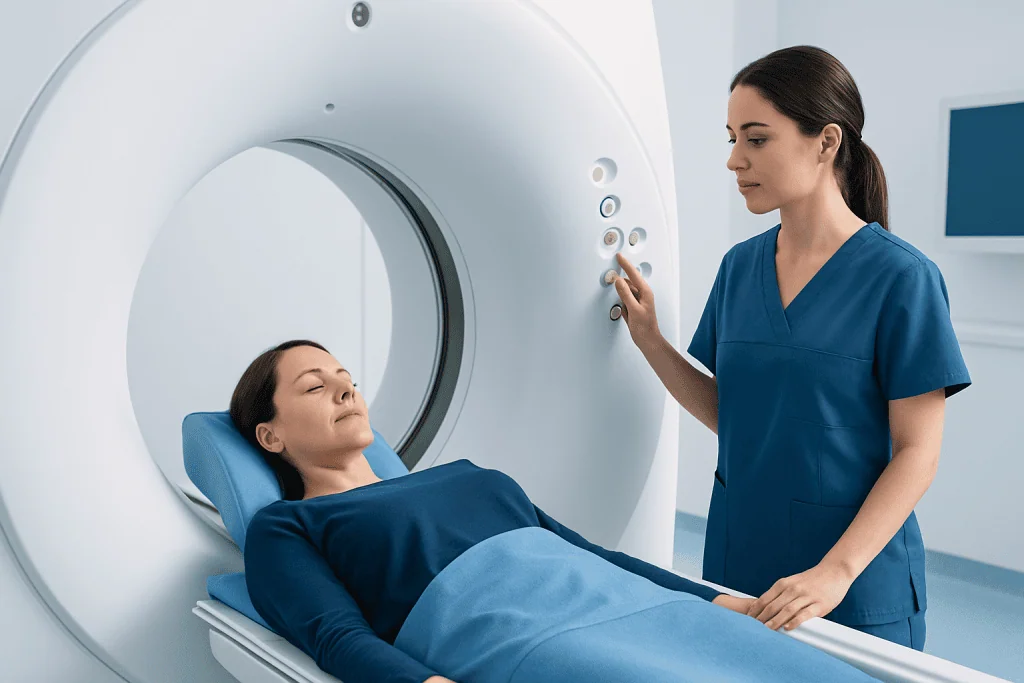
A CT scan uses X-rays to build detailed cross-sectional images of the body, think of it as a stack of thin slices rather than a single flat picture. It is fast, widely available and works well for many body regions at once, which is why it is a workhorse in emergency assessment, chest and lung imaging, abdominal pain investigation, trauma, bone and sinus problems, and many routine diagnostic pathways.
You may be asked about contrast dye. In some CT examinations, an iodine-based contrast agent is given by injection or by mouth to make blood vessels, organs, inflammation or masses easier to distinguish. Before contrast is used, the team will typically ask about allergies, kidney function and certain medications, and may check a recent blood test. This is routine safety screening, not a sign of concern about you specifically.
Logistically, CT is often the easiest of the three scans to fit into a trip. The scan itself usually takes minutes. Your total time at the hospital can still stretch to a few hours if the visit includes registration, a blood test, contrast preparation and waiting for a same-day specialist review, so treat the appointment as a half-day rather than a fifteen-minute errand.
What an MRI is usually used for

MRI uses a strong magnetic field and radio waves instead of X-rays, which means it involves no ionising radiation. Its strength is soft-tissue detail. It is frequently requested for the brain, spinal cord and nerves, muscles, ligaments and joints, the pelvis and reproductive organs, and certain abdominal structures such as the liver and bile ducts.
Because of that detail, MRI is a common choice when symptoms have persisted, when a neurological question needs answering, after sports injuries, or when an earlier scan raised a question that needs clarifying rather than repeating. Some MRI examinations use a gadolinium-based contrast agent; whether that is needed depends on the question being asked, and the radiologist’s protocol will specify it.
The practical trade-off is time and comfort. An MRI commonly takes somewhere between twenty minutes and an hour depending on the body region and the sequences requested. The machine is noisy, you will usually be offered ear protection, and you need to lie still inside a relatively enclosed tunnel. If you find confined spaces difficult, or you have implants, a pacemaker, cochlear implants, hearing aids, metal fragments or previous surgery involving hardware, flag this before the appointment. Some implants are MRI-compatible and some are not, and the radiology team needs exact details, ideally the implant card or operation report, to plan safely.
What a PET-CT is usually used for
A PET-CT combines two examinations in a single session. The CT component maps anatomy. The PET component uses a small amount of radioactive tracer, most commonly a glucose-based tracer, to show which tissues are metabolically active. Because many cancers use glucose faster than surrounding tissue, PET-CT is often requested in oncology: to characterise a suspicious finding, to stage a known cancer, to check how treatment is working, or to look for recurrence. It also has roles in some infection, inflammation and cardiac questions.
PET-CT differs from the other two scans in its rhythm. After the tracer is injected, you usually rest quietly for a set period, often around an hour, while it distributes through the body, and only then are the images taken. Preparation is also stricter: fasting for several hours beforehand is typical, blood sugar is often checked on arrival, and you may be asked to avoid strenuous exercise the day before. If you have diabetes, tell the team when the appointment is arranged, because the timing of the scan and your usual routine need to be planned together with your treating doctor.
Because PET-CT is a specialised examination, it is rarely booked in isolation. Doctors generally want to see pathology reports, recent blood results, previous imaging and details of any recent treatment before confirming that PET-CT is the right next step, recent chemotherapy, surgery or radiotherapy can affect when the scan should be done. If you are travelling for this scan, having those documents organised in advance is the single biggest thing you can do to keep the schedule realistic.
The three scans side by side
| CT | MRI | PET-CT | |
|---|---|---|---|
| What it shows | Structure: bones, lungs, organs, vessels | Soft-tissue detail: brain, spine, joints, pelvis | Anatomy plus metabolic activity |
| Radiation | Yes (X-rays) | No | Yes (CT plus tracer) |
| Typical scan time | Minutes | Roughly 20–60 minutes | Scan is short, but tracer uptake adds an hour or more beforehand |
| Contrast or tracer | Sometimes iodine-based contrast | Sometimes gadolinium-based contrast | Always a radioactive tracer; CT contrast sometimes added |
| Common preparation | Sometimes fasting; kidney check if contrast planned | Metal and implant screening; occasional fasting | Fasting, blood sugar check, rest before and after injection |
| Common uses | Emergency assessment, chest, abdomen, bones, sinuses | Neurological, spinal, joint and pelvic questions | Cancer characterisation, staging, treatment response |
Treat this table as orientation, not a menu. Radiology protocols vary by hospital and by clinical question, and the examination you receive is defined by the radiologist’s protocol, not by the general category.
Radiation, contrast and safety questions
CT and PET-CT involve ionising radiation; MRI does not. That fact alone does not make MRI the automatic first choice, because the tests answer different questions and doctors weigh the expected benefit of the information against the exposure. When a CT or PET-CT is recommended, it is because the clinical value of the answer is judged to justify it. If radiation exposure concerns you, for example, because you have had several scans recently, raise it with the doctor who ordered the test; the total imaging history is part of the decision.
Contrast agents and tracers have their own screening steps. Iodine-based CT contrast prompts questions about allergy and kidney function. Gadolinium-based MRI contrast has its own checks. The PET tracer dose is small and leaves the body over hours, mostly through urine; departments usually advise drinking fluids afterwards and keeping some distance from pregnant women and small children for the rest of the day. Pregnancy, or the possibility of pregnancy, should always be mentioned before any of these scans, since it changes what can be done and how. If you are pregnant and planning treatment abroad, the guide on travelling to Turkey while pregnant covers the wider planning questions.
What the price of a scan depends on
This guide does not quote figures, because a meaningful price only exists once a doctor has seen the referral and defined the examination. What you can usefully know in advance is what moves the number. The scan type matters: PET-CT involves a tracer with a short shelf life, which makes it a more resource-intensive examination than a standard CT. The body region and protocol matter: a single-region MRI is a different examination from a multi-region study with contrast. Contrast agents, sedation for patients who cannot tolerate the scanner, same-day specialist consultation, and whether the report includes comparison with your previous imaging can all change what is quoted.
Hospitals normally issue a written quotation after a doctor has reviewed the referral and confirmed the protocol. A quote given before that review is at best an estimate of a typical case. When comparing quotes, check what each one includes, scan only, or scan plus report, images on disc or digital link, contrast, and consultation, because the cheapest headline figure is not always the most complete one.
How to prepare for imaging in Turkey
The most valuable preparation is not guessing which scan you need. It is arriving with a complete file. That means the referral or consultation note, a short medical summary, previous scan images on disc or digital link, the written radiology reports that go with them, pathology and blood results where relevant, a current medication list, allergy information, and your passport. Images without their written reports are much less useful than the two together, so bring both.
Whether older imaging can be reused depends on how recent it is and what it shows; the guide on how current your imaging needs to be explains the usual expectations. It is also normal for some tests to be repeated on arrival even when you brought results, protocols differ between hospitals, and doctors sometimes need up-to-date values before contrast or treatment. The reasons are set out in the guide on why blood tests and scans may be repeated in Turkey.
Preparation instructions differ by scan and by protocol, so confirm them for your specific appointment rather than relying on general rules. Fasting may apply to CT or MRI when contrast is planned, and almost always applies to PET-CT. Ask the ordering doctor whether your usual medications should be taken as normal on the day: that decision belongs to your treating doctor, particularly for diabetes medication around a PET-CT. Mention early any history of kidney problems, contrast reactions, implants or previous surgery involving hardware.
If your imaging is part of a wider treatment plan, it helps to understand how it fits into the pre-treatment sequence; the guides on pre-travel tests before treatment in Turkey and what happens if you need extra tests after arriving cover the two ends of that sequence.
What the day of the scan is usually like
On arrival you complete registration and safety screening. For MRI this includes a detailed metal and implant questionnaire. For CT and PET-CT you may be asked about contrast allergies, kidney health, recent laboratory results and, where relevant, pregnancy status. You will usually change into a gown or be asked to remove anything metal, belts, jewellery, underwired clothing, hearing aids.
During the scan, the main task is to stay still and follow simple instructions, such as holding your breath for a few seconds during a CT of the chest or abdomen. CT is quick. MRI is longer and noisy, but you hold a call button and are monitored throughout. PET-CT is mostly quiet waiting: injection, a rest period while the tracer distributes, then the imaging itself.
Afterwards, most patients continue their day normally, though this depends on whether contrast or sedation was used, sedation means you should not drive and generally should not be alone immediately afterwards, so plan for a companion on the scan day if sedation is likely. Before you leave the department, confirm three things: when the written report will be ready, whether a specialist will explain the findings to you or whether the report goes to your referring doctor, and how you will receive the images and report digitally so you can share them after you return home.
Fitting the scan into your trip
If you are comparing PET-CT, MRI, or CT in Turkey as part of trip planning, three variables shape the schedule: the medical question, the sequence of appointments, and the buffer you leave around them. A standalone CT can often fit into a short visit. An MRI needs a longer scheduling window and more patience on the day. A PET-CT should be treated as a full day: preparation, tracer, rest, scan, and often a reporting delay before results are discussed.
Reasonable questions to settle before booking flights: will one visit cover consultation, imaging and result review, or should you plan for two or three days? Does the protocol require fasting or a recent blood test? Can your previous imaging reduce repeat testing? Is a same-day departure realistic, or would a next-day flight remove pressure from the schedule? In Istanbul and other large Turkish cities, traffic is genuinely unpredictable, so build travel time into the imaging day rather than around it.
Where you have the scan also depends on which departments your case needs; imaging that feeds into a surgical or oncology plan is usually done where those teams work. The overview of which Acibadem hospital city and campus may fit your treatment needs explains how cases are matched to campuses. Acibadem’s international patient services coordinate interpreters, appointment sequencing and medical records for patients travelling from abroad, which matters most when imaging and specialist review need to land within the same short stay.
Step by step
- Start with the reason for the scan. Ask your doctor what question the scan needs to answer. This explains why CT, MRI, or PET-CT was recommended and how urgent the timing is.
- Gather your previous medical records. Collect earlier scan images, the written reports that accompany them, laboratory results, pathology documents and a medication list. Complete records reduce duplication and speed up decisions.
- Confirm preparation instructions for your specific examination. Ask about fasting, contrast, blood tests, implant screening and pregnancy precautions, and ask the ordering doctor whether your usual medicines should be taken as normal on the day.
- Plan enough time in Turkey. An imaging appointment can involve registration, blood work, contrast or tracer preparation and a same-day consultation. Avoid booking return travel tightly around the imaging day, especially for PET-CT.
- Flag any special circumstances early. Claustrophobia, mobility needs, language preferences, allergies, kidney history, implanted devices and difficulty lying flat all affect scheduling and preparation, and are easiest to handle in advance.
- Confirm how and when results are shared. Before leaving the hospital, ask when the written report will be ready, who will explain it, and whether images and reports will be provided digitally for doctors at home.
Your checklist
- Passport or ID
- Doctor referral or consultation note
- Previous scan images and their written reports
- Pathology and lab results if relevant
- Current medication list
- Allergy information and kidney history
- Details of implants, pacemakers or metal devices (implant card if you have one)
- Comfortable clothing without metal parts
- Your coordinator’s contact details
Key takeaways
- CT, MRI and PET-CT are different tools for different diagnostic questions; none is universally superior.
- MRI offers the finest soft-tissue detail and uses no X-rays; CT is fast and versatile; PET-CT shows tissue activity, mostly in oncology pathways.
- PET-CT is the most demanding to schedule: fasting, tracer preparation and a rest period make it a full-day appointment.
- Prices depend on scan type, body region, contrast, sedation and what the quote includes: a reliable figure follows a doctor’s review of your referral, not the other way round.
- Complete records, images plus written reports, sent ahead of travel do more to smooth the trip than anything else you can prepare.
Frequently asked questions
Which is better: PET-CT, MRI, or CT?
None is universally better; each serves a different purpose. CT is often used for quick structural imaging, MRI for high-detail soft tissue, and PET-CT for metabolic activity alongside anatomy. The right choice depends on the clinical question your doctor is trying to answer, and sometimes two scans are compared to build a complete picture.
How much does a PET-CT, MRI, or CT cost in Turkey?
There is no single answer, because the price depends on the scan type, the body region, whether contrast or a tracer is used, whether sedation is needed, and what the quote includes, scan only, or scan plus report, images and consultation. A reliable written quotation is normally issued after a doctor has reviewed the referral and confirmed the exact protocol. Treat any figure quoted before that review as an estimate.
Do all of these scans use radiation?
No. CT and PET-CT involve ionising radiation, while MRI uses magnetic fields and radio waves instead of X-rays. When CT or PET-CT is recommended, it is because the expected value of the information is judged to justify the exposure. If you have had several scans recently, mention this to the doctor ordering the test, as your imaging history is part of the decision.
Will I know which scan I need before I travel to Turkey?
Sometimes yes, particularly if your referring doctor has named the scan in a clear referral. In other cases a specialist reviews your existing records first and then confirms whether CT, MRI, or PET-CT is the most useful next step. Having your images, written reports and results organised in advance makes that review faster either way.
Can I use my previous scans instead of repeating imaging?
Sometimes. If the images are recent, of good quality and accompanied by their written reports, they may be enough. In other situations doctors recommend repeat imaging because protocols differ between hospitals or because up-to-date information is needed before treatment. Always bring both the images and the written reports, not just one or the other.
How long should I stay in Turkey for an imaging appointment?
It depends on whether you need only the scan or also a specialist review, blood tests and follow-up planning. A standalone CT may fit a short visit. MRI needs a longer window on the day, and PET-CT should be treated as a full day, with the report often following later. If your case is complex, leaving an extra day is safer than planning a same-day departure.
What if I am claustrophobic or have an implant?
Tell the hospital before the appointment, especially for MRI. Some implants are compatible with MRI and some are not, so the radiology team needs exact details: the implant card or operation report is ideal. If enclosed spaces are difficult for you, advance notice lets the team plan the most manageable approach, which in some cases includes sedation arranged in advance.
Add us as a Preferred Source to see more of our trusted health content across Google Search, AI Overviews and Discover.

Update history
- PublishedJuly 8, 2026
- Medical review approvedSeptember 13, 2026
- Last content updateSeptember 12, 2026
References2
- MRI scan: NHS nhs.uk
- CT scan: NHS nhs.uk
More Patient Guides
Sleep Apnea Testing in Turkey: What Happens During Your Evaluation
Sleep apnea testing in Turkey may include a consultation, overnight sleep study or home test, and a clear review of your results…

How to Organize Your Test Results Before Traveling to Turkey
Organize your test results before traveling to Turkey by sorting records, images, medicines and timelines so your Istanbul care team can review…

When Extra Tests Are Needed Before Treatment in Turkey
Extra tests before treatment in Turkey may be needed to confirm diagnosis, timing, and safety. Here is what you can expect in…

At Acibadem, How to Prepare for Blood Tests, Scans, and Pre-Op Checks
Blood tests, scans, and pre-op checks at Acibadem in Turkey help confirm you are ready for treatment and avoid delays on the…