

Weather and Seasonal Packing for Treatment Travel to Turkey
Pack for the season and the city first, then for the procedure. Istanbul is cool and wet in winter and humid in summer; coastal cities run milder, inland cities more extreme. Whatever the month, prioritise layers, front-opening clothing, slip-on shoes, and keep documents and medicines in your carry-on. Hospital interiors are climate-controlled all year, so a light extra layer is useful even in August.
Two questions decide most of your suitcase: what will the weather be doing in the city where you are treated, and what will you actually be able to put on by yourself afterwards? They have different answers, and this guide works through both, season by season, and procedure by procedure.
Weather and seasonal packing for treatment travel to Turkey is not complicated, but it rewards specificity. Istanbul in February and Antalya in July call for different cases, and a patient flying home after abdominal surgery packs differently from one attending a two-day diagnostic visit. Below you will find what each season asks of you, what belongs in your carry-on regardless of the month, and how the practical side of an Acibadem journey fits around it.
At a glance
- Topic: Seasonal, weather-based packing for medical travel to Turkey, not a medical procedure
- Purpose: To arrive prepared for the climate, the hospital environment and the recovery period
- Anaesthesia: Not applicable to packing; it depends entirely on your planned procedure
- Hospital stay: Set by your treatment plan; pack for the hospital and hotel phases separately
- Estimated recovery: Varies by treatment; the first days after a procedure shape most packing choices
- Return travel: Your physician confirms when flying home is appropriate, never book against that
- Seasons covered: Winter, spring, summer and autumn, with regional differences across Turkey
- Suitable department: International Patient Services alongside the relevant medical specialty
- International patient support: Interpreters, airport transfers, accommodation guidance, appointment coordination and remote follow-up
Weather and seasonal packing for treatment travel to Turkey: the basics
Turkey spans several climate zones, so “what is the weather like in Turkey” has no single answer. Istanbul sits between two seas: winters are cool and wet, typically between 3°C and 10°C with frequent rain and occasional short-lived snow, while summers are warm and humid, often around 28°C or above. Ankara, inland on the Anatolian plateau, is more extreme, winters regularly drop below freezing and summers are hot and dry. Coastal cities such as Izmir and Antalya have mild, rainy winters and long, hot summers that can pass 35°C in July and August.
The second climate you will live in is constant: hospitals, hotels, airports and transfer vehicles are climate-controlled all year, usually to a mild indoor temperature. This is why layering is the single most useful principle in weather and seasonal packing for treatment travel to Turkey. A light cardigan or zip-up top earns its place in your bag in every month, because you will move repeatedly between a Turkish summer pavement and an air-conditioned corridor, or between a cold Istanbul street and a warm ward.
The third factor is the treatment itself. Dressings, drains, splints, swelling and simple post-anaesthetic tiredness all change what you can comfortably wear and carry. Good packing sits at the intersection of season, city and procedure.
When is it recommended?
Start thinking about packing as soon as your treatment dates are being discussed, before flights are booked, not after. Documents, imaging on disc or USB, prescription paperwork and any mobility equipment take longer to organise than clothing does, and they are the items you cannot buy in Turkey if forgotten.
Revisit the list after your preliminary medical evaluation, once the expected length of stay, pre-operative tests and first control appointment are confirmed. An outpatient diagnostic visit needs a light bag; a surgical journey with a hospital stay and a hotel recovery period needs a plan for three distinct phases, admission, ward and recovery weeks. Seasonal packing matters most when your journey includes surgery, anaesthesia, wound care, compression garments, or travel with children, elderly companions or a chronic condition.
Who is a good candidate?
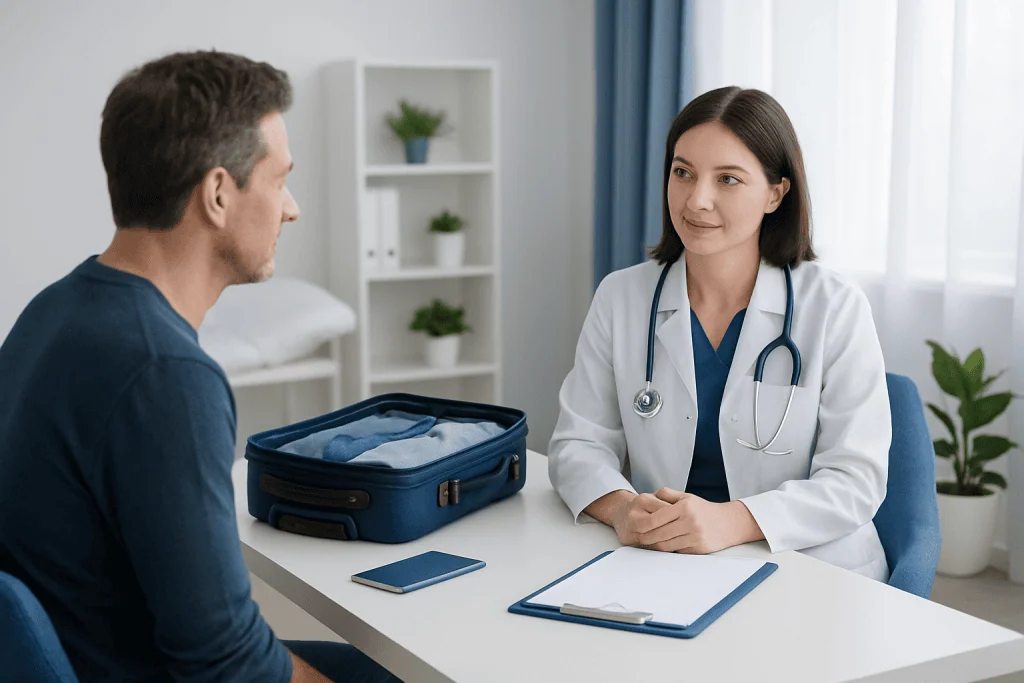
Every international patient benefits from packing deliberately, but some benefit more than most. If you will have limited mobility after a procedure, need to avoid lifting, or will wear dressings, drains, braces or compression garments, your clothing choices directly affect how easily you manage each day. Front-opening tops, soft waistbands and slip-on shoes turn awkward routines into simple ones.
Companions should pack for their own role too: comfortable clothes for waiting periods, a notebook for instructions, chargers, snacks, and copies of the key contact details and addresses. If you live with a chronic illness, use an implanted device, follow a fixed medication schedule or have allergies to medications, adhesives, latex or antiseptics, these facts belong in your pre-travel medical information: they influence both what you bring and what the hospital prepares for you. Whether and when you are fit to travel is always a physician’s decision, made on medical evaluation rather than on any packing list.
Turkey’s seasons, city by city
Use this as a starting framework, then adjust for your destination city and the month of travel. Guidance on how the season itself can influence recovery plans is covered separately in how weather can affect recovery plans in summer or winter.
| Season | Typical conditions | Pack |
|---|---|---|
| Winter (Dec–Feb) | Istanbul 3–10°C, frequent rain, wind off the Bosphorus, occasional snow. Ankara often below freezing. Coastal cities milder, around 10–15°C, but wet. | A warm, waterproof coat that is easy to take on and off, non-slip waterproof shoes, layers that open at the front, a compact umbrella, warm socks. |
| Spring (Mar–May) | Changeable everywhere. Mornings can be cool, afternoons warm; showers arrive with little warning. | Layers above all: a light rain jacket, breathable tops, one warmer layer for evenings. |
| Summer (Jun–Aug) | Istanbul warm and humid, often 28°C and above. Antalya and Izmir hot, frequently past 35°C. Strong sun through the middle of the day. | Loose, breathable fabrics in natural fibres, a hat and sunglasses if compatible with your procedure, and a light layer for air-conditioned interiors. |
| Autumn (Sep–Nov) | September still feels like summer in most cities; October is a mild shoulder month; by November, rain and cooler air return, especially in Istanbul. | Layers again, pack for both halves of the season, adding waterproofs the later you travel. |
If your dates fall at a seasonal boundary, late October is a common example, pack for the colder, wetter end of the range. Being slightly warm is easy to fix; being cold and wet on a hospital transfer day is not.
What to pack for surgery in Turkey
Surgical packing is about what your body will tolerate afterwards, not fashion. After facial or head-and-neck procedures, tops that button or zip at the front, or have wide necks, avoid pulling anything over a swollen or dressed area. After abdominal, breast or gynaecological procedures, soft elastic waistbands and loose dresses or trousers keep pressure off the treated area. After orthopaedic procedures, think about what one hand, or one leg, can manage: slip-on shoes with grip, trousers wide enough to pass over a brace, tops that do not require lifting your arms high.
Some teams advise specific compression garments, supports or supplies for particular procedures; if so, they will tell you during planning whether to bring them or whether they are provided. A fuller item-by-item list, from toiletries to chargers, is set out in our practical packing list for hospital and recovery.
Season still applies on top of all this. A winter discharge outfit should be warm without being heavy or hard to put on: a cape-style coat or an oversized zip-up beats a fitted parka. A summer discharge outfit should breathe, while still covering treated skin if your team has advised keeping it out of the sun.
Documents and medicines: what goes in the carry-on
Checked luggage goes missing; carry-on bags do not. Keep in the cabin with you: passport and any visa paperwork, appointment confirmations, hospital address and contact details, medical reports and imaging, prescriptions, insurance documents where applicable, and emergency contacts. Carry both printed and digital copies: a phone that runs out of battery at the airport should not take your medical history with it.
Pack regular medicines in their original packaging, with the prescription or a doctor’s letter, in quantities that cover your planned stay plus a sensible margin for delays. Reasonable personal quantities of common medicines are generally acceptable to bring into Turkey; controlled or strong prescription medicines need supporting documentation, and the rules are worth checking against current guidance before you fly. The detail, what to declare, how to document injectables and refrigerated medicines, and what pharmacies can and cannot dispense locally, is covered in travelling to Turkey with prescription medicines. Decisions about starting, stopping or adjusting any medicine before a procedure belong to your treating doctor, never to a packing list.
Hospital stay and discharge day
Bring less to the ward than you think you need. Essentials are: phone and charger, glasses, hearing aids, device cards for any implanted equipment, a small toiletry kit and one comfortable layered outfit. Leave valuables at the hotel or at home; if a companion is travelling with you, they can hold anything non-essential. Before procedures involving anaesthesia, the team will give instructions about fasting, jewellery, nail polish, contact lenses and dentures: those instructions override anything general.
Wards are kept at a steady temperature regardless of the season outside, so a light cardigan, socks and a loose robe cover most situations from January to August. For discharge day, lay out clothes that will not rub against incisions, dressings or splints, and that match the weather you will actually step into. Before leaving, make sure you understand your medication schedule, wound care steps, bathing and activity limits, follow-up time and the warning signs listed in your discharge paperwork; the interpreter service exists precisely so that nothing in those documents stays unclear.
Packing for the recovery weeks
The early recovery period is when packing choices pay off or fail. What that period looks like depends on your treatment, anaesthesia, age and general health: your physician’s instructions always outrank general travel advice, but the practical shape of it is broadly similar.
| Timeframe | What packing needs to support |
|---|---|
| First 24 hours | Rest and minimal effort: easy clothing within reach, medications organised, water, a charged phone and your discharge instructions to hand. |
| First week | Control visits and hotel rest: loose outfits, comfortable shoes, weather protection for the trip between hotel and hospital, items that make lying or sitting for long periods easier. |
| Weeks 2–4 | Growing independence, within limits: activity, lifting, sun exposure and travel timing still follow physician advice, not the calendar. |
| Months 1–3 | For some procedures, ongoing restrictions, garments or remote follow-up; keep relevant supplies and paperwork accessible after you return home. |
Useful additions for the hotel phase: a small pillow for positioning in bed or on transfers, slip-on shoes, entertainment that works lying down, and a bag light enough to manage without strain. In winter, non-slip soles matter: Istanbul’s pavements are steep and wet. In summer, plan around the midday heat and keep treated skin shaded if your team has advised it.
What to avoid
Avoid any plan that requires you to haul heavy luggage after a procedure. One case with wheels beats two bags; agree in advance who handles documents and luggage if you travel with a companion, and use the transfer support available if you travel alone. Avoid tight clothing, stiff waistbands, high heels and accessories that press on treated areas; after facial procedures, hats, scarves and sunglasses may need to wait until your doctor confirms they are safe against sensitive sites.
Be careful with the pharmacy shelf and the hotel minibar of skincare. Your discharge instructions define what may be applied to treated skin and what may be taken alongside your prescribed medicines; anything outside that list is a question for your doctor, however familiar the product looks. Finally, avoid overpacking, leave room in the case for reports, prescribed supplies and a comfortable outfit for the flight home.
How cost fits in
Packing does not change your medical fees, but season can affect the travel side of the budget: flights and hotels are scarcer and pricier around Turkish summer holidays and peak tourist months, so shoulder seasons often give more flexibility. Medical costs themselves are shaped by diagnosis, treatment type, consultations, tests, imaging, anaesthesia, hospital stay, medications and follow-up needs.
A written quotation typically defines what is included, planned hospital services, physician services for the procedure, standard pre-operative tests, anaesthesia where applicable, and the expected hospital stay. Items commonly outside a quotation include flights, accommodation, companion expenses, extended hotel stays, additional tests requested after evaluation, special garments, medications after discharge and care for unrelated conditions. Read the inclusions line by line, because every treatment pathway is different.
Planning the journey around the season
Build slack into the schedule. Return flights should sit comfortably after the expected travel clearance, not against it, because plans can change after in-person examination or pre-operative tests. Winter travellers should also allow for weather-related flight disruption, which is more common between December and February.
Check your insurance position before booking: standard travel policies and medical-travel cover behave very differently, and the distinctions are explained in what international patients should check about travel insurance. If someone is coming with you, their flights, accommodation and role during your recovery deserve their own plan, see bringing a companion to Turkey for treatment. Wheelchair assistance at airports, companion beds and special room needs are all easier to arrange when they are known before arrival rather than on the day.
Why choose Acibadem
Acibadem International coordinates the practical side of treatment travel so that the medical side stays in focus. The international patient team helps with appointment scheduling, interpreter services, airport transfers, accommodation guidance and communication with the relevant medical department: the pieces that feel hardest when you are recovering in an unfamiliar country.
The division of roles is deliberate. The medical team evaluates your condition and recommends appropriate care; the international patient team makes the journey around that care organised and understandable. Neither replaces the other, and no packing list replaces either. What good preparation does is remove friction: you arrive dressed for the season, carrying the right documents, wearing clothes your recovery can live with.
Medical review and disclaimer
This guide has been reviewed by the Acibadem International medical team. It provides general information about weather, seasonal packing and practical preparation for treatment travel to Turkey.
It does not replace a medical consultation, diagnosis, treatment plan or travel clearance from a qualified physician. Individual needs differ with condition, procedure, medications, mobility, allergies, age and recovery expectations.
Suitability for treatment and travel must be confirmed by physician evaluation, and the instructions given by your doctor and care team always take priority over general guidance of this kind.
Step by step
- Initial contact. You share your treatment interest, preferred dates, destination city and practical needs such as interpreter support, mobility assistance or companion travel.
- Medical record submission. You send relevant reports, results, imaging, medication lists and photos if requested, which also clarifies what documents and items to bring.
- Preliminary medical review. The relevant department reviews your information and outlines possible treatment pathways, expected stay and any preparation that affects packing.
- Treatment plan and quotation. You receive the proposed plan and its written inclusions, including any garments, supplies or documents to prepare before travel.
- Travel planning. You book flights and accommodation around appointment dates, the expected recovery period and physician guidance on return travel.
- Arrival. You land with documents and medicines in your carry-on; transfer support can be arranged through international patient services.
- In-person consultation. Your physician examines you and confirms whether the proposed treatment remains suitable; plans can change at this stage.
- Pre-operative tests. Where required, blood tests, imaging and anaesthesia assessment are completed before proceeding.
- Treatment. You receive the confirmed procedure, therapy or diagnostic service, bringing only essential items to the hospital.
- Hospital stay. You recover under supervision; layered clothing, chargers, glasses and approved personal items make this period easier.
- First control. Your follow-up appointment covers wound checks, treatment review and next steps.
- Discharge and travel clearance. Your physician confirms discharge instructions and advises when flying is appropriate; do not fly earlier than recommended.
- Remote follow-up. After returning home, you may share updates, photos or reports as advised so progress can be monitored from a distance.
Your checklist
- Passport valid for your dates, plus visa documents if required
- Appointment confirmation, hospital address and Acibadem International contact details
- Medical history summary, current diagnosis and relevant reports
- Medication list with doses and schedules, medicines in original packaging
- Allergy information: medications, foods, latex, adhesives, antiseptics
- Previous surgery and anaesthesia history, including any complications
- Test results, blood work, pathology reports and imaging files on disc or USB
- Photos of the treatment area if requested during online evaluation
- Insurance or payment paperwork where applicable
- Seasonal layers, front-opening tops, soft waistbands and non-slip slip-on shoes
- Phone, charger, plug adapter, glasses, hearing aids and essential devices
- Emergency contacts and companion details if you are not travelling alone
Key takeaways
- Turkey has four real seasons and several climate zones, pack for the month and the city, not for “Turkey” in general.
- Layers solve the biggest problem: moving between seasonal weather outdoors and climate-controlled hospitals, hotels and transfers indoors.
- Documents, imaging and medicines in original packaging travel in the carry-on, never in checked luggage.
- After surgery, front-opening tops, soft waistbands and non-slip slip-on shoes matter more than anything else in the case.
- Leave space for reports and prescribed supplies, and never book return flights tighter than your physician’s travel guidance allows.
Frequently asked questions
Is Tylenol allowed in Turkey?
Tylenol is a brand of paracetamol (acetaminophen), which is legal in Turkey and widely stocked in pharmacies under local brand names. Reasonable personal quantities of common over-the-counter medicines are generally accepted in original packaging. Whether any painkiller is appropriate around your procedure is a decision for your treating doctor, not something to settle from a shelf.
Is Turkey high risk right now?
Risk assessments change, so rely on official sources rather than a static guide. The UK Foreign Office and the US State Department publish continuously updated travel advice for Turkey by region. Most international patients travel to major cities such as Istanbul, Ankara and Izmir; check the current advisory for your nationality before booking and again shortly before flying.
What should I pack for surgery in Turkey?
Front-opening or wide-neck tops, trousers or dresses with soft waistbands, non-slip slip-on shoes, a light layer for climate-controlled wards, your documents and medicines in your carry-on, plus any garments or supports your team has specified for the procedure. Season then adjusts the outer layer: waterproof and warm in winter, breathable and sun-conscious in summer.
What should I beware of as a medical traveller in Turkey?
Practical things, mostly: steep, wet pavements in winter, strong midday sun in summer, big temperature gaps between outdoors and air-conditioned interiors, carrying prescription medicines without documentation, and return flights booked too tightly against expected travel clearance. Building margin into the schedule removes most of these problems.
How does the weather in Turkey affect my packing list?
It sets the outer layers. Istanbul winters are cool and wet, summers warm and humid; inland cities run colder in winter and hotter in summer; the coast is milder year round. Spring and autumn change quickly, so layering is the safest approach in almost every month.
Should I bring all my regular medications?
Bring them in original packaging with prescription details, in your carry-on, in quantities covering your stay plus a margin for delays, and tell the medical team about every medicine and supplement you use. Any change to what you take is your treating doctor’s decision.
How long should I stay in Turkey after treatment?
It depends on your treatment, test results, recovery progress and the timing of your first control appointment. Your physician advises when flying is appropriate, and return travel should be planned with room to spare rather than against the earliest possible date.
Can I buy recovery items in Turkey if I forget something?
Basics such as toiletries, clothing and umbrellas are easy to buy in Turkish cities. Do not rely on buying essential medicines, medical documents, imaging or specialised garments locally: those need to travel with you, and anything procedure-specific is best confirmed during pre-travel planning.
Add us as a Preferred Source to see more of our trusted health content across Google Search, AI Overviews and Discover.

Update history
- PublishedJune 22, 2026
- Medical review approvedSeptember 13, 2026
- Last content updateSeptember 12, 2026
References2
More Patient Guides

HoLEP in Turkey: How It Compares With TURP and What Recovery Involves
HoLEP in Turkey treats enlarged prostate tissue with laser enucleation; learn how it compares with TURP, recovery, travel and follow-up.
Porcelain Veneers in Turkey: Who Is Suitable and How Many Visits Are Needed?
Porcelain veneers in Turkey can enhance tooth shape and colour in two visits for suitable patients after a personalised dental assessment.

How to Prepare for a Sedation Procedure in Turkey
Prepare safely for a sedation procedure in Turkey with guidance on fasting, medicines, travel, recovery and follow-up.
Treatment Delays in Turkey: What Happens If Tests or Recovery Change Your Schedule
Treatment delays in Turkey can happen if tests or recovery change your plan. Learn how to manage appointments, travel, accommodation and follow-up.