Eyebrow Transplant
Eyebrow transplant restores sparse, thin, or missing eyebrows by implanting hair follicles from a donor area for a fuller, natural-looking brow shape.
Quick answer
An eyebrow transplant moves individual hair follicles, usually taken from the scalp, into the brow area, where they grow as real eyebrow hair. It is performed under local anaesthetic, typically using FUE extraction and single-hair placement at very flat angles. Transplanted hairs shed in the first weeks, then regrow gradually over several months, and need regular trimming because they keep their scalp-hair growth behaviour.
Eyebrow Transplant: What It Is and Why People Consider It
An eyebrow transplant moves living hair follicles, usually taken from the scalp, into the eyebrow area, where they establish a blood supply and grow as real brow hair. It is a surgical hair restoration procedure performed under local anaesthetic, and it is designed for people whose brows are naturally thin, have thinned over time, or are partly or completely missing after injury, over-plucking, medical treatment or a skin condition. Unlike pencils, powders, gels or cosmetic tattooing, the result is growing hair rather than a surface effect.
Eyebrows are small features with a disproportionate effect on the face. They frame the eyes, anchor facial expression and contribute to how balanced, alert or rested you appear. When part of the brow is missing, many people feel that their face no longer reflects how they see themselves. Some spend years recreating a brow line each morning with makeup. Others avoid photographs, feel self-conscious in social settings, or worry that their expression reads as tired, stern or asymmetrical. These are common and legitimate reasons to look seriously at surgical restoration.
Interest in the procedure has grown considerably, and many people research having an eyebrow transplant in Turkey specifically, because the country has a long-established hair restoration field that treats international patients routinely. If you are weighing that option, the planning section further down this page explains what a typical care pathway looks like when you travel for treatment.
The medical side matters as much as the aesthetic side, because eyebrow loss has many possible causes. In some people the brow area is simply genetically sparse. In others, thinning reflects scarring, trauma, hormonal imbalance, autoimmune disease, dermatological inflammation or previous cosmetic procedures. A careful assessment determines whether an eyebrow transplant is appropriate, whether an underlying condition should be treated first, and how to plan a result that is both attractive and sustainable. That assessment, not the surgery itself, is where a good outcome begins.
How an Eyebrow Transplant Works
In an eyebrow transplant, individual follicular units are removed from a donor area, prepared under magnification, and implanted one by one into tiny recipient sites created in the eyebrow skin. The follicles are living tissue. Once they anchor and re-establish circulation in their new position, they can go on producing hair in the brow area over the long term.
The procedure is most commonly performed using follicular unit extraction: the same principle used in FUE hair transplant surgery on the scalp. Follicular units are extracted one at a time through very small circular punches, which avoids a linear scar in the donor area. In selected cases, other donor-harvesting methods may be considered, depending on your history, hair characteristics and the surgical plan.
Eyebrow work is technically different from scalp transplantation, and the difference matters more than most people expect. Brow hairs are finer and shorter than scalp hairs. They lie very flat against the skin, change direction across different parts of the brow, and grow predominantly as single hairs rather than in the natural groupings of two, three or four hairs found on the scalp. The surgeon must therefore control the angle, curve, spacing, density and orientation of every implanted follicle. Hairs placed too upright, too densely or in the wrong direction look wrong at conversational distance, and they are difficult to correct afterwards. Precision at this stage is not a refinement; it is the substance of the operation.
Eyebrow hair grafting: how single follicles are prepared
Eyebrow hair grafting is the preparation and placement of individual follicles as single-hair grafts, and it is the step that most determines whether the finished brow looks natural. Follicular units taken from the scalp often contain more than one hair, so they are refined under magnification into single-hair grafts before implantation. This avoids the tufted, plug-like appearance that multi-hair groupings would create in a brow, and it allows the surgeon to feather the edges softly, mimicking the slightly irregular border of a natural eyebrow. Graft preparation is slow, meticulous work, which is one reason a small area of the face can occupy a surgical team for several hours.
Why transplanted brow hair keeps growing, and needs trimming
Transplanted hairs retain the growth behaviour of their donor site, so hairs moved from the scalp will usually grow longer than native brow hair and need regular trimming. This is a normal, ongoing part of maintaining the result, not a sign that something has gone wrong. Some patients find the transplanted hairs become easier to manage over time; most simply build a quick trim into their grooming routine. Some hairs may also need light training with gel or brushing to lie in the intended direction, particularly during the first months of growth.
The aim throughout is a natural-looking shape rather than an artificial or overly dense brow. Planning covers the inner brow, the arch and the tail, as well as symmetry between the two sides. In many patients a subtle restoration gives the most elegant result. In others, particularly after significant loss or scarring, a more reconstructive approach is needed, sometimes staged over more than one session.
Who May Need an Eyebrow Transplant?
People arrive at eyebrow transplantation from very different starting points. Some have always had light or thin brows and want more definition. Others have lost brow hair gradually through repeated plucking, ageing, hormonal change or dermatological conditions. Some seek restoration after burns, scars, injuries, previous surgery or radiation therapy. The procedure may also be considered after cosmetic tattooing or microblading, when someone wants a genuine hair-bearing brow rather than pigment, although the existing pigment and any skin changes must be assessed carefully first.
Typical concerns include sparse brows, gaps in the eyebrow line, loss of the outer third of the brow, asymmetry, patchy areas, scars within the brow, or complete absence of eyebrow hair. Many patients report that they cannot leave the house without drawing a brow shape, or that tattooing has faded, shifted in colour or stopped looking natural. Brow thinning is also a frequent concern among women with wider patterns of hair loss, where the considerations overlap with hair transplant for women more generally.
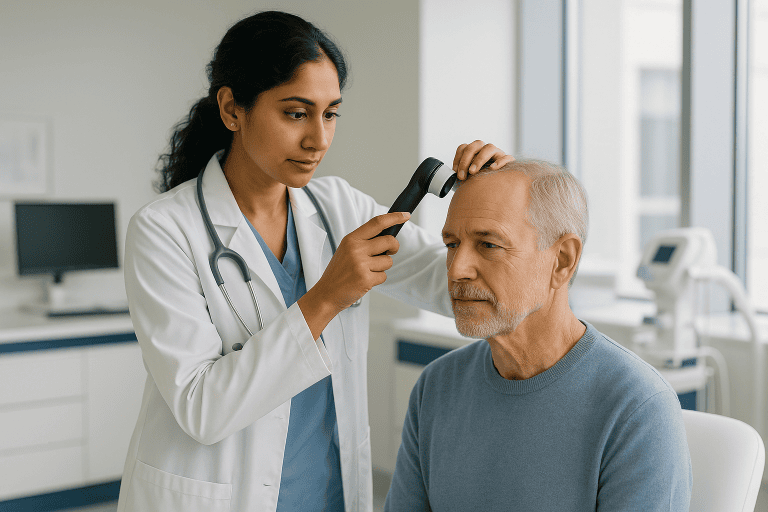
Diagnosis begins with a medical consultation. The physician evaluates the eyebrow area, donor hair quality, skin condition and the pattern of hair loss. A detailed history matters, and you may be asked about:
- Previous plucking, waxing, threading or laser hair removal in the brow area
- Tattooing or microblading, including when it was done and how the skin responded
- Trauma, burns, surgery or radiation involving the brow
- Current medications and supplements
- Hormonal disorders, including thyroid disease
- Autoimmune conditions such as alopecia areata
- Skin conditions including eczema, psoriasis and seborrhoeic dermatitis
- Nutritional deficiencies
- Stress-related hair pulling (trichotillomania)
In some patients, laboratory tests or a dermatological review are recommended before surgery. This is especially important when eyebrow loss is active, sudden, inflammatory or unexplained. If the underlying cause is not controlled, transplanted hairs may be at risk, or you may continue to lose native brow hair around the grafts. Active alopecia areata, untreated inflammatory skin disease and ongoing trichotillomania are examples of conditions that usually need medical or psychological management before transplantation makes sense.
What makes a good candidate?
A good candidate for an eyebrow transplant is generally in good overall health, has adequate donor hair, has stable eyebrow loss, and understands both the growth timeline and the maintenance the result requires. You should be comfortable with the fact that transplanted hairs need trimming and shaping for as long as you have them. Expectations should be realistic: surgery can improve density, shape and symmetry, but it cannot make every follicle grow, and the final refinement depends on healing biology, hair type and careful aftercare.
Who is not a good candidate?
Transplantation is usually postponed or modified for people with uncontrolled medical conditions, active infection in the treatment area, certain bleeding risks, unstable scarring disorders, active autoimmune hair loss affecting the brow, or expectations that surgery cannot meet. In these situations treatment may be delayed, adjusted or combined with medical care first. A recommendation to wait is not a rejection: it protects the quality of the result you eventually get.
Conditions an Eyebrow Transplant Can Address
Eyebrow transplantation serves both aesthetic enhancement and reconstructive restoration. It is most often considered when brow follicles are absent, damaged or too sparse to frame the eyes as you would like.
- Genetically thin eyebrows: Some people naturally have fine, low-density brows that do not respond to cosmetic growth products or grooming techniques. Transplantation adds real follicles where nature placed few.
- Over-plucking or repeated hair removal: Long-term tweezing, waxing or threading can permanently damage some follicles, leaving gaps or thin lines that no longer grow back.
- Age-related thinning: Eyebrow density can decrease with age, particularly along the outer brow, softening the frame of the eyes.
- Scars in the eyebrow area: Hair does not grow through scar tissue caused by injuries, burns, surgery or previous skin procedures. Transplantation may help camouflage the area if the scar has an adequate blood supply.
- Trauma or burns: Partial or complete loss of eyebrow hair after accidents may be improved with careful reconstructive planning, sometimes in stages.
- Medical hair loss after stabilisation: In selected patients whose hair loss from previous disease or treatment has stabilised, transplantation may be considered after appropriate evaluation.
- Asymmetry or shape concerns: Transplantation can help balance uneven brows or rebuild a missing tail, arch or inner brow.
- Revision after cosmetic tattooing or microblading: Some patients want real hair growth after pigment-based procedures, although skin quality and existing pigment must be reviewed before planning.
The indication is never just the amount of missing hair. Facial structure, donor hair characteristics, skin condition, grooming preferences and the look you actually want all shape the plan. A conservative, well-designed transplant usually ages better and looks more natural than an overly dense or sharply defined brow, worth remembering when you compare before-and-after photographs online.
How an Eyebrow Transplant Is Performed, Step by Step
An eyebrow transplant is usually an outpatient procedure under local anaesthetic, with or without light sedation depending on your needs and medical suitability. If you are travelling for treatment, evaluation typically starts before your trip through photographs, medical history and remote communication, followed by an in-person examination and final planning at the hospital.
Preparation and brow design
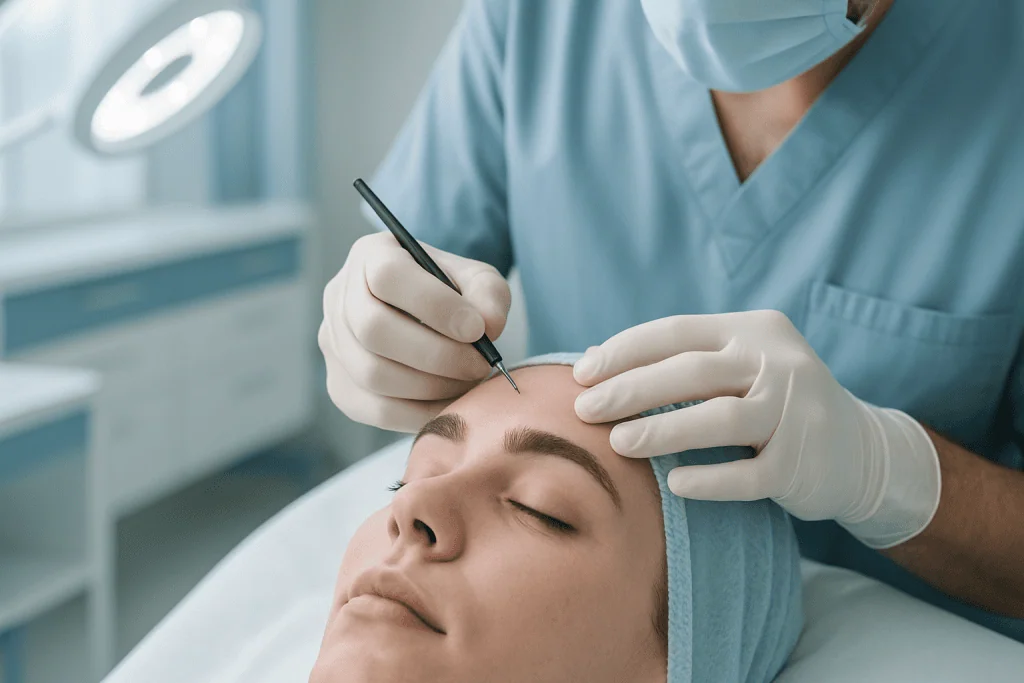
The first step is a detailed consultation. The physician examines the brow area and the donor region, reviews the cause of your eyebrow loss, and discusses what you want the result to look like. Photographs are usually taken for planning and documentation. The shape is designed with attention to facial proportions, eye position, brow bone structure, existing hair direction and your natural asymmetries, nobody’s two brows are identical, and a design that ignores this looks manufactured.
Whether any medicines or supplements should be adjusted before surgery is a decision made between your surgical team and your prescribing doctor, never one to take on your own. Smoking can affect healing and is commonly discouraged before and after hair transplantation. The skin should be free of infection, active inflammation and irritation before the procedure. If you have had microblading or tattooing, the colour, depth and skin response are assessed as part of planning.
Design is a genuine negotiation. You and the physician review the desired thickness, arch height, inner brow width and tail length. Your preference matters, but the safest aesthetic choices are usually guided by natural anatomy: a brow that is too high, too dark, too dense or too sharply angled may not harmonise with your expression over time. A measured design tends to age well; a fashionable one may not.
Donor hair selection
The donor area is usually a region of the scalp where hair calibre and texture suit eyebrow restoration. The physician considers thickness, curl, colour, growth pattern and the need to keep extraction marks discreet. In many patients only a limited region of the donor area is trimmed or shaved, depending on the technique and the number of grafts needed. Because brow follicles are placed predominantly as single hairs, the harvested units are then refined under magnification into appropriate single-hair grafts.
On the day: extraction and placement
The sequence on the day of surgery generally runs as follows:
- Local anaesthetic is applied to the donor area, and the planned follicular units are extracted one by one.
- The grafts are inspected, refined and kept in a controlled, hydrated environment while the recipient area is prepared.
- The brow area is anaesthetised, and tiny incisions or channels are created at very shallow angles so the hairs will lie close to the skin, like natural eyebrow hair.
- Each graft is placed individually, with the team monitoring hydration, handling and orientation to support graft survival.
- The placement is reviewed against the agreed design, checking symmetry, direction and the feathering of the edges before the session ends.
The angle and direction of placement vary across the eyebrow, and recreating these shifts is one of the most important elements of a natural result. At the inner brow, hairs may point slightly upward or outward. Along the body of the brow, hairs are oriented more laterally and lie flatter. Near the tail, the direction changes again. In the central brow, upper and lower rows converge in a subtle feathering pattern rather than meeting in a hard line.
The number of grafts varies by patient and depends on whether the goal is filling small gaps, increasing overall density, reconstructing one brow, or restoring both. Because placement is artistic as well as technical, the procedure may take several hours.
Technology used in eyebrow transplantation
Modern eyebrow transplantation relies on magnification, precision extraction instruments, fine implantation tools and careful graft-preservation methods. Some teams use implanter pens of the kind associated with DHI hair transplant techniques, which allow the follicle to be placed and angled in a single movement. Digital photography and measurement support planning and symmetry analysis, and high-quality lighting with magnified visualisation helps the team prepare and place grafts with consistent attention to direction and spacing.
Technology is valuable, but eyebrow restoration is not a technology-only procedure. The result depends heavily on clinical judgement: selecting the right donor hairs, designing a brow that suits your face, placing follicles at the correct angle, and adjusting density so the final appearance stays natural. In scarred areas the surgeon also assesses tissue quality and blood supply, because scarred skin behaves differently from healthy skin and may support grafts less predictably.
Immediately after the procedure
Small crusts form around the implanted hairs after transplantation. Mild redness, swelling, tenderness or a feeling of tightness can occur. Some patients notice swelling around the upper eyelids or forehead in the first few days; this is usually temporary. The donor area may feel sensitive for a short time and is cared for according to the team’s instructions.
You receive specific guidance on cleansing, sleeping position, activity restrictions, sun protection, medications and when to return for review: the principles overlap substantially with general hair transplant aftercare. The single most important rule is not to rub, scratch or pick at the transplanted area: newly placed grafts need time to anchor. If you have travelled for surgery, the team also advises on safe timing for the flight home, follow-up photographs and how to stay in touch after you return.
Recovery Timeline After an Eyebrow Transplant
Recovery is usually manageable, but the final result takes time, because transplanted follicles must heal, shed and regrow according to the natural hair cycle. The pattern is predictable enough to plan around.
| Time Period | What Patients Can Expect |
|---|---|
| Day 1 | Mild redness, pinpoint crusting and sensitivity in the eyebrow area. The donor area may feel tender. You follow detailed instructions for cleansing, sleeping and protecting the grafts. |
| First week | Swelling around the brow or upper eyelids may occur and usually improves. Crusts begin to loosen. Rubbing, scratching, heavy exercise and direct sun exposure are avoided unless your physician clears them. |
| First month | Many transplanted hairs shed. This is expected and does not mean the grafts have failed. The skin looks calmer, and normal social activities are often resumed, depending on healing. |
| First 3 to 6 months | New growth begins gradually. Hairs may look fine, uneven or irregular at first. Trimming and gentle grooming become necessary as the transplanted hairs lengthen. |
| Longer term | Density, texture and direction continue to mature. The brows are shaped and maintained with trimming. Any decision about additional refinement is made only after the growth pattern has been fully assessed. |
The early shedding phase deserves emphasis because it unsettles people who are not warned about it. In the first weeks, many of the implanted hairs fall out. The follicles themselves remain beneath the skin and begin producing new hairs later. Early growth can look sparse or patchy before it fills in, and the appearance continues to mature for many months. The biological rhythm is the same one described in our guide to the hair transplant results timelineshed first, grow later, judge nothing before the growth phase is well established.
How long do eyebrow hair transplants last?
Eyebrow hair transplants are intended to be long-lasting: the donor follicles usually come from scalp regions that are relatively resistant to common patterns of hair loss, so once they have anchored and started growing, they typically continue producing hair for many years. Two honest caveats apply. First, no surgeon can promise that every graft will grow, and biology varies between people. Second, the native brow hair around the grafts can continue to thin with age or with any underlying condition, which can change the overall look over time. The maintenance obligation, regular trimming, occasional grooming, lasts as long as the hairs do.
Benefits of an Eyebrow Transplant
For suitable candidates, eyebrow transplantation can offer functional, aesthetic and emotional benefits when it is planned and performed with respect for natural brow anatomy.
| Benefit | What It Means for You |
|---|---|
| Uses your own hair follicles | The transplanted hairs are living follicles from your donor area, creating real hair growth rather than a cosmetic surface effect. |
| Natural-looking brow design | The shape, density, angle and direction of the hairs are customised to your face and existing brow pattern. |
| Improves sparse areas and gaps | Transplantation can fill thin patches, restore the brow tail, soften asymmetry or rebuild areas affected by scarring. |
| Reduces dependence on daily makeup | Many patients find they need less penciling or shading once the transplanted hairs grow in, although grooming is still needed. |
| Can support reconstructive goals | For selected patients with trauma, burns or surgical scars, an eyebrow transplant may help restore a more balanced facial appearance. |
| Long-term improvement | Once growth is established, transplanted follicles can continue producing hair, with regular trimming and maintenance. |
Eyebrow Transplant Cost: What Determines the Price
Eyebrow transplant cost varies from patient to patient because the procedure itself varies enormously, filling small gaps in an otherwise intact brow is a different operation from reconstructing two brows over scar tissue. The main drivers of the price are the number of grafts required, whether one brow or both are treated, the complexity of the case (scar work and reconstruction take longer), the technique and instruments used, whether sedation is added, the experience of the surgical team, the clinical setting, and what the quotation actually bundles. You will not find a fixed figure on this page, and that is deliberate: an honest price follows an assessment of your brows, your donor hair and your goals, not the other way round.
How much is an eyebrow transplant?
There is no single honest answer, because the price follows the surgical plan. A session restoring the outer tails of both brows may involve a fraction of the grafts and operating time of a complete reconstruction after burns, and the two should not carry the same price. Be cautious with any clinic that publishes one fixed number before anyone has examined you or your photographs: either the number will change once you arrive, or the plan will be bent to fit the number. What you can reasonably expect from a serious provider is a personalised, written quotation after your case has been reviewed, with the plan it is based on set out clearly.
What does a quoted brow transplant cost usually include?
A quoted brow transplant cost should state exactly what it covers, and it is worth reading the inclusions as carefully as the total. Typically a quotation covers the surgeon and team, the facility and equipment, graft extraction and preparation, the implantation session itself, immediate post-operative supplies and instructions, and scheduled follow-up reviews. For patients travelling from abroad, some packages also cover transfers and accommodation. Two questions are worth asking before you agree to anything: what happens if a second session for added density is recommended later, and is early follow-up included or billed separately. Comparing quotations only makes sense when they describe the same scope of care.
Is “eyebrow implants cost” the same as eyebrow transplant cost?
Searches for eyebrow implants cost almost always refer to the same procedure described on this page. Nothing synthetic is implanted: the “implants” are your own living follicles, moved from the donor area into the brow. The terminology varies, eyebrow transplant, brow transplant, eyebrow implants, eyebrow hair grafting, but in mainstream clinical practice these describe one procedure, and the pricing considerations above apply to all of them.
Why Acting Early Matters, and Why Rushing Does Not Help
Eyebrow thinning is rarely urgent, but early evaluation can be genuinely important. If the loss is caused by an active medical condition, prompt diagnosis may prevent further loss and protect both native and transplanted hair. Thyroid imbalance, autoimmune hair loss, inflammatory skin disease and nutritional deficiency should all be identified and managed before elective restoration is planned.
Delaying evaluation can allow scarring, inflammation or repeated cosmetic trauma to progress. Continued plucking or repeated aggressive cosmetic procedures can further weaken follicles and change the quality of the skin itself. In scar-related eyebrow loss, waiting until scars are mature and stable is often the right call, but the tissue should still be assessed by an experienced physician, who can judge timing and feasibility rather than leaving you to guess.
There is also an emotional dimension. Many patients tolerate brow loss for years because they assume the only options are makeup or tattooing. A proper evaluation clarifies whether transplantation is possible, whether non-surgical treatment should come first, and what result is realistic for your hair and skin. Understanding the cause and the options usually leads to a calmer, better-informed decision.
Equally, early action does not mean rushing into surgery. A well-timed eyebrow transplant happens when the diagnosis is clear, the skin is healthy, the donor hair is suitable, and your expectations align with what surgery can reasonably deliver. In aesthetic medicine, patience with timing is part of good care, not a delay to it.
Brow Transplant or Brow Lift: Two Different Procedures
A brow transplant adds hair to the eyebrow; a brow lift repositions the brow and the surrounding soft tissue. The two are often confused in searches, but they solve different problems. If your brow hair is present but the whole brow sits low or heavy, a lift addresses position, not density: it will not create a single new hair. If your brow position is fine but the hair is sparse, patchy or missing, transplantation addresses density and shape: it will not raise a drooping brow. Some people have both concerns, and in those cases the procedures are assessed and planned separately, each on its own merits and timeline. Knowing which problem you actually have is the first step to researching the right operation.
Factors That Influence the Outcome
The success of an eyebrow transplant depends on medical, technical and personal factors, and it helps to understand them before you commit. A good result begins with the correct diagnosis. If eyebrow loss is driven by an active disease process, transplantation should usually wait until the condition is stable; treating inflammation, hormonal imbalance or behavioural causes of hair loss can be essential groundwork.
Donor hair quality comes next. The best donor hair for eyebrow restoration is often fine to medium in calibre, with a texture and colour that blend into the face. Very coarse, tightly curled or strongly contrasting hair is harder to manage in the brow, and the surgeon must anticipate how the hair will behave once moved to its new location, including how it will look when it grows out between trims.
Surgical technique plays the central role. Eyebrows demand very shallow placement angles and continuous directional changes across a few centimetres of skin. Hairs placed too upright, too densely or in the wrong orientation look unnatural and resist styling. Single-hair grafts, refined spacing and feathered edges are what produce a soft, believable brow line.
Skin quality affects both healing and growth. Healthy eyebrow skin generally supports graft survival better than scarred, irradiated or inflamed skin. Experienced surgeons can still achieve meaningful improvement in selected scar cases, particularly when the scar is mature and well vascularised, but expectations are adjusted accordingly, and a staged approach may be discussed openly rather than promised away.
Aftercare is the part you control. Follow the instructions on washing, activity, sun exposure, medications and grooming. Rubbing or picking at the grafts too early can dislodge follicles. Smoking, uncontrolled health conditions and poor nutrition can all impair healing. If you are travelling for surgery, plan the trip so you can attend the early checks and stay in contact with the care team after returning home.
Finally, expectations shape satisfaction as much as biology does. An eyebrow transplant is not an instant cosmetic fix; it is a gradual biological process. The implanted hairs commonly shed before meaningful growth appears, the brows require trimming for life, and some patients later choose a second session for added density or symmetry: a decision best made only after the first transplant has fully matured.
Having an Eyebrow Transplant in Turkey: Planning as an International Patient
Turkey treats large numbers of international patients for hair restoration, and eyebrow work sits within that established infrastructure: experienced surgical teams, high procedural familiarity, and care pathways built around people who arrive from abroad and fly home within days. If you are considering an eyebrow transplant in Turkey, the practical question is not whether it can be done, it plainly can, but how to organise the journey so that assessment, surgery and follow-up all happen properly.
A typical care pathway for a travelling patient runs in stages. Before the trip, you share photographs of your brows and donor area along with your medical history, so the team can give a preliminary view on suitability and outline a plan. On arrival, you have an in-person examination, the remote review never replaces it, where the diagnosis is confirmed, the design is drawn and agreed, and final consent is taken. The procedure itself is usually completed in a single outpatient session under local anaesthetic. An early check follows before you fly home, and after that, follow-up continues remotely: you send photographs at agreed intervals so the team can monitor healing, shedding and regrowth through the months when the result is still developing.
Travel practicalities are worth planning in advance. Your team will tell you how many days to stay after surgery for the first review, and it is sensible to build a small buffer into your trip rather than booking the earliest possible flight home. In the early period you will need to protect the brow area from sun, avoid swimming, saunas and heavy exertion for as long as your instructions specify, and keep to the cleansing routine you are given. None of this is onerous, but it is easier when your itinerary allows for it rather than fighting it.
Which country is the best for eyebrow transplants?
No country is inherently best; the outcome of an eyebrow transplant depends on the surgeon and the team, not the flag on the building. Turkey’s hair restoration field is large and long established, which means deep procedural experience and pathways designed for international patients, genuine advantages. But the sensible way to judge any provider, in any country, is the same: is the assessment physician-led rather than sales-led, is the team experienced specifically in single-hair brow work rather than only scalp transplantation, are they willing to tell you that you are not a candidate or that you should wait, and is there a structured follow-up plan that survives your flight home. A clinic that passes those tests is a good choice wherever it is.
How is care coordinated before and after travel?
Coordination is mostly a matter of information moving reliably in both directions. Before travel, that means your photographs, medical history, medication list and any relevant test results reaching the medical team, and their preliminary assessment and plan reaching you in a language you fully understand. After travel, it means scheduled photographic reviews, a clear point of contact for questions during healing, and written aftercare instructions you can actually follow at home. When you compare providers, ask specifically how each of these steps works: the quality of the answer tells you a great deal about the quality of the pathway.
Eyebrow Transplant at Acibadem
At Acibadem, eyebrow transplantation is approached as a medical procedure first and an aesthetic one second, within the broader hair transplant unit. Planning begins with medical evaluation rather than a one-size-fits-all aesthetic template: the physician assesses the cause of your eyebrow loss, the condition of the skin, the characteristics of your donor hair and the look you want. If there is any concern about an underlying dermatological, endocrine or autoimmune condition, particularly when loss is sudden, patchy, inflammatory or accompanied by other symptoms, further evaluation is arranged before transplantation is considered.
Multidisciplinary care is available when a case needs it. Many eyebrow transplant patients require only aesthetic hair restoration expertise, but others benefit from input from dermatology, plastic and reconstructive surgery, endocrinology or other specialties. In complex cases, collaborative decision-making helps determine whether surgery is appropriate, whether timing should change, or whether medical treatment should come first.
The diagnostic pathway is structured: history-taking, photographic analysis, donor-area assessment, review of previous cosmetic procedures, and a careful check of medications and health conditions. Technology supports precision, magnification, fine extraction and implantation instruments, graft-preservation methods, photographic documentation and controlled clinical settings, but it is applied in service of clinical judgement, not as a substitute for it. The plan is designed around the individual patient, not around filling a predetermined number of grafts.
For patients arriving from the United States, Europe, the Middle East and elsewhere, Acibadem International provides dedicated services in more than 20 languages. Depending on what you need, support can include appointment coordination, medical record transfer, interpretation, hospital navigation and follow-up communication after you return home: the practical scaffolding that a procedure requiring pre-travel assessment and post-operative monitoring depends on.
One point of honesty matters more than any facility description: not every person with sparse eyebrows is immediately suitable for transplantation. Sometimes the right recommendation is medical treatment, observation, stabilisation of a skin condition, or an adjustment of expectations before surgery is discussed at all. A careful recommendation can feel less immediate than a quick yes, but it protects the quality of the result and your long-term satisfaction with it.
Making Your Decision
If sparse, thin or missing eyebrows affect how you feel about your face, an eyebrow transplant is a legitimate option to research, carefully. The most useful first step is not choosing a clinic but understanding your own case: why the brow hair is absent or reduced, whether the loss is stable, and whether your donor hair and skin are suitable for grafting.
Before agreeing to surgery anywhere, you should have clear answers to a short list of questions. What is the diagnosis behind the hair loss, and is anything active that needs treatment first? What design is proposed, and why does it suit your face rather than a template? How many grafts are planned, over how many sessions, and what does the quotation cover? What does recovery involve week by week, and what follow-up is included after you travel home? What maintenance, trimming, grooming, will the result need for life?
A provider that answers these questions plainly, tells you what surgery cannot do as readily as what it can, and is prepared to recommend waiting when waiting is right, is giving you the raw material for a good decision. The brow itself is a few centimetres of hair; the judgement behind it is what you are really choosing.
Preparation
- A specialist evaluates eyebrow shape, hair quality, donor area suitability, and expectations before planning the transplant. Patients may be asked to stop blood-thinning medications, alcohol, and smoking before the procedure. The treatment area should be clean and free of makeup on the day of the appointment.
Aftercare
- Mild redness, swelling, or scabbing can occur and usually improves within several days. Patients should avoid rubbing the eyebrows, heavy exercise, swimming, and direct sun exposure during early healing. Transplanted hairs may shed first, with new growth appearing gradually over the following months.
Frequently Asked Questions
What affects the cost of an eyebrow transplant?
The main factors include the extent of thinning, the planned brow shape, the number of follicles required, the technique used, surgeon involvement, donor area quality, facility standards, and what is included in the care package.
How can I get a personalised quote?
You can request a free consultation by sharing clear eyebrow photos, donor area photos if requested, your medical history, previous eyebrow treatments, and your desired brow shape. A specialist review is needed before a personalised quote can be prepared.
Is eyebrow transplant usually included in a package for international patients?
Many international patient programmes can arrange package-style support, which may include consultation, procedure planning, aftercare guidance, translation, and selected travel coordination. Inclusions vary, so they should be confirmed in writing before travel.
Does the technique change the cost?
Yes. FUE, FUT, and revision procedures require different planning, surgical steps, and team resources. Revision cases or cases involving scarring can be more complex and may affect the final quote.
Will travel and accommodation affect the total expense?
Yes. Flights, hotel stay, local transfers, companion travel, and time away from work can influence the total budget. Some providers assist with logistics, while others separate medical care from travel arrangements.
Is this information medical or financial advice?
No. This is general educational information. A specialist consultation is required to confirm suitability, explain risks and aftercare, and provide a personalised treatment plan and quote.
Medically reviewed by the Acıbadem International Medical Board September 1, 2026
See our medical review board →
Update history
- PublishedJune 8, 2026
- Medical review approvedSeptember 1, 2026
- Last content updateSeptember 1, 2026
Planning this treatment in Turkey
Our English guides for international patients: costs, timelines, safety and travel.
Trusted care for international patients
From the Acibadem Blog
Preparing for an Eyebrow Transplant: Brow Design Consultation, What to Pause and the Day Before
Eyebrow transplant preparation usually involves a brow design consultation where the surgeon maps shape, hair direction and donor area; a medical review of medicines…
How an Eyebrow Transplant Is Performed: Donor Hair Choice, Angle of Placement and Brow Mapping
An eyebrow transplant moves individual hair follicles, usually from the back of the scalp, into the brow under local anesthesia. The surgeon first draws…
Eyebrow Transplants Before and After: Realistic Results and Their Upkeep
An eyebrow transplant moves roughly 50 to 400 hair follicles per brow, usually taken from the scalp, into thin or missing eyebrows. Transplanted hairs…