Gerontological Oral Health
Gerontological oral health focuses on dental prevention, diagnosis, and care for older adults, including gum health, dry mouth, dentures, implants, and age-related oral problems.
Quick answer
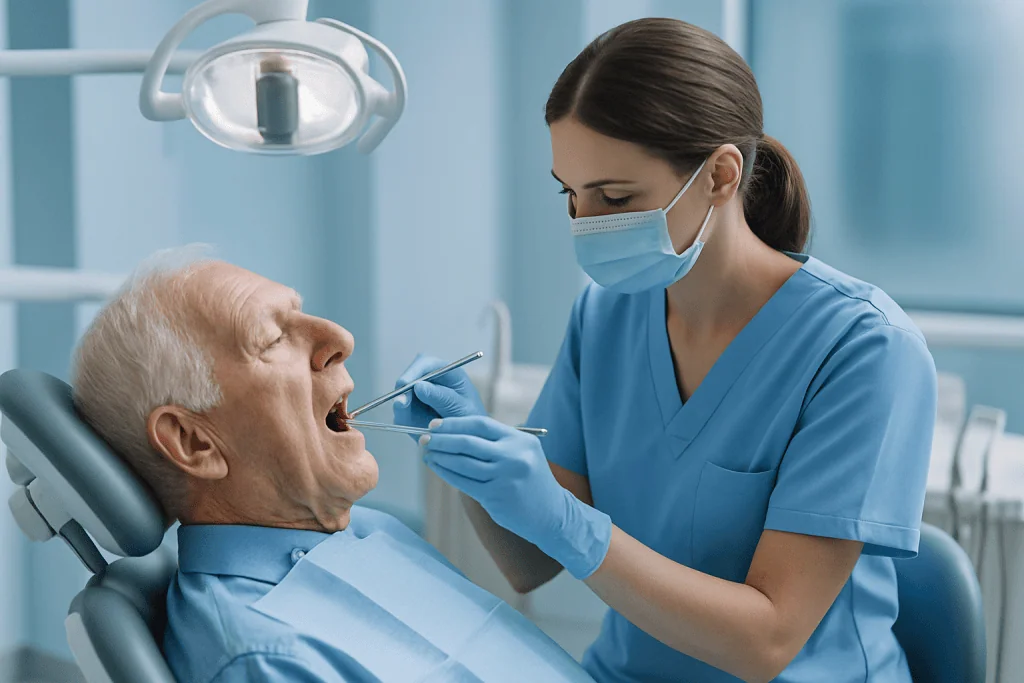
Gerontological oral health is the branch of dentistry focused on preventing, diagnosing and treating oral conditions in older adults. It addresses gum disease, root decay, dry mouth, tooth loss, denture problems and oral lesions, while adapting every treatment plan to the patient's medical conditions, medications, mobility and cognitive status. Care ranges from prevention and cleaning to dentures, implants and comfort-focused treatment.
Gerontological Oral Health: What It Is and Why It Matters
Gerontological oral health is the branch of dentistry dedicated to preventing, diagnosing and treating oral conditions in older adults. It covers teeth, gums, dentures, implants and the soft tissues of the mouth, and it plans every treatment around the medical conditions, medications and daily circumstances that shape later life. It exists because an ageing mouth needs different care from a younger one — not less care, and not necessarily simpler care, but care planned differently.
As you age, your mouth changes in ways that are easy to miss until they cause trouble. Gums recede and expose root surfaces that decay more easily than enamel. Saliva flow often falls, usually because of medication. Fillings and crowns placed decades ago begin to fail at their edges. Teeth wear down, bites shift, and dentures that once fitted well begin to feel loose or painful. None of this is unusual. All of it is treatable when it is identified in time.
For families, these changes rarely announce themselves as dental problems. A parent quietly stops eating meat, apples or salad because chewing hurts. Meals take longer. Someone who used to talk easily says less in company. A person living with diabetes notices gum inflammation that never quite settles. Someone taking several medications develops a persistently dry, uncomfortable mouth. Others feel embarrassed by missing teeth, unstable dentures, bad breath or changes in their speech. These are not minor complaints. They shape how a person eats, sleeps, speaks and takes part in daily life.
The stakes go beyond comfort. Oral health in later life is connected to nutrition, infection risk, diabetes control and cardiovascular health, and gum inflammation can interact with systemic disease in both directions — a relationship explored in more detail on our page about oral health and systemic diseases. A mouth that hurts narrows the diet. A mouth that harbours infection can complicate medical treatment elsewhere in the body. A mouth that works well supports everything else.
Gerontological oral health is not defined by age alone. A healthy, active 70-year-old who is medically stable may be treated very differently from a 70-year-old with advanced heart disease, diabetes, osteoporosis treatment, reduced hand strength or memory changes. What defines this field is the habit of looking at the whole person before deciding what to do about a tooth.
At Acibadem, this care sits within the wider Dental & Oral Health department, in a hospital environment where dental specialists can coordinate with physicians, anaesthesiology teams, nutrition specialists and other clinical departments when a patient’s medical picture calls for it. The goal is never only to treat teeth. It is to preserve function, comfort and dignity in a way that is safe and realistic for each person.
What Gerontological Oral Health Care Includes
Gerontological oral health care includes preventive, restorative, prosthetic, periodontal and surgical dental services designed for older adults. It addresses the oral problems that become more common or more complex with age — gum disease, root cavities, tooth wear, missing teeth, dry mouth, oral infections, denture discomfort, jawbone changes and oral lesions — and it weighs every decision against the patient’s general health, medications and ability to maintain care at home.
How does dental care change with age?
Dental care changes with age because the risks change, the tissues change, and the context changes. Younger patients are treated mostly on the basis of what is happening in the mouth. In older adults, what is happening in the rest of the body matters just as much. Blood thinners affect the timing of extractions. Osteoporosis medication influences how the jawbone heals. Diabetes affects gum health and healing capacity. Reduced grip strength or tremor makes some cleaning routines unrealistic. Memory changes can make complex, maintenance-heavy dental work a poor choice even when it is technically possible. A dentist working in this field reads all of this before recommending anything.
Priorities shift as well. For some patients, the priority is prevention: reducing future decay, improving gum health, managing dry mouth and keeping natural teeth stable for as long as possible. For others, the focus is restoring lost function through crowns, bridges, dentures or dental implants. And for some, the most appropriate care is comfort-focused — relieving pain, controlling infection and supporting safe eating rather than pursuing complex reconstruction. All three approaches are legitimate. The right one depends on the person, not the age on the chart.
What does a gerontological oral health plan include?
A gerontological oral health plan is usually built in stages, beginning with urgent problems such as pain or infection and then moving toward long-term stability. Depending on the findings, a plan may include:
- Professional cleaning and periodontal (gum) treatment
- Fillings and replacement of failing restorations
- Root canal treatment where a tooth is worth preserving
- Extraction of teeth that cannot be saved
- Denture adjustment, relining or new dentures
- Assessment for dental implants or implant-supported dentures
- Oral cancer screening and evaluation of mouth lesions
- Saliva management and fluoride therapy for dry mouth
- Bite evaluation and management of tooth wear
- Practical education for patients and caregivers
Not every plan includes every element. The point of staging is that the sequence follows clinical logic: control pain and infection first, stabilise the gums, then restore or replace teeth on a healthy foundation. Skipping steps tends to produce dental work that fails early.
Modern dentistry for older adults also draws on digital imaging, three-dimensional planning, intraoral scanning, laboratory-supported prosthetic design and minimally invasive techniques where appropriate. These tools help clinicians diagnose more precisely, plan procedures with fewer surprises and produce restorations or dentures that fit more accurately. They are most valuable when they support careful clinical judgment rather than replace it. A precise scan of the wrong treatment plan is still the wrong treatment plan.
Who Benefits from Gerontological Oral Health Care
Older adults usually come to this kind of care because of pain, chewing problems, loose teeth, bleeding gums, dry mouth, denture sores, missing teeth or changes in appearance. Sometimes the first sign is more subtle: avoiding meat, fresh fruit or vegetables; taking longer to finish meals; speaking less in social settings; or chewing only on one side of the mouth. Family members may notice weight loss, bad breath, changes in facial shape or a growing reluctance to wear dentures at all.
Symptoms that warrant a proper dental evaluation include tooth sensitivity, toothache, swollen or bleeding gums, gums pulling away from the teeth, pus around teeth, loose teeth, broken fillings, mouth ulcers that do not heal, burning sensations, persistent dryness, difficulty swallowing dry foods, clicking dentures, painful chewing, jaw discomfort and changes in the way the upper and lower teeth meet. None of these should be filed under normal ageing. Each has a cause, and most causes can be managed.
How is oral health assessed in older adults?
Assessment begins with a detailed conversation, not an instrument tray. The dentist reviews your dental history, medical conditions, medications, allergies and previous dental treatment. This step carries particular weight for patients using blood thinners, osteoporosis medication, immunosuppressive drugs, heart medication, diabetes treatment or cancer therapies, because medication-related dry mouth, bleeding considerations and delayed healing can all affect the timing and type of care. Any adjustment to medication is a matter for the treating physician; the dentist’s job is to plan safely around what is prescribed.
The clinical examination then covers teeth, gums, tongue, cheeks, palate, jaw joints, bite, existing restorations and dentures. Gum measurements may be taken to gauge periodontal disease. Dental X-rays reveal what the eye cannot: bone levels, decay hidden under crowns, root problems, infections and retained tooth roots. In selected cases, three-dimensional imaging helps assess jawbone anatomy before implant planning, complex extractions or surgery. Oral cancer screening is a routine part of every evaluation, and it becomes especially important when there are persistent ulcers, colour changes, lumps, unexplained bleeding or a history of tobacco or alcohol use.
Why do dentures stop fitting over time?
Dentures stop fitting because the mouth keeps changing while the denture stays the same. After teeth are lost, the jawbone gradually remodels and the gum ridge that supports a denture slowly changes shape. A denture made years ago rests on a ridge that no longer exists in the same form. The result is looseness, sore spots, reduced chewing power and, over time, changes in facial support. This is a mechanical problem with mechanical solutions: a denture may be adjusted, relined to match the current ridge, or replaced entirely. Some patients are also candidates for implant-supported dentures, depending on bone quality, health status and personal preference. What does not work is persevering with an ill-fitting denture — chronic rubbing creates ulcers and accelerates the very bone changes that caused the problem.
Why is a dental check needed before major medical treatment?
A dental check before major medical treatment matters because the mouth can be a hidden source of infection. People scheduled for heart valve procedures, organ transplantation, chemotherapy, radiotherapy to the head and neck, joint replacement or certain immune-modifying therapies may need dental infections treated beforehand. An infected tooth that would be a manageable nuisance in ordinary circumstances becomes a genuine risk when the immune system is suppressed or a new heart valve or joint is in place. Clearing oral infection in advance is an established part of medical risk reduction, and it is one of the situations where hospital-based dentistry and physicians work most closely together.
Conditions Treated in Gerontological Dentistry
The conditions below account for most of the work in gerontological dentistry. They often appear together, and treating one frequently depends on controlling another.
Periodontal disease (gum disease)
Periodontal disease is a chronic condition affecting the tissues and bone that support the teeth, and it is one of the most frequent findings in older adults. It often progresses slowly and without pain, which is exactly why it is dangerous: by the time teeth feel loose or become infected, considerable bone support may already be lost. Bleeding when brushing, receding gums, persistent bad breath and gums pulling away from the teeth are earlier warnings. Because gum inflammation interacts with systemic conditions such as diabetes — each can worsen the other — periodontal care in later life is as much a medical matter as a dental one. Structured gum treatment, described on our oral health therapy page, remains effective at any age.
Root caries and decay around old dental work
Root caries is decay on the root surfaces of teeth, and it becomes a particular threat once gums recede. Root surfaces are softer than enamel, so decay there spreads faster and closer to the nerve. In older adults, decay also tends to develop around the edges of existing fillings and crowns, where old margins have opened over the years. Dry mouth, frequent snacking, reduced brushing ability and certain medications all raise the risk. Early detection is the difference between a small filling and a root canal or extraction — one of the strongest arguments for regular checks even when nothing hurts.
What causes dry mouth in older adults?
Dry mouth, or xerostomia, is most often caused by medications, and older adults commonly take several drugs whose side effects combine. Other causes include dehydration, salivary gland disease, diabetes, previous radiation therapy and various medical conditions. The consequences are larger than they sound. Saliva protects teeth against acid, supports swallowing and taste, keeps dentures comfortable and limits fungal infection. When flow falls, patients may develop burning sensations, cracked lips, difficulty speaking, denture discomfort, a rapid run of new cavities and oral thrush. Management can include reviewing medications with the treating physician where appropriate, improving hydration, saliva substitutes or stimulants, fluoride therapy and dietary adjustment. Dry mouth is rarely fixed with a single intervention; it is managed with a daily routine.
What happens when missing teeth are not replaced?
When missing teeth are not replaced, the effects spread well beyond the gap. Chewing efficiency falls, so the diet drifts toward soft, processed food. Neighbouring teeth tilt into the space and opposing teeth over-erupt, disturbing the bite. Chewing forces concentrate on the remaining teeth, wearing them faster. Speech and facial support can change. Options for replacement include removable dentures, fixed bridges and dental implants, chosen according to oral anatomy, health status and personal goals. In gerontological dentistry, the best option is not always the most complex one. It is the option that is safe, cleanable, repairable and meaningful for that patient’s life.
Mouth lesions and oral cancer screening
Oral mucosal conditions — white or red patches, ulcers, fungal infections, traumatic denture sores, burning mouth symptoms and other lesions — need careful evaluation in older adults. Most are benign and treatable. Some are not, and the only reliable way to tell the difference is professional assessment, with biopsy and specialist oral pathology evaluation when indicated. A sore that does not heal, a patch that changes colour, a lump under a denture: these deserve examination rather than observation. Oral cancer found early is treated very differently from oral cancer found late, which is why screening is built into every gerontological dental evaluation.
Beyond these core conditions, this field also addresses worn teeth, bite collapse, jaw joint discomfort, difficulty cleaning around crowns or bridges, fractured teeth, failing implants, ill-fitting dentures, hygiene challenges related to arthritis or neurological disease, and the care needs that accompany cognitive decline. The common thread is that treatment must respect the whole person, not just the tooth or denture in question.
How Gerontological Oral Health Care Is Performed
Care usually begins before anyone sits in a dental chair. For older adults, preparation means understanding the medical background, current medications and daily function. Recent dental X-rays, medical reports, medication lists and details of previous surgeries or chronic conditions are reviewed in advance wherever possible, so the clinical team can plan the visit efficiently and identify early whether coordination with another department will be needed.
The first appointment starts with your own account of the problem: pain, chewing difficulty, appearance, denture trouble, bleeding gums, dryness, or the wish for a second opinion on a plan proposed elsewhere. A full oral examination follows — teeth, gums, tongue, cheeks, palate, bite, jaw movement and all existing dental work. Gum measurements assess periodontal disease. X-rays uncover decay under crowns, bone loss, infection and root problems that visual examination cannot reach.
Digital tools support both accuracy and comfort. Intraoral cameras let you see the areas of concern on a screen, which makes the diagnosis easier to understand and the plan easier to discuss. Digital radiography shortens waiting and supports precise evaluation. Three-dimensional imaging may be recommended when planning implants, assessing bone anatomy, locating infection or preparing for complex extractions. Intraoral scanning can replace traditional impressions for certain crowns, bridges, splints and prosthetic designs — a genuine relief for patients who gag on impression trays or cannot open wide for long.
Preventive and periodontal treatment
Preventive and periodontal treatment forms the foundation of almost every plan. If gum disease is present, treatment usually begins with professional cleaning, scaling and root surface debridement to reduce bacterial deposits and inflammation. You receive individualised instruction on brushing, cleaning between teeth, fluoride use, denture hygiene and dry mouth strategies. For patients with limited hand strength or dexterity, practical adaptations — electric toothbrushes, modified handles, caregiver-assisted routines — often matter more than any prescription. Our oral health education service builds these routines around what a patient can actually manage, not an idealised version of home care.
Restorative treatment
Restorative treatment may include fillings, replacement of failing restorations, crowns, root canal therapy or extraction of teeth that cannot be preserved. Each decision weighs the tooth’s condition, its bone support, infection risk, the patient’s medical status and how much that tooth actually contributes to chewing. In older adults, a conservative approach is often preferred when it can deliver durable function with a lower treatment burden. Heroic dentistry on a tooth with poor foundations serves the dentist’s ambition more than the patient’s mouth.
Dentures, bridges and dental implants
Prosthetic treatment ranges from adjusting a current denture, through relining it to restore fit, to making new partial or complete dentures, designing fixed bridges or planning dental implants. Denture design considers facial support, speech, chewing, saliva, jawbone shape and — critically — your ability to place, remove and clean the appliance yourself. If implants are on the table, the team evaluates bone volume, gum health, medical conditions, healing capacity and long-term maintenance before anything else. Implant-supported dentures can transform life for some patients who struggle with an unstable lower denture, but they are not appropriate for everyone, and an honest assessment says so plainly. Surgical stages such as extractions, bone assessment and implant placement are carried out in coordination with oral and maxillofacial surgery where the case requires it.
Is dental treatment safe for older adults with medical conditions?
Dental treatment can generally be performed safely in older adults with medical conditions, provided it is planned around them rather than despite them. Most procedures are carried out under local anaesthesia. For anxious patients or more complex work, sedation options can be discussed after medical evaluation. Patients with heart disease, respiratory conditions, neurological conditions or long medication lists are exactly the people who benefit from a hospital-based setting, where anaesthesiology input and physician communication are available before, not after, a decision is made. Safety here is not a promise; it is a process — assessment, coordination and sensible staging.
How long does gerontological dental treatment take?
Treatment duration varies widely with the plan. A preventive visit may take less than an hour. Denture fabrication typically requires several appointments as impressions, trial fittings and adjustments follow one another. Implant planning and restoration usually unfold in stages over several months, paced by healing and bone conditions. Staged plans follow biology rather than the calendar — healing time cannot be compressed, and rushing prosthetic or implant stages tends to shorten the life of the final result.
Recovery depends on what was done. After professional cleaning or fillings, most patients return to normal routines the same day. After extractions or implant surgery, expect mild swelling, soreness and a few days of softer food. New or adjusted dentures almost always need follow-up fine-tuning once you begin eating and speaking with them — this is normal, not a sign of failure. Periodontal improvement is gradual and depends heavily on daily home care and maintenance visits. Follow-up is where long-term results are won or lost: older adults with gum disease, dry mouth, extensive restorations, implants or dexterity limits often need maintenance more frequently than younger patients, so that small problems are corrected before they become painful, expensive or medically significant.
Why Acting Early Matters
Dental problems in older adults tend to progress quietly. Gum disease destroys bone without much pain. Root cavities spread quickly because exposed root surfaces are soft. A small denture sore becomes a chronic ulcer if the appliance keeps rubbing. Dry mouth can produce a cluster of new cavities within a strikingly short time. Early action keeps each of these at the small, simple, inexpensive-to-fix stage.
Delay also carries medical weight. Untreated oral infection is a concern for patients with diabetes, heart conditions, immune suppression or upcoming medical procedures. Painful chewing cuts intake of protein, fruit and vegetables; unstable dentures push the diet toward soft, processed food, with knock-on effects on metabolic health and energy. Oral discomfort disturbs sleep, mood and social life. A mouth problem left alone rarely stays a mouth problem.
There is a practical argument too: options narrow as problems advance. A tooth with early decay needs a simple filling; the same tooth a year later may need root canal treatment or extraction. A slightly loose denture can be relined; a severely worn one must be remade. Acting early preserves choices, and preserving choices is half the value of this field of care.
Benefits of Gerontological Oral Health Care
The benefits of treatment reach well beyond the mouth, supporting comfort, nutrition, communication and long-term health planning.
| Benefit | What It Means for You |
|---|---|
| Improved chewing and nutrition | Healthier teeth, gums or well-fitting dentures make it easier to eat a wider range of foods and maintain adequate nutrition. |
| Reduced pain and infection risk | Treating decay, gum disease, denture sores and oral infections relieves discomfort and lowers the chance of more serious complications. |
| Better denture comfort and stability | Adjusted, relined or newly made dentures can improve speech, chewing and confidence in social settings. |
| Protection of remaining teeth | Preventive care and timely restorations help preserve natural teeth and reduce the need for more complex procedures later. |
| Support for medical care | Managing oral infection and inflammation may be important before certain surgeries, cancer treatments or immune-related therapies. |
| Greater confidence and quality of life | A comfortable, healthy mouth makes speaking, smiling, eating and daily interaction feel natural again. |
Recovery and Follow-Up Timeline
Recovery varies with the treatment performed, but most treatment plans in this field combine short-term healing with long-term maintenance. The table below shows a typical pattern.
| Time Period | What Patients Can Expect |
|---|---|
| Day 1 | After examinations, cleanings or simple restorations, most patients resume normal routines. After extractions or surgery, soft foods, gentle oral hygiene and prescribed medications may be recommended. |
| First Week | Mild soreness after dental procedures usually settles. Denture sore spots, bite changes or discomfort should be reported so adjustments can be made. |
| First Month | Gum inflammation begins to improve with periodontal care and better home hygiene. New dentures or restorations may need fine-tuning as function adapts. |
| First Three to Six Months | Patients with gum disease, implants, dry mouth or extensive restorations often return for reassessment and maintenance. Implant cases continue through staged healing and restoration. |
| Longer Term | Regular preventive visits, oral cancer screening, denture checks and supported home care maintain comfort and reduce future dental problems. |
What Influences Long-Term Results
A good result in this field rests on accurate diagnosis, realistic planning and consistent maintenance. The condition of the teeth, gums and jawbone matters, but it is only part of the picture. Medical history, medication use, saliva flow, manual dexterity, nutrition, smoking status, cognitive function and the practical ability to attend follow-up appointments all shape the outcome — sometimes more than any technical detail of the dentistry itself.
Gum health is the strongest foundation. Restorations, dentures and implants all perform better when inflammation is controlled and hygiene is effective. Patients with diabetes may need closer monitoring, because blood sugar control and gum health influence each other. Patients who smoke tend to heal more slowly and carry higher risk of periodontal and implant complications; this is stated plainly during planning, because pretending otherwise helps no one.
Saliva is the second pillar. A dry mouth raises the risk of cavities, oral irritation and denture discomfort, and it undermines otherwise sound dental work. Managing it may involve the treating physician reviewing medications where appropriate, alongside hydration, saliva substitutes or stimulants, fluoride and dietary adjustment. Good long-term results usually come from daily prevention rather than a single procedure, however well executed.
The design of the dental work matters too. A technically impressive restoration is worthless if the patient cannot clean it or tolerate it. In older adults, simplicity, accessibility and repairability carry real value. For one patient a removable prosthesis is the wiser choice; for another, a fixed or implant-supported solution fits better. There is no universally superior option — only the option that suits this mouth, this health profile and this daily life.
How can caregivers support oral health at home?
Caregivers support oral health most effectively through small, consistent routines rather than occasional intensive effort. For patients with reduced vision, arthritis, neurological disease or memory impairment, this can mean helping with brushing at a set time each day, cleaning dentures overnight, checking the mouth occasionally for sore spots or ulcers, watching for signs of pain such as food refusal or one-sided chewing, and keeping maintenance appointments in the calendar. Dentists can demonstrate brushing techniques, recommend adapted tools and explain what to watch for. When daily oral care becomes difficult, modest adaptations — an electric toothbrush, a thicker handle, a simplified routine — often make a meaningful difference. Caregiver involvement is not a fallback; in many cases it is the treatment plan’s most important component.
Finally, outcomes improve when you understand the purpose of each step. Care for the ageing mouth is a long-term partnership: professional treatment controls disease and restores function, while daily care, nutrition, medication awareness and regular follow-up keep the result stable.
Gerontological Oral Health at Acibadem
Dental care for older adults often needs more than an isolated appointment. It may require a careful review of medical conditions, a second opinion on whether teeth can be saved, denture or implant planning, or coordination with other medical treatment. Acibadem’s hospital-based structure allows gerontological oral health care to be considered within the broader context of a patient’s health rather than in isolation.
Depending on the case, evaluation may involve restorative dentists, periodontology specialists, prosthodontists, oral and maxillofacial surgeons, radiology teams, anaesthesiology specialists or physicians from other relevant departments. Complex cases can be reviewed through specialist collaboration, similar in principle to the multidisciplinary boards used elsewhere in medicine. For patients who use blood thinners or have cardiovascular disease, diabetes, a cancer history, osteoporosis treatment or immune-related conditions, this communication between dental specialists and physicians happens before procedures, when it can still shape the plan.
Diagnostic pathways use the technologies described above — digital imaging to identify hidden infection, bone loss and root problems; three-dimensional assessment for implant and surgical planning; intraoral scanning and digital design to improve communication with dental laboratories and spare patients who struggle with traditional impressions. The emphasis is not technology for its own sake, but clearer diagnosis, better planning and more comfortable care.
The same setting matters for frail or medically complex patients. When sedation is being considered, anaesthesiology evaluation takes place first, and recovery is monitored in an environment equipped for patients with long medication lists and chronic conditions. For those who cannot tolerate long sessions, treatment can be divided into shorter, well-sequenced visits: pain and infection are addressed first, gum health is stabilised next, and elective restorative or prosthetic work is scheduled once the mouth — and the patient — are ready for it.
Older adults bring different priorities to the dental chair, and the consultation respects that. Some want to preserve every possible tooth. Others want stable dentures, relief from pain, or a practical plan that fits their circumstances. Some need dental clearance before medical treatment. A good consultation clarifies not only what is technically possible, but what is appropriate, safe and sustainable — and it is honest when the simpler option is the better one.
Living Well with an Ageing Mouth
Oral health problems in later life are common, but they are not an unavoidable part of ageing, and they should not be accepted as one. Pain, loose dentures, bleeding gums, dry mouth, missing teeth and difficulty chewing all have causes, and most causes respond to careful diagnosis and a treatment plan built around the person’s medical needs and daily life.
Second opinions have a particular place in this field. Before committing to extractions, implants, full-mouth reconstruction or new dentures, many patients find that an independent review changes the plan — sometimes toward more treatment, often toward less. Major dental decisions in later life deserve the same scrutiny as any other significant medical decision.
What sustains a healthy mouth over the years is unglamorous: a cleaning routine you can actually perform, dry mouth managed daily, dentures checked rather than tolerated, lesions examined rather than watched, and maintenance visits kept even when nothing hurts — especially when nothing hurts, since that is when problems are cheapest to fix. Done well, this care is less about dramatic intervention and more about protecting the ordinary pleasures a working mouth makes possible: a proper meal, an easy conversation, an unselfconscious smile.
Preparation
- Patients should bring a list of medications, chronic diseases, allergies, and any dental prostheses or implants. Existing dental X-rays or reports can help the dentist plan care. Blood thinners, diabetes, heart conditions, or mobility limitations should be discussed before the visit.
Aftercare
- After the assessment, patients receive a personalized oral hygiene, nutrition, and follow-up plan. Dentures, implants, and gums may need regular checks to prevent infection, pain, or chewing problems. Good daily cleaning and routine dental visits are important for maintaining oral health in older age.
Turkey vs UK, Germany & USA
Gerontological oral health care can range from prevention and gum treatment to dentures, implants, dry mouth management, and care for age-related oral conditions. Costs vary because older adults may need coordinated assessment, medical history review, imaging, laboratory work, and phased treatment planning.
International patients often compare destinations based on total treatment planning, clinical expertise, waiting times, travel support, and what is included in the care package.
| Factor | Turkey | UK | Germany | USA |
|---|---|---|---|---|
| Price drivers | Costs depend on diagnostics, gum treatment, prosthetics, implant needs, laboratory work, and package scope. | Costs may vary between public access and private dental care, with private prosthetic and implant care affecting the final fee. | Costs are influenced by specialist involvement, materials, laboratory standards, and the extent of restorative work. | Costs are often shaped by provider setting, insurance arrangements, specialist fees, materials, and staged treatment plans. |
| Hospital and dentist factors | Large private hospital groups may offer dental specialists, imaging, medical coordination, and international patient teams in one pathway. | Care may be delivered through general dental practices, private clinics, or hospital-based services depending on complexity. | Care may involve general dentists, prosthodontic or periodontal specialists, and dental laboratories with structured documentation. | Care may involve private practices, academic centers, or specialist clinics, with fees varying by provider and location. |
| Accreditation and quality | International patients may choose hospitals with international accreditation such as JCI and established safety protocols. | Quality oversight depends on national regulation, clinic standards, and professional registration. | Quality is supported by regulated clinical practice, documentation, and established dental laboratory processes. | Quality oversight depends on state regulation, professional licensing, clinic protocols, and accreditation where applicable. |
| Typical waiting times | Private appointments for consultation, imaging, and treatment planning may be arranged with relatively flexible scheduling. | Public pathways may involve waiting, while private care can be faster depending on provider availability. | Scheduling is usually planned in advance, especially for specialist or prosthetic treatment. | Private access can be prompt, but specialist availability and insurance approvals may affect timing. |
| Travel and language logistics | International patient departments may assist with appointments, translation, airport transfers, accommodation guidance, and follow-up coordination. | Travel is simpler for local residents; international patients may need to organise accommodation and clinic communication separately. | International patients may need advance planning for language support, treatment records, and staged visits. | Travel planning, insurance communication, and follow-up arrangements may be more complex for international patients. |
| Package inclusions | Packages may include consultation, oral examination, imaging, treatment plan, selected procedures, temporary solutions, and coordination services. | Private quotes may separate consultation, imaging, laboratory work, treatment, and follow-up. | Quotes may be itemised by diagnostics, clinical procedures, prosthetic design, laboratory work, and reviews. | Quotes often separate provider fees, imaging, laboratory charges, sedation if needed, and follow-up visits. |
What affects your final cost
- Overall oral health, gum condition, bone support, and number of teeth requiring care.
- Need for preventive care, periodontal treatment, fillings, extractions, dentures, crowns, bridges, or implants.
- Type and quality of prosthetic materials, implant systems, and dental laboratory work.
- Medical conditions, medications, dry mouth, and the need for coordination with other specialists.
- Complexity of imaging, treatment planning, sedation, temporary teeth, and follow-up visits.
- Whether travel, translation, accommodation support, and international patient coordination are included.
Compare your options
Gerontological oral health care is personalised to the patient’s medical history, oral condition, comfort, function, and expectations. Suitability for any option is decided by a dental specialist after examination and assessment.
| Option | What it is | Typical use | Key considerations |
|---|---|---|---|
| Preventive dental care | Regular oral examination, professional cleaning, fluoride support, hygiene instruction, and monitoring. | Used to reduce decay, gum disease, denture problems, and oral discomfort in older adults. | May need to be adapted for dry mouth, reduced dexterity, medical conditions, and medication use. |
| Periodontal care | Diagnosis and treatment of gum inflammation, periodontal pockets, and supporting tissue problems. | Used when bleeding gums, loose teeth, bone loss, or chronic gum infection are present. | Often requires maintenance visits and good home care; medical history and healing capacity are important. |
| Dry mouth management | Assessment of saliva-related symptoms and supportive care such as hydration advice, saliva substitutes, and decay prevention. | Used when medications, systemic disease, or ageing-related factors contribute to oral dryness. | Dry mouth can increase decay, denture irritation, swallowing discomfort, and oral infection risk. |
| Denture care and replacement | Full or partial removable dentures, denture adjustment, relining, repair, or replacement. | Used to restore chewing, speech, facial support, and appearance when teeth are missing. | Fit, comfort, gum health, bone changes, cleaning ability, and adaptation time affect results. |
| Implant-supported solutions | Dental implants used to support crowns, bridges, or dentures. | May be considered when suitable bone support and general health allow more stable tooth replacement. | Requires specialist assessment, imaging, surgical planning, healing time, hygiene ability, and medical risk review. |
| Oral medicine and soft tissue assessment | Evaluation of ulcers, burning mouth, fungal infections, oral lesions, and medication-related changes. | Used when older adults have persistent discomfort, mucosal changes, or unexplained symptoms. | Early assessment is important; some findings may require biopsy, medical coordination, or ongoing monitoring. |
General information only — not medical or financial advice. Final costs depend on the factors above and your individual case; request a free, personalised quote.
Frequently Asked Questions
What affects the cost of gerontological oral health care?
The final cost depends on the oral examination findings, gum health, number of missing or damaged teeth, imaging needs, denture or implant requirements, laboratory work, materials, and whether treatment must be coordinated with other medical conditions.
How can I get a personalised quote?
You can request a free consultation and share dental photographs, previous X-rays if available, medical history, medication list, and your main concerns. A dental specialist can then recommend an assessment pathway and prepare a personalised treatment plan and quote.
Are dentures usually less costly than implants?
Removable dentures are generally less complex than implant-supported options, but the best choice depends on comfort, chewing needs, bone support, gum health, and medical suitability. A specialist should decide which option is appropriate.
Can older adults with medical conditions have dental treatment abroad?
Many older adults can receive dental care abroad, but medical history, medications, healing capacity, and travel fitness must be reviewed before planning treatment. Coordination with physicians may be needed for safer care.
What is typically included in an international dental care package?
A package may include consultation, oral examination, imaging, treatment planning, selected dental procedures, temporary solutions when needed, translation support, appointment coordination, and follow-up guidance. Inclusions should always be confirmed in writing.
Medically reviewed by the Acıbadem International Medical Board — August 30, 2026
See our medical review board →
Update history
- PublishedJune 8, 2026
- Medical review approvedAugust 30, 2026
- Last content updateAugust 30, 2026
References1
- Taking care of your teeth and gums — nhs.uk
Trusted care for international patients
Doctors Performing This Treatment

Assoc. Prof. Dr. Ferit Bayram
Oral & Dental Health
Dr. Ezgi Gülüm
Oral Dental & Maxillofacial Surgery
Dr. Emre Çengelli
Oral Dental & Maxillofacial Surgery
Dr. Arzu Morçiçek
Oral & Dental HealthDr. Deniz Turgut
Oral & Dental Health
Dr. Ceyda Sabancı
Oral & Dental Health
Dr. Çağla Su Doğangün Ayduk
Oral & Dental Health
Dr. Begüm Öykü Kesim
Oral & Dental Health
Dr. Eylül Türsen
Oral & Dental Health
Dr. Metin Kınacı
Oral & Dental Health
Dr. Duygu Yavuzer Karadeniz
PeriodontolgyDr. Ali Riza Özdurmuş
Oral & Dental Health
Dr. Bedii Ender Topçu
Oral & Dental Health
Dr. Sebiha Nihal Yılmaz
Oral Dental & Maxillofacial SurgeryDr. Seda Saygılı Özaydın
Oral & Dental Health
Dr. Zeynep Ekin Kılınç
Oral & Dental Health
Dr. Uğur Önder
Oral & Dental Health
Dr. Helin Kuşsever Topçu
Oral & Dental Health
Dr. Pelin Açık
Oral & Dental Health
Dr. İpek Saygılı
Oral & Dental Health
Dr. Halime Bayram
Oral & Dental Health
Dr. Havva Gölalan
Oral & Dental Health
Dr. Merve Ağartıoğlu
Oral & Dental Health
Dr. Mücahit Güner
Oral & Dental HealthMedical Units
Available at These Hospitals