Hair Operations
Hair operations restore hair density by transplanting healthy follicles to thinning or bald areas, commonly using FUE or DHI techniques for natural-looking, long-term results.
Quick answer
A hair operation moves healthy hair follicles from a donor area, usually the back and sides of the scalp, to areas that are thinning or bald. Performed under local anaesthesia using FUE or DHI techniques, it typically takes several hours. Transplanted hairs shed within the first weeks, then regrow gradually over the following months as the follicles enter a new growth cycle.
What Is a Hair Operation?
A hair operation is a surgical procedure that transfers healthy hair follicles from a donor area, usually the back or sides of the scalp, to areas where hair is thinning or absent. The donor follicles are chosen because they tend to resist the hormonal and genetic processes that drive common pattern hair loss, so once they establish in their new position they can keep growing through the natural hair cycle. Hair operations are suitable for men and women whose hair loss is stable enough to plan around and whose donor supply can support the treatment safely.
The term covers what most people know as hair transplantation. It is worth being clear about what a hair operation is not. It is not a temporary hair replacement system, a hairpiece or a cosmetic camouflage. It uses your own living follicles, harvested one unit at a time and placed into the recipient area with attention to angle, direction and depth. Once the transplanted hair matures, it can be washed, cut and styled like the rest of your hair.
One aspect of the process surprises many patients, so it belongs in the definition. The transplanted hairs usually shed in the first weeks after the procedure. This is expected. The follicle itself remains in place beneath the skin; the visible shaft is released as the follicle resets its growth cycle. New growth then develops gradually over months as the follicles enter their active growth phase. Because hair grows slowly, the final result is judged over time, not in the mirror the day after surgery.
A natural outcome requires more than moving follicles from one place to another. It depends on an accurate diagnosis of why the hair is thinning, a realistic understanding of how much donor hair exists, careful handling of grafts outside the body, sensible density planning, and a hairline design that suits your face and your age. The hairline must look credible today and remain credible as you get older, while preserving donor hair for possible future needs. For many patients, medical therapy or supportive scalp treatments are also discussed to help stabilise ongoing hair loss and protect the native hair around the grafts.
At Acibadem, hair operations are treated as medical procedures rather than retail products. The plan considers donor hair quality, scalp health, medical history, expectations and the likelihood of continued hair loss. Assessment sits within the broader hair transplant service, where the question asked first is not how many grafts can be moved, but whether transplantation is the right treatment for this person at this time.
Why People Consider Hair Operations
Hair loss is common, but the decision to treat it is personal. For many people, thinning hair or a receding hairline changes how they feel in photographs, professional settings, social situations and everyday life. Some describe the concern as purely cosmetic; others experience it as a visible reminder of ageing, genetics, hormonal changes, illness, stress or previous treatments. Whatever the reason, it is reasonable to want clear, honest information before deciding whether one of the available hair operations is right for you.
Most patients arrive with a longer list of questions. Will the result look natural? How much hair can safely be restored? Will the transplanted hair last? How long does recovery take? How uncomfortable is the procedure? And how can you tell whether a clinic follows medical standards, uses appropriate technology and provides structured follow-up? These questions deserve careful answers before any treatment is planned, and a clinic that cannot answer them plainly is telling you something useful.
The aim of a well-planned hair operation is not simply to add hair. It is to create proportion, direction and density that fit your face, your age, your hair type and the way your hair loss is likely to progress. A result that looks dense but artificial has failed; a result that looks unremarkable, as though the hair was never lost, has succeeded. That distinction shapes every decision described on this page.
FUE and DHI: The Main Hair Operation Techniques
Modern hair operations are almost always performed using one of two follicular techniques: FUE or DHI. In both, individual follicular units are harvested from the donor area one at a time, without the long linear incision used in older strip methods. The difference lies mainly in how the recipient area is prepared and how the follicles are placed. Neither technique is universally better; the right choice depends on your hair characteristics, the size of the area being treated, whether you have existing hair that must be protected, and the surgical plan.
What is FUE hair transplantation?
FUE, or follicular unit extraction, is a hair operation technique in which individual follicular units are removed from the donor area using small circular instruments, then placed into recipient channels that the physician creates in the thinning or bald area beforehand. The goal during extraction is to remove grafts with minimal trauma while preserving the appearance of the donor region. The goal during channel creation is to set the angle, direction and distribution of the future hair before any graft is placed. You can read more about the method on our FUE hair transplant page.
What is DHI hair transplantation?
DHI, often described as direct hair implantation, is a hair operation technique in which follicles are extracted in the same individual manner but implanted using a specialised implanter tool. The implanter allows the team to control angle, direction and depth at the moment of placement, rather than in a separate channel-opening step. DHI may be considered when precise placement matters most: work between existing hairs where native follicles must be protected, refined hairline zones, or selected cases where limited shaving is preferred. The technique is described in detail on our DHI hair transplant page.
Which is better, FUE or DHI?
Neither technique is best for every patient; the appropriate method depends on clinical findings rather than marketing. FUE and DHI can both produce natural results when performed carefully, and both can produce poor results when performed carelessly. Factors that influence the choice include the size of the area to be covered, hair calibre and curl, whether the recipient area contains native hair worth protecting, donor characteristics, and the experience of the surgical team with each method. A clinic that recommends one technique for every patient, before examining anyone, is applying a template rather than a diagnosis.
Can a hair operation be done without shaving the head?
In selected cases, yes. Unshaven or partially shaven approaches exist for patients who cannot or do not want to shave the whole scalp, most often because of work or social commitments in the weeks after surgery. These approaches are more demanding technically, usually suit smaller sessions, and are not appropriate for everyone. Whether an unshaven approach is realistic for you depends on the size of the planned session, your hair length and the technique chosen, and it should be discussed honestly at assessment rather than assumed.
Who May Need a Hair Operation?
People consider hair operations for many reasons. Some have a receding hairline that makes the forehead appear larger. Others notice thinning at the crown, reduced density through the mid-scalp, or a widening parting. Men and women experience hair loss differently, and planning should reflect that. In men, androgenetic alopecia often appears as temple recession, crown thinning or a combination of both. In women, hair loss more commonly presents as diffuse thinning across the top of the scalp, although hairline recession can also occur; the assessment pathway for women is covered on our hair transplant for women page.
You may be a candidate for a hair operation if you have sufficient healthy donor hair, realistic expectations, and a pattern of hair loss that can be treated safely. The donor area is the limiting factor in every plan. If donor supply is limited, overly aggressive transplantation can create visible thinning in the donor region or leave nothing in reserve for future loss. A responsible plan balances what can be achieved now against what may be needed later, because pattern hair loss does not stop on the day of surgery.
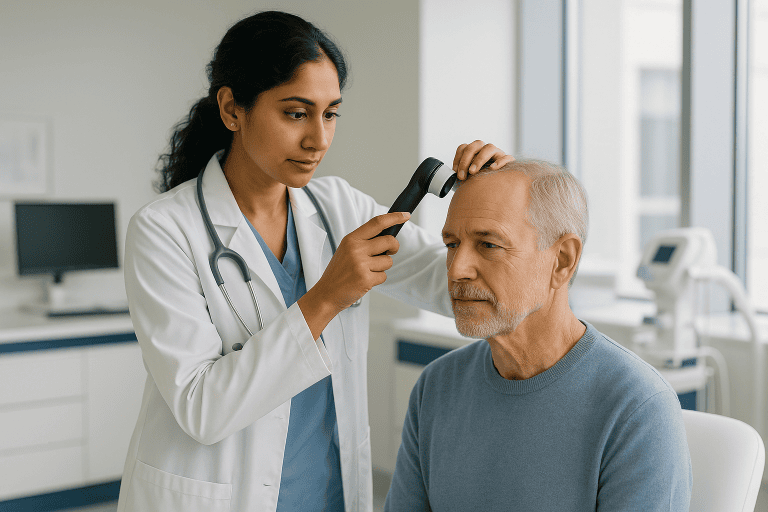
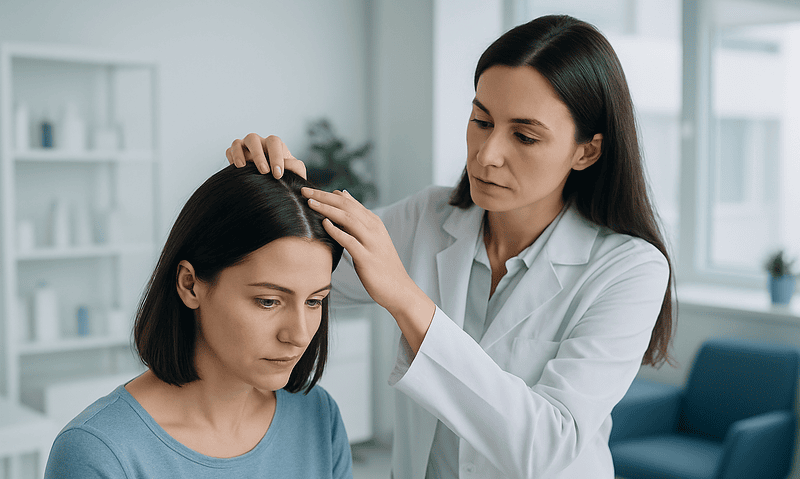
Diagnosis begins with a detailed consultation. The physician evaluates the scalp, hair density, hair calibre, donor area, pattern of loss and medical history. You may be asked about family history, medications, previous hair procedures, hormonal conditions, thyroid disease, autoimmune disease, anaemia, recent illness, weight loss, pregnancy, menopause, stress and nutrition. In some cases, blood tests, dermoscopic scalp examination or referral to dermatology may be recommended, particularly when hair loss appears sudden, diffuse, patchy, inflammatory or otherwise atypical for common pattern loss.
Not every type of hair loss should be treated with transplantation, and certainly not immediately. Temporary shedding, active scalp disease, uncontrolled medical conditions or unstable hair loss may require medical evaluation and treatment first. Hair operations work best when the underlying cause is understood and the scalp is healthy enough to support healing and growth. A careful diagnosis avoids unnecessary procedures and improves the chance of a natural, satisfying outcome; it also occasionally means being told that surgery is not the right answer, which is information worth having.
Some patients seek hair operations for specific cosmetic or reconstructive reasons: restoring hair after previous surgery, improving scars on the scalp or beard area, thickening eyebrows, enhancing a beard or moustache, or revising an older transplant with an outdated hairline. Each situation requires a different design strategy, graft allocation and approach to density, which is why these indications are assessed individually rather than quoted from a menu.
Conditions and Indications Hair Operations Can Address
Hair operations are most often performed for hereditary pattern hair loss, but they may also be appropriate for other indications after medical evaluation. The most suitable candidates are those whose pattern of loss is stable enough to plan safely and whose donor area can provide follicles without creating a new cosmetic problem where the old one used to be.
Male pattern hair loss is the most common indication: frontal recession, temple thinning, crown loss or diffuse thinning across the upper scalp. Depending on the pattern, the plan may focus on restoring a natural frontal hairline, increasing density through the mid-scalp, or addressing the crown while deliberately conserving donor hair. The crown deserves particular caution, because it can expand over time and consume grafts that would frame the face more effectively at the front.
Female pattern hair loss can also be treated surgically in selected women, particularly when thinning is localised and the donor area remains strong. Because women more often lose hair diffusely, evaluation must be especially careful: a diffusely thinning donor area cannot reliably supply grafts. Medical causes such as iron deficiency, thyroid disease, hormonal imbalance, inflammatory scalp disorders or medication-related shedding should be assessed before surgery is considered, and treating those causes sometimes changes the plan entirely.
Scar-related hair loss is another established indication. Scars from previous surgery, trauma, burns or older transplant techniques may be improved by placing follicles into or around the scar tissue, depending on blood supply and skin quality. Results in scar tissue are less predictable than in normal scalp because circulation is reduced, and staged treatment across more than one session is sometimes the safer route.
Eyebrow restoration and beard or moustache enhancement use the same follicular techniques but demand especially refined planning, because the direction and angle of growth in these areas are immediately visible at conversational distance. The physician must consider facial proportions, hair texture, natural asymmetry and how you groom, since transplanted brow or beard hair retains the growth character of its donor site.
Revision after a previous transplant is an increasingly common reason to seek a hair operation. Low density, an unnatural or too-low hairline, plug-like grafts or visible donor scarring can often be improved, but revision work is more complex because donor supply may already be depleted. The plan may involve redistributing grafts, softening the hairline, camouflaging scars or staging the work over time; the options are explained on our hair transplant repair page.
How Hair Operations Are Performed
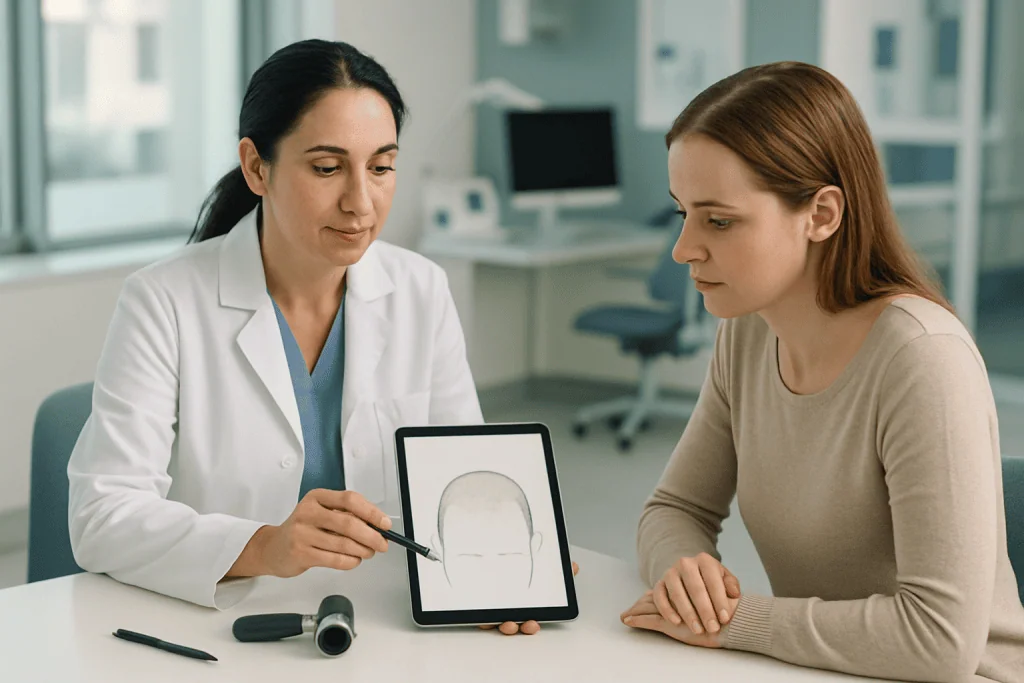
The process begins well before the day of surgery. During consultation, the medical team reviews your goals, hair loss history, donor area and overall health. Photographs are usually taken for planning and documentation. The physician discusses the expected number of grafts, the likely areas of coverage, the limits of your donor supply, and the recovery timeline. Some of this preliminary review can happen remotely, but an in-person scalp assessment remains important before the surgical plan is finalised, because photographs cannot measure donor density or hair calibre reliably.
Preparation includes practical guidance on smoking, alcohol, supplements and hair care in the days before the procedure. If you take regular medication, including anything that affects bleeding, the decision about what to continue or pause belongs to your treating doctor, who weighs the procedure against your wider health. Chronic conditions such as diabetes, hypertension, bleeding disorders or heart disease are reviewed in advance to reduce procedural risk, and the scalp should be free from active infection or inflammation on the day.
Can I dye my hair before an operation?
It is generally better not to dye your hair in the days immediately before a hair operation. Chemical colourants can irritate the scalp, and a freshly treated scalp is harder to assess and prepare; strong colour can also make individual follicular units harder to distinguish during extraction in some hair types. If greys make your donor hair difficult to see, some teams actually ask for a short trim or a specific preparation instead. Follow the specific pre-operative instructions you are given, and raise the question at consultation if colouring is part of your routine, after the scalp has healed, dyeing transplanted hair is usually possible again in due course, at the time your team advises.
How long does a hair transplant operation take?
Most hair transplant operations take several hours, and larger sessions can occupy most of a day. The duration depends on the number of grafts planned, the technique used, the complexity of the case and the pace at which grafts can be handled safely. Speed is not a virtue in itself: follicles are living tissue, and careful extraction, sorting and placement take time. Sessions include breaks for comfort, food and movement, and you remain awake throughout under local anaesthesia in the typical case.
What happens step by step on the day?
Although details vary by technique and case, a typical hair operation follows a recognisable sequence:
- 1. Marking and design. The hairline and recipient zones are drawn while you sit upright, so the design follows your natural facial proportions rather than the geometry of a treatment chair.
- 2. Anaesthesia. Local anaesthetic numbs the donor and recipient areas; sedation may be added in selected cases depending on your needs and clinical suitability.
- 3. Extraction. Follicular units are harvested individually from the donor area with small circular instruments, with the aim of minimal trauma and an even, inconspicuous harvest pattern.
- 4. Sorting and storage. Grafts are examined under magnification, sorted by the number of hairs they contain, and kept in controlled, temperature-conscious conditions to protect their viability.
- 5. Placement. In FUE, recipient channels are opened first and grafts placed into them; in DHI, an implanter device places each follicle directly, controlling depth and direction at the moment of insertion. Hairline and transition zones receive the finest single-hair grafts.
- 6. Final review and instructions. The scalp is cleaned, the result is checked, and post-operative instructions are explained before you leave.
Is a hair operation painful?
Hair operations are performed under local anaesthesia, so the treated areas are numbed during the procedure itself; the injections at the start and a sense of pressure are the parts patients notice most. Afterwards, mild soreness, tightness, itching and swelling are common in the first days and are usually managed with the simple measures and any medication your team prescribes. Discomfort varies from person to person, and it is fair to expect some, anyone promising otherwise is overselling.
Why does transplanted hair fall out after surgery?
Transplanted hairs usually shed within the first weeks because the follicle resets its growth cycle after being moved: the shaft is released, but the follicle remains in place under the skin. This shedding causes real anxiety in patients who were not warned about it, which is why it is worth stating twice on this page: it does not mean the grafts have failed. Early new growth typically begins after several months, often looking fine or uneven at first before thickening and blending. Density, texture and cosmetic maturity continue to evolve over the following months, and the outcome is properly judged only after the hair has completed several growth cycles.
The technology used in hair operations exists to support precision, graft preservation and safety. Magnification helps the team evaluate follicular units; specialised extraction instruments allow controlled harvesting; implanter systems and fine placement tools help set graft angle; digital imaging and clinical photography assist planning and follow-up; and proper storage solutions protect grafts while they are outside the body. None of this substitutes for judgement. The value of any device depends entirely on how thoughtfully an experienced team uses it.
Aftercare is explained before you leave: how to sleep in the first nights, when to begin gentle washing, which activities to avoid, and how to use any prescribed sprays or medication. Most patients can walk and manage light daily activities soon after the procedure, but strenuous exercise, heavy sweating, swimming, alcohol, smoking and direct sun exposure are typically restricted for a period to support healing. Before leaving the hospital, you should understand the whole post-operative plan and know who on the care team you can reach with questions once you are home.
Why Acting Early Matters
Hair loss is often progressive. Waiting too long does not always prevent treatment, but it can narrow the options. As thinning advances, more surface area needs coverage while the donor supply stays finite, which makes it harder to achieve the desired density everywhere. Early evaluation lets a physician determine whether medical therapy, structured observation or transplantation is appropriate at your current stage, and those are three genuinely different answers, not a sales funnel with one exit.
Acting early does not mean rushing into surgery. Younger patients with early hair loss often benefit from monitoring and medical management before any operation is considered. A prematurely placed or overly low hairline can look increasingly unnatural as loss progresses around it, and it spends donor grafts that may be needed later. The right timing depends on age, the rate of loss, family pattern, donor quality, expectations and willingness to maintain long-term care. A sound plan frequently means stabilising the hair loss first and transplanting once the pattern is clearer.
Delay can also allow treatable medical causes of hair loss to worsen. Sudden shedding, patchy loss, scaling, pain, redness or scarring may indicate conditions that need prompt diagnosis. Some forms of inflammatory or scarring alopecia can permanently damage follicles if left untreated, and transplantation into an active disease process is not appropriate until the condition is inactive and the scalp is stable.
For patients who already have advanced hair loss, evaluation remains worthwhile. The goal may shift from full restoration to strategic framing of the face, strengthening the frontal zone, camouflaging scars, or planning staged sessions. Clear medical guidance helps you understand what is realistic, and helps you avoid treatments that would overuse the donor area or create an appearance you would later want to repair.
Benefits of Hair Operations
The potential benefits of a hair operation depend on the diagnosis, the donor supply, the technique and the long-term plan, but these are the improvements patients most commonly seek and that well-planned surgery can offer.
| Benefit | What It Means for You |
|---|---|
| Natural hair growth | Because the procedure uses your own follicles, transplanted hair can grow, be washed, cut, and styled like your existing hair once it matures. |
| Improved hairline and facial framing | A carefully designed hairline can restore balance to the face while respecting age, facial structure, hair type, and future hair loss risk. |
| Long-term density improvement | Transplanted follicles from stable donor areas may provide lasting coverage, although native hair may continue to thin and require ongoing management. |
| Minimally invasive harvesting | Modern FUE and DHI approaches avoid a long linear donor incision and typically allow a relatively quick return to light daily activities. |
| Personalised planning | The number of grafts, placement pattern, and technique can be tailored to your hair loss pattern, donor quality, and aesthetic goals. |
Recovery Timeline After a Hair Operation
Recovery varies between patients, but the following timeline reflects the general stages most people move through after FUE or DHI transplantation. Individual healing depends on the area treated, hair type, skin tone and how closely aftercare instructions are followed.
| Time Period | What Patients Can Expect |
|---|---|
| Day 1 | Mild soreness, tightness, redness, or swelling may be present. Patients receive instructions on sleeping position, medications, and how to protect the grafts. |
| First Week | Small scabs form around grafts and gradually begin to loosen. Gentle washing is introduced as instructed. Strenuous exercise and direct sun exposure are avoided. |
| First Month | Many transplanted hairs shed, which is expected. Redness may continue in some patients, especially with lighter skin tones or sensitive scalps. |
| Three to Six Months | Early new growth often becomes visible. Hair may initially appear fine or uneven before thickening and blending more naturally over time. |
| Longer Term | Density, texture, and cosmetic maturity continue to improve. Final assessment is usually made after the hair has had enough time to complete several growth cycles. |
Two practical points sit behind this table. First, the early weeks look worse before they look better: scabbing, shedding and redness are part of the process, and patients who expect them cope far more calmly than patients who do not. Second, the timeline rewards patience. Judging the result too early, during the shedding phase or the fine early growth, tells you nothing reliable about where the hair will be once the growth cycles complete.
What Influences a Good Hair Operation Result?
A good result begins with the right diagnosis. Transplantation is most predictable when the cause of hair loss is understood and the donor area is healthy. If hair loss is driven by an active medical condition, unstable shedding or inflammatory scalp disease, surgery may need to be postponed until the condition is treated. That protects both the cosmetic outcome and your long-term scalp health, and it is one of the clearest markers separating medical practice from graft retail.
Donor hair quality is among the most important factors. The density of the donor area, the thickness of individual hair shafts, the colour contrast between hair and scalp, the degree of curl or wave, and the number of usable grafts all shape the visible result. A patient with thick, wavy hair may achieve stronger apparent coverage with fewer grafts than a patient with fine, straight hair and high contrast between dark hair and pale scalp. These differences should be discussed honestly at planning, because they explain why identical graft numbers produce very different results in different people.
Hairline design matters just as much. A natural hairline is not a straight line: it carries subtle irregularity, graduated density, and correct direction of growth, with the finest single-hair grafts at the leading edge. The frontal zone should be planned to look credible today and to remain appropriate as you age. Aggressive lowering of the hairline consumes donor grafts quickly and can become impossible to maintain gracefully if hair loss progresses behind it.
Graft survival depends on gentle extraction, proper handling, controlled storage and accurate placement. Follicles are delicate living structures; excessive trauma, dehydration, prolonged time outside the body or incorrect implantation depth can compromise growth. This is why the training and coordination of the whole surgical team matter: a hair operation is a long procedure that is both technical and aesthetic, and consistency across every hour of it is what protects the result.
Your own behaviour after surgery affects healing. Following the washing instructions, avoiding trauma to the grafts, limiting strenuous exercise in the early phase, not smoking, protecting the scalp from the sun and attending follow-up appointments all support recovery. None of this is complicated, but all of it matters, particularly in the first two weeks while the grafts anchor.
Long-term success also depends on managing the hair you were born with. Transplanted follicles may be stable, but the native hair around them can continue to thin, gradually changing the overall picture. Depending on the diagnosis, supportive options may include topical or oral medical therapy prescribed by your doctor, treatments such as PRP for hair loss in selected cases, correction of nutritional deficiencies, or dermatological management of underlying scalp conditions. These options are individualised, and decisions about any medication belong with the treating physician who knows your history.
Finally, expectations must be realistic. A hair operation redistributes existing follicles; it cannot create an unlimited supply of new hair. The task is to use the available donor hair strategically for the greatest visual improvement, which sometimes means declining to chase maximum density everywhere. Some patients need more than one session, particularly when loss is advanced or when higher density is wanted in a large area. A responsible medical team explains what can be achieved safely, and what should not be attempted.
How Acibadem Approaches Hair Operations
For anyone considering hair restoration, medical quality and communication are the central concerns, and reasonably so. Acibadem’s approach combines physician-led assessment, established diagnostic pathways and individualised treatment planning. The intention is that you understand not only the procedure but the medical reasoning behind the plan, including its limits.
Evaluation may involve dermatology, plastic surgery, medical aesthetics or related specialties depending on your needs. When hair loss is complex, that breadth matters. A patient with suspected autoimmune or scarring alopecia needs dermatological diagnosis before any transplant is considered. A patient with prior surgery or scarring may need reconstructive planning. A patient with hormonal or metabolic concerns may need laboratory testing first. Because these services sit within the same healthcare group, additional evaluation can usually be coordinated without fragmenting your care across unconnected providers.
Technology is used to support precision, never to replace judgement. Scalp evaluation, clinical imaging, magnification, refined extraction tools, careful graft-handling systems and implantation instruments help the team plan the donor area, protect follicles and place grafts with natural direction. The technique, FUE, DHI or a combined approach, is chosen according to your anatomy, pattern of loss, donor capacity and goals, not according to a house preference applied to everyone.
Continuity matters at three specific points in a hair operation: clear instructions before the procedure, careful guidance through the first days of healing, and a structured follow-up plan so that questions arising during the months of regrowth reach the team that knows your case.
Treatment plans here are personalised rather than built around a package or a headline graft number, because a high graft count is not automatically better. Excessive harvesting weakens the donor area permanently, and excessive density in the wrong location looks unnatural. The physician’s task is to recommend a plan that respects donor limitations, current loss, likely future loss and your appearance goals, which, for many patients, means a deliberately conservative plan that protects long-term options. During consultation you are encouraged to discuss photographs, the hairline shape you have in mind, styling habits, previous treatments and family patterns of loss, so that expectations rest on medical facts rather than marketing claims.
Deciding Whether a Hair Operation Is Right for You
A hair operation can be a meaningful step for people who want to restore density, improve facial framing or correct thinning that affects their confidence. The best results come from careful diagnosis, realistic planning, skilled graft handling and a long-term view of hair loss. FUE and DHI can both create natural-looking improvement when applied to the right patient with attention to detail, and both disappoint when applied as a formula.
The sensible first step is a proper medical assessment. A physician can examine your donor area, identify the cause and pattern of your hair loss, tell you whether you are a candidate now or would be better served by stabilising treatment first, and set out an approach that fits your goals and protects your future options. Take the time to have that assessment before committing to anything: with hair operations, the quality of the planning is visible in the mirror for the rest of your life.
Preparation
- A specialist evaluates hair loss pattern, donor area quality, medical history, and expectations before planning the procedure. Blood tests may be requested, and patients are usually advised to stop smoking, alcohol, and certain blood-thinning medicines before treatment. Hair and scalp should be clean on the day of the operation.
Aftercare
- Mild swelling, redness, and scabbing can occur and usually improve within days. Patients should follow washing instructions, avoid scratching, heavy exercise, and direct sun exposure during early healing. Transplanted hairs may shed initially, with visible growth developing gradually over several months.
Frequently Asked Questions
What affects the cost of a hair operation?
The final cost depends on the size of the area treated, donor hair quality, chosen technique, level of surgeon involvement, facility standards and what is included in the package. Travel services, interpreter support, accommodation coordination and follow-up arrangements may also affect the quote.
How can I get a personalised quote for hair transplantation in Turkey?
You can request a free consultation by sharing clear scalp photos, your medical history and your expectations. A specialist team can then assess whether FUE, DHI or another approach may be suitable and provide a personalised treatment plan and quote.
Does DHI cost more than FUE?
DHI and FUE have different technical requirements, team workflows and planning needs, so the cost may differ between patients and clinics. The best option is not decided by price alone; suitability should be assessed by a hair restoration specialist.
Are hair transplant packages usually all-inclusive?
Some packages include consultation, procedure, basic medications, translator support, local transfers and follow-up guidance, while other items may be separate. Patients should ask for a written breakdown of clinical and travel-related inclusions before confirming treatment.
Is travelling for a hair operation safe?
Many international patients travel for hair restoration, but safety depends on medical suitability, clinic standards, surgeon experience, infection control and follow-up planning. This information is general and not medical or financial advice, so a consultation is recommended before making arrangements.
Medically reviewed by the Acıbadem International Medical Board August 31, 2026
See our medical review board →
Update history
- PublishedJune 8, 2026
- Medical review approvedAugust 31, 2026
- Last content updateAugust 31, 2026
Trusted care for international patients
From the Acibadem Blog
The Week Before a Hair Operation: A Practical Checklist From Blood Tests to Button-Up Shirts
In the week before a hair operation, most care teams ask patients to complete any requested blood tests, disclose every medicine and supplement so…