Lung Disease
lung disease treatment Turkey at Acibadem offers pulmonology-led diagnosis and care in Istanbul. Plan your consultation with international support.

Quick answer
Lung disease is any condition affecting the airways, lung tissue, blood vessels of the lungs or pleura, from asthma and COPD to infections, interstitial lung disease and lung cancer. Evaluation involves pulmonology consultation, lung function tests, imaging and sometimes bronchoscopy or biopsy, followed by treatment ranging from inhalers and antibiotics to procedures, pulmonary rehabilitation and long-term monitoring.
Lung Disease: When Breathing Becomes a Medical Concern
Lung disease is any condition that affects the airways, the lung tissue, the blood vessels of the lungs, the pleura, or the body’s ability to exchange oxygen and carbon dioxide. It covers short-lived problems such as pneumonia as well as chronic disorders such as asthma, chronic obstructive pulmonary disease and pulmonary fibrosis. Lung disease care is the structured process of finding the cause of breathing symptoms, treating what can be treated, and protecting lung function over time.
Breathing is usually effortless until it is not. A cough that does not go away, shortness of breath on stairs, wheezing at night, chest tightness, repeated infections, or an abnormal chest scan can quickly become a source of worry. For many patients and families, the concern is not only the symptom itself but the uncertainty behind it. Is this asthma, chronic obstructive pulmonary disease, an infection, scarring of the lungs, a blood clot, a tumour, or a complication of another illness? The honest answer is that symptoms alone rarely say. That is exactly what a structured evaluation exists to resolve.
Lung disease care begins with listening carefully to what has changed. Some respiratory conditions develop slowly over years; others appear suddenly and need urgent attention. Some are highly treatable when identified early. Others need long-term monitoring, rehabilitation, medication, oxygen support, or coordinated care with cardiology, oncology, rheumatology, thoracic surgery, intensive care, allergy and immunology, or infectious disease specialists.
For international patients, the decision to seek evaluation abroad often comes at a stressful time. You may have unclear test results, persistent symptoms despite treatment, a new diagnosis that needs confirmation, or a complex condition requiring several specialists at once. You may also be weighing up medical systems, wondering how quickly you can be evaluated, whether language support will be available, and how your care will be coordinated once you return home.
At Acibadem, lung disease care is organised around accurate diagnosis, individualised treatment planning, and careful follow-up. The goal is to understand the cause of breathing problems, reduce symptoms where possible, protect the lungs from further damage, and help you make informed decisions about the safest and most appropriate options.
How the Lungs Work
The lungs are a pair of organs that fill most of the chest, one on each side of the heart. Air enters through the windpipe, which divides into progressively smaller airways until it reaches millions of tiny air sacs called alveoli. The walls of these sacs are thin enough for gases to pass between air and blood. When any part of this system is inflamed, scarred, blocked, infected or compressed, breathing becomes harder work, and that extra work is usually what a patient first notices.
What is the function of the lungs?
The function of the lungs is to move oxygen from the air into the blood and to remove carbon dioxide from the blood into the air. Every cell in the body depends on this exchange, which is why lung disease is felt far beyond the chest: fatigue, poor concentration, reduced exercise capacity and disturbed sleep are all common consequences of impaired gas exchange. The lungs also do quieter work. They help regulate the acidity of the blood, filter small clots from the circulation, warm and humidify inhaled air, and defend the body against inhaled particles and microbes through mucus, tiny hair-like cilia and immune cells lining the airways. When one of these defence mechanisms fails, for example, when smoking paralyses the cilia, infection and inflammation follow more easily.
What are signs of lung problems?
The most common signs of lung problems are breathlessness, a persistent cough, wheezing, chest tightness and a drop in what you can manage physically compared with a few months ago. Other signs are less obvious but just as meaningful: coughing up blood, repeated chest infections, unexplained fatigue linked to low oxygen levels, unintended weight loss, fever with respiratory symptoms, or swelling of the legs together with breathlessness. Night-time signs matter too. Loud snoring, witnessed pauses in breathing, choking sensations, morning headaches and excessive daytime sleepiness can point to a sleep-related breathing disorder rather than a daytime lung condition. None of these signs identifies a specific disease on its own; they are reasons to look further, not conclusions.
What Lung Disease Care Includes
Lung disease care is the evaluation, diagnosis, treatment and ongoing management of conditions affecting the airways, lung tissue, pulmonary blood vessels, pleura and gas exchange. It may involve a single consultation for an unexplained cough or a comprehensive, multi-specialty plan for a chronic or complex respiratory disorder. The scope is set by the clinical question, not by a fixed package.
The specialty most closely involved is pulmonology, also called respiratory medicine. Pulmonologists diagnose and treat diseases of the lungs and the breathing system. Depending on your condition, care may also draw on radiology, thoracic surgery, medical oncology, radiation oncology, cardiology, rheumatology, allergy and immunology, sleep medicine, intensive care, physiotherapy, nutrition and rehabilitation, as well as the Infectious Diseases Department when an unusual or resistant infection is suspected.
Lung disease treatment is not one single procedure. It may include medication, inhaler therapy, antibiotics, antifungal or antiviral treatment, immune-modulating therapy, pulmonary rehabilitation, oxygen therapy, bronchoscopy, drainage of fluid around the lung, biopsy, minimally invasive thoracic procedures, surgery, cancer treatment, or advanced support for severe respiratory failure. The right plan depends on the diagnosis, disease severity, overall health, age, smoking history, previous treatments, imaging findings, measured lung function and your own goals.
Modern respiratory care rests on accurate testing. Pulmonary function tests measure how well air moves in and out of the lungs. Imaging identifies inflammation, infection, nodules, tumours, scarring, fluid, blood clots or airway narrowing. Blood tests, sputum analysis, allergy assessment, sleep studies and tissue sampling are added when they will change a decision, and left out when they will not. For complex cases, findings are reviewed in specialist boards so that the diagnosis and the treatment plan reflect the combined judgement of every relevant discipline rather than a single opinion.
Who May Need Lung Disease Evaluation and Treatment
You may need evaluation if breathing symptoms are new, persistent, worsening, unexplained, or interfering with daily life. Some patients come because of symptoms; others are referred after an abnormal chest X-ray, CT scan, laboratory result, oxygen measurement or preoperative assessment picked something up before any symptom appeared.
Common reasons for a pulmonology consultation include shortness of breath, chronic cough, wheezing, noisy breathing, chest tightness, coughing up blood, repeated bronchitis or pneumonia, fatigue related to poor oxygen levels, unexplained weight loss, fever with respiratory symptoms, reduced exercise capacity, or leg swelling combined with breathlessness. Night-time symptoms, snoring, pauses in breathing, choking sensations, morning headaches, daytime sleepiness, may point towards obstructive sleep apnoea rather than a structural lung problem.
The diagnostic process begins with a detailed history and physical examination. Your physician will ask when symptoms started, what makes them better or worse, whether you smoke or previously smoked, whether you have occupational or environmental exposures, and whether you have allergies, asthma, heart disease, autoimmune disease, a cancer history, clotting problems or a family history of lung disease. Previous imaging, medications, hospitalisations and infections are reviewed alongside anything new.
Diagnosis may involve pulmonary function testing, oxygen saturation measurement, arterial blood gas analysis when indicated, chest X-ray, CT imaging, high-resolution CT for suspected interstitial disease, CT angiography for suspected pulmonary embolism, echocardiography when pulmonary hypertension or a cardiac cause of breathlessness is possible, bronchoscopy for direct airway evaluation, biopsy for suspicious lesions or inflammatory disease, and laboratory studies for infection, inflammation, immune disorders or genetic conditions. Because breathlessness is shared territory, the work-up sometimes crosses into cardiology: coronary artery diseases, heart valve diseases and pericardial diseases can all produce symptoms that feel identical to a lung problem.
Patients often seek a second opinion when they have been told they have lung nodules, emphysema, pulmonary fibrosis, tuberculosis, sarcoidosis, bronchiectasis, difficult-to-control asthma, recurrent pneumonia, a suspected lung cancer, or unexplained shortness of breath. A second opinion can confirm the diagnosis, identify whether additional tests would change anything, and compare treatment options in a structured way, including the honest option of doing nothing more than watching carefully.
Conditions and Indications Addressed
Lung disease care covers a broad range of respiratory conditions, from common airway disorders to rare and complex diseases. The plan is shaped by the condition itself and by how strongly it affects oxygen levels, exercise capacity, sleep, infection risk and overall health.
- Asthma and allergic airway disease: recurring airway inflammation causing wheeze, cough, chest tightness and breathlessness, often triggered by allergens, exercise, infection or irritants.
- Chronic obstructive pulmonary disease: a long-term condition, usually related to smoking or environmental exposure, that includes chronic bronchitis and emphysema and limits airflow and daily activity.
- Respiratory infections: pneumonia, tuberculosis, fungal and viral infections, and recurrent or difficult-to-treat infections requiring targeted diagnosis and therapy.
- Bronchiectasis: permanent widening of the airways leading to mucus retention, chronic cough, recurrent infections and flare-ups.
- Interstitial lung diseases: a group of disorders, including pulmonary fibrosis, in which inflammation or scarring of the lung tissue reduces oxygen exchange.
- Lung nodules and masses: abnormalities found on imaging that may be benign, inflammatory, infectious or cancerous, and require careful risk assessment rather than assumption.
- Lung cancer and suspected malignancy: evaluation, staging, biopsy and treatment planning in coordination with oncology, thoracic surgery, radiology, pathology and radiation oncology.
- Pleural diseases: fluid around the lung, pleural thickening, infection of the pleural space, or pneumothorax, sometimes requiring drainage or a procedure.
- Pulmonary embolism and vascular lung disease: blood clots in the lungs, pulmonary hypertension and other conditions of the lung circulation.
- Sleep-related breathing disorders: obstructive sleep apnoea and night-time oxygen problems affecting sleep quality, cardiovascular strain and daytime function.
- Occupational and environmental lung disease: respiratory illness related to dust, chemicals, asbestos, mould, air pollution or workplace exposure.
- Preoperative pulmonary assessment: evaluation of lung function and risk before major surgery, particularly with known respiratory disease or abnormal imaging.
What is lung disease COPD?
COPD, chronic obstructive pulmonary disease, is a lung disease in which the airways become persistently narrowed and the air sacs lose their elasticity, making it progressively harder to push air out of the lungs. It usually develops after years of exposure to cigarette smoke, biomass fuel or occupational dust, and it typically includes elements of chronic bronchitis and emphysema. The airflow limitation in COPD is not fully reversible, which distinguishes it from asthma, but that does not mean nothing can be done: bronchodilators, anti-inflammatory therapy, pulmonary rehabilitation, vaccination, oxygen assessment and, above all, stopping smoking can meaningfully change how the disease behaves and how you live with it.
What is interstitial lung disease?
Interstitial lung disease is an umbrella term for a large group of disorders in which inflammation or scarring develops in the tissue between the air sacs of the lungs, stiffening them and reducing oxygen transfer. The group includes idiopathic pulmonary fibrosis, lung disease linked to autoimmune conditions such as rheumatoid arthritis or scleroderma, hypersensitivity reactions to inhaled organic material, drug-related lung injury and sarcoidosis. Distinguishing between these matters enormously, because some respond to anti-inflammatory or immune-modulating treatment while others are managed with antifibrotic medication and monitoring. High-resolution CT, pulmonary function testing, autoimmune blood panels and sometimes biopsy are used to sort one from another, and the honest position is that this sorting can take time.
What causes sarcoidosis lung disease?
The cause of sarcoidosis is not known. Current evidence suggests it is an exaggerated immune reaction, probably to an inhaled trigger that has not been definitively identified, in people with a genetic susceptibility. The reaction produces small clusters of inflammatory cells called granulomas, most often in the lungs and lymph nodes of the chest, though other organs can be involved. Some sarcoidosis settles on its own and needs only observation; some requires treatment to control inflammation and protect the lungs. Because it can mimic infection and malignancy on scans, careful diagnosis matters more here than in almost any other lung condition.
What is black lung disease?
Black lung disease is the common name for coal workers’ pneumoconiosis, an occupational lung disease caused by inhaling coal dust over years of exposure, usually in mining. The dust accumulates in the lungs and triggers inflammation and, in advanced cases, scarring that permanently reduces lung capacity. There is no treatment that removes the dust once it is embedded; management focuses on stopping further exposure, treating symptoms and complications, screening for related conditions and supporting breathing. It belongs to a wider family of dust diseases, silicosis and asbestos-related disease among them, which is why an occupational history is a standard part of every respiratory consultation.
What are three warning signs of lung cancer?
The three warning signs most often cited for lung cancer are a persistent cough that lasts or changes character, coughing up blood, and unexplained weight loss. Others include breathlessness out of proportion to activity, chest or shoulder pain, hoarseness and repeated chest infections in the same part of the lung. Two honest caveats belong next to that list. First, every one of these signs is far more often caused by something other than cancer. Second, early lung cancer frequently causes no symptoms at all, which is why nodules found incidentally on scans are taken seriously and followed methodically rather than dismissed.
Lung infection and other lung infectious diseases
A lung infection develops when bacteria, viruses or fungi multiply in the airways or lung tissue faster than the body’s defences can clear them; lung infectious diseases range from ordinary community pneumonia to tuberculosis, fungal disease and infections in patients with weakened immunity. Most respond well to targeted treatment, but “targeted” is the operative word: identifying the organism through cultures, molecular tests and sometimes bronchoscopy allows therapy that actually fits the cause. Recurrent or unusual infections deserve a deeper look, because they can be the visible sign of an underlying problem such as bronchiectasis, an immune disorder or an obstructed airway.
What does “disease on the lungs” mean on a scan report?
When a report describes disease on the lungs, it means the scan shows an abnormality, but it does not say which one. Shadowing, nodules, ground-glass change, consolidation, fluid and scarring all look different to a radiologist and point in different directions, yet all can be summarised loosely as abnormal findings. Because many lung diseases share similar symptoms and similar images, precise diagnosis is essential. Shortness of breath may come from asthma, anaemia, heart disease, pulmonary embolism, infection, anxiety, deconditioning or lung scarring. Cough may be caused by airway inflammation, reflux, medication effects, postnasal drip, infection, tumour or chronic bronchitis. A careful diagnostic pathway protects you from both under-treatment and unnecessary treatment.
How Lung Disease Care Is Performed Step by Step
Initial Review and Preparation
For international patients, the process often begins before travel. Medical reports, imaging files, laboratory results, pathology slides where available, pulmonary function tests, medication lists and discharge summaries can be reviewed in advance to understand the clinical question and plan the most efficient evaluation, so that days on site are spent testing and deciding, not repeating what already exists.
Preparation depends on the planned tests. You may be asked to bring previous CT or X-ray images in digital format, to avoid certain inhalers for a defined period before pulmonary function testing where medically safe, or to fast before a sedated procedure. If a procedure requires adjusting blood-thinning or other essential medication, that instruction comes from the treating physician and from no one else; nothing changes without it.
Consultation and Clinical Examination
The pulmonology consultation covers symptoms, risk factors, past illnesses, occupational exposures, travel history, smoking or vaping history and previous treatments in detail. The examination may include listening to the lungs and heart, assessing your breathing pattern, checking oxygen saturation at rest and sometimes during walking, and looking for signs of infection, inflammation, fluid overload or low oxygen. Small findings carry weight here: clubbed fingertips, crackles at the lung bases or a fast resting heart rate each narrow the possibilities.
In complex cases, the pulmonologist coordinates with other specialists from the beginning. Suspected lung cancer may involve thoracic surgery, medical oncology, radiation oncology, nuclear medicine, interventional radiology and pathology. Suspected autoimmune-related lung disease brings in rheumatology. Pulmonary hypertension requires cardiology and advanced imaging. Unusual infections bring in infectious disease physicians and microbiology. This collaborative approach exists to prevent the most common failure in complex care: fragmented decisions made by specialists who never compare notes.
Diagnostic Testing
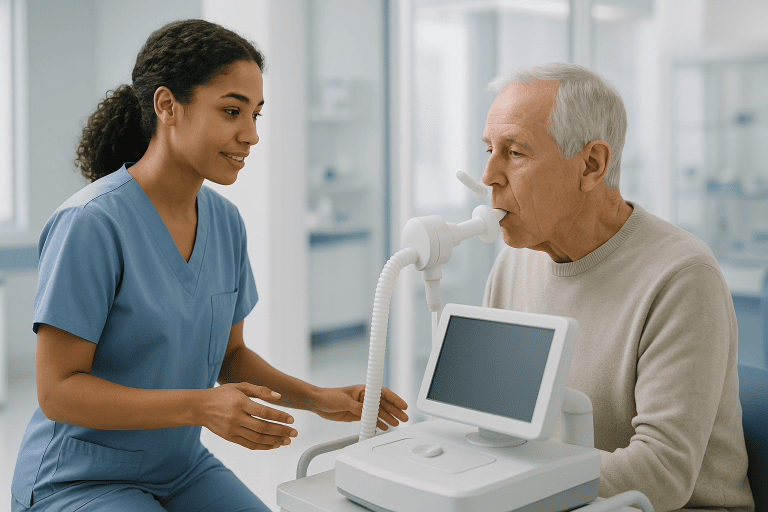
Testing is selected according to your symptoms and previous results, not run as a fixed battery. Pulmonary function tests measure airflow, lung volumes and gas transfer, and help distinguish obstructive diseases such as asthma and COPD from the restrictive patterns seen in some interstitial diseases and chest wall conditions. Imaging may include chest X-ray, CT, high-resolution CT, or contrast-enhanced CT when blood vessels or tumours need evaluation. Ultrasound is used to assess fluid around the lungs, and nuclear medicine imaging can help evaluate blood flow or cancer staging in selected cases. Where older scans exist, comparing them is often more informative than any new test: a nodule unchanged for years tells a very different story from one that has grown.
Bronchoscopy is recommended when the airways need to be seen directly or when samples must be taken. In practical terms it works like this:
- Step 1: you receive sedation and local anaesthetic so the procedure is tolerable and closely monitored.
- Step 2: a thin, flexible instrument is passed through the mouth or nose into the airways.
- Step 3: the physician inspects the airways and collects mucus, washings, brushings, needle samples or tissue biopsies as the suspected condition requires.
- Step 4: you are monitored during recovery from sedation before going home or back to the ward.
Image-guided biopsy through the chest wall is an alternative for certain lung nodules and pleural abnormalities. Laboratory work may include blood counts, inflammatory markers, immune and autoimmune panels, allergy markers, microbiology cultures, tuberculosis testing, viral and fungal tests, and genetic or molecular studies in selected cancers. Pathology and microbiology carry the deciding vote in separating infection, inflammation and malignancy, which is also why their results cannot be rushed.
Treatment Planning
Once the diagnosis is clarified, your care team explains the findings and discusses options. A personalised plan may involve short-term treatment for an acute condition, long-term disease control, a procedure, rehabilitation, lifestyle guidance or structured surveillance. Decisions weigh medical evidence, international guidelines, local resistance patterns for infections, your preferences, your travel constraints and, critically for international patients, the feasibility of follow-up after you return home. A technically ideal plan that cannot be continued in your home country is not an ideal plan.
For chronic airway disease, treatment may involve inhaled medication, bronchodilators, anti-inflammatory therapy, vaccination planning, smoking cessation support, trigger avoidance and training in correct inhaler technique: a step that is undervalued and frequently the single reason a previous treatment “did not work”. For infections, antimicrobial therapy is targeted wherever possible, guided by cultures and clinical response. For interstitial lung disease, treatment may include anti-inflammatory or antifibrotic medication depending on the precise diagnosis, with regular monitoring of lung function and oxygen needs.
For pleural fluid, drainage may be performed for diagnosis or symptom relief. For pneumothorax, treatment ranges from observation to needle aspiration, tube drainage or surgery. For lung nodules, management may mean surveillance imaging, biopsy or surgical removal depending on size, appearance, growth, risk factors and overall health. For cancer, planning is reviewed in a multidisciplinary tumour board so that staging, surgery, systemic therapy, radiation therapy and supportive care are aligned before treatment starts rather than reconciled afterwards.
Procedures, Duration and Monitoring
The duration of evaluation varies honestly with the question being asked. A straightforward consultation with basic testing may be completed within a short visit. Complex cases may need several days for imaging, pulmonary function testing, bronchoscopy, biopsy results, microbiology cultures or board review. Some tests give immediate information; tissue pathology, molecular testing and cultures take longer because accuracy is the point of doing them at all.
Many diagnostic procedures are outpatient. Pulmonary function testing is non-invasive and usually completed the same day. CT imaging is typically outpatient. Bronchoscopy itself is relatively short, but preparation, sedation monitoring and observation afterwards add time. More invasive biopsies, drainage procedures or surgery may require hospital admission depending on your condition and the procedure performed.
Technology supports each stage. High-quality imaging identifies disease patterns and guides biopsies. Pulmonary function systems measure airflow and gas exchange. Endoscopic equipment lets physicians examine airways and collect samples with precision. Laboratory and pathology services characterise infection, inflammation, cancer type and molecular features. Monitoring systems track oxygen levels, heart rhythm, respiratory status and treatment response during procedures and hospital stays.
Recovery and Ongoing Care
Recovery depends on what is being treated. Asthma and bronchitis may improve quickly once the right therapy starts. After pneumonia, it can take weeks before energy and breathing capacity return to their usual level, and that slow tail is normal rather than alarming. COPD, bronchiectasis, interstitial lung disease and pulmonary hypertension usually need ongoing management rather than a single definitive fix. After bronchoscopy, a mild sore throat, cough or fatigue for a short period is common. After drainage procedures or surgery, recovery takes longer and depends on the extent of treatment.
Follow-up is not an optional extra. It may include repeat imaging, pulmonary function testing, oxygen assessment, medication adjustment by your treating doctor, rehabilitation, vaccination updates, infection prevention planning and coordination with physicians in your home country. For international patients, clear medical reports and treatment summaries are what make continuity possible: they are prepared with that use in mind.
Why Acting Early Matters
Many lung conditions are easier to manage before severe damage occurs. Early evaluation can control inflammation, treat infection before complications develop, detect cancer at a more treatable stage, prevent repeated exacerbations and reduce the likelihood of hospitalisation. In chronic lung disease, timely treatment helps preserve function, supports daily activity and gives long-term control a better starting point.
Delay lets some diseases progress silently. Interstitial lung disease can cause scarring that may not be reversible. Poorly controlled asthma can produce severe attacks. Untreated sleep apnoea adds cardiovascular strain and daytime impairment. Recurrent infections worsen bronchiectasis. Pulmonary embolism can be life-threatening when unrecognised. Pleural fluid or pneumothorax can impair breathing to the point of requiring urgent intervention. Not every cough or mild breathlessness is dangerous, most are not, but persistent, worsening or unexplained symptoms deserve a proper answer.
How can I get my lungs healthy again?
The most effective single step for most people is stopping smoking, in any form: it slows the progression of COPD, reduces infection risk and improves the results of nearly every lung treatment. Beyond that, the evidence supports regular physical activity adapted to your capacity, pulmonary rehabilitation where prescribed, keeping vaccinations current, treating airway disease consistently rather than only during flare-ups, reducing exposure to dust, mould and air pollution, and maintaining good sleep and nutrition. One honest limit belongs here: established scarring in the lungs does not reverse. What these measures do is protect the healthy lung tissue you still have, improve how efficiently you use it, and reduce the events, infections and exacerbations, that cause stepwise decline.
Benefits of Lung Disease Evaluation and Treatment
The benefits of treatment depend on the diagnosis, but a structured respiratory care plan offers meaningful advantages for most patients.
| Benefit | What It Means for You |
|---|---|
| More accurate diagnosis | Advanced testing and specialist interpretation identify the true cause of breathing symptoms and reduce uncertainty. |
| Personalised treatment | Your plan is matched to your condition, lung function, imaging, medical history and goals rather than a one-size-fits-all protocol. |
| Better symptom control | Appropriate medication, procedures, rehabilitation and monitoring may reduce cough, wheeze, breathlessness, infections or fatigue. |
| Protection of lung function | Early and consistent care can slow progression in some chronic diseases and reduce preventable complications. |
| Coordinated specialist decisions | Complex cases are reviewed across disciplines, supporting clearer decisions about biopsy, surgery, cancer care, immune therapy or follow-up. |
| Safer ongoing management | Education about medication, inhaler use, oxygen, warning signs, travel planning and follow-up helps you manage your condition with confidence. |
Typical Care and Recovery Timeline
Because lung disease care varies so widely, this timeline describes a general pathway rather than a fixed schedule for every patient.
| Time Period | What Patients Can Expect |
|---|---|
| Day 1 | Initial pulmonology consultation, review of previous records, physical examination, oxygen assessment, and planning of imaging or pulmonary function studies. |
| First week | Completion of key diagnostic tests in many cases, discussion of preliminary findings, start of treatment for clear conditions, or planning of bronchoscopy, biopsy or specialist board review. |
| First month | Assessment of treatment response, medication adjustment by the treating team, review of pathology or culture results, and a follow-up plan for chronic or complex disease. |
| Longer term | Periodic monitoring with symptom review, lung function tests, imaging when indicated, rehabilitation, vaccination planning, exacerbation prevention and coordination with home physicians. |
What Influences Outcomes and a Good Result
A good result is not defined the same way for every patient. For one person, success means resolving pneumonia and returning to normal activity. For another, it means fewer asthma attacks, better sleep, safer surgery, stable lung function, accurate cancer staging, or simply a clear plan for a chronic illness after months of uncertainty. Outcomes depend on the diagnosis, disease severity, timeliness of treatment, overall health, and how consistently the plan can be followed over time.
Diagnostic accuracy comes first. Lung diseases overlap, and symptoms alone are rarely enough. A patient with breathlessness may need parallel evaluation of the lungs and the heart. A nodule may need comparison with older scans to establish whether it is stable or growing. A chronic cough may require assessment of the airways, sinuses, reflux, medications and infection risk before anyone reaches for a prescription. The more precise the diagnosis, the more focused, and the less wasteful, the treatment.
Stage and severity matter. Earlier-stage disease usually offers more options. Advanced scarring, severe emphysema, extensive cancer or prolonged low oxygen levels limit what treatment can achieve, though supportive care and symptom management remain genuinely valuable even then. Infections respond best when the organism is identified and therapy starts promptly.
Your own contribution weighs heavily. Smoking cessation is the most significant step available for many respiratory conditions. Correct inhaler technique strongly affects asthma and COPD control. Vaccination, pulmonary rehabilitation, nutrition, activity adapted to capacity, sleep quality and avoidance of occupational or environmental triggers all influence long-term stability. For patients using oxygen or ventilation support, proper training and monitoring are essential to using them safely and well.
Continuity of care matters especially for international patients. A clear diagnosis and plan are valuable, but most lung disease needs follow-up. Acibadem teams prepare medical documentation, test results, imaging summaries and physician recommendations in a form your doctors at home can act on, and where appropriate, follow-up visits or remote review of new reports can be planned.
Lung Disease Care at Acibadem for International Patients
International patients typically come to Acibadem for a structured, specialist-led evaluation of respiratory symptoms or a second opinion on a complex diagnosis. Care follows defined clinical pathways with patient safety processes, infection control standards and multidisciplinary coordination built into daily practice, not added for visitors.
For lung disease, coordination is where the value sits. A patient with a suspicious nodule may need radiology review, bronchoscopy or image-guided biopsy, pathology, molecular testing and tumour board discussion if cancer is confirmed. A patient with suspected pulmonary fibrosis may need high-resolution imaging, pulmonary function testing, rheumatology input and long-term monitoring. A patient with recurrent infections may need microbiology, immune assessment, airway clearance planning and careful antibiotic selection alongside the infectious diseases team. Bringing these threads together produces one coherent plan instead of several partial ones.
Acibadem’s pulmonology teams work from evidence-based diagnostic and treatment protocols while tailoring every decision to the individual. Modern diagnostic resources support evaluation of airway disease, lung tissue disorders, pleural disease, nodules, infections and sleep-related breathing problems. When a procedure is needed, you are walked through preparation, sedation considerations, risks, benefits and expected recovery in language you can actually follow, including what the procedure cannot tell you, which matters as much as what it can.
Experienced physicians are central, but international care also depends on organisation. Acibadem International supports patients with appointment coordination, medical record transfer, interpretation services, hospital admission planning where needed, and the practical logistics that surround travel for treatment. This matters most for patients who are anxious, travelling with family, or managing a serious diagnosis far from home.
Personalised planning also means recognising different priorities. Some patients need rapid evaluation before returning to work or family. Some need a careful second opinion before starting cancer therapy. Some need to understand whether it is safe to fly, undergo surgery or use oxygen during travel. Others need a long-term plan their home physicians can carry forward. The aim in every case is the same: clear medical reasoning, practical next steps and continuity after the hospital visit ends.
Preparing for a Specialist Evaluation
A specialist evaluation is most productive when the full picture arrives with the patient. Previous imaging in digital format, radiology reports, pathology results, pulmonary function tests, discharge summaries, vaccination records and a complete, current medication list all shorten the path to an answer, and often prevent tests from being repeated unnecessarily. If older chest scans exist, even from years ago, they are worth retrieving: for nodules in particular, the comparison over time is frequently the most informative piece of evidence available.
It also helps to arrive with your own questions written down. What is the working diagnosis, and how certain is it? What would change the plan? What does treatment involve, what does it realistically achieve, and what happens if you choose surveillance instead? What follow-up will be needed at home, and what should your local doctor receive in writing? Lung disease care is most effective when it is precise, timely and coordinated around the whole of your health, and a well-prepared consultation is where that precision begins.
Frequently Asked Questions
What is lung disease?
Lung disease is any condition that affects the airways, the lung tissue, the blood vessels of the lungs, the pleura or the body's ability to exchange oxygen and carbon dioxide. It covers short-lived problems such as pneumonia as well as chronic disorders such as asthma, chronic obstructive pulmonary disease, interstitial lung disease and lung cancer. Care means finding the cause of breathing symptoms, treating what can be treated and protecting lung function over time.
What are the warning signs of lung disease?
Common warning signs include a cough that does not go away, shortness of breath on stairs or exertion, wheezing, chest tightness, repeated chest infections, coughing up blood, unexplained weight loss and an abnormal chest scan. Symptoms alone rarely reveal the cause, because asthma, COPD, infection, scarring, a blood clot or a tumour can all present similarly. Persistent or worsening symptoms deserve a structured evaluation by a pulmonologist.
How is lung disease diagnosed?
Evaluation begins with a pulmonology consultation and a careful history of what has changed and over what time. Lung function tests measure airflow, lung volumes and gas transfer; chest X-ray and CT show the structure of the lungs; blood tests and oxygen measurements assess the wider picture. Bronchoscopy, sputum analysis, allergy testing or biopsy are added when the diagnosis remains unclear. The cause is usually established by combining these findings.
What treatments are used for lung disease?
Treatment depends on the diagnosis. Options range from inhalers for asthma and COPD, antibiotics or antivirals for infections and anti-fibrotic or immune-modulating medicines for interstitial disease, to procedures such as bronchoscopic interventions, surgery or radiotherapy for tumours. Pulmonary rehabilitation, oxygen therapy, vaccination and smoking cessation support are important for many chronic conditions. Long-term monitoring protects lung function and adjusts treatment as needs change.
Can lung disease be prevented?
Many forms can be prevented or slowed. Not smoking, and stopping if you do, is the single most important step, alongside avoiding second-hand smoke and occupational dusts or fumes. Vaccination against influenza, pneumococcal disease and other respiratory infections reduces the risk of serious illness, especially in older adults and people with chronic conditions. Good control of asthma and allergies, regular physical activity and prompt treatment of infections also protect the lungs.
Medically reviewed by the Acıbadem International Medical Board September 13, 2026
See our medical review board →
Update history
- PublishedJune 8, 2026
- Medical review approvedSeptember 13, 2026
- Last content updateSeptember 12, 2026
References2
- Lung Diseases medlineplus.gov
- Chronic obstructive pulmonary disease (COPD) who.int