Pregnancy Monitoring
Pregnancy monitoring, also called prenatal or antenatal care, is the planned series of appointments, laboratory tests, and ultrasound scans that track the health of a pregnant person and the developing baby. Visits…
Quick answer
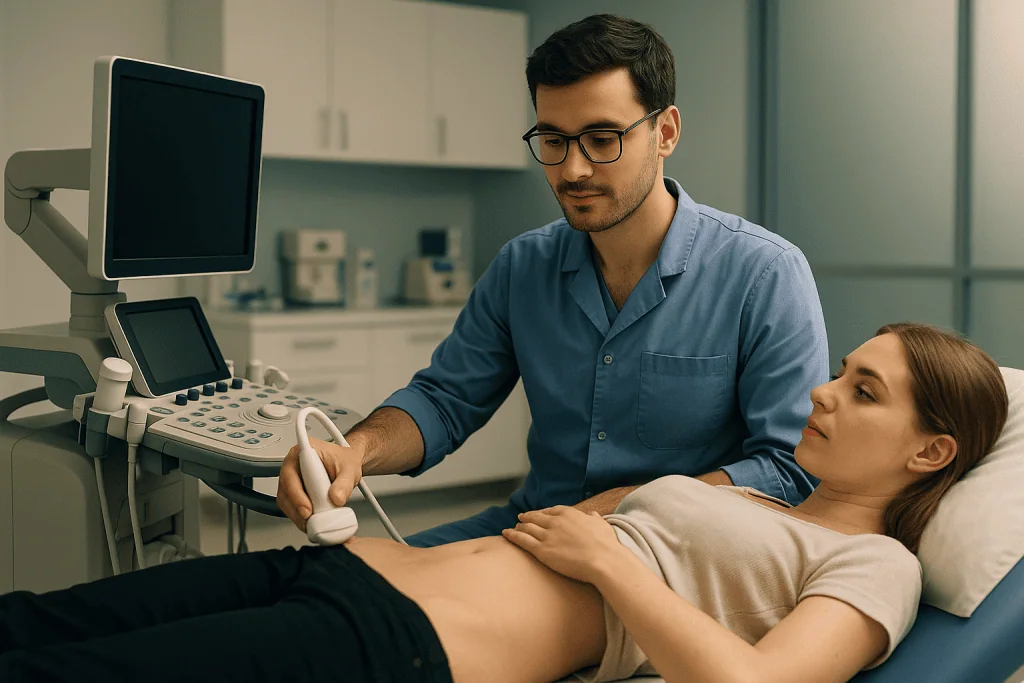
Pregnancy monitoring is the schedule of check-ups, blood and urine tests, and ultrasound scans used to follow a pregnant person's health and the baby's development from early pregnancy to birth. It is recommended for every pregnancy, is generally non-invasive with no recovery time, and helps detect problems such as pre-eclampsia or gestational diabetes early.
What is pregnancy monitoring?
Pregnancy monitoring is the ongoing set of check-ups, tests, and scans that a doctor or midwife uses to follow the health of a pregnant person and the developing baby from the first weeks of pregnancy until birth. It is sometimes called prenatal care or antenatal care (both terms simply mean care given before birth). Rather than a single event, pregnancy monitoring is a schedule of visits that becomes more frequent as the due date approaches.
The main purpose is to confirm that the pregnancy is progressing as expected and to detect problems early, when they are usually easier to manage. Typical elements include measuring blood pressure and weight, testing urine and blood, listening to the baby’s heartbeat, measuring the growth of the uterus (womb), and performing ultrasound scans (imaging that uses sound waves to create pictures of the baby).
Pregnancy monitoring is used in every pregnancy, but it plays a particularly important role in conditions such as:
- Gestational diabetes – high blood sugar that first appears during pregnancy.
- Pre-eclampsia – a condition marked by high blood pressure and protein in the urine that can affect the mother’s organs and the baby’s growth.
- Fetal growth restriction – when the baby is growing more slowly than expected.
- Multiple pregnancy – twins, triplets, or more.
- Placenta problems – for example, placenta previa, where the placenta (the organ that nourishes the baby) lies low in the uterus and covers the cervix (the opening of the womb).
- Pre-existing medical conditions such as diabetes, thyroid disease, heart disease, or autoimmune disorders.
In many hospitals, including Acibadem, pregnancy monitoring is managed by the Gynecology & Obstetrics department, often together with midwives, laboratory staff, and, when needed, specialists in maternal-fetal medicine (doctors who focus on high-risk pregnancies).
Who is a candidate: who needs pregnancy monitoring
Every pregnant person is a candidate for routine pregnancy monitoring. Regular visits are recommended regardless of age, health history, or number of previous pregnancies, because some complications develop without warning symptoms.
Closer or more specialized monitoring is often advised when one or more of the following applies:
- Age under 18 or over 35 at the time of delivery.
- A previous pregnancy affected by pre-eclampsia, preterm birth, stillbirth, or a baby with low birth weight.
- A pre-existing condition such as high blood pressure, diabetes, kidney disease, epilepsy, or a blood-clotting disorder.
- A body mass index (a measure of weight relative to height) that is significantly above or below the usual range.
- A pregnancy conceived with fertility treatment such as in vitro fertilization (IVF).
- Twins or higher multiples.
- Bleeding, reduced fetal movement, or abnormal findings on an earlier scan or blood test.
- Infections that can affect the baby, or exposure to certain medications.
When it is not suitable: there is no situation in which pregnancy monitoring itself is harmful, so it is rarely described as “unsuitable.” However, individual tests within the monitoring plan may not be appropriate for everyone. For example, some invasive tests, such as amniocentesis (taking a small sample of the fluid around the baby with a fine needle), carry a small risk of miscarriage and are offered only when the expected benefit outweighs that risk. Certain imaging methods that use radiation are generally avoided during pregnancy unless clearly necessary. Your doctor may also adjust the schedule if travel, illness, or other circumstances make the standard timetable impractical.
How the pregnancy monitoring procedure works
Pregnancy monitoring follows a broadly similar pattern in most countries, although the exact number and timing of visits vary between health systems and individual circumstances.
Before: the first visit
The first appointment usually takes place in the first trimester (the first 12 to 13 weeks). It is typically the longest visit. The doctor or midwife takes a detailed medical, surgical, family, and obstetric history, asks about lifestyle and medications, and calculates an estimated due date. Baseline measurements of blood pressure, weight, and height are recorded. Blood tests commonly check blood type, iron levels, blood sugar, and screening for infections such as hepatitis B, HIV, and syphilis. A urine test looks for infection and protein. An early ultrasound may be done to confirm the pregnancy is in the uterus, check the heartbeat, count the number of babies, and refine the due date.
During: the visits through pregnancy
At each follow-up visit, the routine usually includes:
- Blood pressure and weight measurement.
- A urine test for protein and sugar.
- Listening to the baby’s heartbeat with a handheld Doppler device (a small ultrasound instrument).
- Measuring the height of the uterus over the abdomen to track growth.
- Discussion of symptoms, movements, and any concerns.
Key scans and tests are timed to specific windows. A screening ultrasound between roughly 11 and 14 weeks, often combined with a blood test, can assess the chance of certain chromosomal conditions. A detailed anatomy scan is usually performed around 18 to 22 weeks to examine the baby’s organs, the placenta, and the amount of fluid. A glucose test to screen for gestational diabetes is commonly offered around 24 to 28 weeks. In the third trimester, additional scans or a cardiotocograph (CTG) may be used. A CTG records the baby’s heart rate and the mother’s contractions through two sensors strapped to the abdomen for about 20 to 40 minutes.
After: results and follow-up
Most results are discussed at the same visit or at the next one. If anything is unclear, your doctor may order a repeat test, a more detailed scan, or a referral to a specialist. Toward the end of pregnancy, monitoring also includes checking the baby’s position and discussing plans for labor and birth.
Preparation for pregnancy monitoring
Most monitoring visits require very little preparation, but a few practical steps make appointments more useful:
- Bring records. Notes from previous pregnancies, a list of current medications and supplements, and any recent test results help the care team build a complete picture.
- Know your history. Information about hereditary conditions in either partner’s family may influence which screening tests are offered.
- Follow fasting instructions when given. Some glucose tests require fasting for several hours beforehand; routine visits do not.
- Ultrasound comfort. For some early scans you may be asked to arrive with a full bladder, which improves image quality; for later scans this is usually unnecessary.
- Write down questions. Visits can feel brief, so a short list helps ensure nothing is forgotten.
- Wear loose clothing. Two-piece outfits make abdominal examinations and CTG monitoring easier.
Recovery and aftercare: pregnancy monitoring recovery time
Because routine pregnancy monitoring is non-invasive, there is generally no recovery period. Most people return to normal activities immediately after a visit. Ultrasound and CTG do not cause pain, although lying on the back for a scan late in pregnancy can be uncomfortable for a short time.
A few components have brief aftercare considerations:
- Blood tests may leave minor bruising at the needle site that typically fades within a few days.
- Glucose tolerance tests can cause temporary nausea or light-headedness; eating a normal meal afterward usually resolves this.
- Invasive tests such as amniocentesis or chorionic villus sampling (taking a tiny sample of placental tissue) are the exception. After these, doctors often recommend resting for the remainder of the day and avoiding heavy lifting or strenuous exercise for a day or two. Mild cramping is common; persistent pain, leaking fluid, or bleeding should be reported promptly.
Aftercare in the broader sense means following the advice given at each visit: taking recommended supplements such as folic acid and iron, attending the next scheduled appointment, and paying attention to the baby’s movement pattern once movements are established, typically from the second half of pregnancy.
Risks and side effects: pregnancy monitoring risks and benefits
Balanced information about pregnancy monitoring risks and benefits helps people take part in decisions about their care.
Benefits
- Early detection of high blood pressure, diabetes, anemia, and infections, allowing treatment before they cause harm.
- Identification of babies who are growing slowly or have structural differences, so birth can be planned appropriately.
- Confirmation of the due date, which guides decisions about timing of delivery.
- Opportunities to discuss nutrition, medications, vaccination, and preparation for birth.
- Reassurance for many parents when results are normal.
Risks and limitations
- Ultrasound and CTG have been used for decades and are considered safe when performed for medical reasons by trained staff. No harmful effects on the baby have been established with standard diagnostic use.
- False alarms. Screening tests estimate risk rather than give a definitive diagnosis. Some results suggest a problem that turns out not to exist, which can cause anxiety and lead to further testing.
- Missed findings. No scan or test detects every condition. A normal result lowers the likelihood of a problem but cannot rule everything out.
- Invasive diagnostic tests carry a small risk of miscarriage, infection, or leakage of fluid. These risks are discussed in detail before the test is offered.
- Blood draws may cause minor bruising or fainting in some people.
- Over-monitoring. In low-risk pregnancies, additional tests beyond the standard schedule do not necessarily improve outcomes and may increase interventions without clear benefit.
Results and outlook
The general body of evidence shows that pregnancies that receive regular, well-organized monitoring are more likely to have complications recognized early and managed before they become serious. Conditions such as pre-eclampsia and gestational diabetes often produce few or no symptoms in their early stages, and routine blood pressure, urine, and glucose checks are the main way they are found.
For most people, results at every visit are within the expected range, and monitoring serves mainly to confirm that all is well. When a concern is identified, the outlook depends heavily on the specific condition, how early it is detected, and how it is managed. Your doctor can explain what a particular result means in your situation and what the next steps are. Results should always be interpreted in context rather than as isolated numbers.
Cost considerations
The cost of pregnancy monitoring varies widely and depends on several qualitative factors:
- Number of visits. High-risk pregnancies usually require more frequent appointments and more specialist involvement.
- Type and number of scans. Detailed anatomy scans, growth scans, and Doppler studies of blood flow generally cost more than basic scans.
- Laboratory testing. Standard blood and urine panels are relatively simple; genetic screening tests that analyze fetal DNA in the mother’s blood are typically more expensive.
- Invasive procedures. Amniocentesis or chorionic villus sampling involve specialist time, sterile equipment, and laboratory analysis.
- Hospital admission. Some complications require inpatient observation, which adds to overall cost.
- Insurance and health system. Coverage rules differ greatly between countries and insurers, and many health systems fund routine monitoring as part of maternity care.
Frequently asked questions
How often is pregnancy monitoring done?
In an uncomplicated pregnancy, visits are typically spaced about every four weeks in the first and second trimesters, every two weeks from around 28 weeks, and weekly from around 36 weeks until birth. Exact schedules vary between health systems. People with medical conditions or complications are often seen more frequently, and your care team will set a plan suited to your situation.
Is the pregnancy monitoring procedure painful?
Most components are not painful. Ultrasound involves gel and a smooth probe moved over the abdomen; CTG uses soft belts and sensors. Blood tests involve a brief needle prick. Invasive diagnostic tests such as amniocentesis may cause short-lived cramping or pressure, and a local anesthetic (medication that numbs a small area of skin) is sometimes used.
Is there any pregnancy monitoring recovery time?
For routine visits, scans, and blood tests there is no recovery time, and normal activities can continue straight away. After an invasive test, doctors commonly advise a day of rest and avoiding heavy exertion for a short period. Any persistent pain, bleeding, or fluid leakage after such a test should be assessed promptly.
Who needs pregnancy monitoring beyond the standard schedule?
Additional monitoring is often recommended for people with pre-existing medical conditions, a history of complications in a previous pregnancy, twins or higher multiples, older maternal age, or when a scan or test has shown an unexpected finding. Your doctor may also increase monitoring if symptoms such as high blood pressure, reduced fetal movement, or bleeding develop during the pregnancy.
Is ultrasound safe for the baby?
Diagnostic ultrasound has been used in pregnancy for many decades, and no harmful effects have been established when it is performed for medical reasons by trained professionals at standard settings. Most guidelines recommend that scans be done when there is a clinical reason rather than purely for keepsake images.
What are the main pregnancy monitoring risks and benefits to weigh?
The main benefit is early detection of problems that may have no symptoms, giving time to act. The main risks are the small chance of complications from invasive tests and the possibility of false alarms or missed findings from screening tests. In most cases, routine non-invasive monitoring carries negligible physical risk while offering meaningful information.
Can I decline certain tests?
Yes. Screening and diagnostic tests are offered, not required. Your care team can explain what each test looks for, how accurate it is, and what would happen next if a result were abnormal, so that you can make an informed choice about which tests you wish to have.
When to see a doctor
Attending scheduled monitoring visits is the routine way to keep pregnancy under review. Beyond the schedule, the following situations warrant assessment by an obstetrician or midwife without waiting for the next appointment:
- Vaginal bleeding at any stage of pregnancy.
- A noticeable reduction or change in the baby’s usual movement pattern once movements are established.
- Persistent or severe headache, visual disturbances such as flashing lights or blurring, or sudden swelling of the face, hands, or feet, which can be signs of pre-eclampsia.
- Severe or persistent abdominal pain.
- Fever, painful urination, or symptoms of infection.
- Persistent vomiting that prevents eating or drinking.
- Regular contractions, pelvic pressure, or a gush or steady trickle of fluid before 37 weeks.
- Pain, redness, or swelling in one leg, or sudden shortness of breath or chest pain, which may indicate a blood clot.
Urgent red flags after an invasive monitoring test (such as amniocentesis or chorionic villus sampling) include heavy bleeding, leaking of clear fluid, severe cramping that does not settle, fever, or chills. These require prompt medical evaluation. If symptoms are severe or rapidly worsening, emergency care should be sought rather than waiting for a routine visit.
Preparation
- Bring previous pregnancy records, a list of current medications and supplements, and details of family medical history. Follow any fasting instructions for glucose tests; routine visits do not require fasting. For some early ultrasounds you may be asked to arrive with a full bladder. Wear loose, two-piece clothing and bring a written list of questions.
Aftercare
- Routine visits, scans, and blood tests need no aftercare beyond continuing normal activities. After an invasive test such as amniocentesis, rest for the remainder of the day and avoid heavy lifting for a day or two. Take recommended supplements, attend the next scheduled visit, and report bleeding, fluid leakage, severe pain, or reduced fetal movement promptly.
Medically reviewed by the Acıbadem International Medical Board September 13, 2026
See our medical review board →
Update history
- PublishedSeptember 13, 2026
- Medical review approvedSeptember 13, 2026
- Last content updateSeptember 13, 2026
References2
From the Acibadem Blog
Pregnancy Monitoring Trimester by Trimester: Which Visits, Scans and Blood Tests Come When
A typical prenatal care schedule begins with a booking visit before about 10 to 12 weeks, then visits roughly every four weeks until 28…
Pregnancy Monitoring Visits: Records to Bring and When Fasting Is Required Beforehand
Bring photo ID, your insurance card, a written list of every medicine and supplement you take, your vaccination record, previous pregnancy and surgical history,…