Spinal Cord Injury Rehabilitation
Spinal cord injury rehabilitation is a structured, multidisciplinary program that helps people adapt and regain function after the spinal cord is damaged by trauma or disease. It combines physical and occupational therapy,…
Quick answer
Spinal cord injury rehabilitation is a team-based program of physical and occupational therapy, nursing care and education that helps people regain function and independence after damage to the spinal cord. It cannot repair the cord, but it helps prevent complications, teaches new ways to perform daily tasks and supports adjustment. It usually starts in the hospital and continues lifelong.
What is spinal cord injury rehabilitation?
Spinal cord injury rehabilitation is a structured program of therapy, medical care and education that helps a person regain as much function and independence as possible after the spinal cord has been damaged. The spinal cord is the bundle of nerves that runs from the brain down the back inside the spine and carries messages between the brain and the rest of the body. When it is injured, those messages may be partly or completely blocked below the level of the injury. This can affect movement, sensation (the ability to feel touch, temperature and pain), bladder and bowel control, breathing, blood pressure and sexual function.
Rehabilitation is not a single procedure. It is a team-based process that usually starts in the hospital, continues in a spinal cord injury rehabilitation center or a dedicated rehabilitation ward, and then carries on in the community. The team often includes a rehabilitation physician (a doctor who specializes in restoring function, also called a physiatrist), physical therapists, occupational therapists, rehabilitation nurses, psychologists, respiratory therapists, dietitians and social workers. In many hospital groups, including Acibadem, this care is coordinated by the Physical Medicine & Rehabilitation department.
Spinal cord injury rehabilitation is used for:
- Traumatic spinal cord injury caused by road traffic accidents, falls, sports injuries or violence.
- Non-traumatic spinal cord damage caused by tumors, infections, loss of blood supply, inflammation (for example transverse myelitis) or degenerative spine disease that presses on the cord.
- Paraplegia, which means loss of movement and often sensation in the legs and lower body. Paraplegia rehabilitation focuses on wheelchair skills, transfers and independence in daily tasks.
- Tetraplegia (also called quadriplegia), which affects the arms, trunk and legs and sometimes breathing.
- Incomplete injuries, where some movement or sensation remains below the level of injury and there may be potential for further spinal cord injury recovery.
Who is a candidate
Most people who have had a spinal cord injury are candidates for some form of rehabilitation, whether the injury is complete or incomplete, recent or long-standing. A structured program typically begins as soon as the spine is stable and the person is medically well enough to take part, which may be within days of the injury or of spinal surgery.
Common indications include:
- New weakness, paralysis or loss of sensation caused by damage to the spinal cord.
- Problems with bladder or bowel control, breathing or blood pressure after a spinal cord injury.
- The need to learn wheelchair use, transfers, dressing, bathing and other daily activities in a new way.
- Long-term complications after an older injury, such as pain, spasticity (involuntary muscle tightness and spasms), pressure injuries or a decline in independence.
Intensive inpatient rehabilitation may not be suitable, or may need to be delayed, when:
- The spine is not yet stable, or the surgeon has advised strict bed rest or limited movement.
- An unstable medical problem, such as uncontrolled infection, severe breathing difficulty or very unstable blood pressure, needs treatment in an intensive care or acute hospital setting first.
- The person cannot yet tolerate several hours of therapy a day; in that case a lower-intensity or home-based program may be considered.
- A serious brain injury or other cognitive impairment (difficulty with thinking, memory or understanding) means a different rehabilitation approach is needed.
The rehabilitation team assesses each person individually and agrees on the setting, intensity and goals together with the patient and family.
How the procedure works
Because rehabilitation is a process rather than an operation, it helps to think of it in three stages.
Before: assessment and goal setting
At admission, the rehabilitation physician performs a detailed neurological examination. This usually includes testing muscle strength and sensation at each level of the body to define the neurological level of injury and whether it is complete or incomplete. Many centers use the ASIA Impairment Scale, a standardized grading system from the American Spinal Injury Association, to record this. Nurses assess skin, bladder and bowel function, and therapists assess sitting balance, breathing, hand function and the ability to move in bed. Based on these findings, the team and the patient set realistic short-term and long-term goals.
During: the daily program
A typical inpatient day includes several therapy sessions, often totaling around three hours, plus nursing care and education. The main components are:
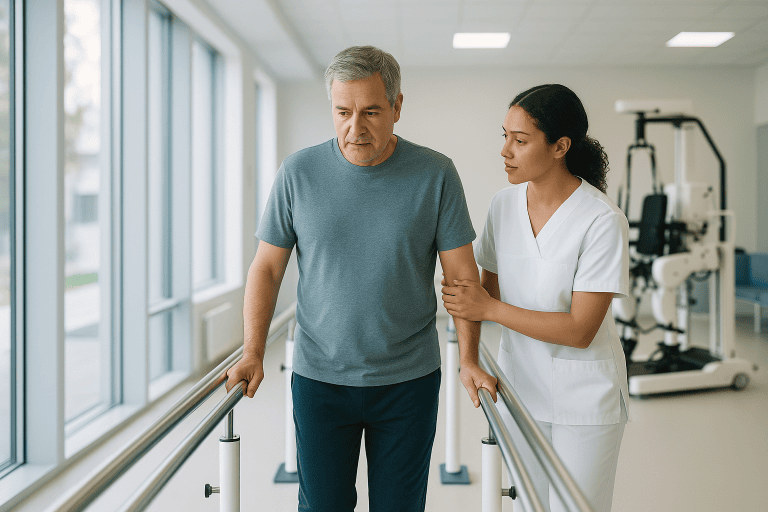
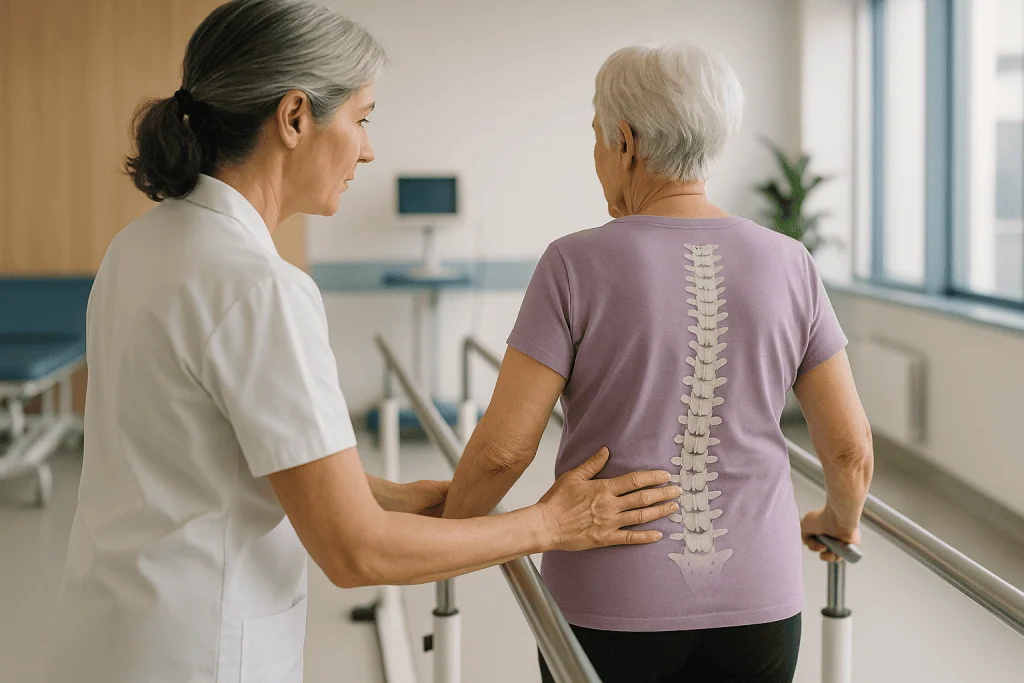
- Physical therapy to maintain joint range of motion, strengthen muscles that still work, improve balance and trunk control, and practice transfers, wheelchair skills and, where possible, standing or walking with braces or supports.
- Occupational therapy to relearn daily activities such as dressing, eating, bathing and using a computer or phone, often with adaptive equipment.
- Bladder and bowel management, which may involve learning intermittent catheterization (inserting a thin tube to drain the bladder at set times) and a scheduled bowel routine.
- Respiratory care for higher-level injuries, including breathing exercises, assisted coughing techniques and, in some cases, ventilator weaning.
- Skin protection through regular pressure relief, positioning and pressure-relieving cushions and mattresses.
- Pain and spasticity management using medication, stretching, positioning and sometimes injections or other procedures.
- Psychological support and education for the patient and family, including sexual health counseling and planning for work or study.
After: transition home and follow-up
Before discharge, the team usually reviews the home environment, recommends equipment and modifications, trains family members and arranges follow-up. Rehabilitation then continues as outpatient therapy, home exercise programs and regular medical reviews. Lifelong follow-up is generally recommended because the needs of a person with a spinal cord injury change over time.
Preparation for spinal cord injury rehabilitation
Preparation for admission to a spinal injury rehabilitation centre is usually organized by the acute hospital team, but patients and families can help in several ways:
- Gather medical records, including imaging reports, surgical notes and a current medication list, so the rehabilitation team has a complete picture.
- Ask the surgeon about any movement restrictions, such as wearing a brace or avoiding bending and twisting, and how long these apply.
- Bring comfortable, loose clothing and supportive flat shoes for therapy sessions, plus any glasses, hearing aids or personal items that support independence.
- Think about your priorities. Goals such as feeding yourself, transferring to a car or returning to work help the team shape the program.
- Identify family members or caregivers who can attend training sessions, because much of the aftercare involves them.
- If you smoke, ask about support to stop; smoking slows healing and increases the risk of breathing and skin problems.
It is also helpful to be prepared emotionally. Adjusting to a spinal cord injury is difficult, and rehabilitation centers typically include psychological support as part of the program.
Recovery and aftercare
Spinal cord injury recovery is highly individual, and timelines vary widely. In general, most neurological improvement that will occur happens in the first several months after injury, with slower gains possible for a year or more, particularly in incomplete injuries. Functional improvement, meaning the ability to do more for yourself, often continues well beyond this as skills, strength and confidence develop.
An initial inpatient rehabilitation stay typically lasts several weeks to a few months. People with paraplegia often have shorter stays than those with tetraplegia, who usually need more time to learn breathing techniques, hand strategies and assisted care. Many patients then continue outpatient therapy for months.
Aftercare usually includes:
- A daily home exercise and stretching program to maintain range of motion and reduce spasticity.
- Checking the skin at least once a day, especially over the tailbone, hips and heels, and relieving pressure regularly when sitting or lying.
- Following the bladder and bowel program consistently and drinking adequate fluids to reduce infection risk.
- Attending regular reviews with the rehabilitation physician, often every few months in the first year and then at least yearly.
- Maintaining and adjusting equipment such as wheelchairs, cushions and braces as the body changes.
- Watching for changes in mood and asking for help early, since depression and anxiety are common and treatable.
Risks and side effects
Rehabilitation itself is a low-risk treatment, but the period after a spinal cord injury carries several medical risks that the program is designed to detect and prevent. Being aware of them is part of the education process.
- Pressure injuries (bedsores) can develop quickly over bony areas when sensation is lost and movement is limited.
- Urinary tract infections are common when the bladder does not empty normally or catheters are used.
- Blood clots in the legs or lungs are a particular risk in the early weeks; preventive medication and compression devices are often used.
- Autonomic dysreflexia is a sudden, dangerous rise in blood pressure that can occur in people with injuries at or above the mid-chest level, usually triggered by a full bladder, bowel or skin problem. Patients and families are taught to recognize and respond to it.
- Orthostatic hypotension, a drop in blood pressure on sitting or standing, can cause dizziness or fainting, especially early in therapy.
- Spasticity and pain, including nerve-related (neuropathic) pain, may increase over time and can interfere with sleep and activity.
- Falls, strains and fractures can occur during transfers or exercise, and bones below the injury level lose density and become more fragile.
- Respiratory complications such as pneumonia are more likely with higher-level injuries.
- Emotional effects, including grief, depression and anxiety, are common responses to a life-changing injury.
Therapy sessions may cause muscle soreness or fatigue. The team adjusts intensity if symptoms suggest overuse or if blood pressure is unstable.
Results and outlook
Current evidence supports the view that structured, early and interdisciplinary rehabilitation improves independence, reduces complications and supports better quality of life after spinal cord injury. Rehabilitation cannot repair the damaged spinal cord, and no treatment currently available can reliably restore lost function in complete injuries. What rehabilitation does is help people make the most of the function they have, prevent secondary problems and adapt their environment and routines.
The outlook depends mainly on the level and completeness of the injury, age, general health and the presence of other injuries. People with incomplete injuries generally have a greater chance of regaining some movement or sensation than those with complete injuries. Many people with paraplegia achieve independence in self-care, wheelchair mobility and driving with adapted controls. People with tetraplegia may need ongoing assistance with some tasks, but assistive technology can significantly widen what is possible. Life expectancy after spinal cord injury has improved considerably over recent decades, largely because of better prevention and management of complications, although it remains somewhat lower than in the general population, particularly for high-level injuries.
Research into nerve regeneration, electrical stimulation and robotic-assisted training is ongoing. Some approaches are used in selected centers as part of rehabilitation, but they should be seen as additions to standard care rather than cures. Your rehabilitation physician can explain which options are supported by evidence and appropriate for your situation.
Cost considerations
The cost of spinal cord injury rehabilitation varies widely between countries, centers and individuals, and this page does not provide figures. The main factors that influence the overall cost are:
- Length and intensity of the inpatient stay, which is usually the largest component and depends on the level and completeness of the injury.
- Level of medical support required, such as ventilator care, wound care or management of complications.
- Equipment, including wheelchairs, seating systems, pressure-relieving mattresses, braces, transfer aids and home modifications.
- Advanced technologies, such as robotic gait trainers or functional electrical stimulation, when they are part of the program.
- Outpatient therapy and lifelong follow-up, including regular medical reviews, urology and skin checks and equipment replacement.
- Ongoing supplies such as catheters, bowel-care products and medications.
Insurance coverage, government programs and accident compensation schemes differ greatly by country and policy. The social worker or case manager in the rehabilitation center is usually the right person to explain what is covered and what documentation is needed.
Frequently asked questions
What happens in a spinal cord injury rehabilitation center?
A spinal cord injury rehabilitation center provides daily physical and occupational therapy, nursing care focused on skin, bladder and bowel management, medical supervision of complications, and education for patients and families. The program is tailored to the level of injury and personal goals, and it usually ends with a planned transition to home and outpatient follow-up.
How long does spinal cord injury rehabilitation take?
Inpatient rehabilitation often lasts several weeks to a few months, with longer stays more common for tetraplegia than for paraplegia. Outpatient therapy and home programs may continue for many months, and medical follow-up is generally lifelong. Your team can give a more specific estimate once your injury has been fully assessed.
Is spinal cord injury recovery possible after a complete injury?
Some people with an initially complete injury regain a degree of sensation or movement, especially in the first months, but this cannot be predicted reliably for an individual. Functional recovery, meaning greater independence through skills and equipment, is achievable for most people regardless of whether neurological recovery occurs.
What does paraplegia rehabilitation focus on?
Paraplegia rehabilitation typically concentrates on wheelchair skills, transfers, strengthening the arms and trunk, bladder and bowel routines, skin protection and returning to activities such as driving, work and sport. For incomplete injuries, standing and walking training with braces or supports may also be included.
Can you walk again after spinal cord injury rehabilitation?
Walking ability depends mainly on how much movement remains below the injury. People with incomplete injuries may regain some walking, sometimes with braces, walkers or other aids. For complete injuries, walking is generally not expected, and therapy focuses on other forms of mobility. Your rehabilitation physician can discuss realistic expectations for your situation.
How do I choose a spinal injury rehabilitation centre?
Useful questions include whether the center has a dedicated spinal cord injury program, how many hours of therapy are provided per day, which specialists are on the team, whether family training and psychological support are included, and how follow-up is arranged after discharge. Your acute hospital team can often help you compare options.
When to see a doctor
Anyone with new weakness, numbness, loss of bladder or bowel control or difficulty walking after an injury or illness needs urgent medical assessment, because early treatment can affect the outcome. People living with a spinal cord injury should be reviewed by a rehabilitation specialist if they notice a gradual decline in function, increasing pain or spasticity, new difficulty with transfers, recurrent urinary infections or worsening mood.
Seek emergency care immediately if any of the following occur during or after rehabilitation:
- A sudden severe headache, flushing, sweating above the injury level or a rapid rise in blood pressure, which may indicate autonomic dysreflexia.
- Shortness of breath, chest pain, or a swollen, warm or painful leg, which may suggest a blood clot.
- Fever with chills, cloudy or foul-smelling urine, or confusion, which may signal a serious infection.
- A new or worsening skin wound, especially one that is deep, draining or has an unpleasant odor.
- A sudden loss of function or sensation above the previous injury level.
- Thoughts of self-harm or an inability to cope emotionally.
Prompt assessment of these problems can prevent serious complications and helps keep rehabilitation progress on track.
Preparation
- Ask your surgeon about any movement restrictions or braces before starting therapy, and bring complete medical records and a current medication list. Pack comfortable clothing and supportive shoes, and think about the daily activities that matter most to you so the team can set goals. Identify family members who can attend training sessions, and ask for help to stop smoking if relevant.
Aftercare
- Follow the home exercise and stretching program daily and keep to your bladder and bowel routine. Check your skin every day, relieve pressure regularly when sitting or lying, and keep all follow-up appointments with the rehabilitation physician. Report fever, new wounds, severe headaches, breathing problems or changes in mood promptly.
Medically reviewed by the Acıbadem International Medical Board September 8, 2026
See our medical review board →
Update history
- PublishedSeptember 8, 2026
- Medical review approvedSeptember 8, 2026
- Last content updateSeptember 8, 2026